How AI-Driven Digital Automation is Driving the Future of Mortgage Underwriting?

Mortgage underwriting is one of the most critical processes in financial institutions to measure the level of risk associated with lending money to borrowers or prospective homebuyers.It’s a rigorous process of identifying and scrutinizing the borrowers’ identity, checking their credit history, and examining their financial health, cash flows, investments, liabilities, etc.

Underwriting a mortgage may take anywhere from a few days to weeks, depending on whether the application has some missing details, such as a signature in the application, lack of sufficient documents, or issues with verifying the identity or credit history of the borrower, etc. It can stretch to months or even longer for secured products such as home loans/mortgage loans, etc. 

However, borrowers today want quick turnaround time and faster property security, which is possible only when financial institutions can swiftly process applications and respond quickly.

In this blog, we have discussed the role of automation and emerging technologies, such as AI, in reshaping mortgage underwriting and modernizing loan origination.

The Role of Automation and AI in Mortgage Underwriting

The traditional mortgage underwriting process is known for its complexity and slow turnaround for mortgage or loan approval. This is due to the involvement of extensive paperwork, manual verification, and a significant amount of resources and time requirements to process the information. It also creates backlogs in areas such as contact centres and back offices.

However, with automation and AI, financial institutions can overcome these challenges and transform the underwriting process to ensure efficiency, accuracy, and fairness.

As per ICE Mortgage Technology , 83% of mortgage lenders plan to increase their investment in AI and machine learning technologies in 2024, marking a significant shift from traditional processes.
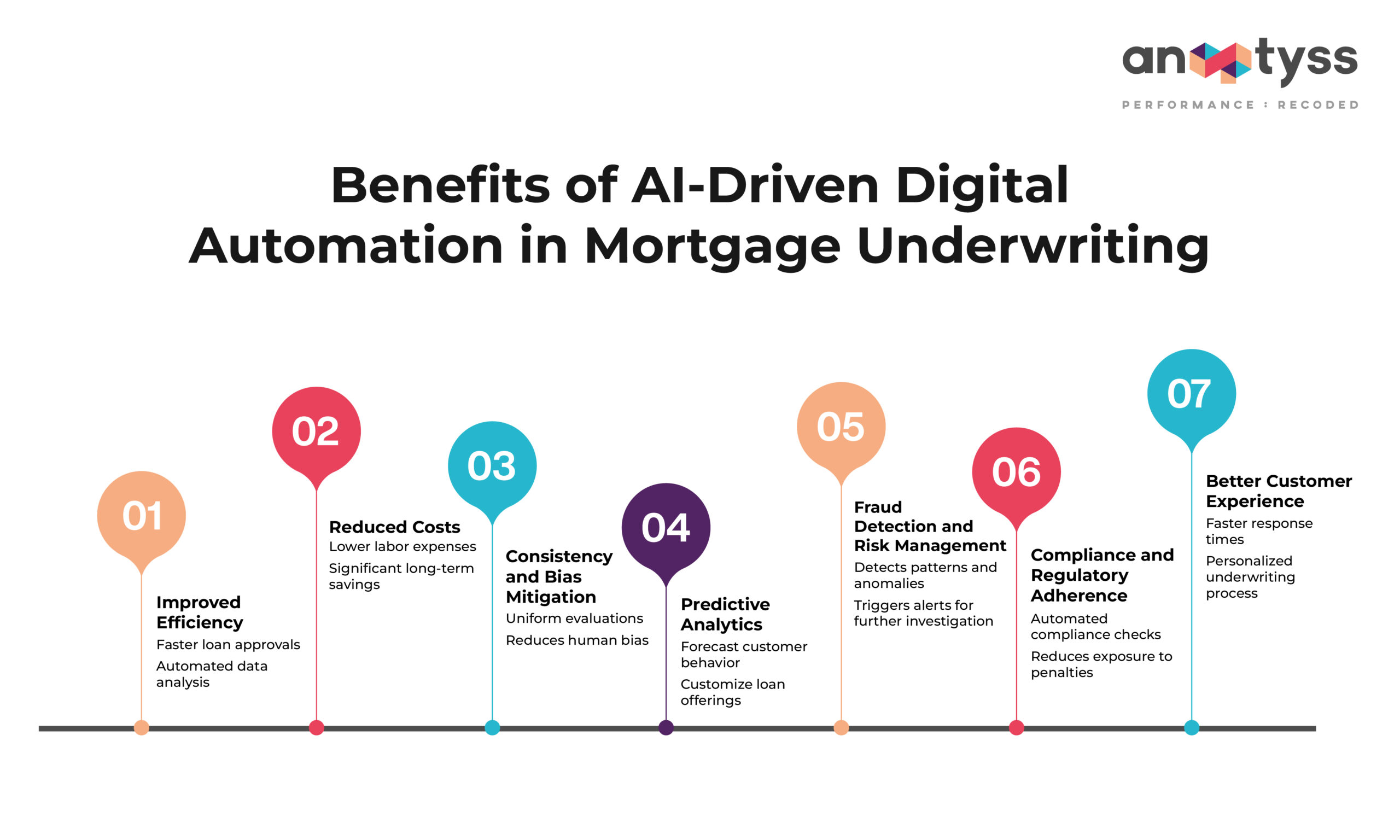
Benefits of AI-Driven Digital Automation in Mortgage Underwriting-01

1. Improved Efficiency

Faster responses and loan approvals to borrowers improve customer experience and lender’s reputation. In recent times, the borrower’s journey has evolved drastically. Instead of waiting for weeks or months to get a loan approval, many of them are already pre-approved and the turnaround time for new approvals has also come down to a few days and even hours in some cases. By leveraging automated systems, financial institutions can quickly analyze and process data or information at a much faster speed and accuracy than humans.

“Financial institutions that adopted AI-powered underwriting systems reported a reduction by up to 30% -50% in processing and a significant increase in loan originations due to faster decision-making”

For instance, a borrower’s KYC document verification and creditworthiness can be automatically analyzed with automated underwriting that may take a few seconds or minutes to evaluate the borrower’s financial history and credit score, among other factors. It can help reduce the time to process, approve, or reject a loan application. 

2. Reduced Costs

Although initial investments in automation and AI systems may appear substantial, the long-term advantages and cost savings are often significant. With intelligent automation, financial institutions can replace labor-intensive tasks and reduce the dependency on humans for repetitive tasks.

The McKinsey Global Institute (MGI) estimates that gen AI could add between $200-$340 billion in value annually across the global banking sector.

As a result, it lowers labor costs by 10-20%, minimizes the associated expenses, and enables financial institutions to utilize their internal resources more effectively and human expertise in complex scenarios requiring nuanced decision-making.

3. Consistency and Bias Mitigation

Consistency and precision are two crucial elements of automation. Another significant advantage of automation is that it voids human bias. With automated underwriting systems and processes, financial institutions can apply predefined rules and objective criteria to ensure fair and uniform evaluation of every loan application.

As a result, this adds more integrity to the lending process and builds trust among borrowers and lenders (investors). 

4.Improved Fraud Detection and Risk Management

AI-powered automation and algorithms can process vast amounts of data to detect patterns and anomalies indicative of fraudulent activities that humans may indirectly overlook or miss. These systems can trigger alerts to underwriters or loan officers/advisors for further investigation, making the underwriting process more efficient.

In addition, intelligent automation can reduce the likelihood of manual errors and provide a more robust risk management framework. 

This proactive approach enables financial institutions to minimize overlooking or miscalculations and make a more informed underwriting decision and cleaner documentation to reduce the risk of loan defaults and buybacks for lenders. 

5. Predictive Analytics

AI-driven predictive modeling approach can use past data and statistical models to get valuable insights and predict future outcomes. It involves an assessment of the default rate and patterns related to repayment and also identifies how likely or whether the borrower will repay.

As a result, lenders can project future trends and take appropriate strategies for their mortgage portfolios leading to smart decisions related to lending and approval. Predictive analytics also helps financial institutions mitigate risks customize loan offerings to individual borrower profiles and deliver personalized solutions to enhance customer satisfaction.

6 . Adherence to Compliance and Regulatory Requirements

AI systems can automatically cross-check data for industry requirements and standards to ensure compliance. This also reduces exposure to penalties and complications and enables lenders to navigate the complex regulatory landscape easily.

7. Better Customer Experience 

The faster a financial institution or lender can respond with a quote or rate, the more likely they will win a borrower. If it takes longer, there are chances that the customer may end up signing with another lender or financial institution. 

In addition, AI-driven insights can further help personalize the underwriting process for the individual profiles of borrowers, making the lending process more personalized and responsive, thereby improving customer satisfaction and relationships between lenders and their borrowers.

Challenges and Considerations with Automation & AI in Mortgage Underwriting Process

There are several barriers when it comes to the traditional mortgage underwriting process. Below are three main challenges:

1. Data Privacy and Security Concerns

One primary concern is reliance on massive data and its potential impact onprivacy and security. The financial institution has to implement very stern measures that would be required to protect sensitive information and, at the same time, ensure compliance with requirements brought forth by regulators.

2. Lack of Transparency and Accountability

AI models, particularly the complex ones acting like “black boxes, create problems regarding transparency and accountability. The lenders will have to ensure their systems powered by AI are explainable (XAI) and decisions justified in a trustworthy way.

3. Human-AI Collaboration Challenge

While AI and automation bring numerous benefits, they also require new skills and competencies from the human workforce. These technologies cannot replace the critical role of humans in mortgage lending when it comes to a relationship between advisor and customer. Rapport, trust, and empathy are other positive factors associated with human interactions.

Elements such as data literacy, analytical thinking, and emotional intelligence are essential for effectively collaborating with AI systems and overseeing their operations. 

Conclusion

By leveraging automation and AI, the mortgage industry can create a more efficient, fair, and secure lending environment which would benefit all stakeholders involved. Financial institutions across the globe are embracing digital transformation to automate loan journeys and keep up with the evolving markets’ and customers’ needs.

With more advancements in artificial intelligence (AI), such as generative AI which can automatically extract and organize data from unstructured documents, financial institutions can utilize their human expertise on more strategic tasks and achieve better outcomes with the same resources. 

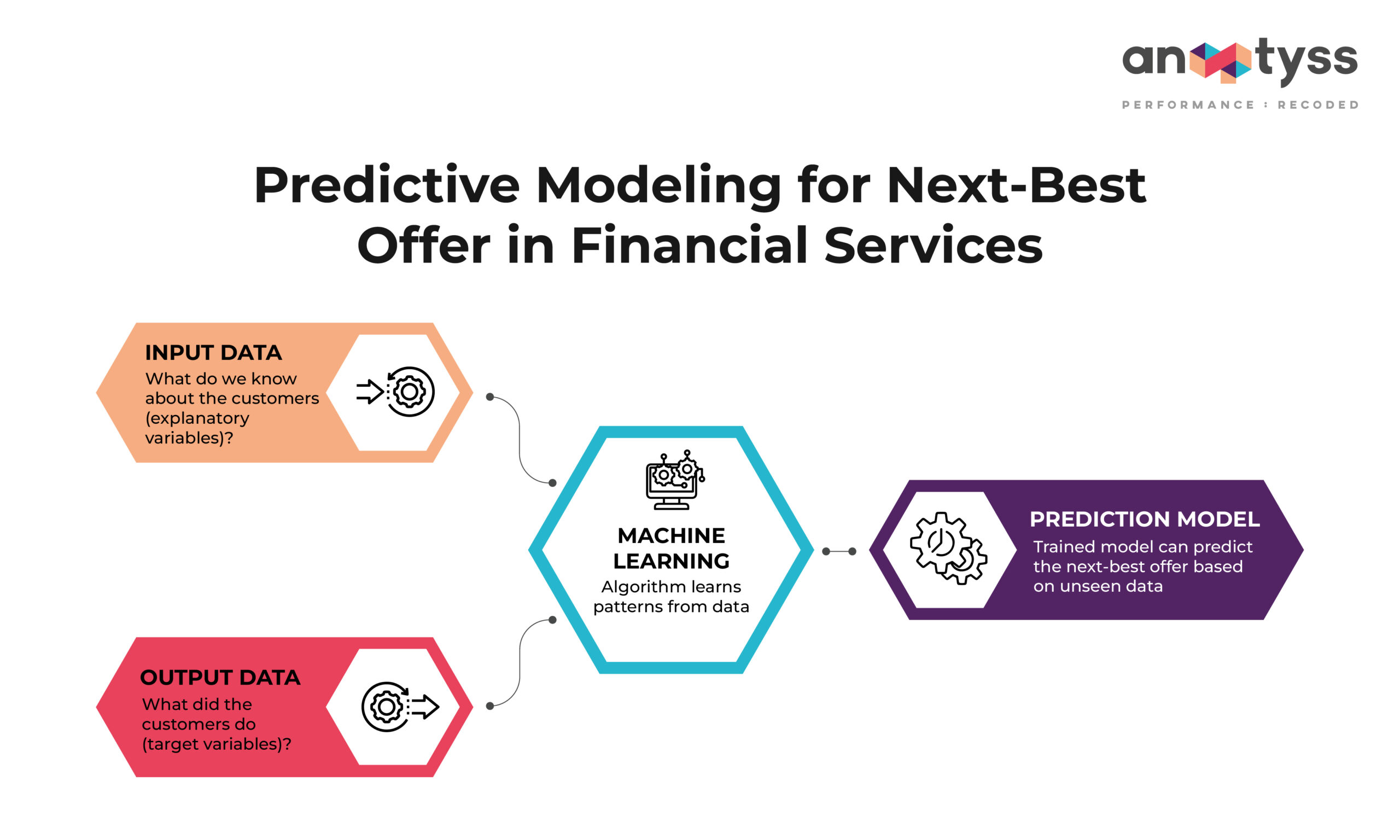
Predictive Modeling for Next-Best Offer in Financial Services 

Predictive modeling has found numerous applications in financial services, such as forecasting loan delinquencies, fraud occurrences, customer churn rates, market trends, and more.

Among such many applications, Next Best Offer (NBO)—i.e., creating highly relevant and timely offers for customers—is an emerging use case of predictive modeling in financial services. Predictive modeling and analytics techniques can help financial institutions, including banks, derive actional insights from customer data, allowing them to craft converting offers.

This blog discusses how banks and financial institutions can use predictive modeling for Next Best Offer (NBO), increasing customer experience, revenue, and retention.

What is Next-Best Offer?

Next-Best Offer, or next-best action, is a personalized marketing strategy based on predictive modeling and analysis. For an effective NBO, banks and financial institutions must understand customers’ needs and create optimal product and service offers based on sales, transactions, behavioral patterns, time relevance, and other factors.

Effectively designed next-best offers can facilitate purchase actions from customers who are considering buying.

Predictive modeling is crucial in the NBO value chain, from determining customer needs and preferences and crafting offers to driving consideration and purchase. Aside from allowing a data-led understanding of customers, it helps personalize and guide customer engagement efforts, which is crucial in modern financial services. This approach can help financial institutions boost sales and retention and onboard consumers more effectively.

Input Data > Output data (known outcomes) > Machine Learning and AI > Prediction Model

Predictive Modeling for Next-Best Offer in Financial Services-01

Benefits of Next Best Offer Using Predictive Modeling

Following are some prominent benefits of using predictive modeling for the next best offer.

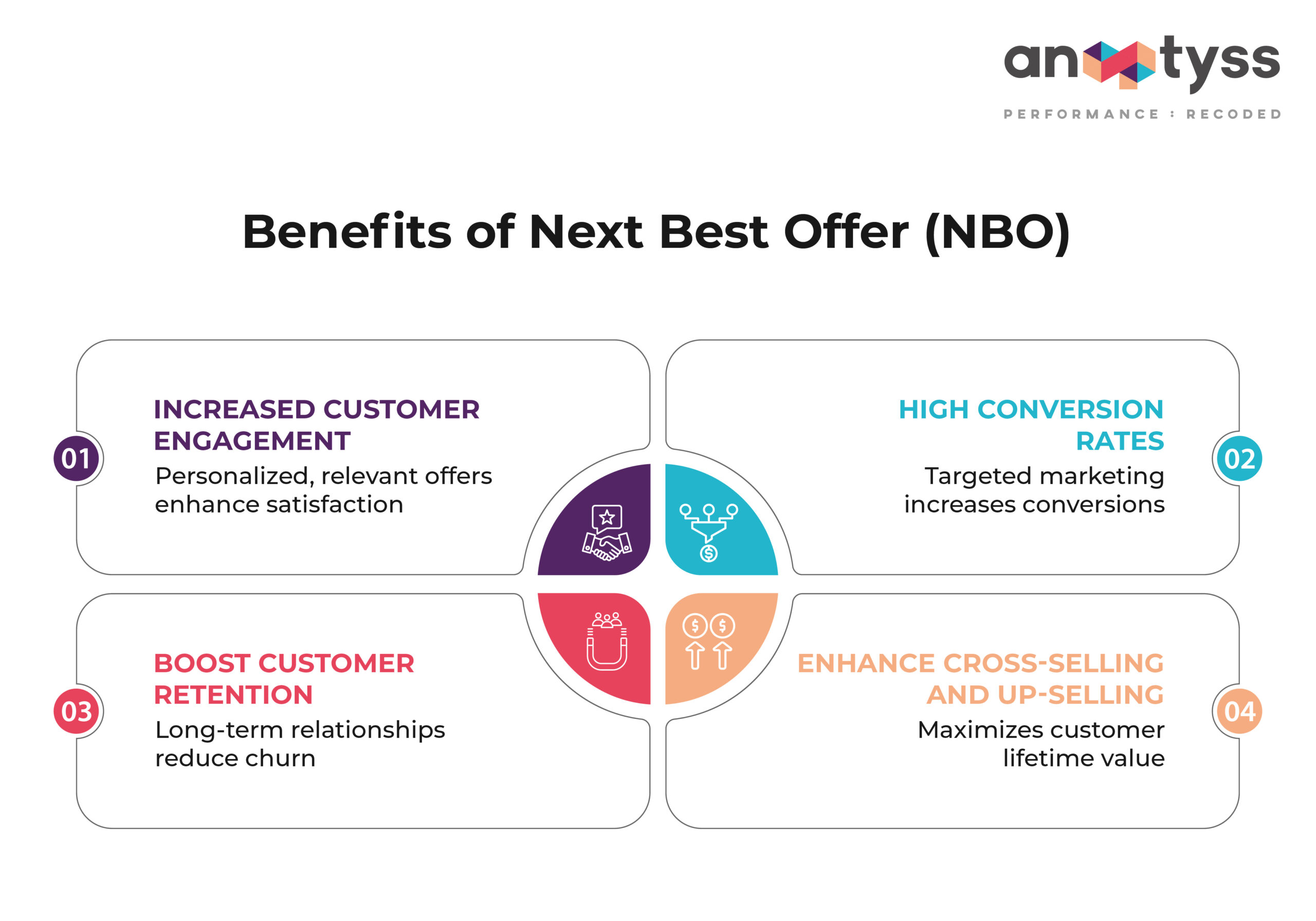
Benefits of Next Best Offer (NBO)

1.    Increased Customer Engagement

Customers will most likely engage with offers relevant to their current needs and interests. Therefore, offering tailored products and services based on individual customer preferences and behavior is crucial to enhancing customer engagement.

With predictive analytics and NBO, banks and financial institutions can provide personalized offers and make customers feel valued and understood. This can boost engagement and lead to more interactions. 

2.     High Conversion Rates

With NBO, financial institutions can ensure that the right offer is presented to the right customer at the right time. This helps increase the conversion rate, reduces waste of time and resources, and boosts return on investment (ROI) for marketing campaigns.

McKinsey & Company found that personalization can deliver five to eight times the ROI on marketing spend and lift sales by 10% or more.

3.    Boost Customer retention

Bain & Company research shows that increasing customer retention rates by 5% increases profits by 25% to 95%.

With predictive analytics and NBO, banks and financial institutions can consistently provide and deliver relevant and valuable offers to customers. It helps anticipate customer needs and enables banks or financial institutions to address them proactively, which reduces the likelihood of customers switching to competitors and builds a long-term relationship with the customer, fostering loyalty.

A report by Salesforce indicates that 84% of customers say being treated like a person, not a number, is very important to winning their business.

4.    Enhance Cross-Selling and Up-Selling Opportunities

Predictive analytics also helps identify opportunities for cross-selling and upselling. According to a study by HubSpot, upselling can result in a 41% increase in average order value. By analyzing customer data and behavior, financial institutions can recommend complementary or higher-value products and services that customers are more likely to purchase.

In another survey by Zendesk, 74% of customers stated they are more likely to return to a business if they have had a positive cross-selling or upselling experience.

How to Implement the Next Best Offer with Predictive Modeling? Steps

Implementing the next best offer with predictive modeling requires some basic steps, as follows:

  1. Data Collection

Data collection and high-quality data are fundamental to developing accurate and reliable predictive models. The data should comprise details of customer demographics, transaction history, online behavior, and engagement metrics.

  1. Data Analysis

The data requires filtering and cleaning, which is followed by data analysis to identify patterns and trends. With advanced analytics techniques, such as machine learning and data mining, financial institutions can extract valuable insights from the data. This step also involves segmenting customers based on their behavior and preferences.

  1. Model Development

In this step, predictive models are developed using mathematical/statistical techniques and machine learning algorithms. The data is ingested to train the model to predict future customer behavior and identify the most relevant offers for each customer segment. Model development requires continuous refinement and updates to ensure accurate predictions over time.

  1. Offer Generation

The predictive model generates personalized offers for each customer based on data analysis and information feeds. These offers need to be relevant, timely, and aligned with the customers’ needs and interests. The goal is to generate offers that resonate with customers and encourage them to act.

  1. Delivery and Monitoring

This final step involves the delivery of personalized offers to customers through channels such as email, mobile apps, and websites. Monitoring the performance of these offers and continuously fetching feedback is crucial for improving the predictive model and next-best offer strategy.

Key metrics for measuring the performance of offers include engagement rate, conversion rate, and customer feedback.

Conclusion

Determining the next-best offers using predictive modeling and analytics can offer huge benefits to financial institutions through increased customer engagement, conversion rates, customer retention, and cross-selling and upselling.

With a strong NBO strategy and advanced analytics, banks and other financial institutions can deliver personalized offers that fuel customer satisfaction and business growth.

Applications of Advanced Analytics in Mortgage Origination

Mortgage origination is a complex and ever-evolving landscape that requires lenders to keep a proactive approach to risk management, balancing efficiency/cost-effectiveness, and customer experience (CX). They need to constantly look for ways to improve their mortgage operations and decision-making capabilities.

With advanced data analytics, financial institutions and mortgage lenders can streamline their lending processes and make better-informed decisions to enhance the efficiency of their mortgage origination.

Unlike basic analytics which focuses on historical data and descriptive statistics, advanced analytics involves tools and techniques, such as predictive modeling, business process automation, and machine learning algorithms to identify opportunities, pre-empt risks, predict future trends, understand unknown correlations, and get a deeper understanding of data.

In this blog, we have covered various applications and benefits of advanced analytics in mortgage origination with real-world examples of banks and financial institutions leveraging advanced analytics to improve the efficiency and reliability of their loan origination processes.

Use Cases and Applications of Advanced Analytics in Mortgage Origination

Below are some top applications and ways financial institutions leverage advanced analytics to support mortgage origination.

  1. Boost Lead Generation and Management

Lead generation strategies are crucial to acquiring new customers and growing revenue. With advanced analytics, mortgage originators can analyze vast data to identify and generate more leads.

They can meticulously assess the quality of each lead based on various parameters, such as credit scores, income levels, and previous financial behavior, to develop effective sales and marketing strategies. This helps them convert these leads into clients and facilitates systematic lead nurturing for future engagement, ensuring targeted and personalized marketing efforts​.

For instance, LendingTree uses advanced analytics to optimize its lead management system. By analyzing data on potential borrowers, such as their online behavior, credit history, and demographic information, LendingTree is able to prioritize leads that are most likely to convert.

  1. Identify and Recruit Best Loan Officers and Performance Management

Mortgage lenders can leverage advanced analytics to identify and recruit top-performing loan officers in specific markets by analyzing the educational backgrounds, work experiences, expertise, and characteristics of successful loan officers.

Using the extrapolated information, lenders can hire new officers with similar traits. It also enables financial institutions to manage and monitor loan officers’ performance in real time. This helps ensure timely interventions and resource optimization.

  1. Adaptive Loan Routing and Decision-Making

Lenders can feed multiple predetermined criteria into an advanced analytics-powered routing system to assign loan officers to specific leads. This ensures that each lead is handled by the most suitable loan officer.

It also helps reduce biases and improve customer satisfaction. Financial institutions can also automate large-scale mortgage pre-approvals and loan approvals by analyzing internal and external data, such as deposit statements and credit scores. This automation speeds up the approval process, making it more efficient and reducing the need for manual intervention.

  1. Predictive Analytics for Customer Behavior

Advanced analytics helps leverage various predictive variables, such as payment history, credit scores, and economic indicators like mortgage rates, inflation, and unemployment history, to understand and forecast customer behavior and assess the likelihood of customers prepaying or repaying their mortgage loans.

It also helps optimize distribution strategies. By analyzing market trends and customer behavior with advanced analytics, lenders or mortgage originators can forecast market demands and identify potential growth markets to stay competitive and capitalize on emerging opportunities.

  1. Fraud Detection and Risk Management

Frauds in mortgage and lending are quite prevalent and can be costly for mortgage originators and lenders.

According to a study, mortgage firms spend $4.20 for every $1.00 they lose to fraudulent activity. However, advanced analytics help detect and prevent fraud in mortgage origination.

It can quickly analyze patterns, and anomalies in data, identify potentially fraudulent activities, and mitigate risks.

For instance, Wells Fargo employs advanced analytics for fraud detection in its mortgage origination process to analyze patterns and anomalies in transaction data, such as unexpected large transactions or changes in customer behavior, which are flagged for further investigation to identify potentially fraudulent activities early.

With this proactive approach, lenders can improve the overall security of the mortgage process to safeguard themselves and protect their customers (borrowers) from fraud and financial losses.

  1. Optimizing Customer Retention and Experience

To succeed and survive in emerging markets, mortgage lenders need to continue their focus on customer retention and experience. Advanced analytics enables mortgage originators to efficiently analyze customer data and identify new opportunities for cross-selling and upselling.

For instance, Rocket Mortgage by Quicken Loans transformed their mortgage application process using advanced analytics and AI. By integrating automated data retrieval and advanced algorithms, Rocket Mortgage enabled borrowers to apply for loans with a few clicks and get approvals as quickly as under a few minutes.

It enables them to develop targeted retention programs and personalized retention strategies based on detailed customer insights. Mortgage lenders can tailor their offerings and customize their products and retention strategies to select and segment customers and meet their needs more effectively.

  1. Improving Operational Efficiency

Mortgage processes are paperwork-heavy and involve several tedious manual tasks that lead to longer processing time and are prone to errors. With advanced analytics, mortgage lenders can significantly improve their operational efficiency.

With advanced analytics, financial institutions can reduce manual functions and errors by automating complex workflows, such as underwriting and compliance audits. This helps minimize the operational costs and reduce the time and effort required to process mortgage applications.

This increased efficiency further boosts the turnaround times and frees up employees for high-value tasks that machines can’t do. This means more work in less time without unnecessary staffing, which further boosts the return on investment (ROI) for mortgage lenders.

Anaptyss for Mortgage Process Outsourcing & Technology Solutions

The mortgage industry is seeing significant adoption of technologies for automation and data-driven insights that can help players meet customer expectations. Advanced analytics solutions can provide mortgage originators with fast and valuable insights for improving their processes and delivering better customer experience.

These solutions can boost lead generation, improve decision-making, detect fraud, increase operational efficiency, and recruit expert talent. Anaptyss offers expertise in implementing data analytics and other digital solutions, helping lenders improve their ROI and efficiency and meet regulatory compliance.

This increased efficiency further boosts the turnaround times and frees up employees for high-value tasks that machines can’t do. This means more work in less time without unnecessary staffing, which further boosts the return on investment (ROI) for mortgage lenders.

Anaptyss for Mortgage Process Outsourcing & Technology Solutions

The mortgage industry is seeing significant adoption of technologies for automation and data-driven insights that can help players meet customer expectations. Advanced analytics solutions can provide mortgage originators with fast and valuable insights for improving their processes and delivering better customer experience.

These solutions can boost lead generation, improve decision-making, detect fraud, increase operational efficiency, and recruit expert talent. Anaptyss offers expertise in implementing data analytics and other digital solutions, helping lenders improve their ROI and efficiency and meet regulatory compliance.

The Role and Importance of Stress Testing in Credit Risk Management

Stress testing is a simulation technique crucial to test or assess the resilience of financial institutions and their portfolio or sub-portfolio against adverse conditions. Its purpose is to find vulnerabilities and prepare organizations for unexpected economic shocks. Stress testing helps financial institutions measure investment risks and asset adequacy and evaluate internal controls and processes.

Regulators obligate financial institutions to regularly conduct stress testing to evaluate their resilience in different stress scenarios that might impact borrower credit quality and the financial institution’s stability and health.

This blog discusses traditional stress testing techniques in credit risk management, explores their limitations, and outlines modern stress testing techniques for effective credit risk management.

Traditional Techniques in Stress Testing

The 2008 financial crisis led to more stringent regulatory reporting requirements, mainly due to the Dodd-Frank Act (2010), bringing focus on capital adequacy and stress testing. Currently, the BASEL III endgame, slated for implementation by 2025, necessitates documentation of banks’ capital level and administration of stress tests in various scenarios.

Below are some traditional stress testing techniques that banks and financial institutions employ to assess their resilience and the impact of risk factors on stability.

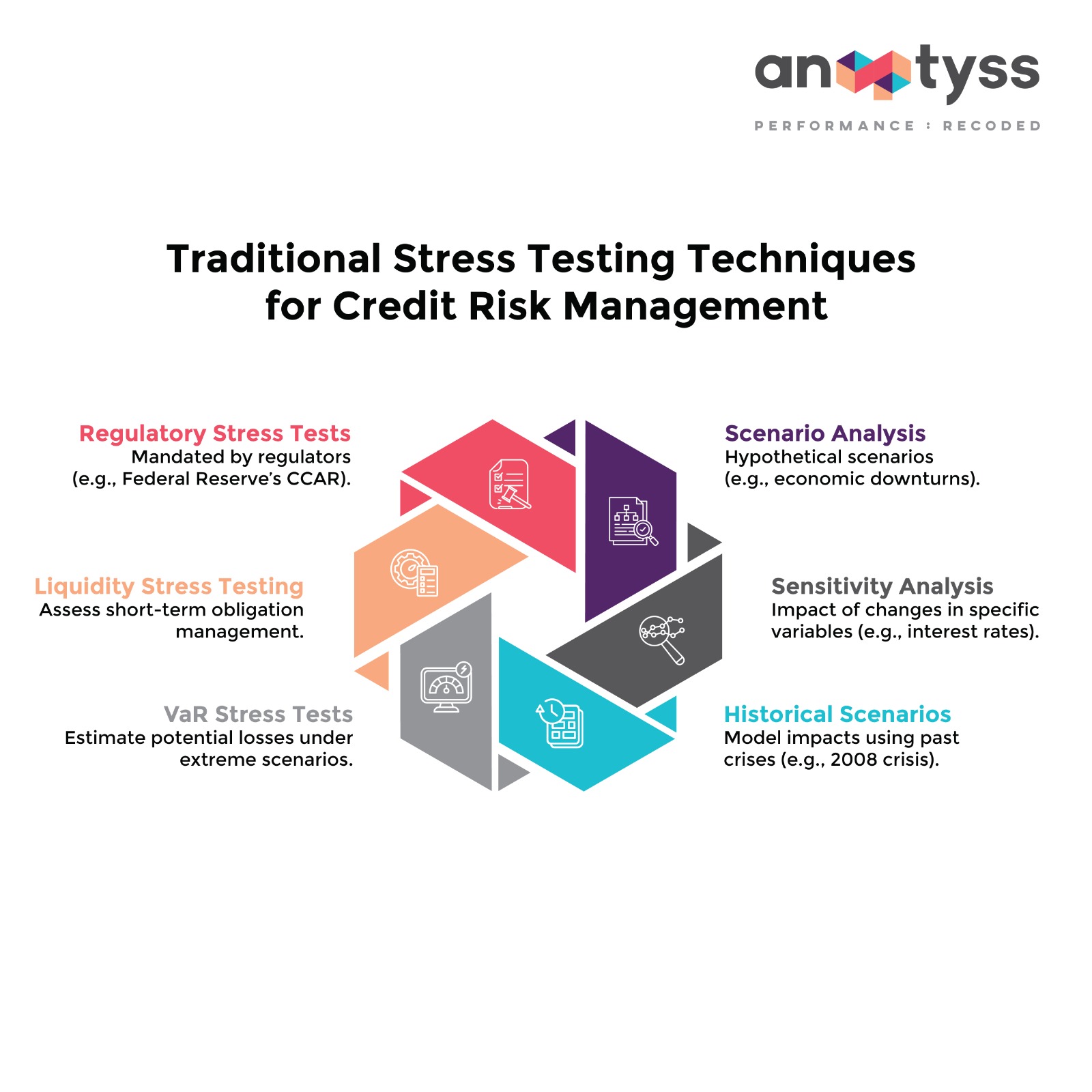
Traditional Stress Testing Techniques for Credit Risk Management

1. Scenario Analysis

Scenario analysis involves generating hypothetical scenarios that can negatively influence the credit portfolio. Typically, these involve economic downturns, changes in regulatory requirements, and natural disasters. Financial institutions develop these scenarios based on historical data and expert opinion. It helps understand the following:

For instance, financial institutions can use scenario analysis to determine the impact of a 1% rise in interest rates on their credit portfolios. Scenario analysis is simple to implement and understand and provides a clear view of the possible impact of individual risk factors under defined conditions.

However, the scenarios usually are based on historical data and hence may not be relevant in forecasting future occurrences. Thus, it may not be adequate in covering all the possible risks or real-world scenarios.

2. Sensitivity Analysis

Sensitivity analysis evaluates the changes in some variables on the credit portfolio.

It relies on single variables, such as interest rates or unemployment, that are incrementally changed to observe the impacts and identify the consequences.

Sensitivity analysis allows for the identification of key risk drivers and conducting a deep analysis of isolated variables. However, it relies on individual variables—with no interplay among them —and therefore, many systemic or interconnected risks can remain undetected.

3. Historical Scenarios

Historical Scenarios use past financial crises or adverse events to model the potential impact on current financial positions. Historical scenarios help develop scenarios using the historical data to reflect conditions similar to past events.

They rely on actual events, which, in turn, assist in providing realistic and relevant insights and understanding of how institutions addressed past crises.

For instance, financial institutions may analyze the effect of a specific type of monetary crisis, as that witnessed in 2008, on the existing asset portfolio. Nonetheless, they are historical incidences and may not be used to predict future. The quality of historical data also limits this technique.

4. Value-at-Risk (VaR) Stress Tests

The VaR stress test expands traditional VaR analysis by stressing portfolios with extreme yet plausible scenarios that allow assessing potential losses under such adverse conditions.

It is quantitative and thus is well used and accepted in the financial industry. For instance, commercial banks typically use VaR stress tests to analyze the losses that may likely occur in their trading portfolios under severe market disturbances.

However, this technique assumes normal market conditions, which may not hold valid in extreme scenarios, underestimating risks if such extreme events fall outside the modeled scenarios.

5. Liquidity Stress Testing

Liquidity stress testing evaluates the organization’s ability to fulfill short-term obligations under adverse conditions. It models situations that envision sudden withdrawals of deposits or the inability to refinance short-term debt.

The technique helps institutions maintain their liquidity buffers for managing short-term financial stability. For example, a bank can simulate a 30% withdrawal of customer deposits within a week to check the impact on liquidity.

However, financial institutions may require advanced modeling to make proper simulations for practical simulations of liquidity events. Advanced modeling is crucial since assumptions made in the scenarios might significantly affect the results.

6. Regulatory Stress Tests

Financial regulators impose regulatory stress tests on banks to check their resilience against risk types under systemic conditions. Typically, regulatory authorities design multiple scenarios to evaluate a wide range of possibilities. The exercises support establishing benchmark resilience across various firms and maintaining effective surveillance for compliance with regulatory standards.

Examples include the Federal Reserve’s CCAR stress tests for large U.S. banks.

However, regulatory stress tests may prove to be an extraordinarily resource-intensive and expensive exercise in implementation. Additionally, scenarios are predefined and may not encompass all the specific risks individual institutions face.

Limitations of Traditional Techniques

The conventional stress test methods pose the following limitations:

Modern Techniques in Stress Testing

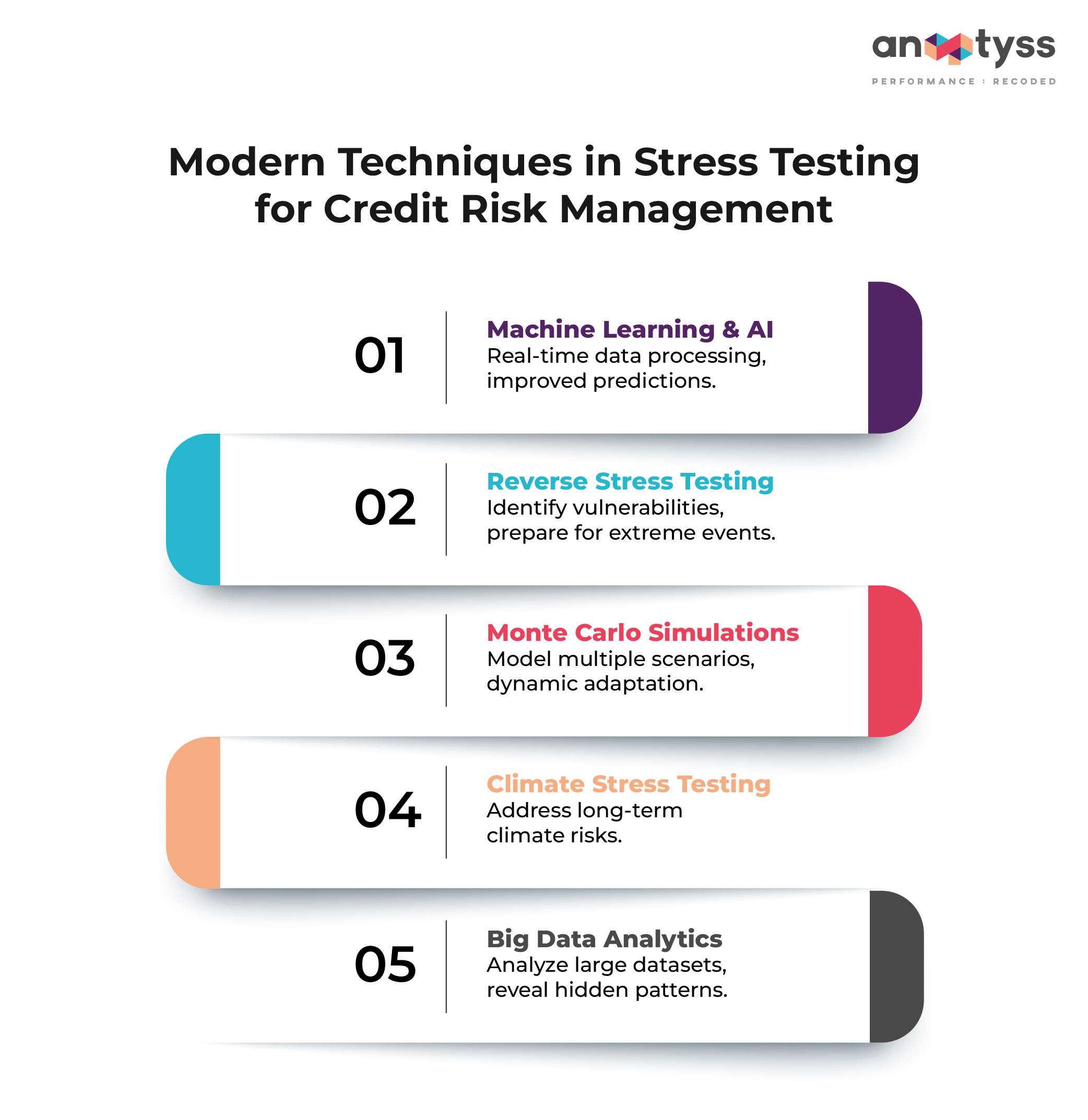
Over the years, stress testing methods have advanced significantly and use more sophisticated technologies and methodologies to assess the resilience of financial institutions and systems under adverse conditions. Some modern stress testing techniques for credit risk management include:

Modern Techniques in Stress Testing for Credit Risk Management_infographic

1. Machine Learning and AI-based Models

Machine learning and AI-based models have revolutionized stress tests as they enable financial institutions to analyze massive sets or volumes of data in real time. These technologies can efficiently recognize patterns and predict outcomes more accurately than traditional methodologies.

Advantages:

2. Monte Carlo Simulations

Monte Carlo simulation is a mathematical technique applied to estimate Credit Value at Risk (CVR) and the economic capital of credit portfolios held by the financial institution. It can forecast a possible outcome of an uncertain event by using past data using probabilistic techniques, random sampling, and choice of action. It offers the flexibility to develop dynamic scenarios in a more comprehensive way for testing against potential risks.

Advantages:

3. Integration of Big Data Analytics

Big data technology employs advanced techniques to process colossal and complicated datasets. This approach helps improve the ability to assess credit risk by using a wide range of data sources that could include non-traditional or unstructured data, such as social media trends, billing history, transaction patterns, and more.

Advantages:

4. Reverse Stress Testing

This advanced risk management technique starts from a given outcome to specific products, for example, a significant financial loss or failure. It goes backward to extract possible scenarios or events that might lead to a given outcome. The technique allows financial institutions to incorporate extreme and plausible events and their effect on operations and solvency.

Advantages

5. Climate Stress Testing

In contemporary times, factoring and preparing for climate risks is essential. This technique helps the financial institution assess the potential impact of climate change risks, considering events such as rising temperature and sea levels and how regulatory changes will affect the institution’s portfolio and economic well-being.

Advantages

Advantages of Modern Techniques Over Traditional Ones

Modern stress-testing techniques offer several advantages. Some of these include:

Modern techniques present a more comprehensive and detailed view of potential risks and enhance the institution’s ability to withstand adverse conditions.

Conclusion

As financial markets grow in complexity, the limitations of traditional stress testing methods become more apparent. Modern techniques employing machine learning, AI, Monte Carlo simulations, and Big Data Analytics improve the accuracy, flexibility, and comprehensiveness of stress testing.

These advancements allow financial institutions to predict and manage credit portfolios and credit risks more effectively, ensuring greater resilience against economic shocks.

Anaptyss offers state-of-the-art tools and technologies, including the latest techniques in modern stress testing, to help financial institutions get the necessary insights for navigating a continually evolving industry landscape.

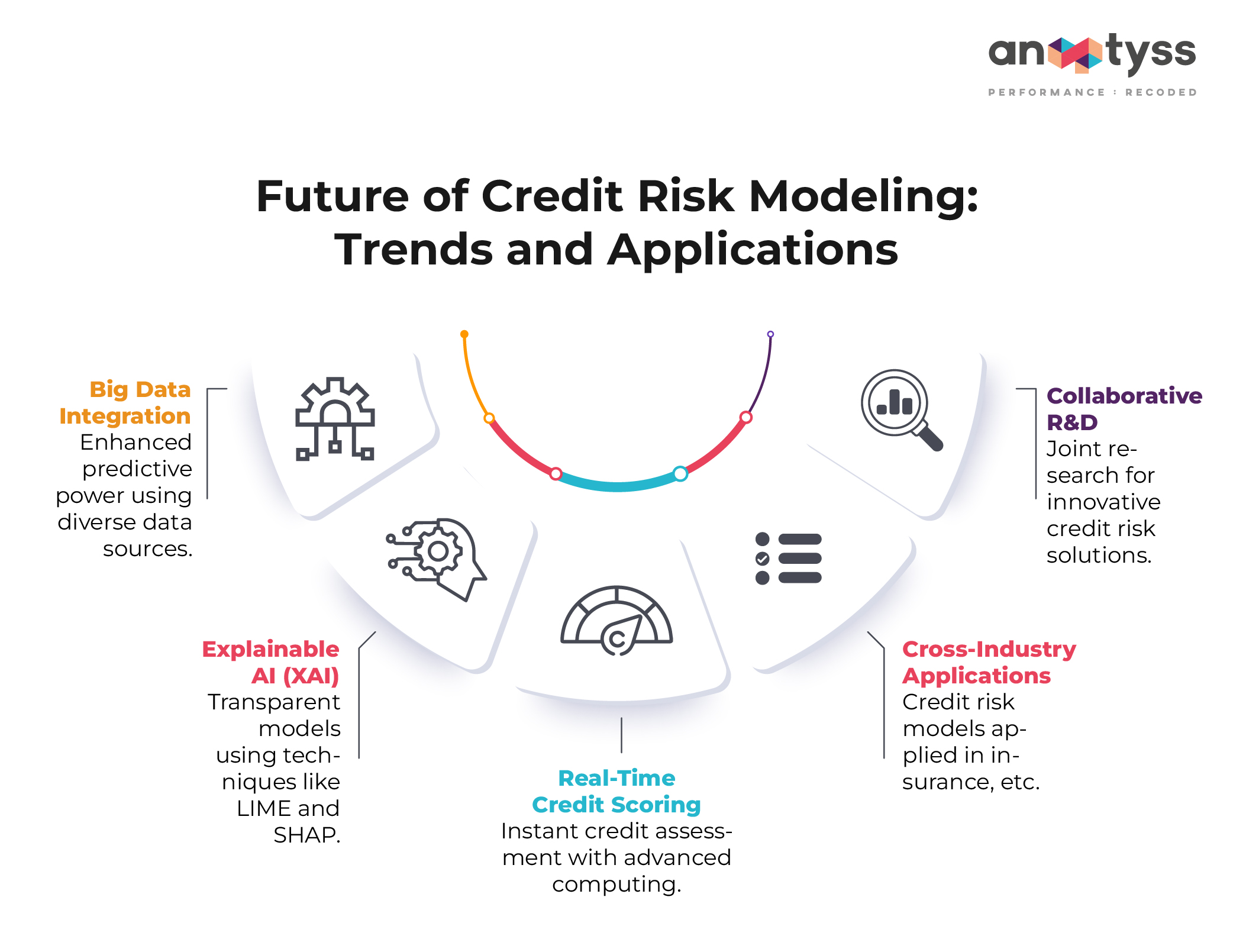
Future of Credit Risk Modeling: Trends and Applications

The future of credit risk modeling is continuously evolving with the ever-increasing integration of artificial intelligence and machine learning. These technologies are enabling the development of sophisticated models that can handle huge amounts of data and make accurate predictions. Here are some of the key trends and applications shaping the future of credit risk modeling.

Future of Credit Risk Modeling, Trends and Applications_infographics_Artboard 2

1. Integration of Big Data

Big data analytics increases the prediction capabilities of credit risk models. It allows ingestion and analysis of huge volumes of big data from different sources, such as social media and transaction records, to enhance the model’s accuracy.

Big data analytics has revolutionized credit risk modeling, making it highly predictive. According to a 2023 study by the International Data Corporation (IDC), the global big data and business analytics market is expected to reach $274.3 billion by 2026.

However, as the use of big data in credit risk modeling grows, there will be a necessity for robust frameworks and technologies to keep data private and secure sensitive information in compliance with data protection regulations.

2. XAI (Explainable AI)

As the models get very complicated, the explainability of the models is very important to overcome the “black-box” problem with AI. Techniques such as Local Interpretable Model-agnostic Explanations (LIME), Explain Like I’m 5 (ELI5), and Shapley Additive Explanations (SHAP) are being used to interpret the decisions and working of ML models to make them transparent and interpretable.

Gartner predicts that by 2025, 75% of large organizations will hire AI behavior forensic, privacy, and customer trust specialists to reduce brand and reputation risk.

3. Real-Time Credit Scoring

Real-time credit scoring is now possible with more computational power and faster data processing due to technologies such as quantum computing. With this, financial institutions can assess credit risks in a few seconds and ensure dynamic and responsive decision-making.

MarketsandMarkets reports that the quantum computing market is expected to grow from $472 million in 2021 to $1.76 billion by 2026.

4. Cross-Industry Applications

Credit risk modeling methodologies are gaining adoption in cross-industrial applications. For instance, in insurance, the same models have been used for predicting claim defaults and fraud. In this way, the flexibility and applicability of the methods can be seen.

5. Collaborative Research and Development

The continued cooperation between banks and other financial institutions, academia, law enforcement, and regulatory bodies will be essential to fostering new ideas in the credit risk modeling business. Joint research and exchange of knowledge forums will result in further development of the discipline as well as solving emerging problems.

A McKinsey report highlights that partnerships between financial institutions and technology firms are essential for leveraging advanced analytics and AI.

Conclusion

AI and ML integration in credit risk modeling promises improved accuracy and efficiency. By focusing on big data, explainable AI, real-time scoring, cross-industry applications, and collaborative R&D, financial institutions can stay ahead in credit risk management. At Anaptyss, we offer advanced solutions for credit risk management, including intelligent digital solutions for highly predictive models. Our expertise in financial modeling, risk management, and regulatory compliance enables practical and tailored solutions to manage credit risks and enhance financial institutions’ decision-making and operational efficiency.

Effective Risk Management Techniques to Improve Credit Portfolio Returns

A credit portfolio—comprising loans, bonds, and other such credit exposures—is pivotal to the financial health of a bank or financial institution. Therefore, the return-to-risk ratio of a credit portfolio requires optimization to maximize the value for all stakeholders. Portfolio optimization necessitates a scientific approach toward risk measurement and risk management, which can set appropriate limits and enable strategic changes to credit exposure. This blog outlines essential measures and techniques for advanced risk management that can help financial institutions enhance their credit portfolio returns.
Discover our how machine learning can drive savings in credit risk—here’s a case study on 400K Annual Savings Using ML‑Based Credit Risk Scoring Model.

Measuring Portfolio Risk and Ensuring Capital Adequacy

Effective risk management requires accurate measurement of portfolio risk and capital adequacy. This includes:

a. Loss Distribution

The most important step is to determine the quantum of capital required to absorb possible portfolio losses. The average Expected Loss (EL) over a given period calculates the parameter as – EL = PD × EAD × LGD Where

b. Stress Testing and Reverse Stress Testing

Stress testing measures a bank’s expected losses (EL) and capital requirements (CR) under different bank-specific and macroeconomic conditions. Likewise, reverse stress testing uncovers scenarios, borrowers, and sectors with more exposure and chances of substantial losses and acts as a wake-up call for banks to realize unknown vulnerabilities. For instance, stress tests conducted during the COVID-19 pandemic showed considerable risks in the Hospitality and Retail sectors. Key metrics for stress testing and reverse stress testing:
In 2023, the Federal Reserve stress test results found that the largest banks in the U.S. could withstand the most severe recessions and maintain lending flows. Under the stressed scenario, they averaged a 9.7 CET1 ratio. A European bank’s reverse stress test (2023) revealed that a prolonged period of negative interest rates combined with a significant increase in loan defaults could reduce its CET1 ratio by 6 percentage points, potentially breaching regulatory capital requirements.

c. Capital Planning and Risk Appetite

Capital planning refers to actions that ensure that banks remain adequately capitalized and recover from capital shortfalls under severe stress.
As per Basel III, banks need to hold a minimum Common Equity Tier 1 (CET1) capital ratio of 4.5%, with additional buffers bringing the total minimum to around 10.5%.
Setting risk appetite defines the target levels and limits for taking risks that align with market risks and opportunities.

Quantifying the Impact of Each Exposure on Portfolio Risk

Understanding the incremental impact of each exposure on portfolio risk is crucial for making strategic decisions. Key measures include:

a. Risk Contribution

Risk Contribution (RC) indicates the increase in portfolio risk as the exposure increases by $1. It includes the size of the exposure, its standalone risk, and its correlation to the portfolio. In general, this process pinpoints exposures that truly matter for the given portfolio risk and makes a reasonable decision about whether it is a good idea to increase or decrease that exposure.

b. Risk Concentration and Risk Attribution

Identifying risk concentrations in borrowers, sectors, or regions allows banks to manage diversification effectively. Risk attribution further explains the factors driving an exposure’s Risk Contribution, enabling better communication and action upon risk measures.

Setting Limits to Prevent Excessive Risk Concentrations

To avoid excessive risk concentrations, banks and financial institutions can set notional limits that can be determined by using a quantitative and risk-sensitive approach, such as:

a. Segment and Borrower Limits

Banks and financial institutions can use tools to calculate risk-adjusted notional limits for segments and top borrowers. This approach accounts for individual risk attributes and impact on correlation, which can be dynamic and thus maintain risk at an optimal level based on the bank’s risk appetite. This approach accounts for specific risk attributes and correlation impacts, providing a dynamic method to maintain risk levels consistent with the bank’s risk appetite​​.

Increasing/Decreasing Credit Exposure to Enhance Portfolio Return/Risk

Portfolio performance can be optimized by strategically increasing or reducing credit exposure, provided the latter is consistent with the expected return and the expected risk of the portfolio:

a. Asset Selection

By evaluating the Sharpe Ratio of every exposure (expected return divided by incremental risk), banks can prioritize asset selection that offers higher returns to their risk. Portfolio optimization tools distribute investments across segments in such a manner that the overall Sharpe ratio is maximized, balancing the return and risk.

b. Optimal Allocation of Assets

By evaluating each exposure’s Sharpe Ratio (expected return divided by Risk Contribution), banks can prioritize assets that offer higher returns relative to their risk. Portfolio optimization tools help allocate investments across segments to maximize the overall Sharpe Ratio, ensuring an efficient balance between return and risk​​.

Pricing and Sizing New Deals

Ensuring accurate pricing and sizing of new deals is the key to maintaining a balanced portfolio. This involves:

a. Risk-Based Pricing

Determining the Risk Contribution and Sharpe Ratio of new deals enables the bank to price them in a way that will ensure that they justifiably make a positive contribution toward the return/risk profile of the portfolio.

b. Tools

Tools enable easy and quick calculations of return and risk statistics at the point of deal origination while taking key factors—such as credit quality, deal terms, and macroeconomic conditions—into consideration. For additional strategies, check out our white paper Future of Risk Management & Internal Controls.

Conclusion

Managing credit portfolio risks and returns is crucial for the financial stability and growth of banks. Advanced credit risk management techniques, such as precise risk measurement, strategic adjustments in exposure, and accurate pricing of deals, can help improve the bank’s return-to-risk ratio. Further, integrating the latest trends and regulatory changes with these credit practices can help build a robust and profitable credit portfolio. In a dynamic financial environment, banking success is all about improving and adapting.

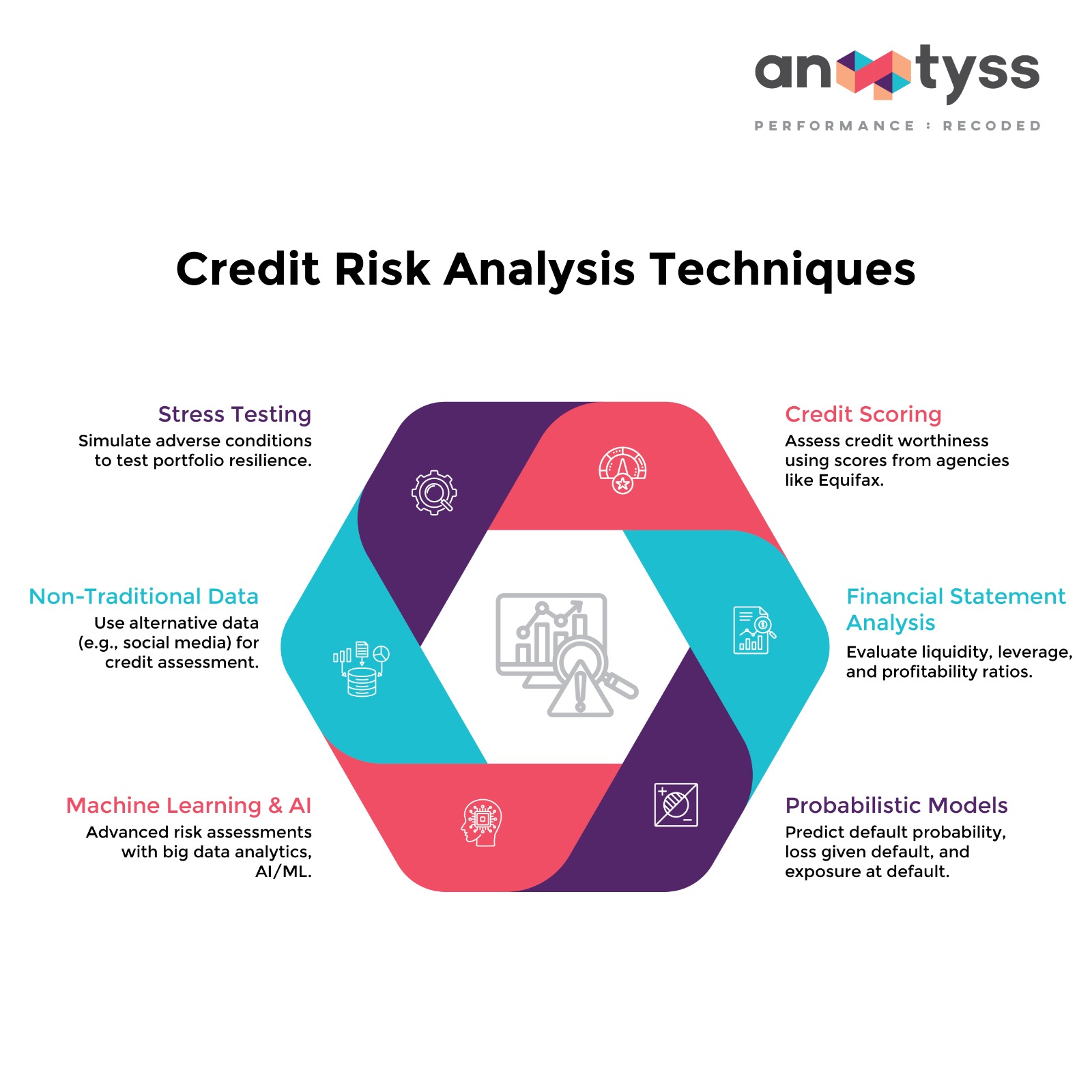
Credit Risk Analysis Techniques in Banks and Financial Institutions 

Credit risk analysis techniques are the quantitative tools banks use to evaluate a borrower’s ability to repay a loan and determine the likelihood of default. In the current economic landscape of late 2025, with businesses and consumers adapting to a period of sustained higher interest rates, the precision of these techniques is more critical than ever.

Throughout 2024 and 2025, default rates, particularly in speculative-grade debt, have trended upwards as predicted by firms like S&P Global. As we look toward 2026, the focus sharpens on deploying robust and dynamic risk assessment frameworks to navigate this challenging environment.

This guide explores the key traditional and modern techniques for analyzing credit risk, providing a roadmap for maintaining a healthy and competitive lending portfolio today.

Traditional Credit Risk Analysis Techniques

These foundational methods have long been the bedrock of credit risk assessment, providing essential, explainable insights.

1. Credit Scoring

Credit scoring is a widely used statistical method to assess the credit risk of individual borrowers. Credit reporting agencies like Experian and Equifax provide numerical scores based on several factors:

2. Financial Statement Analysis

For corporate borrowers, banks perform a deep analysis of key financial statements. This involves evaluating key financial ratios, with a heightened focus on specific metrics in the current climate:

Modern Credit Risk Analysis Techniques

Modern techniques leverage advanced technology and data for more accurate and dynamic risk assessments, which are essential for navigating today’s volatility.

Credit Risk Analysis Techniques

3. Probabilistic Models

These models use historical data and statistical analysis to forecast the likelihood of future outcomes. Key metrics include:

4. Stress Testing

Stress testing simulates extreme but plausible adverse economic conditions. In the context of 2025, these simulations have evolved to model scenarios like prolonged inflation, specific geopolitical supply chain disruptions, and sudden liquidity shocks. For a deeper analysis, explore the role and importance of stress testing.

5. Integration of Non-Traditional Data

To gain a more holistic view of a borrower’s creditworthiness, modern analysis incorporates alternative data sources beyond traditional credit reports. This can include utility payments, rental history, and online transaction data, which is especially useful for assessing individuals with limited credit histories.

6. Machine Learning and AI

AI and machine learning are now central to advanced credit risk analysis. Beyond simply processing vast amounts of data, the focus has shifted to new applications and challenges:

For more strategies on this topic, you can refer to our white paper on Credit Portfolio Management In an Era of Fluctuating Interest Rates.

Choosing the Right Technique: A Quick Comparison

A hybrid approach that combines the reliability of traditional methods with the predictive power of modern technology often yields the best results.

Frequently Asked Questions (FAQ)

Conclusion

Effective credit risk management in the current 2025 economic climate requires a dynamic and adaptive approach. While traditional techniques provide an essential foundation of stability and explainability, the integration of modern, technology-driven analysis is crucial for navigating today’s volatility. By implementing a hybrid strategy, financial institutions can make more accurate lending decisions, proactively manage their portfolios, and build a resilient framework for the challenges of 2026 and beyond.

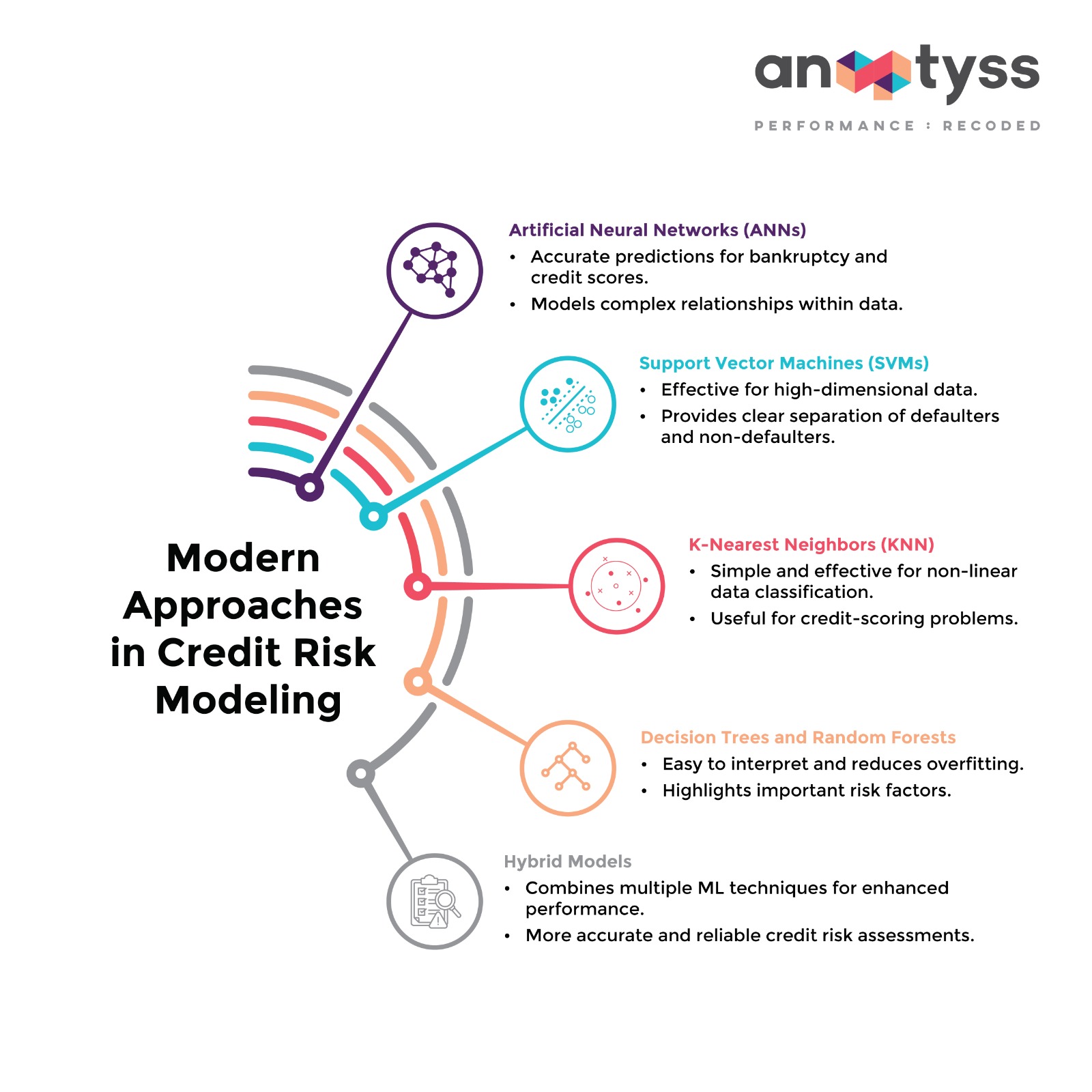
Modern Approaches in Credit Risk Modeling

Credit risk modeling is relatively a very old and essential component of financial risk management, where decisions cut across lending, investment, and regulatory practices.

In simpler terms, the history of credit risk modeling dates back to rudimentary statistical techniques.

Some of the pioneers in this area are FitzPatrick (1932) and Altman (1968), whose Z-score was one of the first quantitative models.

In this model, multivariate discriminant analysis was applied to predict bankruptcy through financial ratios.

This blog talks about modern approaches to credit risk modeling and recent advancements.

Modern AI and ML Approaches for Credit Risk Modeling

In recent years, artificial intelligence (AI) and machine learning (ML) have significantly revolutionized the process of credit risk modeling by providing accurate and flexible models.

Some of the algorithms and methodologies used in both consumer and corporate credit modeling, relying heavily on AI and ML, are as follows:

Modern Approaches in Credit Risk Modeling

1. Artificial Neural Networks (ANNs)

Artificial Neural Networks is a network of many artificial neurons that are used to model complex and non-linear relationships within the data.

Used Cases:

2. Support Vector Machines (SVMs)

Credit risk modeling using the support vector machine (SVM) methodology works well by separating the defaulters from the non-defaulters.

This method works mathematically by setting a line (or boundary) that separates the two groups using a modified version of the data.

Use Cases:

3. K-Nearest Neighbors (KNN)

KNN is a relatively simple, non-parametric technique in classification and regression; thus, it is easy to implement and interpret.

It is also equally effective in classifying non-linear distributions of datasets and is, therefore, a useful technique in most credit-scoring problems.

Used Cases:

4. Decision Trees and Random Forests

Decision trees for logic provide a graphical representation, and random forests provide many descriptions for the enhancement of prediction performance through logic representation.

On the other side, they tend to overfit the data.

Random forests solve the problem with the previous method because they aggregate the classification of many decision trees in the quest to improve accuracy and robustness.

Used Cases

5. Hybrid Models

These models combine multiple machine learning techniques to enhance performance.

For instance, using genetic algorithms in the feature selection and, at the same time, tuning the parameters in order to maximize the accuracy of the support vector machines and other classifiers.

Used Cases:

Conclusion

Credit risk modeling, from classical statistical approaches to modern ones based on machine learning, has come a long way.

Modern techniques are more accurate, flexible, and scalable and have evolved into an essential tool in financial risk management. With the ever-advancing technology, credit risk modeling has become more sophisticated.

Anaptyss offers tailored solutions and expertise to build models that identify, quantify, and mitigate credit risks in line with regulatory standards.

Our expertise in financial modeling, risk management, and regulatory compliance enables practical and tailored solutions to manage credit risks and enhance financial institutions’ decision-making and operational efficiency.

How to Manage Different Types of Model Risks in Banks & Financial Institutions

Financial modeling plays a critical role in banks and financial institutions. They assist financial institutions in decision-making, risk management, and strategic planning processes.

Therefore, banks and financial institutions heavily rely on these models, from measuring credit risk and predicting economic conditions to pricing complex derivatives and ensuring regulatory compliance.

Although these financial models are powerful and beneficial, they pose inherent risks that can lead to financial and reputational damage, if not managed appropriately.

Model risk refers to the potential of losing a possible future gain from a model not developed, implemented, or used correctly. Model risks may occur due to reasons, such as feeding inaccurate data into the model, a modally inadequate structure, inappropriate assumptions during model development, or a technical problem in its implementation.

This blog presents the different types of model risks, their sources, and mitigation strategies to help financial institutions control such risks and ensure the reliability and accuracy of their models.

1. Data Risk

The risk of data, or what is known as the input risk, is the quality and integrity of the data that leads up to financial models. A model is as good as the data it relies on. Therefore, if data is not of the right quality or is inconsistent, inaccurate, or biased, it can lead to erroneous outcomes.

Explore how cognitive financial modeling with sentiment and behavioral analytics is improving data-driven modeling accuracy in complex environments.

A report by Gartner estimates that poor data quality costs organizations an average of $12.9 million annually. This underlines the financial impact of data risk.

Common Sources of Data Risk

Strategies to Mitigate Data Risk

2. Algorithmic Risk

Algorithmic risk involves errors, limitations, or incompleteness of mathematical-statistical methods forming the base of the model. Despite high-quality data, some poor algorithms can result in misleading results.

For an industry view on current modeling challenges and priorities, see our insights on top model risk management priorities in banking.

Common Sources of Algorithm Risk

The Basel Committee on Banking Supervision highlights that model assumptions, if not realistic, can lead to significant discrepancies in risk assessment, potentially causing financial losses.

Research by Deloitte indicates that overfitting is a common issue in financial models, leading to poor predictive performance. Overfitting occurs in approximately 30% of financial models due to overly complex algorithms.

Strategies to Mitigate Algorithmic Risks

3. Implementation Risk

Implementation risk or process risk becomes evident in the deployment and operational usage of the models. By nature, a well-constructed model with good-quality data can still fail.

Common Sources of Implementation Risk

A study shows that 85% of data science projects fail due to poor integration and coding errors, which underscores the importance of proper implementation and system integration.

Strategies to Mitigate Implementation Risk

Conclusion

Model risk is multilayered; hence, it has to be dealt with on a comprehensive and pre-emptive basis. It is crucial for banks and financial institutions to proactively maintain the reliability and accuracy of their financial models, which is key to decision-making, risk management, and strategic planning.

Mitigation strategies include data governance, bias correction, model validation, simplification, transparent documentation, code review, change management, and continuous monitoring.

Anaptyss offers tailored solutions and expertise for developing a robust Model Risk Management (MRM) framework that identifies, quantifies, and mitigates model risks in line with regulatory standards.

We recently helped a leading U.S. financial institution achieve 40% faster validation of third-party credit risk models using machine learning.

Our expertise in financial modeling, risk management, and regulatory compliance enables practical and tailored solutions to manage model risks and enhance financial institutions’ decision-making and operational efficiency.


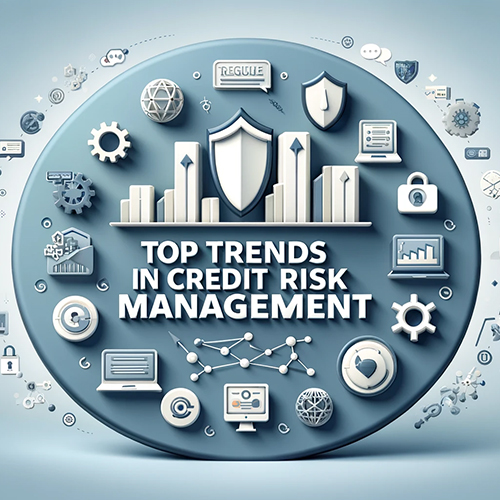
Top Trends in Credit Risk Management

Credit risk management is one of the fundamental processes and an essential function in financial institutions. It aims to identify, assess, and reduce or mitigate the potential risks of lending money to borrowers, such as individuals, businesses, or other entities.

Credit risk management involves evaluation of the likelihood of a borrower failing to repay their loans and taking appropriate actions to minimize the impact of those risks on the lending institution.

The strategies and tools for credit risk management continue to evolve with the changing financial landscape. The following are some of the top trends in credit risk management and insights into the latest developments and their implications for financial services.

1. Harnessing Advanced Data Analytics and Real-Time Data Integration

One of the most significant trends in credit risk management is the increased use of data analytics along with real-time data integration. Financial institutions are leveraging big data and machine learning approaches to improve their credit risk assessments.

Approx. 78% of financial institutions have increased their investment in data analytics to improve risk assessment and management.

Also, 63% of banks are leveraging real-time data integration to improve decision-making and mitigate credit risk.

Machine learning and real-time data enable more accurate predictions and enhance business decision-making as follows:

Explore how predictive modeling and next-best-offer analytics are helping institutions act proactively in credit decisioning.

2. Leveraging Automation with Artificial Intelligence

Automation and artificial intelligence are changing credit risk management by improving operational efficiency and reducing human errors.

AI-based tools can handle vast amounts of data and provide insights that human analysts may miss. Some of the applications are:

An estimated 47% of credit risk professionals report significant efficiency improvements due to AI and machine learning in reducing manual processes.

Approx. 58% of banks plan to boost their AI investments in the next two years to manage credit risks more effectively.

3. Fortifying Cybersecurity Measures

As more banking and financial activities adopt digital solutions, cybersecurity has become an integral part of their credit risk management mandates. Financial institutions are investing heavily in cybersecurity to protect sensitive data and maintain customer trust.

4. Eliminating Bias in Credit Risk Decisions

Removing biases from credit risk assessments is crucial to making better and more accurate decisions. Today, financial institutions are significantly working on reducing biases so that they can evaluate credit applications objectively.

About 35% of credit decisions exhibit some level of bias, prompting a focus on bias elimination through advanced algorithms and AI​.

Financial institutions using AI for credit decisions have reduced bias by 29% compared to those using traditional methods.

5. Enhancing Customer Experience with Digital Solutions

Context-relevant digital solutions can augment customer experience and streamline credit risk management process. More financial institutions are adopting these digital-first strategies to meet the evolving expectations of tech-savvy consumers.

Reportedly, 82% of customers prefer digital interactions for credit applications and inquiries.

An estimated 70% of banks report that digital transformation initiatives have improved customer experience and satisfaction.

6. Addressing Non-Financial Risks

Non-financial risks, such as cyberattacks and operational risks, have already started playing an increased role in credit risk management. Financial institutions are developing wide-ranging strategies to stay abreast of these new risks.

Approx. 55% of financial institutions are integrating non-financial risks, such as environmental and social risks, into their credit risk assessments​.

Financial institutions face an average of 85 serious cyberattacks annually, underscoring the critical need for robust cybersecurity measures​.

For practical strategies, explore how managed services and digital transformation are enabling banks to enhance resilience while controlling costs.

7. Navigating Regulatory Changes and Compliance

Financial institutions must stay abreast of the ever-changing global regulatory requirements, rules, and guidelines and calibrate their policies and efforts to address emerging risks.

Key imperatives include:

An estimated 68% of banks have implemented new compliance technologies to keep up with evolving regulations​.

Conclusion

Risks due to cyberattacks, AI-related issues, climate change, rising interest rates, evolving regulations, and geopolitical instabilities pose bigger challenges for financial institutions.

Emerging trends in credit risk management reflect a shift towards subtler and technology-driven approaches to counter these risks. For instance, advanced analytics with automation, AI, and cybersecurity will enable financial institutions to manage credit risk more effectively and enhance decision-making capabilities.

Also, get insights from our blog on Effective Risk Management Techniques to Improve Credit Portfolio Returns to align your credit strategy with portfolio performance goals.

Additionally, focusing on eliminating biases, enhancing customer experience, and staying compliant with regulatory changes are critical for maintaining market competitiveness.

DKO™
Life@Anaptyss
Careers