How AI-Powered Automation Transforms Accounts Payable Workflows

The traditional accounts payable process relies significantly on human agents to receive the purchase order, cross-referencing, invoice processing, etc. With the increasing transaction volumes, manual AP workflows can lead to issues such as overdue, duplicate payments, human errors, inefficiencies, and increased costs. AI-powered intelligent automation can help financial institutions streamline their accounts payable process, improving efficiency and accuracy and reducing the risks due to human errors and fraudulent activities.

This blog explains how AI-powered automation can transform the accounts payable workflows.

1. Automate Invoice Processing

Traditionally, AP departments rely heavily on manual processes to manage invoices. This includes manual data entries, approvals, payment schedules, etc. With AI-powered automation or intelligent automation, financial institutions can enhance this process. Here’s how:

  1. Banks and financial institutions can use AI systems combined with Optical Character Recognition (OCR) and Machine Learning (ML) algorithms to scan invoices and extract relevant data such as vendor details, line items, amounts, and due dates. It can also automatically enter this scanned and extracted data into an ERP system, eliminating the need for manual data entry and reducing the chances or likelihood of errors.
  2. Another most time-consuming task in AP is matching invoices with purchase orders and receipts. With AI-powered automation, AI can match these documents automatically. With machine learning capabilities, it can learn patterns and identify related information – gradually becoming better at identifying discrepancies and handling exceptions.
  3. Once invoices are processed, the AI-powered automation system can trigger approval workflows based on predefined rules. For instance, it can auto-approve invoices that are within a predefined threshold and send others for manual sign-offs, enhancing the process efficiency.

2. Improve Payment Processing and Cash Flow Management

AI-powered automation can help optimize payments and improve cash flow management – another key area in financial services.

  1. With an AI-powered automation system, financial institutions can analyze historical payment data and predict the best timing for payments based on factors such as cash flow, vendor terms, and discount opportunities. For instance, it can recommend early payments when discounts are available or push out payments when cash reserves are low—making it easier and more convenient to take advantage of cost-saving opportunities while maintaining a healthy cash flow.
  2. AI-based automation systems can schedule and execute or initiate payments for approved invoices without manual intervention. Such intelligent automation enables timely payments, reduces delays, and protects financial institutions from penalties or late fees.
  3. With AI-powered automation tools, financial institutions can quickly analyze past transactions to negotiate better payment terms based on historical performance with vendors. For instance, identifying vendors that consistently receive early payments and then using this data to secure more favorable terms in future negotiations.

3. Reduce Errors and Enhance Compliance

Compliance and error reduction are some of the most critical concerns in financial institutions. AI-powered automation can help improve accuracy and meet compliance requirements. Here’s how:

  1. AI systems can continuously analyze and monitor transactions to detect anomalies and errors, such as duplicate invoices. It can detect missing line items or incorrect amounts and flag such discrepancies before the payment is processed.
  2. AI-powered automation systems trained using historical and newly generated data can ensure financial transactions meet regulatory and internal audit requirements. For instance, the AI system can flag illegal transactions and halt the payment, notifying the stakeholders to take appropriate actions.
  3. AI-based automation systems can intelligently log every action in the AP process. They can create a detailed and searchable audit trail to enable financial institutions to track every transaction back to their source/origins. This capability helps ensure the organization is always audit-ready and reduces the time spent on manual reconciliations and reporting. For instance, in case of an audit, AI systems can provide transaction logs with details of personnel who approved and processed an invoice.

4. Strengthens Fraud Prevention

Fraud prevention is a top priority of financial institutions. With an AI-based automation system, financial institutions can safeguard themselves against fraudulent activities in the AP process.

  1. AI systems can continuously learn from historical data and newly generated data and identify a baseline of normal transaction behavior. This capability enables the system to detect anomalies or suspicious transactions indicative of fraudulent activity. Some examples include unusual vendor requests or abnormally large payments.
  2. AI systems can generate real-time alerts when unusual activity is detected. For instance, if a vendor submits an invoice outside their usual pattern or if there are unverified changes in bank details, the system will automatically flag the transaction and route the invoice for manual scrutiny.
  3. With an AI-powered automation system, financial institutions can precisely verify vendor information by cross-referencing vendor data with external databases before processing payments. This helps ensure only legitimate invoices are processed, thereby significantly reducing the risk of phishing attacks and vendor fraud.

Conclusion

AI-powered automation can enable significant operational upgrades in the accounts payable process. It has become a vital tool for financial institutions and other organizations, as it helps them improve efficiency, enhance accuracy, reduce fraud, and scale seamlessly with organizational growth.

How to Enhance Compliance and Risk Management with BI Reporting

Business Intelligence (BI) helps financial institutions get profound insights into their operational complexities, customer expectations and behavior, and market shifts. BI reporting enables institutions to identify actionable trends in customer or transaction data, make well-informed decisions, find automation opportunities, and improve compliance processes.

According to a survey by Deloitte, companies that have CEOs making data-driven decisions are 77% more likely to succeed.

One of the key advantages of using BI for compliance is real-time monitoring capabilities.

BI platforms are capable of continuously collecting and analyzing data from multiple sources. For instance, BI tools can analyze transactions, financial records, and employee activities to identify patterns that may indicate non-compliance.

This enables businesses to take corrective action in real-time, minimizing the risk of regulatory breaches.

However, Gartner also found that 87% of organizations have low BI and analytics maturity.

Steps to Setup and Use BI for Compliance and Proactive Risk Management

Below are some steps that banks or financial institutions can follow to set up BI for regulatory compliance:

Step 1: Define Requirements and Objectives

Begin with identifying the applicable regulatory requirements — law, regulation, statutory body — based on the financial service. For example, OFAC sanctions program, Dodd-Frank Act, FDIC, CCPA, and Sarbanes-Oxly Act (SOX) are some of the prime considerations.

To get started, create a checklist of the reports, data points, and audit processes required for compliance with each regulation.

Step 2: Select the BI Tool

There are various business intelligence tools, each with advantages and disadvantages. Thus, it is crucial to choose a BI platform that caters to the specific needs of banks and financial services and offers insights for managing risks, customer expectations, and effective decision-making.

For example, BI tools that offer pre-built templates or plugins can help banks automate the formatting of reports per the regulatory requirements.

Some examples of business intelligence tools are PowerBI, SAP Business Objects, and Kani.

Step 3: Integrate Data Sources

Data is the fuel for business intelligence. To ensure comprehensive compliance management, integrate or combine the various sources, such as transaction logs, databases, and other operational data.

BI tools come with integration features that allow the ingestion of structured and unstructured data from various sources. By combining multiple data sources into a single BI tool, banks and financial institutions can track compliance issues in real-time.

Step 4: Automate Compliance Monitoring and Reporting

Traditional compliance tracking is time-consuming and prone to errors. However, with BI tools, you can automate the compliance tracking and reporting process with real-time reports on the current status of compliance.

You can use the BI tools features to schedule or generate reports regularly. It can be daily, weekly, or monthly reports based on the compliance or regulatory requirements in the financial services industry or specific to regulations.

It can also send alerts or notifications to the teams if any deviation from required standards is detected.

Proactive Risk Management with BI

Business Intelligence tools also help classify, categorize, and prioritize risks based on their severity levels and likelihood. For this, financial institutions can leverage data mining and machine learning algorithms in the BI tool.

The following are some best practices to achieve this and avoid errors or false triggers:

  1. Invest in data governance, as data completeness and accuracy of the data will affect the tool’s effectiveness.
  2. Foster collaboration across departments with accessible and easy-to-understand BI dashboards.
  3. Talk to the BI solution provider to customize the dashboards, reports, and alerts to meet the compliance and organization’s specific requirements.
  4. Continuously monitor the effectiveness and evaluate the impact of BI on compliance performance and risk management.

Conclusion

The cost of non-compliance is profound. When it comes to regulatory compliance and risk management, BI plays a crucial role in helping financial institutions identify, assess, and mitigate risks and monitor their adherence to laws and regulations.

By leveraging BI tools, organizations can streamline compliance processes, proactively manage risks, and enhance their decision-making capabilities through real-time data insights.

How to Optimize Financial Operations with Business Process Management

In the context of financial operations, BPM aims to streamline processes such as accounting, budgeting, payroll, compliance, and reporting.

In this article, you will learn how to leverage BPM to optimize financial operations and steps to integrate BPM into your system and processes.

Key Components of BPM

While Business Process Management (BPM) is a broader discipline that covers a number of components and concepts crucial for the effective implementation and optimization of financial options, the following components make its core:

1. Process Modeling

The process includes creating visual representations of financial processes. This is needed to understand and analyze each process and flow.

2. Process Optimization

This includes finding out the inefficiencies and bottlenecks in financial operations and solutions to eliminate them.

3. Process Automation

Next comes the implementation part, where technology solutions are applied to automate repetitive and time-consuming tasks.

4. Continuous Improvement

Finally, it is important to continuously and regularly review and refine processes. This is crucial to ensure that the processes remain efficient and relevant.

Step 1. Identify Key Financial Processes

The first step in optimizing financial operations through Business Process Management (BPM) is to identify the key financial processes within your organization. By doing this, banks and financial institutions can:

For this, banks and financial institutions can:

To collect all this information and map processes in the organization, they can use popular techniques such as brainstorming sessions, workshops, and interviews with all the key stakeholders. Also,

Make sure to templatize the documentation for consistency in recording and mapping the processes.

Step 2: Analyze and Model Financial Processes

Once key financial processes are identified, the next step is to analyze and model them. This will help the financial institution or bank to learn and understand the current state, inefficiencies, and areas for improvement in the processes.

For this, they can:

Create flowcharts or Business Process Modeling Notation (BPMN) diagrams to show every step in the process – from beginning to end. This includes all inputs, outputs, decision points, and information flow.  

Identify the bottleneck, redundancies, and inefficiencies by reviewing the mapped-out or visually represented processes – use the “Five Whys” technique.

At this stage, define the key performance indicators. These will help measure the efficiency and effectiveness of financial processes before and after optimization, for example, processing time, error rates, and cost per transaction.

Step 3: Optimize Financial Processes

After a clear understanding of all the existing and current processes in the financial institution, they need to focus on optimization.

To streamline and improve these processes, financial institutions need to simplify complex processes by removing unnecessary steps and automating routine tasks.

For example, automating invoice approvals can significantly reduce processing time.

This will not only help reduce manual effort and increase accuracy but also improve compliance. To achieve this, banks or financial institutions can:  

Step 4: Ensure Continuous Monitoring and Improvement

Optimization and continuous monitoring followed by iterative refinements are essential for improving processes. This helps ensure improvements and adapt to changes.

Conclusion

Optimizing financial operations through Business Process Management is a powerful strategy for enhancing efficiency, accuracy, and compliance.

However, this requires careful analysis, modeling, and automation of financial processes. By doing this, banks and financial institutions can improve their financial operations.

Applications of Intelligent Bots in Wealth Management

The wealth management industry is transforming significantly, majorly due to the rapid evolution and adoption of artificial intelligence (AI) technologies. This evolution involves both assets and algorithms— algorithms that fuse wealth and asset management with artificial intelligence and data analytics.

Wealth management, which has historically been linked to personal relationships between individuals and expert financial advisors, is becoming more automated and data-driven. Among these, AI-powered intelligent bots are on the rise.

The global chatbot market is expected to rise beyond $994 million by the end of 2024 – [source]. By 2027, chatbots will become the primary customer service channel for roughly a quarter of organizations, according to Gartner, Inc.

This blog presents the crucial role of intelligent bots in wealth management and how financial services firms use them to identify and engage with prospects, boosting revenue and customer experience.

The Role of Intelligent Bots in Wealth Management

Intelligent bots, often powered by conversational AI/machine learning (ML) algorithms and large language models (LLM), are designed to mimic human interactions and perform tasks that typically require human intelligence.

Wealth management companies can use these bots across the client lifecycle—from initial prospecting and onboarding to ongoing engagement, service delivery, support, and renewals.

1. Identifying New Prospects

Identifying high-potential prospects has always been a key challenge in wealth and asset management.

Intelligent bots can address this challenge by leveraging data analytics and AI to analyze large datasets, identify patterns, and predict which individuals or businesses would likely need wealth management services.

These bots can scan social media, financial news, and other online platforms to gather insights into potential clients’ financial activities, life events, and investment behaviors.

PwC estimates that by 2027, the assets under the management of robo-advisers will rise to an astounding $5.9 trillion, more than twice as much as in 2022 ($2.5 trillion).

For instance, bots can monitor events such as a business sale, inheritance, or a significant market transaction, which might indicate a need for wealth management services. By automating this process, wealth managers can efficiently build a pipeline of qualified leads without the manual effort traditionally required.

2. Engaging with Prospects

Once potential prospects are identified, intelligent bots can engage them through personalized communication strategies and help qualify leads by asking relevant questions and directing the potential customer or client to the sales team for conversion.

They also help enhance the capabilities of human advisors and create more of a bionic advisor that leverages AI, data analytics, and personalized service to engage with the prospects, which helps ensure trust and psychological connection.

By utilizing advanced Natural Language Processing (NLP) and Natural Language Understanding (NLU) technologies, these bots can initiate contextually relevant conversations tailored to the individual’s financial situation and needs, schedule appointments if the team or human advisor is not available, and enable your potential clients to make a quicker and more informed decision. Also, they can work 24×7.

For example, a bot might reach out to a prospect with a message acknowledging a recent financial milestone and offering insights into investment strategies that could help manage new wealth.

This proactive engagement helps position the wealth management firm as attentive and client-focused. It also significantly increases the chances of converting the prospect into a client.

Benefits of Intelligent Bots in Prospect Engagement

The adoption of intelligent bots in wealth management provides several key benefits, including:

1. Scalability

Unlike humans, intelligent bots can handle a vast number of client queries and interactions simultaneously without experiencing fatigue or overload.

They make it possible to engage with more prospects and handle a larger number of clients and their queries faster and better than a human team could manage. They do this by asking relevant questions and directing the clients or customers to the respective sales team, ensuring no potential lead is left unattended.

2. Personalization

With the help of data analytics, intelligent bots can deliver highly personalized responses and messages that resonate with prospects on an individual level.

This potentially increases the likelihood of converting leads into sales by enabling relevant and timely interactions.

3. Efficiency

Intelligent bots can automate repetitive or routine tasks, including initial prospect outreach and follow-ups.

This capability helps free up human advisors, allowing them to focus on more complex, high-value interactions with prospects and clients.

4. Cost-Effectiveness

Implementing bots can reduce operational costs associated with customer acquisition and engagement. Since bots can operate 24/7 without breaks, they provide consistent service at a fraction of the cost of human labor. They can provide quick and timely responses to customer queries and help reduce the average handling time for each interaction.

Besides, these intelligent bots are designed to provide accurate and consistent information to the customer, which helps minimize errors or misinformation, avoiding costly mistakes or customer escalations.

Real-World Applications of Intelligent Bots

Below are some practical applications of intelligent bots in wealth management from identifying and engaging with new prospects to boosting customer trust, experience, and retention.

1. Customer Onboarding

Intelligent bots are used by banks and financial institutions, including wealth and asset management firms to automate customer onboarding processes.

What these bots do is that they:

Automations like these help streamline the onboarding process and make the entire process much faster and more efficient​.

For instance, Deutsche Bank Wealth Management has started implementing the KYC Solution, an AI-enabled system with multi-language and natural language processing capabilities, to verify customer identities. This solution examines unfavorable news and compiles the background information about present and future customers. It gathers, summarizes, and classifies data according to its pertinence and level of risk in order to create thorough profiles for these clients.

2. Financial Advisory Services

Traditionally, financial advisory services were deemed exclusive and often involved high fees. Intelligent bots have shifted this landscape which are now used to provide rule-based and two-way communication-driven financial advice. These can be called or referred to as Robo Advisors.

The robo-advisors market is expected to grow to 234.3 million customers by 2027, according to Statista.

For example, a bot might send out newsletters containing market updates or offer tailored investment advice based on the prospect’s financial goals and risk tolerance. This way, financial experts and advisors can deliver automated, algorithm-driven investment advice and top-tier personalized financial guidance at an affordable price via messaging platforms like WhatsApp, or through mobile apps, websites, etc. That too at a scale, enabling them to focus on more strategic aspects of investment and strategies for enhancing client satisfaction and retention​.

3. Fraud Prevention and Risk Management

Intelligent bots are equipped with predictive analytics and anomaly detection algorithms to prevent and mitigate fraud risk.

Since these bots can work 24×7, they can help continuously analyze client data to identify unusual patterns, user behavior, location data, transaction patterns, etc., indicative of any potentially fraudulent activities. They also can learn from historical data and real-time data and adapt to the evolving tactics used by threat actors or cyber criminals.

This way, wealth and asset management firms can protect customers and themselves from potential risks.

Conclusion

Intelligent bots are revolutionizing the way wealth management firms identify and engage with new prospects. They help automate data analysis, personalize client interactions, and provide scalable solutions to improve customer acquisition and retention. With the rapid evolution of emerging technologies, such as AI, the role of bots in wealth and asset management is likely to expand.

How Process Mining Improves Financial Operations: Benefits and Use Cases

The banking and financial services industry is one of the most regulated and competitive industries, where compliance failures can result in heavy fines, leading to reputational and financial damages. Add to this the growing expectations of customers who want a seamless, personalized, and secure digital experience, and the challenges become even more pronounced.

Due to the nature of the business, which is operations and process-heavy, banks and financial institutions have to deal with high volumes of customer queries, compliance requirements, steep fines, and long processing times.

Additionally, financial institutions need to innovate continuously to keep pace with evolving customer expectations and market shifts.

According to a report titled “The State of Connected Customer,” 84% of customers think that how a company treats them is just as important as what it sells. However, many businesses are unable to meet customer expectations.

This is where process mining helps financial institutions gain process visibility and optimize existing workflows and processes with automation.

What is Process Mining?

Process Mining is a non-intrusive methodology and a data-driven approach where financial institutions analyze the data trails of daily business activities, key workflows, business operations, and systems to create a visual model or a living image of the business processes that the organization runs on.

Process mining works without disrupting current operations, systems, or processes.

Unlike traditional process mapping, which relies on manual observations and documentation, process mining uses real-time data. This becomes particularly important for financial services and operations where accuracy, transparency, and compliance are crucial.

How Does Process Mining Enhance Financial Operations?

The process mining approach includes data collection from financial systems like Enterprise Resource Planning (ERP), Customer Relationship Management (CRM), and other databases, such as transactional data. The data helps reconstruct process flows, identify deviations, and highlight inefficiencies.

The result is a data-driven visualization and visibility of the actual processes. Process mining helps enhance financial operations by:

Use Cases of Process Mining

Below are some use cases that banks and other financial institutions can follow and use the process mining methodology to enhance their financial operations.

1. Customer Onboarding

Customer onboarding is lengthy and cumbersome, especially when it involves complex financial products and multiple regulatory requirements. This process can take a few days to several weeks, requiring detailed due diligence, risk assessments, and compliance checks.
However, delays may happen in such processes due to incomplete documentation, manual processes involved in the review, back-and-forth communications for clarifications, etc.

Process mining can help banks and financial institutions accelerate the onboarding process:

2. Claims Processing

Claims management is a complex and slow process that involves several steps, such as claim submission, investigation, assessment, negotiation, settlement, and disbursal. Claim processing in the United States can take a few days to several weeks. This depends upon the complexity of the claim and the efficiency of the processes and systems in the financial institution.

Most of the time, delays occur due to incomplete forms, incorrect details, time taken to collect all the required documents, such as police reports, and slow communication between the customer, insurance provider, and other parties, such as the hospital and repair facilities.

Process mining can help:

Besides process mining, there are a few other ways to manage insurance claims and reduce costs.

3. Loan Processing

In the United States, customers have to wait for substantial durations before their loan or mortgage applications get processed. In some other countries, this can take even longer — that too when all the documentation is in order.

The delays are often caused by errors in data entry by customers and employees, collection of paper documents for verification, missing documents, and the back-and-forth communications between the front and back offices.

This not only leads to delays but also impacts the customer, who may feel a disconnect and lack of transparency, leading to compliance problems and delayed loan approvals — negatively affecting lenders’ ability to compete in the evolving markets.

Process mining can help by:

4. Credit Card Issuance and Disputes

Issuing a credit card involves multiple steps from verifying the identity to the authenticity of the documents submitted. Similar to loans and mortgages, delays in credit cards can also occur due to inaccurate or missing information or documentation requiring the bank or the concerned financial institution to rework.

These delays and rework cost banks and negatively impact the turnaround time to issue a credit card. Similarly, credit card disputes, especially those involving fraud, can be time-consuming and frustrating for customers and the bank itself. In many regions, this process could take 60 or more days to resolve the dispute fully. These delays are caused by the time taken to collect evidence, an investigation involving transaction verification details, communicate with the merchant, etc.

Process mining can help streamline the credit card issuance and dispute process by:

Conclusion

Process optimization is more important than ever in the competitive financial sector today. Financial organizations leverage process mining as a strong tool to acquire insights into their operations, ensure compliance, reduce expenses, and boost customer satisfaction.

As technology advances, process mining is set to become essential in financial operations, helping to boost efficiency and drive innovation throughout the industry.

For financial institutions looking to stay ahead of the curve, now is the time to explore process mining. Whether you’re looking to optimize existing processes, ensure compliance, or gain a competitive edge, process mining offers the insights needed to transform your operations.

Top 10 Use Cases of Data Analytics in Commercial Lending

In today’s competitive financial services landscape, commercial lenders increasingly turn to data analytics to understand their customers, prevent financial fraud, and enhance their decision-making processes. The reason is the sheer volume of data generated by the financial services industry on a daily basis.

According to reports, the global banking industry generates 2.5 quintillion bytes of structured and unstructured data every day. By 2025, the volume of data generated by the banking industry is expected to reach 463 zettabytes.

This is where data analytics comes in. Driven by advancements in big data, machine learning, and artificial intelligence (AI), data analytics plays a critical role in commercial lending. It can provide actionable insights to lenders, helping them improve efficiencies, mitigate risks, and ensure compliance.

As per reports, 73% of banks currently use data analytics, and 60% of banks think that over the next five years, data analytics will be the main source of innovation in the banking sector.

In this blog, we’ll explore the top 10 use cases of data analytics in commercial lending. We will also highlight the latest trends, statistics, and best practices used in the industry.

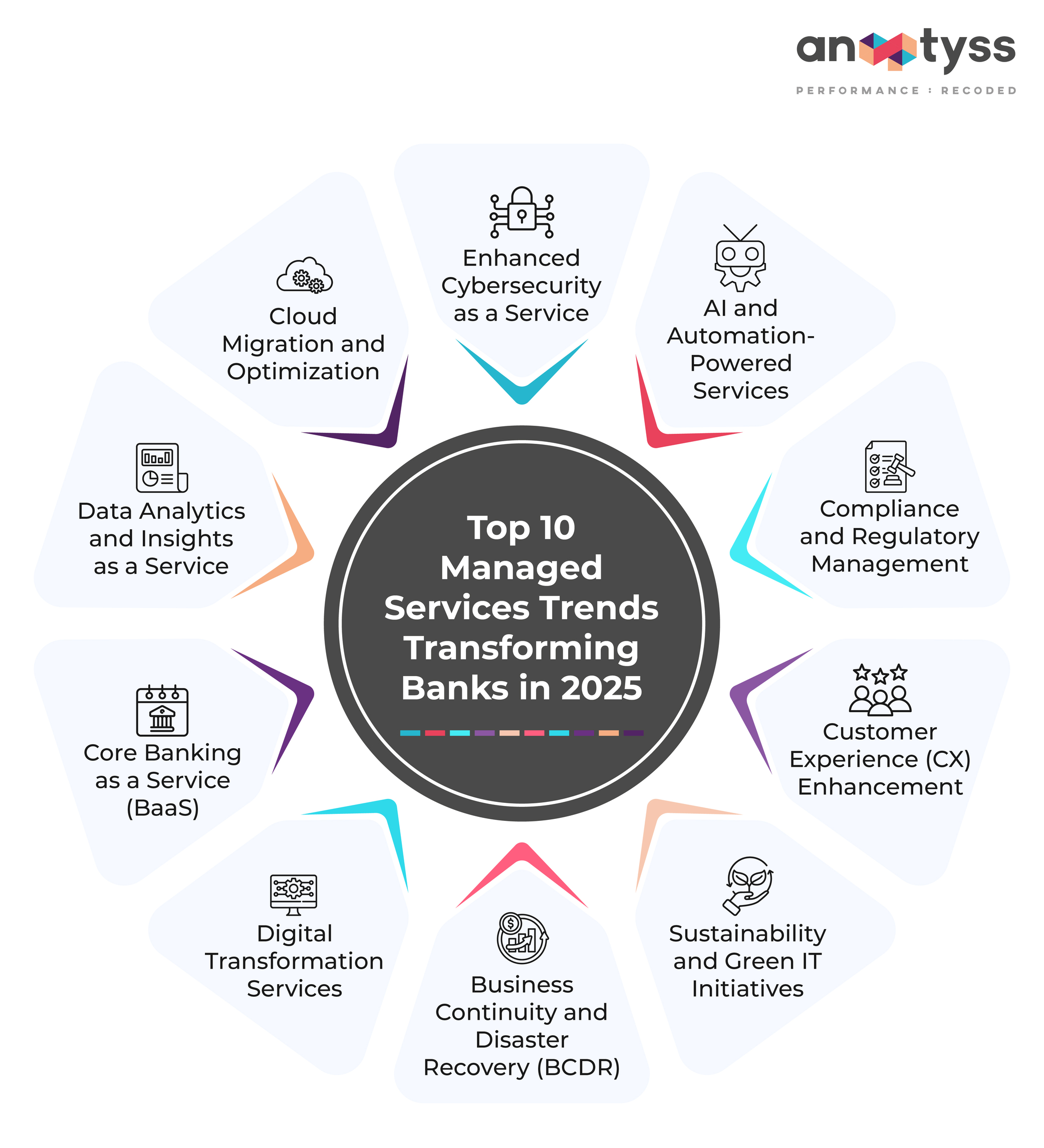
Top 10 Managed Services Trends Transforming Banks in 2025

1. Credit Risk Assessment

Credit risk assessment is the backbone of commercial lending that can significantly impact lenders’ portfolios and profitability as it can influence the collection cost and disrupt cash flows. Traditionally, credit risk models rely heavily on

However, credit risk analytics has transformed the approach. With credit risk analytics, lenders can turn historical and forecast data into actionable insights and assess risk before making lending and account management decisions.

Using technologies such as OCR and workflow automation, lenders can take or extract relevant financial data points from documents such as income tax returns, financial statements, related documents, and various other sources, such as social media, transaction histories, and market conditions to provide a snapshot view of the borrower’s financial health.

It helps them analyze and turn the historical and forecast data into actionable insights.

For instance, JP Morgan Chase uses big data to analyze customer transactions, combining this with other data sources to gain insights into creditworthiness and potential opportunities for selling financial products. The bank also employs predictive analytics to manage working capital and cash forecasting for its clients.

2. Customer Segmentation and Personalization

Customer segmentation is a process of dividing and grouping customers who exhibit similar attributes or based on shared characteristics, behavior, and preferences.

For instance, data analytics enables lenders to segment their customer base into distinct groups based on various factors to retain customers and reduce churn rates, such as

Then comes personalization where lenders can address the customer’s challenges, needs, and wants by tailoring their products, services, and experiences to individual customers – basis their unique attributes or characteristics and behavior.

Lenders can increase customer engagement, loyalty, and lifetime value by understanding the unique needs and preferences of various consumer segments or demographics.

Firms that leverage customer analytics intensively are 2.6 times more likely to have a higher ROI compared to their competitors –McKinsey.

Also, Wells Fargo has embraced big data analytics to optimize its business operations, particularly in customer segmentation and personalization.

3. Loan Pricing Optimization

Loan pricing optimization is crucial for banks and other financial institutions, which can impact their profitability and risk management. With real-time data analysis, lenders can adjust pricing dynamically based on market fluctuations and borrower risk. Lenders can also identify new market niches or high-growth areas by analyzing customer preferences, demographic changes, and market trends.

Besides, accurate loan pricing is essential for maintaining profitability while remaining competitive.

Data analytics allows lenders to consider a wide range of factors to optimize pricing strategies. These include:

4. Fraud Detection and Prevention

It is estimated that banks and the financial services industry across the globe are likely to lose more than $40 billion by 2027 due to fraud and financial crime -as per ACI Worldwide Report.

Instances of financial fraud are increasing year over year. It is a significant concern in commercial lending, with potential losses running into millions of dollars. With data analytics (fraud analytics), lenders can analyze patterns of suspicious behavior or activities and help detect and mitigate fraudulent activities in real-time.

For instance, American Express utilizes big data to enhance its fraud detection capabilities. The company’s Enhanced Authorization (EA) tool cross-references transaction data with additional information (e.g., email, IP address) to verify the identity of the transaction initiator in real-time.

It also helps predict future fraudulent behavior and enables them to protect their customer’s data and finances against fraud more effectively.

According to the ACFE’s Occupational Fraud 2022, organizations that utilize proactive data analytics as an anti-fraud control incur fraud losses that are 47% lower than organizations that do not use data analytics to combat fraud.

5. Loan Portfolio Management

Effective loan portfolio management is critical for balancing risk and return. More than 60% of financial institutions have increased their use of new types of data and advanced analytical techniques, such as machine learning, for credit portfolio management over the past two years. Furthermore, over 75% expect these trends to continue in the next two years – McKinsey.

Lenders are increasingly using predictive analytics to forecast portfolio performance under various economic scenarios. This enables them to proactively manage risk.

Data analytics also provides lenders with insights into the performance of their loan portfolios. This helps them make informed decisions on portfolio rebalancing, diversification, and risk mitigation.

6. Regulatory Compliance

Regulatory compliance in commercial lending is complex and time-consuming. In 2021, the global banking industry paid $32.3 billion in fines for regulatory violations.

Data analytics involves processing and interpreting unprocessed data to get insightful information. By doing so, lenders can identify patterns, trends, and correlations that could otherwise go unnoticed.

Data analytics simplifies this process by automating the collection, analysis, and reporting of regulatory data, ensuring that lenders meet all necessary requirements.

RegTech or Regulatory Technology, a part of FinTech, is gaining traction with analytics-driven compliance tools helping lenders to stay ahead of regulatory changes more efficiently and cost-effectively.

7. Loan Underwriting

Loan underwriting is a critical step in the lending process. Underwriting may take anywhere from a few days to weeks or even months in some cases.

However, borrowers today want quick turnaround time and secure property faster, which is possible only when the financial institutions can swiftly process the applications and respond in time.

Data analytics helps lenders evaluate a borrower’s ability to repay a loan much faster. Data analytics enhances underwriting by incorporating a broader range of data points, including alternative data sources such as cash flow analysis and market trends. Further, by deploying AI and machine learning models for advanced data analytics, lenders can automate underwriting and reduce the time and cost associated with manual underwriting processes.

8. Early Warning Systems

Early warning systems are designed to identify potential loan defaults before they occur. Data analytics plays a crucial role in these systems by continuously monitoring borrower behavior and market conditions to detect signs of distress.

Predictive analytics models have become more sophisticated, and are capable of identifying potential risks months in advance, allowing lenders to take preventive measures.

For instance, Bank of America uses predictive analytics, a subset of data analytics, to determine which of its clients are most likely to experience loan default. Similarly, HSBC uses it to enhance its fraud detection systems – source.

9. Customer Retention

Retaining valuable customers is essential for long-term success in commercial lending.

Data analytics helps lenders identify customers who are most likely to leave and understand customer needs and preferences, allowing them to offer timely and relevant products that improve customer loyalty and retention.

Churn prediction models are being used to identify at-risk customers, enabling lenders to take proactive steps to retain them.

According to a study by Bain and Company, FinServs can see a 25% boost in profit with just a 5% increase in client retention.

10. Process Streamlining and Operational Efficiency

Operational efficiency is vital for reducing costs and improving the bottom line in commercial lending. Data analytics plays a significant role in streamlining various processes and improving operational efficiency, from loan origination to servicing, by automating routine tasks and optimizing workflows.

According to a report by McKinsey, financial institutions using advanced analytics to optimize their credit risk management have seen up to a 15-20% reduction in operating expenses.

It also provides insights into the system that helps identify bottlenecks and inefficiencies in processes and enables firms to make data-driven decisions for resource allocation, cost optimizations, and process improvements.

Research conducted by the Association for Financial Professionals found that banks may save an average of 20% on compliance costs by utilizing data analytics to enhance their compliance procedures.

Conclusion

Data analytics is transforming the commercial lending industry by providing deeper insights, which improve decision-making, deliver tailored products and services, and enhancing customer experiences.

In the coming years, we can anticipate even more innovative applications of data analytics in commercial lending, driven by advancements in AI, machine learning, and big data.

For lenders, the key to staying competitive will be their ability to harness these tools effectively and adapt to the rapidly changing financial landscape.

Partner with Anaptyss to leverage cutting-edge data analytics solutions tailored to your commercial lending needs, and stay ahead in the evolving financial ecosystem.

Implementing Microservices in Financial Systems: Challenges and their Solutions

Microservices enable financial institutions to develop, deploy, and maintain reliable applications by breaking large and complex systems into individual services. Each of these services performs a specific task while communicating with each other through language-independent Application Programming Interfaces (APIs). This setup offers better maintainability and manageability.

For instance, banks or financial institutions don’t need to be concerned about dependencies on other services, such as payment services, customer management services, core banking services, etc., if they want to update just the KYC microservices.

While a microservices architecture provides numerous benefits over a traditional monolithic system, the transition to microservices is not without its challenges.

In this blog, you will learn the complexities of implementing microservices in financial systems, key challenges, and practical solutions to overcome them.

Challenges to Microservices Architecture Implementation in Financial Services

Below are some notable challenges that banks and other financial institutions may encounter while implementing the microservices architecture- and practical solutions.

1. Complexity in Resource Management and Monitoring

Microservices architecture can have hundreds and thousands of individual independent services. Managing this multitude of services manually is virtually impossible and requires sophisticated orchestration and monitoring tools for the following:

To overcome these,

As per this Gartner report, almost three-quarters (74%) of respondent organizations are currently using a microservices architecture and 23% of leaders’ organizations plan to adopt it.

2. Data Consistency Issues

Ensuring data consistency across distributed and independent services is one of the challenges. In a microservices architecture, each microservice has its own data model and manages its own data. This data also moves between microservices using protocols, such as REST.

3. Cultural and Organizational Changes

Adopting microservices often necessitates a cultural shift within the organization. Teams need to embrace new development practices, and there may be a need for upskilling to handle the complexities of microservices.

Best Practices for Implementing Microservices in Financial Systems

To successfully transition from monolithic systems to microservices, financial institutions should follow these best practices:

1. Start Small and Go Slow: Begin with Non-Critical Services

When implementing the microservices architecture in your financial institution, it is recommended to pilot the microservices approach by beginning with non-critical services. This step is crucial, as financial institutions must be careful while handling customer data and large transaction volumes.

For example, start with peripheral services such as user profile management or notifications.

They can gradually move to payment processing, fraud detection, etc., to allow teams to experiment, learn, and refine the methods without the risk of disrupting critical business operations.

Such a phased rollout can help mitigate the risk of any potential system failure that could lead to financial and reputational damages.

According to Gartner, almost half (49%) of respondent organizations using microservices currently manage fewer than 100 microservices, and 23% manage between 100 and 300. Only 3% manage over 1,000 microservices.

2. Invest in Automation

Automation is the backbone of a successful and reliable microservices architecture. It accelerates the development and deployment process and can minimize human errors that could lead to vulnerabilities or failures.

The organization can utilize continuous integration and continuous development (CI/CD) pipelines to automate the testing, integration, and deployment phases.

CI and CD are the most common DevOps practices used by 80% of organizations – as per DevOps Report 2023.

By doing this, organizations can ensure that any changes in the code are tested thoroughly before deploying the application or microservice. This approach helps reduce the chances of introducing bugs into the production environment.

A study conducted by DORA found that the change failure rate was 50% lower in organizations using CI/CD procedures than in those that did not. Furthermore, by detecting and resolving issues in real-time, CI/CD pipelines improve overall system reliability and enable quick issue resolution.

3. Embrace DevOps

DevOps helps promote collaboration between development and operations teams, which helps rapid development, testing, and deployment cycles for microservices. Fostering seamless cooperation between the traditionally siloed teams can help bridge the gap and ensure a successful implementation of microservices architecture.

It also helps in the following ways:

Adopting DevOps methods gives an organization a 2.5x greater chance than its rivals to surpass profitability, market share, and productivity targets. This underscores the competitive edge that comes with utilizing DevOps methodologies. [Source]

4. Continuous Monitoring (CM)

CM is the final stage in the DevOps pipeline and can help organizations achieve performance and scalability. It can make organizations more efficient and agile and bring focus on continuous integration and delivery.

Maintaining system health and performance is essential to microservices architecture, especially when hundreds or thousands of services are running simultaneously.

Continuous and real-time monitoring using tools that provide detailed metrics on the error rates, resource usage, service latency, etc., can help keep an eye on each service’s health and performance.

While monitoring several components spread across different systems and clouds can be challenging, it helps identify and resolve issues before they cause an outage.

According to a Forrester study, there is a 9.9% return on investment (ROI) for every dollar spent on user experience. By collecting user comments following updates, pinpointing performance bottlenecks, and enabling developers to promptly address severe defects, a continuous monitoring tool can enhance the user experience.

Conclusion

By transitioning to a microservices architecture financial institutions can improve the agility, scalability, and resilience needed to thrive in today’s fast-paced environment. However, implementing microservices architecture is fraught with challenges that can be mitigated by following best practices. Some of these include starting small, investing in automation, embracing DevOps, and ensuring continuous monitoring. By following these critical steps, financial institutions can successfully implement microservices.

How to Boost Efficiency in Financial Systems with Microservices

Microservices are applications-based services organized in an architectural pattern and work (communicate and function) based on protocols.

Microservices are gaining relevance in banking and financial services due to their modular architecture and configurability, offering better agility, customizability, and scalability over traditional monolithic systems.

Microservices can address the complexities associated with traditional systems and improve their fault tolerance and reliability.

In this blog, you will learn how microservices can help transform banking operations and the benefits they offer.

Decoding Microservices Architecture: Key to Robust and Scalable Systems

Microservices architecture breaks down applications into smaller and independent services, each responsible for a specific business function. This architecture facilitates a modular approach to system building.

Unlike traditional monolithic architectures, where the components are tightly interwoven, and different teams specialize in different processes or services, microservices allow each service to be developed, deployed, and scaled independently.

This decoupled nature of microservices architecture offers greater flexibility and resilience to financial institutions, allowing them to innovate and respond to market needs with agility.

Below are the key characteristics of microservices:

1. Independent

Each service operates independently and is responsible for a specific function. However, each service works together by communicating with each other through well-defined language-agnostic application programming interfaces (APIs) to solve complex and significant business problems.

2. Decentralized

Since microservices involve various technologies, traditional centralized governance methods are ineffective. Instead, governance and data management are decentralized to promote agility and allow others to solve similar problems.

3. Continuous Delivery

Supports faster and more frequent deployments, which allows financial institutions to introduce new features, updates, and fixes with minimal disruption. This feature helps them respond quickly to the growing market shifts.

Benefits of Microservices in Financial Systems

Microservices architecture offers several benefits in the banking and financial sector. Below are some key benefits that financial institutions can leverage to boost their operations.

1. Scalability and Flexibility

Microservices enable financial systems to scale individual components in response to demand fluctuations.

For example, a bank can scale its payment processing service independently during peak times without affecting other services, optimizing resource utilization and cost.

Capital One —a bank holding company— adopted the microservices architecture to break down the monolithic system and scale the payment processing service during holidays. Microservices helped them handle increased transaction volumes without any performance degradation.

2. Improved Efficiency and Speed

With microservices, financial institutions can accelerate their development cycles, releasing new features and bug fixes faster. The architecture supports Continuous Integration and Continuous Deployment (CI/CD), which helps boost operational speed and reduces time-to-market for new products.

For example, at Goldman Sachs, the speed of software innovation is critical. The organization adopted microservices with DevOps principles to deliver containerized applications at scale across on-premises and cloud environments. This approach significantly reduced the time required to deploy new apps and updates.

With this approach, Goldman Sachs accelerated software delivery velocity from one build every two weeks to over a thousand per day.

3. Enhanced Security and Compliance

Microservices break monolithic systems into independent and isolated services, reducing the attack surface and enhancing the system’s security.

Besides, the microservices architecture allows fortifying each service with tailored security protocols and enables precise control and audit of data flows that help in meeting regulatory compliance.

For example, HSBC implemented microservices using AWS services such as Amazon ECS (Elastic Container Service) and Amazon EKS (Elastic Kubernetes Service). These microservices provided robust and advanced security, helping HSBC protect sensitive financial data and comply with regulatory requirements, such as GDPR, PCI-DSS, etc.

4. Resilience and Fault Isolation

In a microservices architecture, the failure of one service does not necessarily cascade to others, although they communicate with each other with APIs.

This helps improve the system resilience and isolate the fault to ensure higher system uptime, which is crucial for financial services where downtime can have significant financial, reputational, and legal implications.

For example, when ING — a financial institution with over 38 million customers across 40 countries — went through an agile transformation, it realized the need for a standardized platform and adopted a more agile and scalable approach to keep pace with the rapidly changing financial services landscape.

The financial institution transitioned from monolithic architecture to microservices-based architecture utilizing Kubernetes as the orchestration platform. This microservices architecture combined with Kubernetes’ robust orchestration improved the system resilience and isolated the microservices to prevent cascading or causing widespread outages due to failure in one or more individual services.

Conclusion

Microservices architecture is changing how infrastructure services are designed, built, and operated.

Financial institutions can leverage microservices to rapidly develop, deploy, and manage applications to boost efficiency and innovation. By embracing microservices, organizations can stay competitive and responsive to market needs as financial systems continue to advance.

At Anaptyss, we specialize in helping financial institutions transition to microservices architecture. With over 8+ decades of combined expertise, Anaptyss can help you overcome the challenges of monolithic systems and tap into the potential of microservices.

Top 15 Use Cases of Intelligent Process Automation in Mortgage

Process automation in the mortgage industry has seen tremendous evolution due to advancements in machine learning. One of the developments is the conventional software tool’s ability to automate more complex processes with reduced human intervention.

For example, Intelligent Process Automation (IPA) involves systems, models, or smart bots that learn from changing circumstances and adapt to them in near real time. This ability allows IPA to automate mortgage processes with more accuracy and less supervision, increasing the efficiency and cost-effectiveness. It also supports risk management, compliance, and decision-making across the mortgage value chain.

In this blog, we have discussed the top applications of intelligent process automation in the mortgage industry and how IPA is assisting lenders modernize the origination processes.

1. Automated Document Processing

The mortgage origination process requires significant paperwork and documentation, which can be labor-intensive and error-prone when performed manually.

Financial institutions can adopt intelligent bots to extract structured and unstructured data from physical documents, PDFs, images, and handwritten documents like income statements, tax returns, and identity proofs. This is possible by utilizing contemporary AI techniques like machine learning and natural language processing, which are beyond the capabilities of traditional OCR technology.

These AI-based bots can automate the process of data extraction, validation, and classification. They can also comprehend the relationships and context of various documents and data, enhancing the reliability and accuracy of the extracted data.

For instance, intelligent document processing (IDP) ( a part of intelligent process automation) can achieve a 99% accuracy rate as per Datasemantics.

Benefits

2. Loan Origination

Conventional methods of application processing, credit checking, estimating risk, etc., can take a lot of time.

Intelligent process automation can increase loan original efficiency by automating various steps such as extracting data, compiling information from multiple documents, and assigning a score to loan applications. It can reduce or sometimes eliminate the need for manual efforts, improving the decision-making and speed for processing mortgage applications.

Benefits

3. Underwriting Automation

Underwriting is a crucial phase in the mortgage or loan origination process, which evaluates the borrower’s creditworthiness and the risk of making a loan to a specific borrower—who could be an entity, an individual, or a company. Therefore, underwriting necessitates careful data analysis.

According to a randomized experiment by PubsOnline, algorithmic underwriting outperformed the human underwriting process in auto lending, resulting in 10.2% higher loan profits and 6.8% lower default rates.

Mortgage lenders can adopt intelligent automation solutions to increase the efficacy of their underwriting processes. IPA can help them automate the extraction, aggregation, and analysis of data sourced from internal and external sources.

Benefits

4. Customer Service Automation

As per McKinsey, digital transformation practices and enhanced customer experience result in about 20-30% customer satisfaction and up to 50% profits.

Mortgage lenders can use intelligent chatbots and virtual assistants with generative or conversational AI capabilities to serve multiple purposes. For example, they can engage with customers, respond to questions, provide updates, and aid clients with the mortgage application process.

These intelligent bots can also provide advice, gather comments, address client concerns, respond to frequently asked questions, and more. This makes it possible for lenders to respond to consumer inquiries and service requests in a timely, transparent, and personalized manner, making customers happy and satisfied – one of the most crucial ways to stay competitive in the mortgage market.

Benefits

5. Fraud Detection and Prevention

For mortgage lenders, one of the biggest issues and difficulties is detecting and preventing fraud, leading to significant financial losses.

In the US, mortgage fraud is a critical issue. In 2019, one out of every 123 mortgage applications had indications of fraud.

In 2023, there were 34.6% more monthly fraud attempts in the home financing sector, according to a recent report released by LexisNexis.

IPA can assist lenders in identifying fraud and managing them using AI, machine learning, and predictive analytics.

When necessary, intelligent bots can help them monitor transactions and activities in real time, spot suspicious activity, and flag possible fraud for manual or automated intervention.

Benefits

6. Mortgage Servicing

Maintaining good customer relations requires managing mortgage accounts, collecting payments , and corresponding with customers. Manual servicing of mortgage accounts consumes significant time and has chances of errors, as human agents need to deal with multiple documents, calls, emails, tracking customers, interactions, etc. Such errors can lead to financial losses and regulatory issues.

Intelligent process automation can help expedite these procedures—including account changes, customer notifications, and payment processing—while reducing the possibilities of error.

Benefits

7. Financial Reporting

Financial reporting is crucial to monitor the organization’s performance and meet the various internal/external audits and compliance requirements. According to a survey by FannieMae—30% of lenders have deployed or are trial users of AI/ML, an increase from 27% in 2018.

IPA can extract the data automatically from systems and relevant documents to help mortgage lenders aggregate financial data from multiple sources, analyze it, and generate comprehensive reports in designated or desired formats. It can also automatically send these reports to all the stakeholders intelligently based on the content.

Benefits

8. Loan Closing Process

Bank and mortgage lenders may get substantial closing requests, which could burden their resources, as loan closure involves multiple steps such as document signing, fund disbursement, compliance checks, and final approvals.

The complexity of these tasks often results in delays, especially when borrowers fail to comply with documentation requirements.

With Intelligent Process Automation (IPA), lenders can streamline the closing process by automating document generation, electronic signatures, and disbursement procedures.

Benefits

9. Portfolio Management

Managing a portfolio of mortgage loans requires continuous monitoring and adjustment to maximize returns. The sheer volume of data, manual processes, and delayed insights with traditional automation systems are some key challenges.

IPA utilized emerging technologies to automate data collection, real-time analysis, monitoring of loan performance, forecasting trends, reporting, and optimizing portfolio strategies.

Benefits

10. Loan Servicing Transfers

Transferring loan servicing rights can be complex which involves the transfer of servicing rights from one entity to another. This process requires meticulous attention to detail and handling customers’ sensitive data while meeting regulatory requirements and maintaining customer trust and satisfaction.

Traditional methods are prone to errors and inefficiencies that lenders can overcome with intelligent process automation. By combining AI, ML, and RPA, lenders can automate the loan servicing and loan transfer processes with secure data migration and regulatory compliance.

Benefits

11. Property Valuation

Accurate property valuation is essential for lenders to calculate loan amounts and perform risk assessments. Conventional approaches rely on processes that require qualified appraisers to perform in-depth studies with scant data and insights. These processes are vulnerable to the appraiser’s judgment, which may result in inconsistencies and wrong valuations.

With the aid of AI and ML algorithms, IPA assists in automating the process of property valuation—referred to as Automated Property valuation (APV) models. This includes market data collection and analysis, market comparisons, real-time valuation updates based on shifts in market trends, and integration of geographic information systems (GIS) to evaluate geographical factors that may influence property value. This offers precise appraisals and a more comprehensive picture of the property value.

Benefits

12. Payment Processing

Timely and accurate payment collections and processing are key to success for mortgage lenders, which helps maintain customer trust and financial stability. However, traditional systems may find it difficult to handle the complexity of a high volume of transactions, manage multiple payment methods, and maintain compliance.

This makes it difficult to process payments accurately and handle discrepancies, which frequently necessitates manual interventions that cause delays and a bad customer experience.

The automated collection, processing, and recording of mortgage payments may be done quickly, accurately, and dependably with IPA. It can instantly confirm payments, give clients updates, and process payments in real time. It can also automatically match the payments with accounts and outstanding balances, prevent fraud, keep customers informed about payment status, and provide detailed insights into payment trends and performance to lenders, which could aid strategic planning.

Benefits

13. Escrow Management

Paying insurance, property taxes, and other associated costs is part of managing escrow accounts. Manual entry errors and irregular updates in escrow accounts can cause delays in traditional escrow, resulting in disparities and increased operating expenses.

IPA can help automate the calculation, collection, and disbursement of escrow payments with automated escrow data entry and reconciliation and notifications or updates to customers regarding any changes in escrow accounts or payments.

Benefits

14. Customer Onboarding

By assisting clients every step of the way, AI-powered intelligent process automation can help optimize the customer onboarding procedure. IPA can automate the entire process easily and accurately, from gathering customer papers, extracting data, and inserting it into the business system to confirming the supplied information and first approvals.

Benefits

15. Marketing and Sales Automation

To attract and retain clients, the mortgage sector needs effective marketing and sales methods. Traditional approaches lack customizations and involve numerous manual procedures and inspections, affecting responsiveness and opportunities.

According to Million Insights, the global digital lending platform market is projected to amount to USD 15.3 billion by 2026, which indicates sizeable opportunities for digitized businesses.

IPA can help you automate numerous activities in marketing campaigns, lead creation, and client follow-up. For example, it can aid in segmenting customers based on data through scoring and prioritization and automating personalized marketing messages. This capability can support lead nurturing, freeing teams to focus on high-value interactions and strategic planning.

Benefits

Conclusion

Intelligent process automation solutions can enhance the mortgage loan origination process and help lenders remain competitive in a market that is changing quickly. These solutions can help with digital boarding, document management, underwriting, and the calculation of real-time mortgage pricing options. They can also ensure that industry standards are met and compliance is maintained.


Improving Commercial Loan Origination Efficiency with Automation

Commercial loan origination has always been a cumbersome and time-consuming task for any financial institution. Traditional commercial lending methods, with manual tasks and paper-based workflows/underwriting, are becoming inefficient and virtually obsolete because of their slow results, lack of consistency, suitability, accuracy, and time-consuming nature, leading to unhappy customers.

However, intelligent automation of loan origination processes can empower a financial institution to better engage with the borrower and align all the teams involved in loan origination without adding overhead or extra work to relationship managers, approvers, and credit analysts.

As a result, this allows lenders to process applications at a faster pace while significantly bringing down operational costs and driving accuracy and customer satisfaction.

The blog outlines the challenges within the traditional loan origination approaches and some strategic techniques and approaches in which automation could help improve commercial loan origination efficiency.

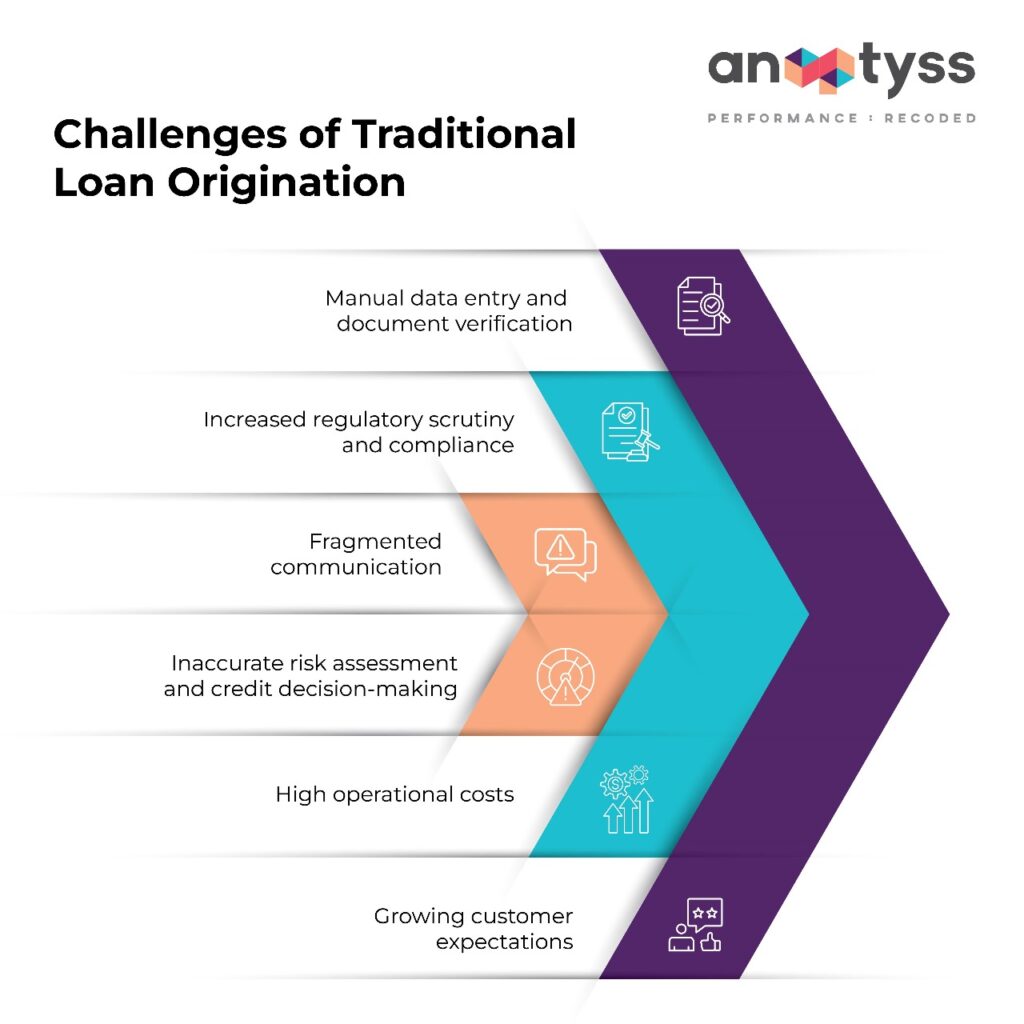
The Challenges of Traditional Loan Origination

Traditional loan origination consists of several manual steps ranging from gathering borrower information to document verification and credit checks and more. All these activities are labor intensive and thus, susceptible and subject to human error. This can lead to delays and increase operational costs.

Some of the key challenges with traditional loan origination processes include:

Challenges of Traditional Loan Origination

1. Manual Data Entry, Document Collection, and Verification

Traditional loan originators involve manual data entry and collection of paper documents for verification. Such paperwork-heavy processes are intrinsically slow and prone to errors and delays. This need to move paperwork around physically—sometimes coupled with in-person interactions, adds to further delay.

These inefficiencies can lead to compliance problems or delayed loan approvals, and adverse customer experiences that can negatively affect lenders’ ability to compete in the evolving markets.

2. Increasing Regulatory Scrutiny and Compliance Requirements

Rising regulatory scrutiny and stricter requirements on financial institutions make compliance a more challenging, complex, time-consuming, resource-intensive, and expensive task.

However, financial institutions have no option but to be continuously on their toes and constantly update and modify their internal processes and risk controls to stay abreast of regulatory requirements.

3. Fragmented Communication

The success of any financial institution depends on the customer perception and trust. Today, customers want to stay updated on everything that matters.

However, the lack of a unified or single platform between borrowers, lenders, and third parties leads to fragmented and inconsistent information exchange that slows down the loan origination process to a crawl and delivers a less-optimal customer experience.

4. Inaccurate Risk Assessment and Credit Decision-Making

The traditional methods for risk assessment are usually based on limited data and subjective judgments.
This can lead to poor risk profiling and suboptimal lending decisions. As a result, it increases the possibility of potential defaults, delinquency, and financial losses.

5. High Operational Costs

Manual or traditional paper-heavy and physical processes and methods are inefficient and come with a high operational cost which can erode financial institutions’ profitability and weaken their competitiveness in the market.

In addition, scaling up or modernizing manual or traditional systems and processes requires domain expertise, skilled staff, and resources, which can be cost-prohibitive for many banking and financial institutions.

6. Growing Customer Expectations

Today, customers or borrowers want speed, transparency, and seamlessness in digital experiences. These expectations are difficult to meet with traditional processes that could lead to dissatisfaction and lost business opportunities.

How Automation Can Transform Loan Origination

Intelligent and hyper-automation bring advanced and emerging technologies together to drive efficiency into many steps in the loan origination process using artificial intelligence, machine learning, and RPA.

It can streamline disparate systems and provide reliable and consistent data from all stages of the loan origination process and quicken the workflow.

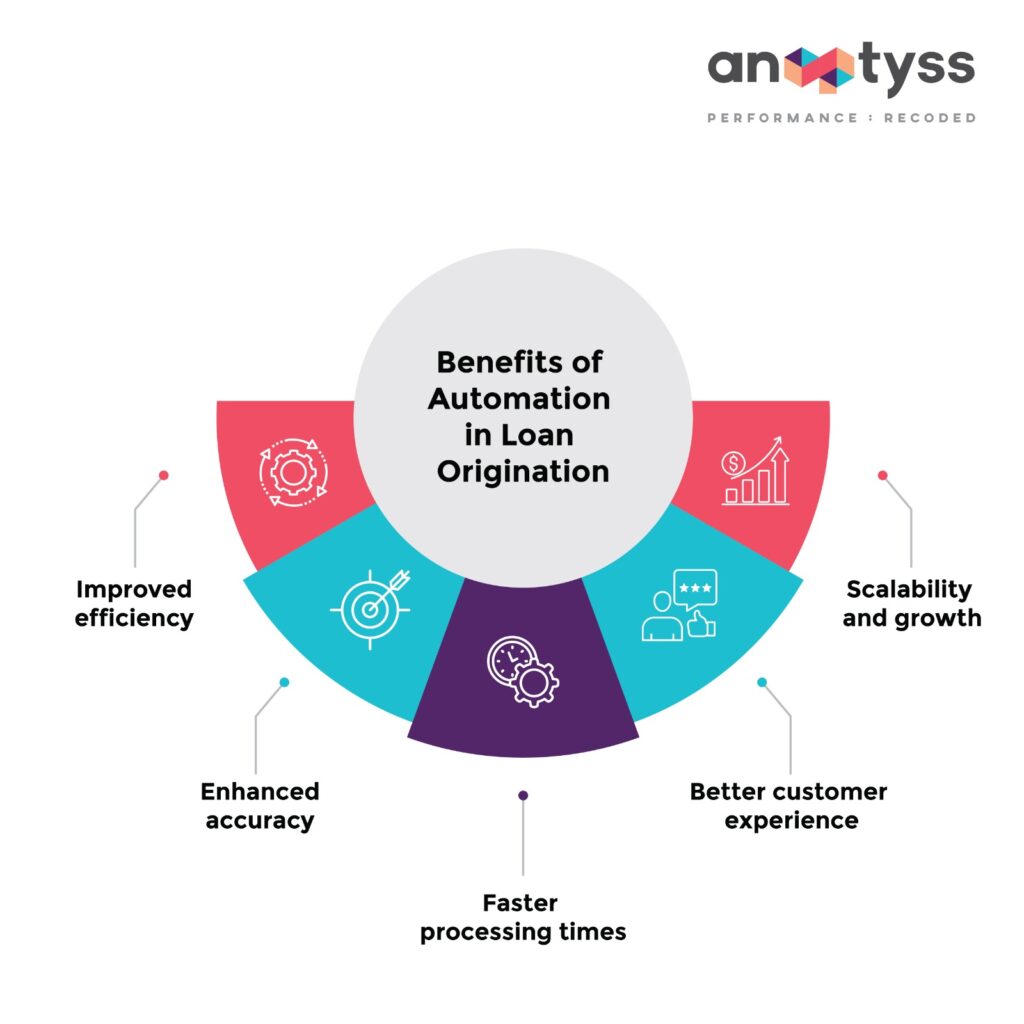
The following are some of the notable benefits seen from integrating automation into commercial loan originations:

Benefits of Automation in commercial lending and Loan Origination

1. Improves Efficiency

It automates some time-consuming processes so that the loan officers shift focus to more convoluted and strategic activities. This includes data collection from different sources in an automated manner, document verification via OCR technology, and connecting with or communicating with borrowers digitally.

For instance, the automated systems can record, capture, and verify the borrower’s information instantaneously against predefined criteria, which in turn massively reduces the times used in processing.

According to a report from McKinsey, leading banks have reduced the “time to yes” from weeks to minutes and the “time to cash” from weeks to less than 24 hours by embracing digital lending processes.

2. Improves Accuracy

Eliminating manual entry of data helps reduce the risk of errors and ensures consistent and accurate data throughout the workflow which helps improve the overall quality of the loan portfolio and reduces the likelihood of loan denials or delays due to inaccurate information. Therefore, it helps provide improved customer satisfaction and experience.

3. Faster Processing Times

Automation of routine tasks at each phase, like data entry and document verification, for instance, improves loan origination. It allows for speedy decisions and consequentially quick loan approval and disbursal.

For instance, an AI solution can auto-extract and validate data in bank statements or loan documents, reducing the time spent handling these activities.

4. Enhances Customer Experience

It creates a better borrower experience due to the streamlined and automated process. Applicants will be able to submit documents much faster and get real-time updates on their applications. Faster decision-making can provide higher levels of customer satisfaction and loyalty.

According to a PwC study, 82% of customers want seamless and faster digital experiences from financial services. Banks implementing automated loan origination systems have increased customer satisfaction by 30%, using quicker processing and real-time updated notices.

5. Scalability and Growth

Practically all of the automation solutions developed are scalable to enable lenders to process a greater volume of loans without substantially increasing or relying on resources. For any lender who wants to build their business efficiently, scalability is indispensable.

Strategies to Increase Commercial Loan Origination Efficiency with Automation

With the change in the landscape of commercial lending mostly due to the emergence of more tech-enabled competitors, banks and financial institutions are adopting automation methods in their loan origination process to drive efficiency. However, competition is not the only driver for this shift towards automation.

Below we have mentioned some advanced automation strategies to improve commercial loan origination efficiency.

1. Implement Artificial Intelligence and Machine Learning

AI and ML can significantly automate and improve different aspects and areas of the commercial loan origination process. According to McKinsey & Company, the adoption of AI in lending can reduce the cost of loan processing by up to 40% by automating tasks such as data entry and document verification​

These include:

A recent report by Celent found that 75% of lenders are currently using or planning to use AI for collection management within the next two years.

A report by Javelin Strategy & Research estimates that lenders lost $34 billion to fraud in 2022.

2. Robotic Process Automation (RPA)

RPA can automate several activities or tasks that are relevant yet repetitive and rule-based, thereby enhancing efficiency from loan origination to document processing and quality control, billing, and customer satisfaction.

When combined with the cognitive abilities of AI and Machine Learning, lenders can upgrade RPA to achieve tangible results by further streamlining workflows, increasing efficiency, and supercharging productivity.

By automating up to 40% of non-core, manual tasks, lenders can enhance operational efficiency and reduce costs​. Also, A recent Deloitte report indicates that 82% of lenders anticipate that Robotic Process Automation (RPA) will have a substantial impact on the lending industry within the next five years.

3. Optical Character Recognition (OCR)

Optical Character Recognition (OCR) technology can help speed up loan decisions by converting various types of documents, such as paper documents that have been scanned, PDF files like tax returns, or an image taken by a digital camera, into editable and searchable data, thus letting underwriters and analysts slice and dice the data any way they want.

This technology has been reported to reduce cost by 30% and increase invoice processing accuracy by up to 95% – Forrester Research.

With natural language processing and machine vision, this can be further improved to scan and extract data from loan documentation, assess borrower’s creditworthiness, and make lending decisions. A report by Forrester Research found that the global market for AI-powered document scanning is expected to reach $15 billion by 2027.

4. Integration of Low-Code Platforms

Low-code platforms provide access to the current banking system and data sources using out-of-the-box connectors to popular third-party APIs. This enables fast application development with little hand-coding needed, thus rapidly deploying loan origination applications that will help automate and streamline processes.

5. Cloud-Based Solutions

Flexibility, scalability, and accessibility—these are some of the advantages of cloud-based solutions that are essential for modern loan origination systems.

6. Enhancing User Experience with Digital Portals

Banks and NBFCs can leverage digital portals that offer an intuitive and user-friendly interface for borrowers to interact with the loan origination system. This will help them in enhancing overall experience and satisfaction for both lenders and customers.

Conclusion

Commercial loan origination integration with automation is not a technological upgrade but a strategic necessity if lenders want to win today in the marketplace.

With intelligent automation in loan origination, financial institutions can overcome the challenges in traditional methods, streamline processes, reduce errors, and enhance the borrower experience. Besides, embracing such technologies will continue to set the bedrock for any growth sustained by operational excellence.

DKO™
Life@Anaptyss
Careers