Credit Portfolio Management – Challenges and Strategies

Credit Portfolio Management (CPM) is a key function for banks and financial institutions. It consists of a critical set of tools, functions, principles, and processes within the institutions to manage the credit risk exposure of loans, bonds, and financial instruments portfolios.

A survey by McKinsey and the International Association of Credit Portfolio Managers (IACPM) shows that financial institutions have made significant progress in using new data and techniques for credit portfolio management.

It helps banks to optimize portfolio performance and risk-return profile, diversify income sources, reduce losses, and comply with regulatory requirements.

This blog discusses the challenges and strategies for banks and financial institutions to refine and enhance their credit portfolio management (CPM) capabilities.

Challenges in Credit Portfolio Management

Below is the list of challenges banks and financial institutions encounter when managing their credit portfolio.

1. Credit Worthiness Assessment

Assessment of a borrower’s creditworthiness is a significant challenge for banks and financial institutions. It requires understanding the stability, repayment capacity, and borrower’s risk profile. This is more challenging for the customer who has no credit history.

Further, forecasting borrower’s behaviors and default probabilities can be challenging due to factors, such as economic volatility, market shifts, and unexpected events, such as natural disasters or pandemics.

2. Concentration Risk

Concentration risk in a bank’s credit portfolio arises when a significant portion of the credit portfolio is invested in similar instruments, geographies, or products. It leads to financial losses due to overexposure and is a crucial factor for investors, financial institutions, and regulators to consider for ensuring a stable financial system.

Therefore, it increases the vulnerability of the credit portfolio in adverse market conditions/fluctuations and economic downturns.

3. Data Quality and Management

Financial institutions rely on a mix of traditional and alternative data sources, such as internal records like client financial and cross-product data, and external sources such as credit bureaus. The sheer volume and variety of the data make it challenging to maintain accuracy and reliability. In addition, poor data quality translates to incorrect risk assessment, creditworthiness analysis, and decision-making errors.

Other threats to data quality include data integrity, accuracy, and timeliness.

Learn how one US-based commercial lender used AI/ML-based data analytics to predict delinquency with 93% accuracy.

3. Loan defaults and Delinquencies

These are recurrent risks for credit portfolio management that may arise due to factors such as:

This may affect the bank or financial institution’s portfolio performance, introduce more credit risk, and impact their financial stability and profitability.

Defaults can also lead to direct losses. High delinquency rates may strain a bank’s capital reserves which can make it difficult for banks to meet regulatory capital requirements, such s Basel III.

4. Economic Volatility and Interest Risks

Interest rate fluctuations significantly impact a bank or financial institution’s credit portfolio performance. For instance, rising interest rates can increase borrowing costs, affect the value of fixed-income investments, and lead to higher default as it affects borrowers’ ability to meet interest payments (especially variable rate or floating rate loans). This may result in reduced yield to the institutions.

5. Technological Integration

Traditional CPM practices, while robust, often lag in adapting to the rapid changes in market conditions and customer behavior. Emerging technologies, such as Artificial Intelligence (AI), Machine Learning (ML), and big data, can help improve credit portfolio management, improve decision-making, and streamline operations.

However, incorporating these advanced technologies into traditional credit portfolio management processes poses significant challenges. These include:

6. Compliance with Regulatory Shifts

Banks and non-bank financial institutions like NBFCs operate in a highly regulated environment that constantly evolves with social, economic, and environmental changes. Keeping up with these mandates requires intensive resources, planning, robust internal controls, and systems that can be costly and time-consuming.

Strategies for Improving Credit Portfolio Management

Below are some strategies that banks and financial institutions can apply while investing in financial instruments and products, reduce credit risks, and enhance profits.

1. Diversify Portfolios

Diversifying a credit portfolio is a method of managing and reducing the level of credit risks (or concentration risk) while ensuring a potential degree of profit.

Banks and financial institutions must be careful while extending credits to a few specific customers or entities. It is important to balance different types of assets, products, sectors, industries, geographies, credit ratings, and instruments to reduce their overall risk exposure.

[Risk Diversification Infographic][RS1] 

2. Credit Risk Transfer

Credit Risk Transfer (CRT) is a process to transfer the credit risk of a loan portfolio or credit portfolio from the originator or holder (financial institution) to another party. These parties may include investors, insurance, or guarantors.  

This helps the originator reduce risk exposure and potential losses. It also helps diversify the risk profile.

2. Advanced Analytics and AI/ML

According to McKinsey, Many financial institutions have increased their adoption of data and new technologies to manage credit portfolios.

Using AI and ML for risk management, banks and financial institutions can identify potential threats before they materialize. Similarly, early warning systems powered by ML can alert institutions about at-risk accounts and enable them to take adequate actions to prevent or mitigate defaults.

Using advanced analytics with AI and ML can help analyze customer data more efficiently and empower financial institutions to create tailored credit products. This will also boost customer experience (CX), satisfaction, and loyalty and improve the portfolio yield.

For instance, Citibank is using AI to detect fraudulent transactions, protecting its customers and reducing operational costs associated with fraud management. 

Similarly, HSBC has deployed ML models for loan underwriting, improving the efficiency and accuracy of credit assessments.

Discover the top AI-driven credit risk modeling trends reshaping lending and risk assessment in financial institutions

3. Building the Right Team

To effectively integrate emerging technologies into CPM, banks and financial institutions must cultivate a skilled workforce by training existing staff in new technologies and potentially hiring and onboarding new talent with specialized expertise in AI, ML, and data analytics.

Investing in continuous learning and development preferably through eLearning or digital learning platforms, such as Fluent, can help banks and financial institutions boost workforce training and enable teams to stay updated on the latest regulatory reforms and technological advancement and stay competitive in the rapidly evolving market.  

4. Regulatory Technology (RegTech)

RegTech solutions can help streamline compliance processes, minimize cost, and improve accuracy when it comes to meeting regulatory requirements. Collaborating with fintech companies and managed service providers (MSPs) can accelerate the adoption of these technologies. Partnerships can provide access to their expertise, industry knowledge, capability, scalability, advanced tools, and platforms, facilitating seamless integration into banks’ existing systems and processes.

5. Sustainability and ESG Considerations

As a financial institution, adherence to regulatory standards and ethical considerations is paramount. As more and more stakeholders demand greater transparency and responsibility in financial practices, it is high time that banks and financial institutions incorporate environmental, social, and governance (ESG) factors into their credit portfolio management.

It can help:

Conclusion

The integration of new technologies and intelligent digital solutions into Credit Portfolio Management (CPM) represents a significant challenge and opportunity for banks and financial institutions.

As a strategic partner, Anaptyss helps banks and financial institutions adopt a strategic approach to implementing these technologies so that institutions can position themselves for success in the increasingly competitive and complex financial landscape.

For strategic insights, read our white paper on Credit Portfolio Management in an Era of Fluctuating Interest Rates for actionable guidance.


Reconciliation in Banking – Importance and New Challenges

Financial reconciliation is a fundamental process in accounting, which involves auditing a company’s books or general ledger and tallying them against the associated bank statements to ensure the records match.

The process involves comparing the cash earned or spent and ensuring that every cent associated with checks, deposits, withdrawals, and other instruments during a fiscal year is well-documented.

Financial reconciliation aims to find discrepancies in the organization’s records and detect potential frauds and thefts from the bank account.

Failing to reconcile records or letting them go unchecked can lead to financial losses and allow fraudsters to continue their exploits.

This blog shares helpful information about the reconciliation process in banking, its types, importance, and challenges. It can help banks strengthen their processes, mitigate fraud and theft, and comply with regulatory standards,

Types of Bank Reconciliation

Learn how one US-based community bank achieved transparent and real-time tracking of reconciliation tasks using Power BI in this success story.

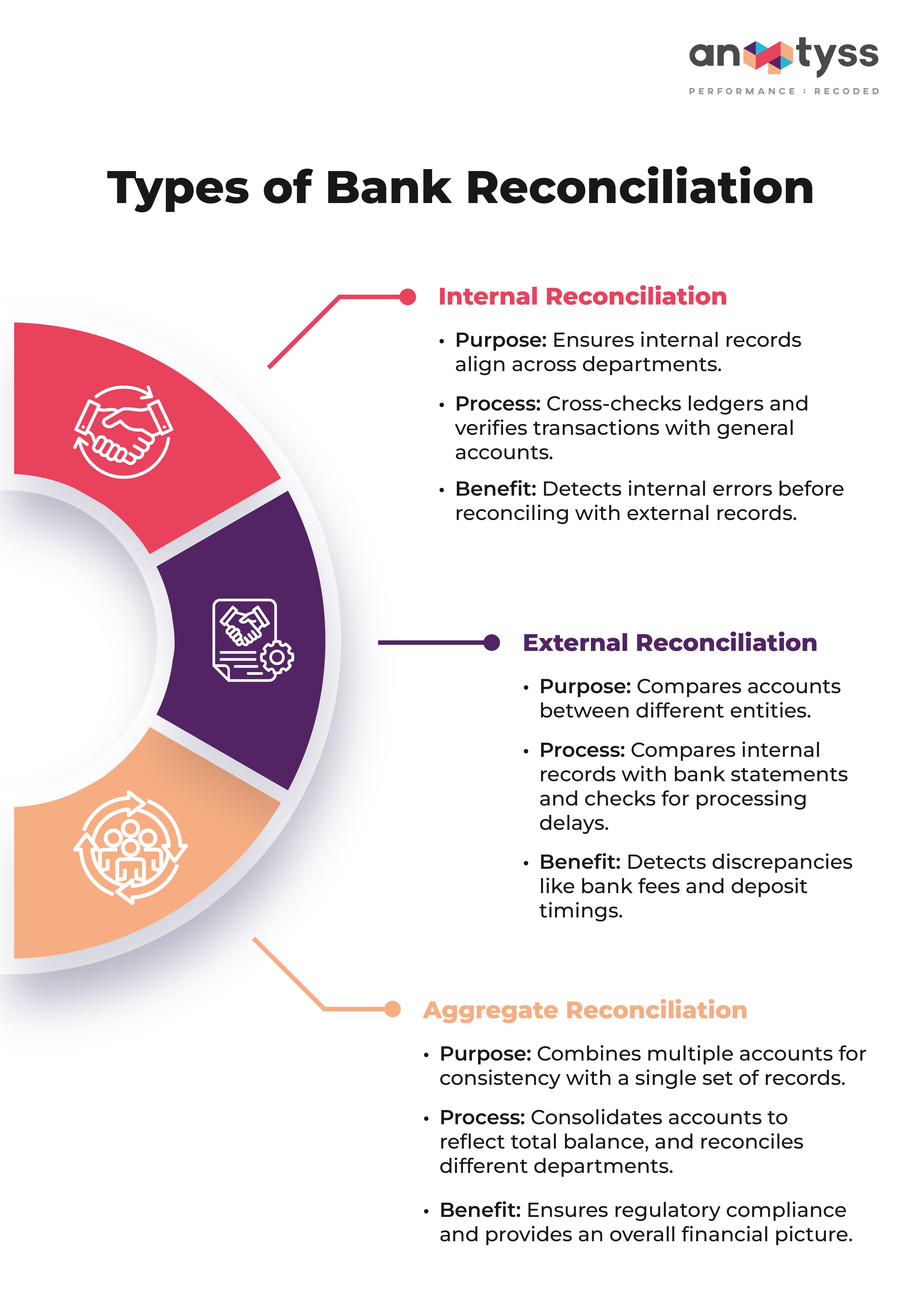
There are three types of bank reconciliation, and each plays a distinctive role in financial management and auditing. These include:

Types of Bank Reconciliation

1. Internal Reconciliation

Internal reconciliation is the process of comparing a bank’s records maintained across its departments to ensure they are accurate and reconciled with each other. The process involves:

  1. Cross-checking ledgers, such as matching transactions in sales ledger with cash receipt journal.
  2. Verifying the detailed records of individual transactions with general accounts or broader financial records.

These actions help identify and detect errors within the internal accounting system before tallying the records with external documents or entities.

2. External Reconciliation

External reconciliation compares accounts between different entities, such as the organization or business and its bank, or between two businesses. It involves

  1. Comparing the internal records with bank statements
  2. Identifying time differences, as some transactions may not reflect in the statement due to processing delays.

External reconciliation identifies discrepancies due to factors, such as bank fees, check issues, or deposit timings. It also helps ensure that cash balance records are consistent in the institutions’ accounting system with those reported in the statements.

3. Aggregate Reconciliation

This involves combining multiple accounts and verifying them against a single set of records or documents to ensure their collective accuracy. It is used to:

  1. Consolidate multiple accounts to reflect the total balance correctly
  2. Reconcile various sectors or departments to ensure their reporting accuracy and consistency.

Aggregate reconciliation helps the bank or financial institution to comply with regulatory requirements, such as SOX. It also provides a comprehensive overview of the financial status and avoids discrepancies in overall accounts.

Importance of Reconciliation in Banking

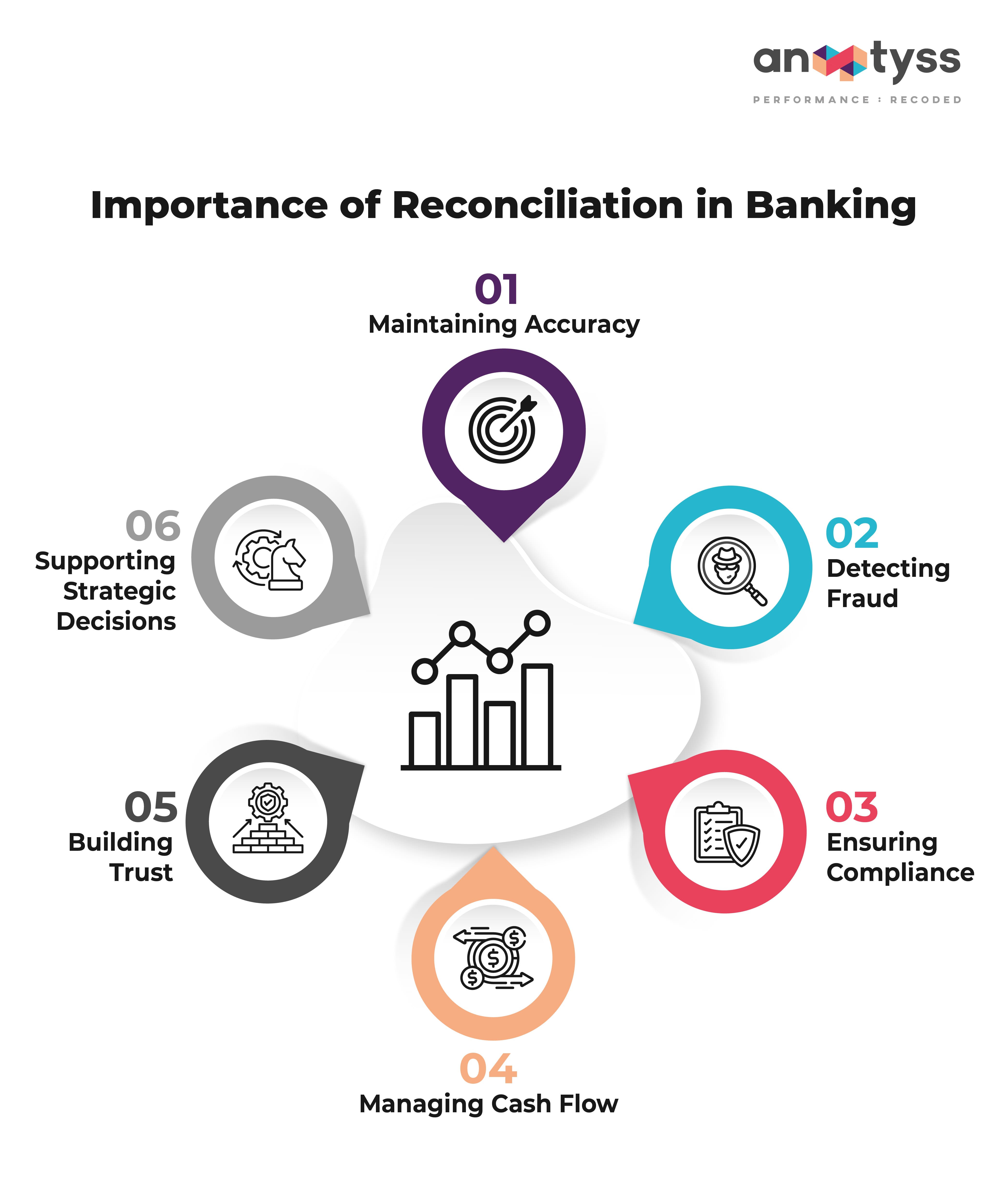
Reconciliation in banking is a critical accounting task and mechanism for the financial integrity of the bank or financial institution. This process is essential for several reasons such as:

  1. Maintaining the accuracy of financial records by detecting errors made by the bank or the business’s accounting team and taking necessary actions to adjust them in financial records to reflect accurate transaction details.
  2. Regular reconciliation helps financial institutions detect unauthorized or fraudulent transactions and prevent such instances from reoccurring by implementing risk controls and security measures.
  3. Ensure compliance and audit readiness through verified and accurate financial records.
  4. Manage cash flows, as it provides an accurate picture of available funds that banks can use to manage their liquidity effectively for making better investment decisions.
  5. Transparent and regular reconciliation helps build trust among all stakeholders and enhances reputation in the market.
  6. Accurate financial information leads to better strategic decisions related to resource allocation, investments, risk management, etc., improving operational efficiency.

Challenges in Optimizing the Reconciliation Process in Banks and Financial Institutions

When it comes to optimizing the reconciliation process, financial institutions face several challenges. These include:

1. Data Management

Managing and processing vast amounts of data pose a primary challenge for banks and financial. This data includes transactions from multiple sources, such as credit card sales, online transactions, cash payments, and other payments. The complexity is further increased by the differences in transaction details between the bank statements and books (general ledgers) that make matching transactions more difficult.

2. Timing Difference

The time difference between the transactions recorded in the internal system and their records in the bank statement leads to mismatches. This is especially true about transactions involving credit cards and checks that may not be processed immediately by the bank and are prone to delay due to processing time.

3. Manual Processes

Most financial institutions, especially small and mid-sized banks, still rely on manual processes for bank reconciliation. However, these manual processes are prone to human errors. Manual entry of data, adjustments, and verification steps can lead to inaccuracies and inconsistencies that could be costly to rectify and time-consuming.

Automation can significantly reduce these risks—discover how digital-led transformation is streamlining banking operations.

4. Inadequate Oversight

Lack or inadequate oversight, monitoring, and manual handling of reconciliation processes can increase the risk of fraud. Employees handling the reconciliation may manipulate the data or hide it to cover fraudulent activities or theft.

5. Documentation

Maintaining accurate records for audits and compliance is a huge challenge for banks and financial institutions. With such a vast amount of transaction data, ensuring a well-documented and transparent reconciliation process to meet regulatory requirements and support internal/external audits becomes challenging.

6. Technology Integration

Integrating new and emerging technologies with existing systems and manual processes can be challenging. However, it is necessary to automate and optimize the reconciliation process. A lack of technical expertise and experience can make it more challenging to implement technology without violating regulatory norms.  

Conclusion

Banks and financial institutions face numerous challenges in optimizing the bank reconciliation process, such as data management, time difference issues, manual process errors, and meeting compliance.

Anaptyss offers advanced digital solutions that can help overcome these obstacles. Some examples include automation of reconciliation tasks, improvement in accuracy, enhanced fraud detection, and regulatory compliance.

To see this in action, explore how we enabled faster and accurate real-time business reporting for a leading US bank using Power BI.


What is Model Risk Management (MRM) in Banking and Finance?

Model risk occurs due to a potential flaw or performance gap in the internal control model, which financial institutions use to measure quantitative information and make decisions. Aside from an adequate control model, its misuse for ulterior motives may also lead to incorrect and unreliable results, posing the model risk.

These models are often designed and employed by financial institutions to assess risk, predict market shifts, valuation of financial instruments, compliance, fraud detection, underwriting, forecasting, and making business decisions.  

These risks may arise from various sources, including coding errors, incorrect parameter settings, outdated or inaccurate data, incorrect implementation (applying a model beyond its scope), and relying on the outputs too heavily without adequate human oversight.

These inaccuracies can lead to financial losses, operational disruptions, flawed strategic decisions, increased systemic risks, poor decision-making, and potential violations of regulatory standards. Legal penalties and reputational damage are other consequences.     

Importance of Model Risk Management in Today’s Landscape

Model Risk Management helps financial institutions identify, measure, and monitor the risks associated with their models. The role of Model Risk Management (MRM) has become increasingly crucial due to the following reasons:

MRM includes the best practices and processes that financial institutions can use to detect, assess, manage, and mitigate various risks associated with models designed for decision-making and risk management.

A sound MRM framework helps:

Components of a Robust Model Risks Management Framework

Model Risks Management framework is a policy document that helps financial institutions implement the models effectively. It mainly consists of four components:

1. Model Risks Management Governance Framework

Define the roles and responsibilities of everyone involved in the model lifecycle, including model developers, oversight committees, validators, and users to ensure accountability. Also, establish organizational structure and MRM policies from creating and maintaining the model to implementing, validating, using, and decommissioning it.

2. Model Inventory

Maintain a comprehensive inventory of the models with key attributes, such as purpose, inputs, outputs, risks, and status to track and manage them effectively.

3. Model Validation and Testing

This step includes testing and reviewing the various models for their accuracy, reliability, and appropriateness for the intended use. It involves an assessment of the technical aspect of the model and its performance over time. These tests and reviews include statistical testing, back-testing, sensitivity analysis, and benchmarking against alternative models. Model validation and testing precede the production phase.

Learn how we helped a U.S. bank achieve 40% faster validation of third-party credit risk models using machine learning.

4. Model Monitoring and Reporting

This step includes the “when” and “what” of monitoring the models running in production. It helps manage the models and detect changes in model performance, understand the effects of external factors on the model’s accuracy, and assess when the model fails. Reporting such events is crucial to keep all stakeholders informed about the model risks, outcomes, and corrective actions to improve the model and mitigate model risks.  

New Challenges for Model Risk Management (MRM) in Financial Institutions

The MRM landscape is continuously evolving with the evolution of emerging technologies. Below are the top five challenges that can hinder financial institutions’ ability to enhance or build an effective MRM framework.

1. Complexity of AI and ML-Based Models

While AI and ML-based models can process vast amounts of data rapidly and improve decision-making, it may make it difficult to comprehend how inputs are transformed into outputs, also known as black box problems in deep (machine) learning. This can lead to complications in the validation and governance of model risks.

Explore how financial institutions are leveraging digital twins to improve model transparency, stress testing, and lifecycle management.

2. Data Quality, Management, and Privacy

The increase in the model risk management framework’s reliance on data introduces challenges related to data quality, privacy, and management. Poor data quality can impact the model’s accuracy and increase error and inefficiencies leading to an increase in model risks.

Financial institutions need to introduce advanced techniques to ensure data integrity, security, and compliance with privacy laws, such as GDPR and CCPA. 

3. Evolving Regulatory Standards

Banks and financial institutions operate in a highly regulated environment that is constantly evolving with social, economic, and environmental changes.

Therefore, keeping up with these mandates requires intensive resources, planning, robust internal controls, and systems that can be costly and time-consuming.

4. Cybersecurity Threats

With rising cybersecurity incidents and sophisticated cyberattacks and breaches, protecting the models and their data and ensuring the integrity and confidentiality of model inputs and outputs pose a major challenge for banks and financial institutions.

5. Lack of Talent and Expertise

Hiring, nurturing, and retaining skilled talent has always been challenging for banks and financial institutions due to fluctuating demands caused by market shifts.

How Can Anaptyss Help

Anaptyss offers tailored solutions and expertise for developing a robust Model Risk Management (MRM) framework that identifies, quantifies, and mitigates model risks in line with regulatory standards.

Our expertise in financial modeling, risk management, and regulatory compliance enables practical and tailored solutions to manage model risks and enhance financial institutions’ decision-making and operational efficiency.


What is Customer Due Diligence and How Does It Work?

In today’s dynamic financial landscape, robust Customer Due Diligence (CDD) is no longer merely a regulatory checkbox; it is a critical strategic imperative for banks and financial institutions. This comprehensive approach to regulatory compliance in financial services is essential for safeguarding against illicit financial activities. By effectively implementing CDD processes, organizations can not only adhere to legal requirements but also protect themselves from potential fraud and reputational damage. This is closely related to Enhanced Due Diligence (EDD), which represents a deeper level of scrutiny for higher-risk scenarios.

This blog explores vital facets of CDD, including its meaning, core requirements, types of customer due diligence, and applications in the banking and financial services industry.

What is Customer Due Diligence?

Customer Due Diligence (CDD) is a Know Your Customer (KYC) and Anti-Money Laundering (AML)/Countering Terrorism Financing (CTF) regulatory requirement for banking and financial services. CDD aims to uncover, assess, and mitigate financial crime risks associated with potential and existing customer relationships, including individuals and businesses.

CDD enhances the reputation and integrity of banks and other financial institutions by safeguarding against financial crimes such as money laundering and terrorist financing.

The Foundational Elements of CDD

Customer Due Diligence is foundational to AML/CTF efforts in terms of:

  1. Verifying the identity of prospects and customers
  2. Understanding their financial activities
  3. Assessing the risks they pose to the bank or financial institution

This process enables financial institutions to detect and prevent financial crimes, safeguard their reputation, and comply with legal and regulatory obligations. Effective CDD also allows businesses to gain a deeper understanding of customers and their financial behaviors, thereby managing risks more effectively.

The following KYC principles are key to effective CDD:

  1. Collecting and verifying customer identity information, such as name, address, date of birth, and identification numbers.
  2. Ongoing monitoring to maintain up-to-date customer information and scrutinize transactions for suspicious activities.
  3. Risk-based assessment to tailor the depth and breadth of the CDD process according to the level of risk associated with a customer, with higher-risk customers undergoing more stringent scrutiny – Enhanced Due Diligence (EDD).

Types of Customer Due Diligence (CDD) Measures

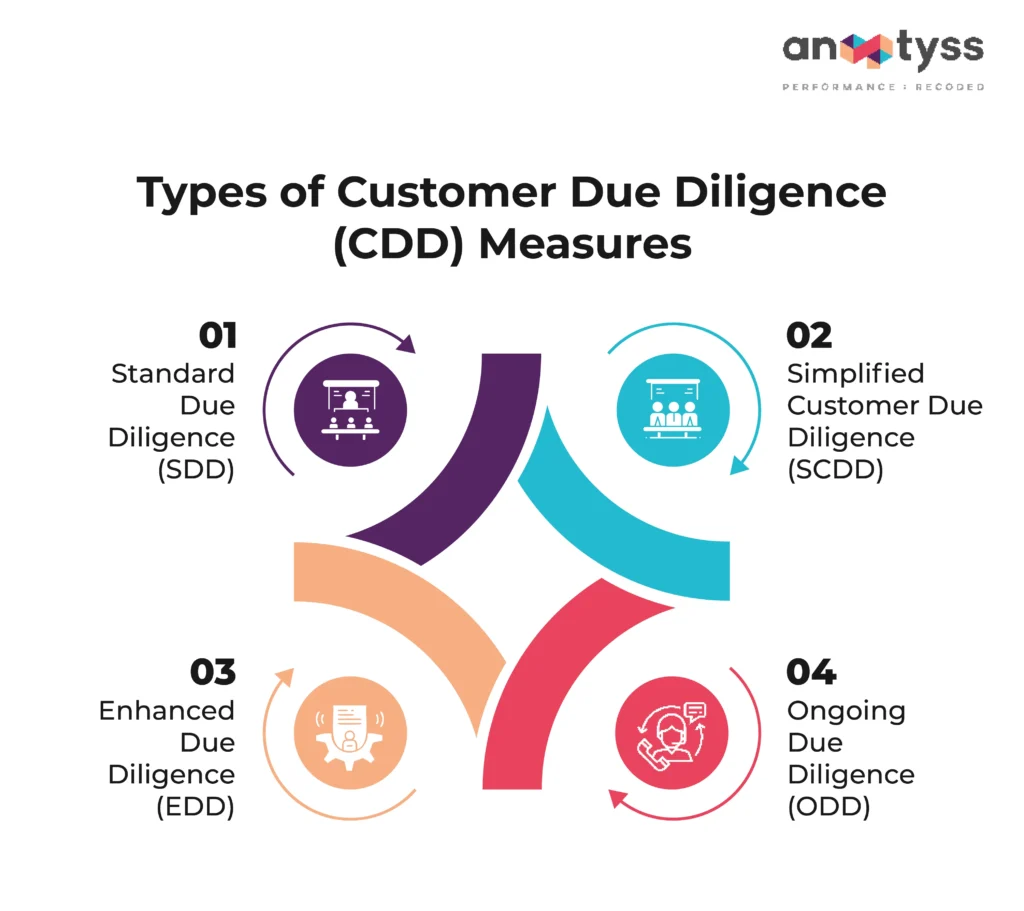
There are four primary types or levels of CDD measures that banks and financial institutions utilize, each tailored to different risk profiles. This graduated approach is a cornerstone of best practices for customer due diligence in banks.

Infographic on types of customer due diligence (CDD) measures

1. Standard Due Diligence (SDD)

SDD is a more rigorous process applied to most customers. It requires gathering, analyzing, and verifying a customer’s identity based on documents, data, and information from third-party sources, including the beneficial owner. It also involves understanding the nature of customer’s or entity’s business activities and assessing their risk profile. This level of due diligence is sufficient for customers who present a normal risk level.

2. Simplified Customer Due Diligence (SCDD)

Simplified due diligence is a less rigorous process for lower perceived risks. It involves verifying the identity of low-risk customers, without the need for more details or ongoing monitoring. SCDD allows financial institutions to verify customers’ identities and onboard them quickly and efficiently. Examples might include government bodies, listed companies, etc.

3. Enhanced Customer Due Diligence (ECDD) or Enhanced Due Diligence (EDD)

Enhanced Due Diligence (EDD) is required for high-risk customers and it includes:

EDD involves a deeper look into the customer’s risk profile through investigating the customer’s background, closer scrutiny of transactions, and ongoing monitoring.

4. Ongoing Customer Due Diligence (OCDD) or Ongoing Due Diligence (ODD)

ODD refers to a risk-based approach for managing the KYC information to protect the organization from reputational damage, sanctions, legal penalties or regulatory scrutiny, and operations. The ODD is a continuous process based on the risk events and triggers rather than a traditional scheduled periodic refresh. The aim is to identify the changes in the status, behavior, activities, or anything else relevant to the customer or entity during the financial institution’s entire relationship with them. It includes:

The Customer Due Diligence Process

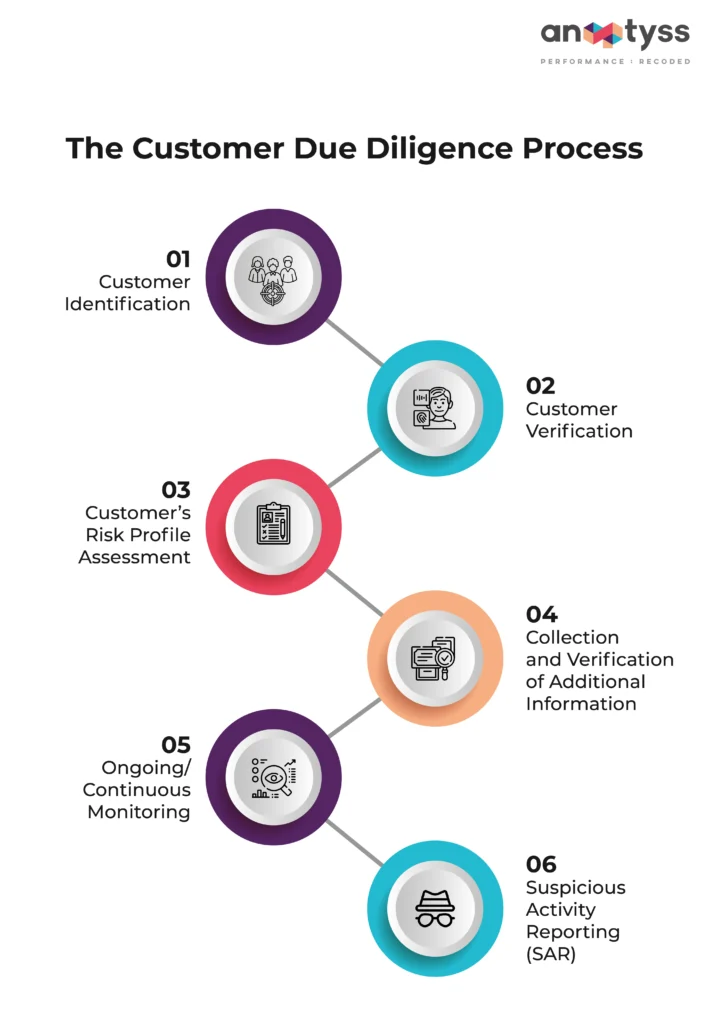
The customer due diligence process flow is a meticulous approach that financial institutions and other obligated entities follow to comply with regulatory requirements and mitigate risks. It involves the following key steps:

infographic on the customer due diligence process

1. Customer Identification

This initial step in the CDD process involves identifying the customer by collecting basic information, such as name, address, date of birth, and identification numbers to determine their risk profile. It may also involve collecting documents or information about the business and financial history of the customer.

2. Customer Verification

After collecting the information, the bank or the financial institution needs to verify this information, such as the passport or driving license, using reliable, independent sources such as private (third parties) or public records. However, for corporate clients, this process involves understanding the nature of their business, and its ownership structure, and identifying the beneficial owners.

3. Customer’s Risk Profile Assessment

After verifying customer information, banks, and financial institutions must assess their potential customers’ risk profile based on the information collected and consider other relevant factors that can help them assess the customer’s risk profile. This may include criteria such as:

Based on this comprehensive risk assessment, financial institutions can determine the appropriate level of due diligence (SDD, SCDD, EDD, or OCCD) required for a particular customer.

4. Collection and Verification of Additional Information

Based on the customer’s risk assessment, financial institutions may need to collect and verify additional information about the customer, their business activities, and financial statements from references, public records, or other financial institutions and sources. For high-risk customers, banks or financial institutions may want to further understand:

This enhanced information provides a crucial baseline for assessing the legitimacy of future transactions and activities.

5. Ongoing/Continuous Monitoring

CDD is an ongoing and continuous process, and monitoring is a crucial part of customer due diligence (CDD). After customer onboarding, banks and financial institutions need to continuously monitor their transactions to ascertain that the pattern reconciles with the institution’s knowledge of the customer, their business, and their risk profile. This includes:

6. Suspicious Activity Reporting (SAR)

While monitoring if the bank or financial institution detects any red flags or detects any illegal or suspicious activity, they must report it to the appropriate authorities according to the customer due diligence regulatory compliance requirements and laws, such as Anti-Money Laundering/Countering Financing of Terrorism Act (AML/CFT) and Bank Secrecy Act (BSA). Failing to report suspicious activities may attract legal penalties and sanctions and cause reputational damage to the institution.

Challenges in Implementing Customer Due Diligence

Banks and financial institutions frequently encounter several significant challenges while implementing effective CDD processes for regulatory compliance in financial services. These challenges necessitate robust strategies and advanced technologies to ensure effective CDD implementation.

1. Data Accuracy and Verification

Verifying the accuracy and completeness of customer information, especially in jurisdictions with less reliable public data sources or for customers with complex international backgrounds, can be exceedingly difficult. This often leads to manual data reconciliation and increased operational costs.

2. Beneficial Ownership Identification

Identifying the ultimate beneficial owners (UBOs) of complex corporate entities remains a persistent challenge, particularly when ownership structures are deliberately designed to obscure true ownership, such as through the use of shell companies, trusts, or multiple layers of corporate vehicles across different jurisdictions.

3. Lack of Expertise and Adequate Resources

Applying Enhanced Due Diligence to high-risk customers requires significant resources, technologies, and skills. The lack of technical expertise and skills can pose a significant challenge for banks and financial institutions that can lead to inefficiencies and false positives.

4. Technological Integration

Keeping pace with rapid advancements in customer due diligence technology for data collection and monitoring can be costly and requires continuous investment in system upgrades, integration of disparate systems, and adaptation to new digital tools. Legacy systems often struggle to integrate with modern RegTech solutions, creating operational bottlenecks. This highlights the significant impact of technology on customer due diligence.

5. Regulatory Compliance

Navigating the myriad of evolving and often diverging regulatory requirements across different national and international jurisdictions adds immense complexity and cost to compliance efforts. Staying updated with changes from bodies like the FATF, FinCEN, FCA, and MAS requires dedicated resources and agile compliance frameworks.

Streamline KYC and Customer Due Diligence with Anaptyss

The KYC regulatory environment is evolving quickly making the tedious manual process for KYC, due diligence, and screening irrelevant. Banks and financial institutions also struggle with hiring and onboarding the right talent and expertise. In addition, it’s expensive to recruit, skill, and reskill the workforce.

Anaptyss offers managed KYC services that help financial institutions meet compliance, improve customer experience (CX), and co-create digital solutions to streamline customer due diligence and ongoing due diligence processes, while minimizing operational costs. These include financial crime solutions, anti-money laundering and terrorist financing monitoring and investigations, and customer screening services with reduced false positives.

Fraud Risk Management: Key Challenges in Banking

Fraudulent activities are becoming more sophisticated in banking and financial services with the advent of new technologies and digital banking. As a result, financial fraud poses a significant risk to banks and their customers.

In recent years, there has been a surge in sophisticated fraud schemes, which poses unique challenges and difficulties in implementing fraud prevention measures.

In this blog, you will learn various aspects of fraud risk management (FRM), types of fraud risks, and challenges to managing fraud risks in banking and financial services.

For real‑world examples of fraud detection, explore this success story Flagged 100% Fraudulent Transactions with ML Fraud Detection System.

What is Fraud in Banking and Financial Services?

Fraud is the intentional act of deceiving others for financial gain or harming their reputation, brand image, and trust. It can take many forms, each requiring a unique approach to detection and prevention.

Some of the most prevalent frauds include:

  1. Identity theft
  2. SIM swap fraud
  3. Call/SMS forwarding
  4. New account fraud
  5. Cryptojacking
  6. Deepfake and AI-powered scams
  7. Rogue mobile banking apps
  8. Card Skimming
  9. Phishing (spear phishing)
  10. Smishing (SMS phishing)
  11. Vishing (voice phishing)
  12. Loan Fraud
  13. Romance scams, such as pig butchering
  14. Check Fraud
  15. Account Take Over (ATO)

The American Bankers Association (ABA) reports that in 2020, the banking industry faced $15.8 billion in fraud losses, with card fraud alone accounting for a significant portion.

According to the Federal Trade Commission (FTC), identity theft complaints more than doubled from 2019 to 2020, highlighting the growing concern about fraud in digital transactions.

In addition, more than 40% of banks in the US have seen an increase in fraud, with losses increasing by about 65%.

Further, fraudsters keep evolving their techniques and methodologies to exploit weaknesses in financial systems. A growing number of criminals also offer Fraud-as-a-Service (FaaS), including training materials and tutorials, to the highest bidder; the criminal in this setup conducts fraud using specialized tools and techniques.

8 Key Challenges in Fraud Risk Management

Combating fraud in banking and financial services poses unique challenges due to the inherent complexity of financial systems and modern fraudulent schemes.

1. Regulatory Compliance

Banks and financial institutions such as NBFCs operate in a highly regulated environment. These regulations constantly evolve with social, economic, and environmental changes.

Therefore, keeping up with these mandates requires intensive resources, planning, robust internal controls, and systems that can be costly and time-consuming.

2. Customer Experience

Managing fraud while ensuring a good customer experience can be challenging.

Too stringent measures for fraud detection can lead to dissatisfaction, frustration, delays, and potential loss of clients.

Similarly, lax measures for fraud risk management can increase the vulnerability of banks and financial institutions.  

3. Resource Constraints

Managing fraud risks necessitates investments in advanced fraud detection and prevention technologies. It also requires skilled personnel and continuous training, upskilling, and reskilling.

However, budget constraints, lack of expertise, and technological issues can hinder a bank’s ability to implement fraud risk management strategies and mitigate fraud risks.

Balancing the cost and benefit of fraud prevention is a strategic, long-term pursuit.    

4. Globalization and Cross-Border Transactions

Globalization has enabled businesses and given rise to cross-border transactions,  increasing the complexity and scope of fraud risk management due to varying laws, regulations, and cultural practices. Different jurisdictions and geographical variations hamper the financial institution’s ability to respond to fraud incidents in a timely and effective manner.

5. Data Privacy Regulations

Fraud detection using AI, advanced analytics, and other technologies requires significant use of new and existing data. With data privacy regulations such as GDPR and CCPA, banks need to meet regulatory compliance while ensuring they can monitor and analyze data to detect fraudulent activities.

6. Insider Threats or Internal Fraud

Internal fraud or insider threats pose a major risk to banks and financial institutions. Frauds committed by employees, contractors, or partners can be hard to detect. These threat actors often exploit vulnerabilities in internal controls, systems, and processes to conduct fraud, harming the bank’s reputation and customer trust.

7. Evolving Fraud Techniques

Criminals and threat actors use more sophisticated techniques, tools, and software to commit fraud. For example, they use artificial intelligence and machine learning to create deepfake videos for launching synthetic identity frauds, which include creating a new identity by mixing authentic and fabricated information, including pictures. These evolving typologies pose unique difficulties to fraud detection and management.

8. New Payment Technologies

New payment technologies, such as cryptocurrencies, P2P payments, mobile wallets, etc., pose a new risk for the banks and financial services sector. Fraudsters often use these payment technologies as they offer anonymity and make it difficult to track criminals or fraudsters.

Read our white paper Mitigating Financial Crime Risks in the Age of Cryptocurrency that discusses some key strategies to overcome these challenges.

Conclusion

Banks and financial institutions are prone to fraud, especially in an evolving and globalized financial services ecosystem. Geopolitical situations, new internal and external threat actors, convoluting fraud typologies, and systemic gaps exacerbate the fraud management capabilities of institutions.

At the onset, effective fraud management requires a thoughtful combination of domain expertise and specialized tools that can provide a commensurate counter-force to thwart fraud. Also, the governance framework must incorporate specific mandates to bring in the necessary checks and oversight.

For a comprehensive approach to compliance, read our e‑book A Banker’s Guide to Financial Crime Compliance.

What is Enhance Due Diligence (EDD) in Banking and Financial Services

At its core, Enhanced Due Diligence is a comprehensive set of KYC/AML procedures that banks and financial institutions follow to assess and manage the risks associated with high-risk customers.

It goes beyond the standard due diligence (SDD) checks and goes deeper into a customer’s background, financial activities, and the risk they pose to the financial institution.

Importance of Enhanced Due Diligence

In an era where financial transactions can cross borders with the click of a button, the potential for abuse has escalated exponentially.

Regulatory bodies worldwide are also tightening their grip and imposing stringent compliance requirements with hefty penalties for non-compliance.

In this context, EDD emerges as a critical line of defense. EDD is the highest level of due diligence a bank or financial institution can do to identify and mitigate the risks associated with high-risk customers or high-net-worth businesses that engage in large and complex transactions.

EDD helps banks and financial institutions to achieve the following:

When is Enhanced Due Diligence Required?

EDD is ideal for the following situations where enhanced scrutiny is necessary:

Standard Due Diligence Vs. Enhanced Due Diligence

Standard Due Diligence (SDD) and Enhanced Due Diligence (EDD) are crucial KYC and AML compliance processes in banking and financial services. These help analyze risks, such as money laundering, fraud, and terrorist financing, posed by a customer or entity.

While Standard due diligence (SDD) involves verifying the customer’s identity and assessing their basic risk profiles, EDD conducts additional scrutiny on customers posing a higher risk of financial crime.

Standard Due Diligence (SDD) Enhanced Due Diligence (EDD)
To identify and assess customer risk in general. To provide a deeper understanding of high-risk customers.
Applies to most customers with a lower risk profile. Applied to customers presenting a higher risk, such as politically exposed persons (PEPs) or those from high-risk countries.
Basic information: name, address, date of birth, etc. Detailed information: sources of wealth, the purpose of the account, financial statements, etc.
Relatively low; basic verification of provided information. High; extensive verification of information, including third-party checks.
Standard monitoring based on transaction patterns. More rigorous and frequent monitoring, with specific attention to any deviations from expected activity.
General risk assessment based on available information. Detailed risk assessment considering a wider array of factors and potential for illicit activities.
Mandatory for all customers to meet baseline compliance. Required by law for customers classified as higher risk.
Sufficient for most customers with standard risk levels. Necessary for understanding and mitigating risks associated with high-risk customers.

Components of Enhanced Due Diligence

Key components of Enhanced Due Diligence include:

1. Identifying High-Risk Customers

The first stage of the Enhanced Due Diligence (EDD) process involves the identification of high-risk customers.

A customer may be deemed high risk based on their location, profession, political exposure, or other factors that can increase the likelihood of their involvement in money laundering or terrorist financing.

The goal is to develop a comprehensive understanding of the potential risks and to implement measures to mitigate them effectively.

2. Detailed Financial Background Checks

After identifying the high-risk customers, Enhanced Due Diligence (EDD) requires some serious financial background checking. This isn’t just a quick peek at their basic info but a thorough investigation into their financial past, including details such as:

  1. Where does their money come from
  2. Who they’re in business with
  3. Legitimacy of their transactions

It requires checking public records and financial statements and matching customer details against global watchlists and sanctions lists.

The point is to catch any warning signs that might point to shady financial dealings or connections with individuals or entities they shouldn’t be involved with.

EDD is always tailored to the level of risk posed by a customer or transaction.

3. Understanding the Ultimate Beneficial Ownership (UBO)

UBO is a crucial aspect of Enhanced Due Diligence in banking and financial services. It involves identifying the individuals who own or control a customer entity, such as a company, parentship, or trust, and assessing any risk involved. This helps:

  1. Detect and prevent attempts to disguise illicit funds’ origin, avoid sanctions, or finance terrorism.
  2. Mitigate reputational, operational, legal, and credit risks associated with the individuals.

4. Adverse Media Screening

The process involves a systematic search and evaluation of negative news articles, reports, and publicly accessible information related to individuals or entities.

This type of screening is instrumental in identifying potential risks, encompassing financial and non-financial threats, which might not be apparent through conventional financial analysis or regulatory examinations.

5. Nature and Purpose of Business Relationships

This process thoroughly examines the reasons behind a bank or financial institution’s engagement with a client and their expected activities, transactions, and behavior patterns associated with that relationship.

Such understanding is critical for assessing risk, ensuring regulatory compliance, and safeguarding against financial crimes like money laundering, terrorist financing, and fraud.

6. Ongoing Monitoring

Keeping tabs on transactions is key, especially to make sure everything lines up with the bank’s or institution’s knowledge of the customer, their businesses, and how risky their dealings might be. A cornerstone of Enhanced Due Diligence (EDD) is this relentless vigilance over the transactions of those flagged as high risk.

This involves:

  1. Continuously scrutinizing transactions to detect any unusual or suspicious patterns that deviate from the customer’s normal business activities
  2. Advanced monitoring systems
  3. Use algorithms, AI, and machine learning techniques to flag transactions that may require further investigation
  4. Continuously monitoring to identify and mitigate any emerging risks

To dive deeper into building a robust AML system, read our blog on Building a Robust Transaction Monitoring System for AML Compliance.

Stages to Conduct Enhanced Due Diligence

Enhanced due diligence process typically involves the following stages:

1. Customer Identification Program (CIP)

The EDD process begins with a robust Customer Identification Program (CIP), which collects and verifies identifying information about the customer. This step is crucial for establishing the customer’s identity and assessing their risk profile.

2. Customer Due Diligence (CDD) and EDD Triggers

Following the CIP, institutions perform standard Customer Due Diligence (CDD) to gather basic information about the customer’s business and financial activities. If the CDD process uncovers any risk factors or if the customer falls into a predefined high-risk category, EDD triggers are activated, necessitating a deeper investigation.

3. Collecting and Analyzing Information

EDD involves collecting extensive information about the customer, including the origin of funds, the purpose of the account or transactions, and the customer’s business network. This information is analyzed in detail to understand the customer’s risk profile and to identify any potential issues that may require further scrutiny or reporting.

4. Risk Assessment

The culmination of the EDD process is a comprehensive risk assessment, which evaluates the information gathered to determine the level of risk associated with the customer or transaction. Based on this assessment, the financial institution decides on the appropriate course of action, which may include enhanced monitoring, reporting suspicious activities, or in some cases, terminating the business relationship.

AML/CFT Regulatory Landscape and Compliance Requirements for Enhanced Due Diligence

The landscape of anti-money laundering (AML) and counter-financing of terrorism (CFT) regulations for banks and financial institutions has evolved significantly in the past decades. International organizations and national regulatory bodies have developed detailed frameworks aimed at mitigating and preventing financial crimes.

Our white paper on Mitigating Financial Crime Risks in the Age of Cryptocurrency explores these regulatory challenges in a rapidly evolving risk landscape

Key among these regulatory frameworks are the recommendations from:

1. Financial Action Task Force (FATF)

The FATF’s recommendations have become a cornerstone for national laws worldwide, pushing for stringent due diligence, particularly for clients presenting a higher risk. These recommendations emphasize identifying and verifying customer identities, understanding the nature and purpose of business relationships, and conducting ongoing monitoring.

2. European Union’s Anti-Money Laundering Directives (AMLD)

These directives have progressively tightened EDD and other anti-money laundering (AML) requirements, including enhanced scrutiny for transactions involving high-risk countries and measures to identify beneficial ownership of legal entities.

3. United States Bank Secrecy Act (BSA) and PATRIOT Act

In the US, these laws require financial institutions to implement Customer Identification Programs (CIPs), conduct due diligence for accounts tied to foreign financial entities, and apply additional scrutiny to accounts owned by politically exposed persons (PEPs).

Compliance with these regulations is compulsory. Non-compliance can lead to severe repercussions, including hefty fines and damage to reputation. Through EDD, financial organizations are better equipped to detect and report suspicious transactions, thereby contributing to the global fight against the financial networks that support illegal activities, such as terrorism financing or money laundering. In doing so, institutions demonstrate their commitment to preventing financial crime.

Enhanced Due Diligence (EDD) Checklist

Implementing the EDD process could be intricate. An effective Enhanced Due Diligence process should cover these:

1. Identify and Classify High-Risk Customers

Start by classifying high-risk customers using the FATF’s risk-based approach and find which customers need EDD.

2. Collect Detailed Information

This includes personal data, business activities, and the source of funds.

3. Assess the Customer’s Risk Profile

Look at their business, geographic risks, funding, political exposure, and transaction patterns. Calculate their asset value and match it with what they reported.

4. Conduct In-Depth Financial Background Checks

Dive into their financial history, check them against watchlists, and search against public records.

5. Understand the Customer’s Business and Financial Relationships

Get a clear picture of their business dealings and partnerships.

6. Monitor Transactions Continuously

Keep an eye on their transaction history. This should be a continuous and ongoing process as they may transact later after the scrutiny that may stray away from norms.

7. Review Public and Private Information

Use databases, news outlets, and financial statements to identify sentiments for the customer or entity, and if the business has a bad reputation in the market that may carry its own risk.

8. Check Against Global Watchlists and Sanctions Lists

Make sure they’re not linked to any prohibited entities.

9. Document and Update Findings Regularly

Keep a detailed record of all findings found during the EDD process. Keep it updated as new information comes to light.

Challenges in Enhanced Due Diligence

Implementing and maintaining an effective EDD process poses several challenges. Some of these include:

1. Navigating a Balance Between Enhanced Due Diligence (EDD) and Customer Experience

Keeping customers satisfied during their onboarding with EDD could be challenging. EDD by nature is an invasive and time-consuming process. It requires clients to provide detailed personal and financial information. Any oversight can lead to frustration, delays, and potential loss of business.

2. Data Management and Privacy Concerns

The accuracy of the EDD process heavily relies on the quality of available data. In addition, managing a large volume of sensitive data and addressing privacy concerns related to data management, presents a significant challenge.

3. Identifying Ultimate Beneficial Owner (UBO)

Unraveling complex ownership structures is a complex but key component of the EDD process. It involves a detailed investigation to determine the individuals who ultimately own or control a customer entity.

4. Technological and Expertise Constraints

Not all institutions, especially small and medium financial institutions have the technology and expertise to efficiently conduct EDD.

5. Regulatory Variations

Financial institutions operating in global environments need to stay on top of evolving regulations across jurisdictions. However, this is a constant challenge as complying with these varying regulations adds complexity to the EDD process.

6. EDD Implementation Cost

The cost of implementing and maintaining an effective EDD process can be substantial. This includes costs associated with technology, hiring expertise, training the workforce, and hiring third-party services.

Learn How Anaptyss Can Help Streamline KYC/AML Program

Enhanced Due Diligence (EDD) in banking and financial services is a formidable tool in the fight against financial crimes, ensuring institutions not only comply with KYC/AML regulatory demands but also safeguard their operations.

Despite the challenges, with the right strategies, a risk-based approach, and technological support from partners like Anaptyss, navigating the KYC/AML landscape can be less daunting and more efficient.

Discover how a US-based bank flagged 100% of fraudulent transactions using machine learning in their fraud detection systems—one of the critical tools supporting EDD today.


Real-Time Payment Fraud Detection & AML Compliance: Expert Strategies for Banks

In the constantly changing world of banking, spot payment scams as they happen (frauds) and money laundering are issues that pose a significant challenge to banks. Technology is quickly changing and making financial dealings more straightforward. But this also opens ways for money scam artists to use elaborate methods and try to clean illegal money.

To effectively combat real-time payment fraud and ensure AML compliance, banks must stay watchful and employ emerging technologies, including advanced analytics, machine learning models, and real-time monitoring systems.

In doing so, they analyze patterns, identify suspicious activities, flag potential frauds and scam payments instantaneously, adhering to anti-money laundering rules.

Strategies to Detect Fraud in Real-Time Payment Fraud Detection

Below are some strategies that banks can employ to detect and prevent fraud in real-time payments and strengthen their AML/CFT compliance efforts.

To detect fraud in real-time payments, ensure:

1. Advanced Analytics and Machine Learning

2. Behavioral Analysis

3. Biometric Authentication

4. Device Fingerprinting

5. Transaction Monitoring System

6. Geospatial Analysis

7. Bi-Directional Communication

8. API Integrations

For AML compliance in real-time payments, ensure:

1. Customer Due Diligence (CDD)

2. Transaction Monitoring

3. Automated Watchlist Screening

4. Regulatory Reporting

5. Employee Training and Awareness

6. Regulatory Technology (RegTech)

7. Collaboration and Information Sharing

8. Audit and Continuous Improvement

Conclusion

Employing progressive generation can reduce the hazard of fraudulent payments while ensuring banks adhere to regulations regarding cash laundering. ​Continuously producing new ideas is vital because fraudsters continuously devise new schemes and regulatory necessities evolve, necessitating ongoing updates. Also, employing cognitive tools such as ALFA can help banks and financial institutions detect and prevent fraud. Powered by AI/ML technologies, the powerful tool helps monitor real-time payments, and transactions, automate watchlist screening, and KYC risk profiling.


Evolving AML Trends: How Global Sanctions and Regulations Impact Compliance Strategies

In recent years, the landscape of Anti-Money Laundering (AML) violations and fines has seen significant developments influenced by global sanctions, regulatory changes, and increased scrutiny by regulators across different jurisdictions.

In 2022, the global fines for anti-money laundering violations and other financial crimes surged more than 50%.

In 2023, the cryptocurrency exchange Binance faced a record-breaking $4.3 billion fine for AML violations.

These fines underscore the regulatory scrutiny of firms failing to conduct due diligence and KYC (Know Your Customer) checks – two critical AML components.

In 2024 and beyond, financial institutions may face challenges that will shape their AML compliance strategies.

1. Enhanced Regulatory Requirements

To avoid the failure of banks, regulators want banks to have capital that matches their actual risk appetite and ensure that banks are accountable for their own financial decisions.

Therefore, the new regulatory requirements proposed by institutions, such as the Federal Reserve, Federal Deposit Insurance Corporation (FDIC), and Office of the Comptroller of the Currency (OCC), are focused on revising the capital requirements for large banks and financial institutions with assets size of $100 billion or more.

This is to align the banking sector with international capital standards issued by the Basel Committee on Banking Supervision (BCBS) to boost:

2. Focus on Crypto Transactions

The rise of virtual assets and cryptocurrencies demands tailored AML solutions and a collaboration with RegTech solutions providers to address risks associated with crypto transactions. This includes enhanced due diligence (EDD) and real-time monitoring of crypto transactions, which are integral to AML frameworks in 2024.

For instance, the European Union’s Sixth Anti-Money Laundering Directive (6AMLD) and Markets in Crypto-Assets Regulation (MiCA) aim to increase regulatory harmonization, particularly as an oversight for cryptocurrencies and their potential exploitation for terrorism financing and sanctions evasion.

Major banks like HSBC are actively exploring blockchain technology. By leveraging Blockchain, the bank aims to enhance the speed, security, and efficiency of transactions and develop solutions for monitoring and reporting crypto transactions to address the risks associated with digital assets and comply with AML regulations.

3. Advanced Approaches to Uncover Ultimate Beneficial Owners (UBOs)

Financial institutions are adopting advanced data analytics and other emerging technologies to improve the transparency of ownership structures and prevent the exploitation of complex corporate hierarchies for money laundering.

In 2022, the Financial Action Task Force (FATF) in mandated countries to:

The United States has also introduced new Beneficial Ownership Information (BOI) reporting rules under the Corporate Transparency Act (CTA).

Beginning January 01, 2024, these rules necessitate certain types of entities to file the beneficial ownership information (BOI) report with the Financial Crimes Enforcement Network (FinCEN).

4. Balancing Compliance and Customer Experience

As customer experience remains crucial, balancing compliance and customer experience will be a key trend in AML strategies for 2024 and the coming years. Financial institutions can leverage emerging technologies, such as artificial intelligence (AI), machine learning (ML), and natural language processing (NLP), to automate and streamline compliance processes.

This will ensure seamless customer interactions for low-risk clients while focusing scrutiny on high-risk customers and meeting critical AML/CFT regulatory requirements

5. Cloud-based AML Solutions

There is a shift towards continuous, real-time risk assessment and monitoring using cloud-based AI and machine learning solutions that enable institutions to analyze, identify, and respond to evolving financial crime threats and suspicious activities more proactively.

The popularity of cloud-based AML solutions is growing due to their scalability, flexibility, and security. These solutions allow easy adaptation to changing business needs and ensure secure data storage and analysis.

6. Adapting to Digital Assets and Geopolitical Risks

Digital assets require robust KYC and transaction monitoring systems to track and report suspicious activities effectively. Geopolitical risk awareness also helps banks anticipate and manage cross-border compliance challenges related to sanctions evasion and politically exposed persons (PEPs).

Collaboration between regulators, law enforcement, banks, and financial institutions is necessary to address the new/emerging risks in digital assets and the current geopolitical space.

7. Customer Identification Program (CIP) and CDD in Broker-Dealers

Under the USA PATRIOT Act, financial institutions, including broker-dealers, must establish a CIP as part of their AML programs to verify customer identities and sources of income.

This includes:

  1. Implementing robust procedures for verifying the identity of new account holders
  2. Conducting due diligence to ensure compliance with AML regulations

Charles Schwab, a leading brokerage firm, has refined its CIP to comply with the USA PATRIOT Act.

Conclusion

The AML landscape in 2024 is characterized by evolving regulations, the integration of advanced technologies, and a focus on dynamic risk management approaches. Financial institutions must stay ahead of these trends to ensure effective compliance and risk mitigation in a rapidly changing environment.

At Anaptyss, we leverage our expertise in areas of AML compliance, ranging from case investigation to AML program audit/design and implementation.

For instance, Anaptyss has helped set up a consultative BSA/AML-focused risk mitigation program for a US-based community bank to meet the FDIC directives.


How to Build a Robust Transaction Monitoring System for AML Compliance: Guide for Bankers

The banking industry continues to build robust AML compliance systems and practices amid growing financial crime threats and volatility. In this regard, reliable and evolved transaction monitoring systems are key to enabling adequate protection for banks and other institutions against sophisticated hacking attempts, state-sponsored attacks, acts of financial terrorism, and other threats. Nonetheless, these malicious actors find a way to attack or bypass banks’ security setups for anti-money laundering and fraud prevention.

While banks face significant financial crime threats, transaction monitoring is at the core of their AML compliance obligations. Imagine building a robust system that uses automation and human expertise to flag nearly every malicious transaction while minimizing false positives.

This guide explores the need for a robust AML transaction monitoring system, key challenges, and techniques for transaction monitoring. It also outlines the role of emerging technologies and the core components for building a robust transaction monitoring system for enhanced financial crime compliance

Need for a Robust Transaction Monitoring System

Financial institutions, including banks, make efforts to maintain a positive consumer sentiment, and instilling confidence in compliant and secure services is pivotal to this need. In case of a deviation or lapse, financial institutions may face challenges like mass withdrawals, loss of customer and stakeholder trust, and other financial uncertainties due to sanctions and fines. The following needs compel banks to implement a robust transaction monitoring system.

a. Money Laundering and Terror Financing

Involvement in money laundering or terror financing, deliberate or unintentional, attracts sanctions and fines with negative consequences. FATF, OFAC, and other regulatory bodies issue red flags and guidelines to monitor and detect suspicious transactions, including transaction laundering and cross-border transactions, and curtail exploitation of the global financial system for money laundering and terror financing.

b. Fraud Prevention

Another major challenge for banks is to ensure their customers are neither victims of financial fraud nor culprits. The banking industry thrives on trust, and if customers of a bank are either involved in or are victims of financial frauds like identity theft, false insurance claims, dump schemes, etc., the bank’s credibility takes a massive hit, bringing down the customers’ morale.

c. Bribery and Corruption

Law enforcement and legal authorities track and prosecute cases of bribery and corruption using the money trail. Banks need to detect these suspicious cases in advance and be proactive. Violations can lead to significant reputational losses due to negative media and prosecution, including allegations of complicity, lapses in due diligence, etc. Banks must curtail bribery and illicit transactions to protect their reputation and customers.

3 Key Challenges with Transaction Monitoring Systems

Transaction monitoring systems (TMS) are essential for financial institutions to detect and report suspicious transactions that indicate money laundering and other financial crimes. However, implementing and maintaining these systems pose several challenges:

1. High False Positives

Every flagged transaction results in a ticket and requires intervention from Level 1 analysts who evaluate and validate whether the case is genuinely an illicit transaction. With up to 95% of false positives among the total flagged cases, banks and financial institutions bear a high cost in monitoring the AML/CFT transactions.

2. One Size Fits All Approach

The behavior and transaction patterns of customers differ from one entity to another. The need is to implement clustering algorithms to monitor the transactions based on customer segments while offering them personalized financial products and experiences. The significant size and diversity of the customer base pose a challenge to this requirement.

3. Scenario Overcrowding

Number of scenarios in any transaction monitoring system grows over time. A new list of scenarios is added to transaction monitoring systems with new banking reforms and compliance or regulatory framework updates. Overcrowded scenarios increase complexities, monitoring time, and costs.

5 Key Transaction Monitoring Techniques

Transaction monitoring system’s success depends on its ability to minimize false positives while detecting malicious transactions. While triggering alerts for every suspicious transaction is straightforward, detecting false positives is the real challenge.  

High volumes of transactions in banking systems make it necessary to build a system that reduces false positives. False alerts increase transaction monitoring costs due to human intervention needed on every ticket raised.

1. Anomaly Monitoring

Anomaly monitoring techniques track transactions by constantly comparing transaction patterns with the norm and issuing an alert when they detect a deviation. Traditional anomaly detection models utilized statistical models. However, modern anomaly detection systems, embedded with AI and machine learning capabilities, can monitor transactions more effectively on parameters such as transaction size, geography, frequency, etc.

2. Network Monitoring

Network Monitoring is a complex technique that examines transactional relationships between different entities within the financial system. It unravels connections and hidden relationships between various entities to identify potential cases of money laundering, fraud schemes, illicit fund flows, shared accounts, interlinked transactions, etc.

3. Rule-Based Monitoring

Rule-based monitoring is the oldest transaction monitoring technique and works on pre-defined rules and thresholds to trigger alerts on suspicious transactions and activities. These rules are often a part of the global transaction monitoring regulations, and banks get clear guidelines from various banking bodies to set these up. These rules use transaction patterns and other known typologies of financial crimes to monitor transactions.

4. Behavior-Based Monitoring

Behavior-based monitoring is a complex yet effective transaction monitoring technique that learns standard behavioral patterns and sets a baseline. Subsequently, it monitors deviations from the standard behavior and issues an alert when it detects an illicit transaction.

5. Adverse Media Screening

This transaction monitoring technique screens digital and print media for adverse reports on entities, including individuals, PEPs, organizations, and others. This system leverages AI to keep track of media reports and compare the sanctioned/blocked entities with its clientele to issue alerts.

Role of AI, ML, and Blockchain in Transaction Monitoring

The role of machine learning and artificial intelligence in transaction monitoring has increased manifolds. AI and ML systems enable automation at scale, improving efficiency and reducing human efforts and transaction monitoring costs.

Some examples of AI and ML in transaction monitoring process are:

To track down and monitor crypto transactions, such as Bitcoin, banks and financial institutions can leverage Blockchain technology.  With BASEL Accords recognizing crypto transactions, banks are now working to implement a robust blockchain framework that can help them keep track of business or personal transactions of their customers.

For example, HSBC has integrated blockchain into its global trade finance operations, which has helped it significantly reduce the risk of fraud and errors in international transactions.

Building Blocks of a Robust Transaction Monitoring System

After understanding the need for a transaction monitoring system, the next step is to review the building blocks of a robust transaction monitoring system.

1. Data Sources

Incorporating vast data sources, including real-time data, is one of the fundamental building blocks of formulating a robust transaction monitoring system. The effectiveness of transaction monitoring systems depends on the breadth and depth of data financial institutions can access and analyze.

2. Data Integration

Once the data sources are available, the next step is to build a platform that integrates data from various internal and external sources into a single easy-to-access platform, expanding the umbrella of investigation. This integrated data includes transaction records, customer information, account details, and third-party databases, such as sanction lists and PEP lists.

3. Quality Control

Before working on the data, checking data quality is crucial, including cleaning the consolidated data to remove errors, duplicates, and inconsistencies. A robust quality control system and methodology should routinely evaluate the quality of data fed into the system. This process should have both automated and human evaluations on random samples.

4. Risk Assessment

Banks have varying products and services and operate in different geographies, resulting in diverse risks. Financial institutions should assess all risks and vulnerabilities that can exploit their products and services resulting in financial crimes such as money laundering.

5. Policy Implementation

There should be one global policy applicable across the organization irrespective of the geography of operation, products, etc. A single policy environment helps reduce ambiguity and gives a clear mandate to the teams working on various transaction monitoring processes.

6. Procedures Setup

While the policies are set up at the organizational level, the procedures are tailored to meet the needs of every product, service, customer segment, geography, etc. Using the same policy, multiple response procedures can be set up depending on the impact of a breach. These procedures should outline the roles and responsibilities of personnel and define threshold values for reporting suspicious activity on various products and services, etc. It should also offer a robust reporting, escalation, and reporting mechanism in case of breach.

7. Leverage Technology

While setting up a monitoring and reporting system, one should always consider the best ways to leverage technologies like machine learning, artificial intelligence, blockchain, etc. These technologies offer advanced analytics and can identify complex patterns and anomalies. Leveraging technology can improve the detection of suspicious activities while bringing down false positives to reduce manual effort.

8. Scenarios Setup

Scenarios are a key component of a robust transaction monitoring system. It involves the creation of models, setting up rules, and creating scenarios for various segments of products, services, customers, and geographies. Using these, the system defines the criteria for flagging suspicious transactions while considering various risk factors, regulatory requirements, banking guidelines, and other known typologies.

9. Alert Generation

Alert generation is done by the system and is triggered based on the predefined scenarios and thresholds assigned to various topologies. The success of an alert generation system relies not on generating more alerts but on minimizing the false positives while not missing any malicious transaction. False positives increase the number of cases that need human intervention, thus increasing the operational costs.

10. Alerts Investigation

Every alert generated by the system is investigated by a team of AML analysts who assess the transaction, account, and customer to do a deep investigation into the transaction and determine the future course of action on the triggered alert.

12. Alert Management

Once an alert is generated it is entered into a ticketing or case management system where every nuance of the case is documented and the progress of investigation is tracked. A robust case management system not only offers an audit trail but also facilitates collaboration across teams and lays the foundation for consistent decision-making.

13. Regular Audits

The implemented system is regularly audited and validated to ensure its effectiveness and adherence to the regulatory frameworks applicable across various geographies. There is a need for independent audits and checks to ensure there are no overlooked gaps or weaknesses in the system.

14. Continuous Upgrades

The system should be regularly updated to meet the ever-evolving compliance landscape and adaptable to implement any upgrades on technology, regulatory frameworks, and algorithms. A vigilant team should be in place that should watch out for challenges faced by similar organizations across the globe and proactively make the fixes or upgrades as needed.

15. Organizational Learning & Readiness

Analysts and teams working on regulatory roles must keep themselves updated on the latest challenges, evasive maneuvers, regulatory requirements, compliance requirements, framework changes, and many other aspects of AML compliance. To keep up with these requirements, any organization working with AML compliance should ensure that they have a regular training calendar, and every individual should participate in these programs.

Setting up these components of a robust transaction monitoring system is essential. Every component has its purpose, and the reliability of the whole system relies on them. Imagine a robust system where the teams working on them are not abreast of the latest developments. They might miss a crucial step or make a judgment call without considering the latest developments.

5 Key Considerations for a Robust Transaction Monitoring System

When designing a system for Transaction monitoring, one should always ask the following questions to ascertain the reliability of the systems in place.

1.      Is the banking system running the latest and most reliable technology stack?

The banking industry is prone to attacks and needs robust infrastructure to counter such attacks. The latest and most stable technology stack can provide reliable protection against malicious entities attempting to breach the system.

2.      Are measures taken to comply with local regulations across all jurisdictions?

Local regulations should always be considered while designing the system. The system should be designed such that it complies with the regulatory requirements of all locations/territories of operation.

3.      Is there a documented provision for periodic system updates?

The system should have a framework for periodic updates to keep abreast of improvements and fixes on the identified shortcomings of the system. While banking systems are robust and thoroughly tested for vulnerabilities, continuous improvements help them stay ahead of the threats.

4.      Are there periodic independent audits of the system?

Independent audits can ensure the assessment of all challenges, compliances, and vulnerabilities by observers who are not working on the system. These observers bring a fresh perspective and a lot of experience to deep dive into the effectiveness and efficiency of the system.

5.      Is there a program for staff training and evaluation?

A staff training program is essential to ensure the teams working in transaction monitoring roles are well-versed with the latest updates in technology, regulatory frameworks, compliance standards, and operating procedures. At the same time, on the commencement of such programs, there should be a system to assess the participants on the effectiveness of such programs.

These questions help us understand the effectiveness of the system on various aspects of transaction monitoring. An effective system is not only robust in technology and compliance but also offers a comprehensive outlook on personnel training and development.

AML Transaction Monitoring Systems FAQs

What specific types of financial institutions besides banks need a robust transaction monitoring system for AML compliance?

Besides banks, other financial institutions that require a robust transaction monitoring system for AML compliance include credit unions, money service businesses (MSBs), payment processors, cryptocurrency exchanges, insurance companies, and investment firms. These entities face similar threats of money laundering and financial crime and are under regulatory obligations to monitor transactions and report suspicious activities.

How can smaller financial institutions with limited resources implement effective transaction monitoring systems?

Smaller financial institutions can leverage cloud-based AML solutions that offer scalability and cost-effectiveness. They can also consider partnering with fintech companies specializing in AML compliance to access advanced technologies like AI and ML for monitoring without the need for significant upfront investment in IT infrastructure and personnel training. Additionally, regulatory technology (RegTech) solutions can provide customizable platforms that fit smaller institutions’ specific needs and risk profiles.

Can transaction monitoring systems differentiate between types of transactions (e.g., domestic vs. international) and apply different monitoring criteria?

Yes, advanced transaction monitoring systems can differentiate between various types of transactions, such as domestic and international transfers, and apply different monitoring criteria based on the risk levels associated with these transactions. These systems can be configured with rules and scenarios that specifically address the unique risks of cross-border transactions, including different jurisdictions’ regulations, currency exchange rates, and the involvement of high-risk countries.

How do transaction monitoring systems handle privacy and data protection regulations?

Transaction monitoring systems are designed to comply with privacy and data protection regulations, such as GDPR in the European Union or CCPA in California, by incorporating data encryption, access controls, and anonymization techniques. These systems ensure that personal data is processed legally, transparently, and securely, maintaining customer confidentiality while still allowing for effective monitoring and reporting of suspicious activities.

What role do human analysts play in the transaction monitoring process given the advances in AI and machine learning?

Human analysts remain essential in transaction monitoring, even with AI advancements. They review system-generated alerts, apply judgment to complex cases, and ensure AML compliance by addressing false positives and missed alerts and improving detection. However, continuous training and upskilling preferably via a digital Learning solution are essential to maintain their effectiveness.

Conclusion

Transaction monitoring is an essential component of the regulatory framework for the banking industry. It enables the banks to keep track of all the transactions while ensuring seamless transactions for most of the transactions and financial crime compliance.

Banks and financial institutions can consider deploying an enterpriser-grade AI/ML-powered solution, such as ALFA, to reduce false positives and the costs involved with manual human intervention.  

 

How to Build an Expert Compliance Team: A Guide for Banks

In today’s rapidly evolving financial landscape and increasing regulatory requirements, banks and financial institutions face a significant challenge: managing complexity and spiraling costs of compliance.

To overcome these challenges, financial institutions require a strategic approach to build and maintain expert teams.

The article discusses the escalating cost of compliance for financial institutions in recent years and strategies to build expert teams to navigate compliance challenges and better risk management.

The Rising Cost of Compliance in the Financial Sector

The financial sector is witnessing a surge in compliance costs, attributed to several factors, including:

Steps to Build an Expert Compliance Team

Building expert compliance teams is a strategic task for any financial institution, such as banks or PSPs, facing the intricate tapestry of modern financial regulations. Below we have explained the steps to create a robust and effective compliance team.

Step 1: Define Compliance Objectives

Financial institutions need to assess their regulatory needs and understand the specific regulatory requirements relevant to their organization or line of business in both local and international jurisdictions.

They also need to ensure that the compliance objective aligns with and supports the organization’s broader business interests and values.

They must also develop and define clear and quantifiable goals for the compliance team, such as:

Step 2: Identify Key Roles

Identifying and defining key roles within the compliance team is a crucial step. It involves creating a role matrix where the institution defines key roles within the compliance team, including responsibilities and required skills.

Financial institutions need to invest in hiring professionals with specialized skills and expertise. Some of the essential roles include:

Step 3: Recruit and Onboard

After identifying the compliance objectives and roles, the next step is to seek suitable candidates by utilizing various talent acquisition channels, such as professional networks, industry conferences, and recruitment agencies.

Make sure candidates have the necessary technical skills and expertise in relevant compliance regulations with strong analytical and communication skills. Also, look for their attention to detail and attitude to fit well with the company’s culture.

Post-hiring, introduce new hires to company policies, team dynamics, and compliance objectives and pair them with experienced mentors for faster guidance and smoother integration into the system.

Step 4: Invest in Compliance Training and Awareness Program

Banks and financial institutions need to focus on their compliance training and awareness programs. They can conduct regular training sessions to update and train the team on regulatory changes and best practices.

Leverage digital learning and knowledge management solutions, such as Fluent, to customize the learning paths and tailor training programs to specific roles within the team for more effective learning while reducing training costs.

The digital learning approach can help financial institutions boost their workforce training program and support outcome-based learning to help employees acquire skills relevant to the current compliance landscape and emphasize demonstrative capabilities rather than curriculum.

Step 5: Document the Policies Clearly

One of the best practices for compliance is to document and create clear and comprehensive policies that cover all aspects of compliance and regulatory requirements. This should also include:

Ensure that the policies are easily accessible and do not use any jargon to make them understandable to all employees.

Based on the changes in the regulatory environment, regularly revise and update the policies, covering how they affect business operations.

Step 6: Invest in Technology

Meeting compliance is a complex process that involves substantial costs and efforts. By investing in technology solutions, specifically Regulatory Technology (RegTech) for compliance, banks and financial institutions can support and streamline their regulatory needs.

It can help them automate compliance processes such as:

  1. Transaction monitoring
  2. Regulatory reporting
  3. Risk management
  4. Cybersecurity and fraud prevention
  5. Enhance traditional financial systems and legacy technology

Step 7: Regular Audits and Continuous Improvement

Regular audits are crucial for assessing the effectiveness of compliance policies, internal controls, and procedures. The outcome of audits can be used along with employee feedback to improve and strengthen compliance processes and controls continuously

To stay ahead in this competitive environment, institutions need to be proactive and ready to adapt and adapt their policies and processes as regulatory and business environments evolve.

Conclusion

The financial sector is at a crossroads where managing compliance costs and building expert teams have become more critical than ever. To navigate this landscape, institutions must prioritize investments in technology, skilled personnel, and innovative compliance strategies.

Anaptyss as a strategic partner is providing the necessary support and 8+ decades of combined expertise to help financial institutions adapt to these challenges and ensure compliance while delivering excellent customer service.

DKO™
Life@Anaptyss
Careers