Key Challenges in RegTech Adoption for Financial Institutions

Financial institutions bear substantial compliance costs, varying inversely with their size. However, failure to comply with the regulatory requirements also has serious and multifaceted consequences for banks and other financial institutions that can affect their financial stability and reputation.

These include but are not limited to hefty penalties, operational disruption, litigations, increased scrutiny, loss of business opportunities, etc.

In recent years, Regulatory Technology (RegTech) for the financial services industry has rapidly evolved and become a crucial component for financial institutions. It helps financial institutions manage their regulatory, compliance, and monitoring controls using technologies, such as AI, ML, blockchain, NLP, etc. RegTech solutions can increase efficiency and mitigate risks while reducing the cost of compliance.

However, despite its potential, several key challenges hinder financial institutions from adopting RegTech solutions.

6 Challenges in RegTech Adoption in Banks and Other Financial Institutions

Below are some key hurdles that hamper the adoption of RegTech solutions in financial institutions.

1. Technical Complexity

The adoption of RegTech requires standardization of data, recording, storage, and management systems. Cooperation between jurisdictions, standardization of IT infrastructure requirements, and harmonized definitions of key reporting concepts are also crucial to drawing meaningful insights and ensuring the efficiency of these systems​​.

2. Integration Challenge

Integrating RegTech solutions with legacy systems in financial institutions is complex and costly. These systems are often outdated, making them incompatible with the latest RegTech solutions, which leads to integration challenges.

3. Cultural Shifts and Barriers

The implementation of RegTech in financial institutions faces challenges rooted in cultural shifts and resistance to change. Employees accustomed to traditional methods may view new technologies as disruptive and raise their concerns about job security.

4. Fraud Monitoring Systems

Current Anti-Money Laundering (AML) procedures and fraud monitoring systems vary widely. There is a pressing need for coordinated or centralized surveillance and more industry collaboration on analytics to identify and share suspicious transactions reporting customer information for more effective AML/CTF and sanction compliance​​.

5. Talent and Skill Gap

Implementing RegTech is a complex process that requires significant resources, technologies, and skills. The lack of technical expertise and skills in banks and financial institutions, especially among compliance professionals and regulators, in understanding and operating these technologies can lead to misinterpretation and ambiguity.

To overcome this, financial institutions can consider investing in eLearning solutions, such as Fluent, for agile and rapid workforce training and applying the problem-oriented approach to encourage partnership between people with different skill sets and out-of-the-box thinking.

6. Data Privacy

While adopting or implementing any compliance technology solution, financial institutions must prioritize client data confidentiality and security while storing and transferring the data. They must comply with data protection laws and regulations, such as the California Consumer Privacy Act (CCPA), with robust data security measures to protect sensitive information. However, these regulations vary based on the jurisdiction.

Embrace RegTech to Enhance Regulatory Compliance

RegTech will play a pivotal role in shaping the future of regulatory compliance in the financial services industry. Therefore, addressing the challenges in the adoption of RegTech is crucial. It will help banks and financial institutions streamline and enhance their compliance processes and address the complexities of the constantly evolving regulatory landscape. However, this requires a more balanced and collaborative effort among various stakeholders to standardize data, processes, and systems, ensure data privacy, and embrace emerging technological advancements.

Anaptyss, as a strategic partner, is helping banks and financial institutions seamlessly adopt and integrate regulatory technology (RegTech) solutions, such as ALFA, to navigate the complexities of a continuously evolving AML/KYC regulatory environment, market trends, and customer expectations.


How to Enhance Fraud Detection in Digital Payments – A Guide for Banks

The shift towards real-time or instant payments is becoming increasingly common worldwide. However, with new payment systems, such as digital payments, the risk of fraud has also grown significantly in recent years.

While the new solutions allow quicker payments and transactions, they leave little time for banks and financial institutions to detect and mitigate payment fraud.

In this blog post, we will discuss the challenges to monitoring fraud and suspicious transactions in digital payments and strategies for banks and financial institutions to combat fraud in digital payments.

4 Key Challenges in Digital Payments

When it comes to monitoring and detecting fraud in digital payments, banks and financial institutions encounter the following challenges:

1. Diverse Payment Methods

The rapid evolution of digital payment methods like credit/debit cards, cryptocurrencies, and digital wallets has expanded the attack surface for fraudsters. Each payment method has unique vulnerabilities that require specific countermeasures.

2. Rapid Transaction Speed

Real-time or instant payments are convenient, but they are also vulnerable. Fraudsters and criminals can exploit these vulnerabilities to quickly move funds and make detection and intervention more challenging. Traditional transaction monitoring controls and processes are insufficient to detect fraud, including digital payments.

3. Sophistication of Fraud Techniques

With the advancement in technology, the tactics of fraudsters have also evolved. They now employ complex and advanced techniques to exploit the weaknesses in controls, processes, and systems for identity theft, account takeover, and advanced phishing scams.

4. Global Scale and Regulatory Variance

Digital payments often cross international borders, which adds a layer of complexity. Global diversity also opens up opportunities for fraudsters to exploit weaker regulatory environments and take advantage of different international regulations and enforcement capabilities of various jurisdictions to perpetrate cross-border frauds.

4 Key Strategies for Fraud Detection in Digital Payments

Banks and financial institutions can consider the following key strategies to detect and minimize fraud in digital payments and safeguard themselves and their customers from financial losses.

1. Implement AI and ML-based solutions

AI-driven solutions are increasingly being adopted by banks and financial institutions across the globe for fraud detection. Tools based on emerging technologies, such as artificial intelligence and machine learning, can help process vast amounts of data to identify patterns and anomalies indicative of fraudulent activity.

According to a survey by Plaid, 76% of FinTech users prefer to verify their identity when signing up for new services. This trend underscores the importance of robust identity verification and authentication technologies in the digital payment space.

2. Advanced Real-time Data Analytics and Monitoring

Real-time data analysis can help banks and financial institutions be more proactive in detecting fraudulent activities. With advanced real-time data analysis and monitoring, banks can boost their fraud detection capabilities.

3. Identity Verification Technologies

With the rise of instant payments, robust identity verification has become critical. Banks and financial institutions must adopt smart approaches to verify customer identity to streamline their fraud prevention approach. For example, they can implement techniques such as liveness checks, ID validation, geolocation, and biometric verification to support their efforts and keep fraudsters at bay.

4. Collaboration and Information Sharing

The growing collaboration between bad actors is leading to sophisticated fraud and increased attacks. Banks and financial institutions, such as payment service providers (PSPs), must also establish a secure platform to share information and collaborate for identifying and reporting suspicious activities to local law enforcement and regulatory authorities. This collaborative approach can help them exchange information and safeguard against evolving fraud techniques.

Conclusion

To combat fraud in digital payments, banks and financial institutions must continue to evolve their process and internal controls. They also need to leverage and combine emerging technologies, such as AI and machine learning, real-time data analysis, advanced analytics, etc., for fraud detection and prevention in digital payments to protect consumers and businesses from the growing threats of financial fraud.

An enterprise-grade solution, such as ALFA offers a viable solution for effectively monitoring and preventing fraud and helping financial institutions fulfill their AML obligations.

What is Correspondent Banking and Its Associated AML Risks?

Correspondent banking is a critical component of the global financial system, which enables one bank to provide cross-border payment services and other financial services to its clients.

However, this intricate network is not without its challenges, particularly concerning Anti-Money Laundering (AML) risks.

In this blog, we will learn the fundamentals of correspondent banking and the AML risks associated with it and provide strategies for financial institutions to mitigate the risks associated with correspondent banking.

What is Correspondent Banking?

Correspondent banking refers to a relationship between two financial institutions, often based in different countries. In this arrangement, one bank (the correspondent) provides services to another bank (the respondent) or the respondent bank’s clients.

These services may include:

This arrangement facilitates international financial transactions and global trade, even in countries where the respondent bank has no physical presence.

The Importance of Correspondent Banking

Correspondent banking plays a pivotal role in the global economy.

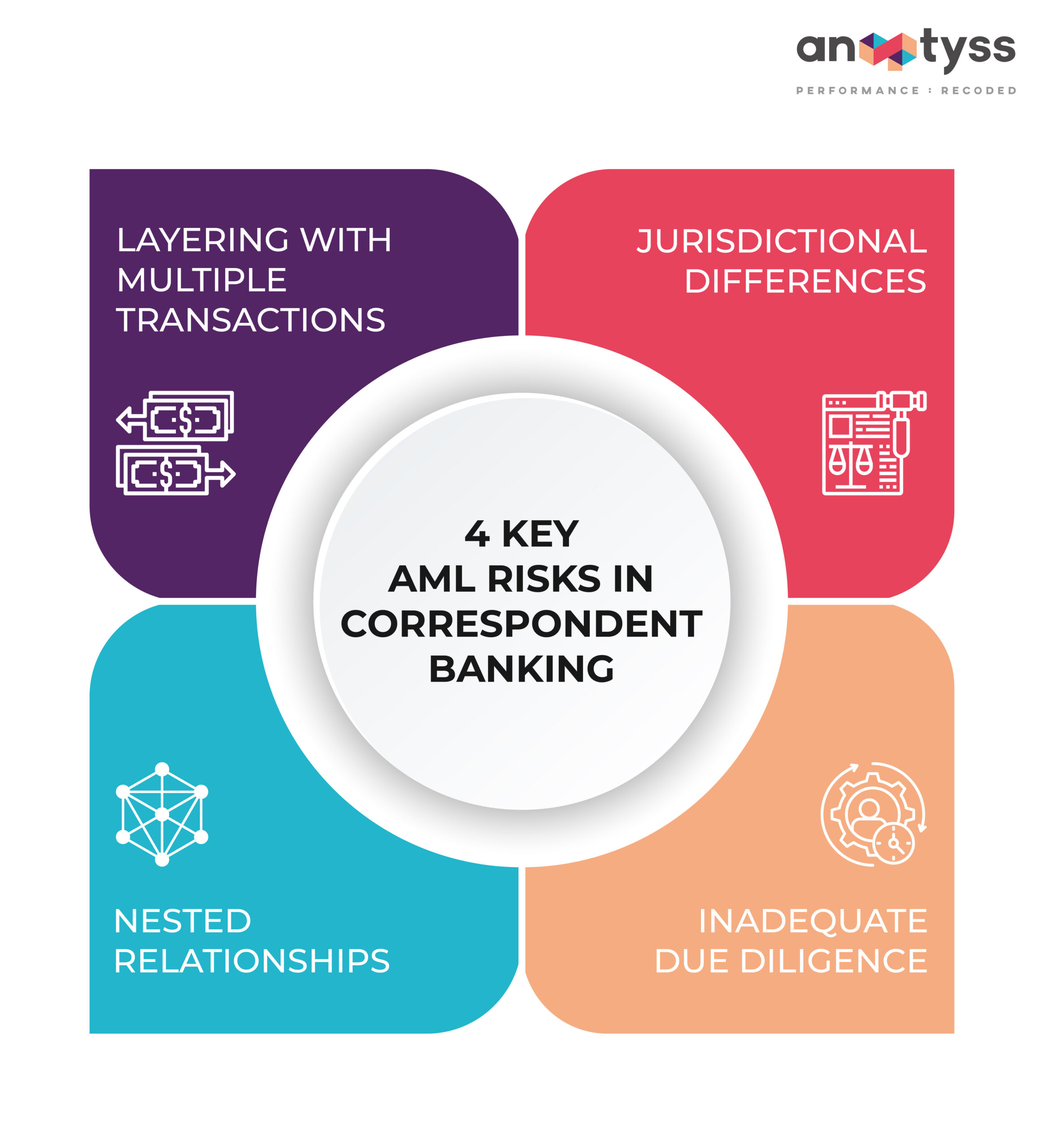
AML Risks Involved in Correspondent Banking

Despite its significance, correspondent banking is inherently susceptible to money laundering risks due to its nature of activities and cross-border transactions, which increases the complexities.

Below are some prominent factors that contribute to this vulnerability:

1. Layering with Multiple Transactions

Due to the nature of correspondent banking, the correspondent bank often lacks direct access to information about the ultimate parties involved in a transaction. This lack of transparency can be exploited for money laundering purposes.

To better understand how AML red flags manifest across channels, read our blog on FATF Red Flags for Money Laundering and Terrorist Financing.

Further, the sheer volume and complexity of transactions processed through correspondent banking networks can make it challenging to detect suspicious activities.

2. Jurisdictional Differences

Correspondent banks operate across various jurisdictions with different AML regulatory frameworks. Criminals can exploit the weaker controls in the Anti-Money Laundering (AML) systems to gain access to the international financial system.

3. Nested Relationships

Smaller banks often lack robust AML controls and access the international financial system through larger banks. This ‘nested’ arrangement of banks can further obscure the true origin and beneficiaries of funds.

4. Inadequate Due Diligence

Lack of adequate due diligence, such as insufficient customer verification, weak transaction monitoring, and efficient enterprise risk management processes, allows criminals to hide their true identity and move illicit funds through correspondent banking networks.

Real-World Examples of Correspondent Banking AML Compliance Risks

Below are a few real-world examples of AML risks in correspondent banking that lead to significant fines for major financial institutions.

4 Key Strategies to Mitigate Money Laundering Risks in Correspondent Banking

Addressing money laundering risks in correspondent banking requires a multi-faceted approach. Below are some best practices that banks can implement to minimize the risk of financial crimes, such as money laundering and terrorism financing.

4 Key AML Risks in Correspondent Banking

1. Enhanced Due Diligence (EDD)

Banks must conduct thorough due diligence on their direct correspondent banking clients and the customers of the clients to the best possible extent. This includes understanding the following:

  1. The nature of the respondent bank’s business.
  2. Client’s customer base.
  3. The jurisdictions in which the correspondent banking client operates

2. Robust Transaction Monitoring Systems

Banks can analyze suspicious patterns and flag unusual transactions using a robust monitoring system. For this, they can use:

Explore how to build a robust transaction monitoring system aligned with AML compliance best practices.

3. Regulatory Compliance

Banks and financial institutions must adhere to the regulatory frameworks and international AML standards, such as those set by regulatory authorities like the Financial Action Task Force (FATF), to mitigate the AML risks associated with correspondent banking. By adhering to these regulations, banks can:

Banks and financial institutions can also follow the FATF guidelines to address the challenges and AML risks in correspondent banking.

4. Training and Awareness

Regular workforce training in detecting and reporting suspicious activities can help banks and financial institutions create awareness about the latest money laundering techniques and trends among employees and empower them to identify and address risks proactively.

Banks can leverage digital learning and knowledge management solutions, such as Fluent, to deploy and boost workforce training programs for rapid skilling with measurable outcomes.

Conclusion

Correspondent banking presents unique AML challenges to banks and financial institutions across the globe. This blog is a comprehensive overview of correspondent banking. It provides foundational knowledge, discusses risks, and suggests key strategies to mitigate the AML risks associated with correspondent banking.

See how one institution achieved a 75% reduction in false alerts in sanctions compliance using Anaptyss’ AI-powered solution, ALFA.

Anaptyss offers comprehensive financial crime compliance and fraud risks in correspondent banking. With deep domain expertise, Anaptyss employs ALFA – an advanced AI/ML-powered AML compliance solution – to strengthen anti-money laundering (AML) capabilities and navigate cross-border compliance challenges.

How to Improve the Sanctions Screening Process in Banking?

Sanctions screening plays a pivotal role for banks in the fight against financial crimes. It acts as a frontline defense against potential violations and helps financial institutions maintain integrity.

While the importance of sanctions screening is undeniable, banks face several challenges in navigating this complex landscape.

In this blog, we will discuss the intricacies of sanction screening in the banking industry and provide best practices to improve the sanction screening process in banking.

What is Sanctions Screening?

Sanctions screening in banking is an Anti-Money Laundering (AML) control process through which banks or financial institutions scrutinize customer data and transactions against lists of sanctioned individuals, organizations, and countries. These lists are maintained by government regulatory bodies or international organizations, such as the Office of Foreign Assets Control (OFAC).

This meticulous examination aims to prevent activities, such as money laundering, terrorism financing, and trade with embargoed nations.

It also ensures that banks do not inadvertently facilitate sanctions violations, which could result in severe penalties, including fines and imprisonment.

Failure to comply can have dire consequences.

4 Key Challenges in Sanctions Screening for Banks

A robust sanctions screening program is not just a compliance checkbox, it is an integral part of a bank’s broader financial crime risk management strategy.

how to improve sanction screening in banking (1)

Banks and financial institutions must comply with the sanctions guidelines by the Office of Foreign Assets Control (OFAC) in the United States. This also includes international sanctions related to cross-border compliance.

Below are the 4 key challenges to ensuring effective sanctions screening.

1. Evolving Regulatory Landscape

The evolving regulatory landscape in sanction screening poses challenges due to the following:

  1. Frequent updates in sanction lists.
  2. Complex and varied regulations.
  3. Rapid geopolitical changes.
  4. Varying enforcement practices.

2. False Positives

Dealing with false positives presents another significant challenge in sanction screening. The demand for faster payments puts significant pressure on banks and financial institutions. As a result, they need to screen transactions rapidly without compromising accuracy.

However, no matter the type of screening you implement, false positives may arise as there can be thousands of data points and names to match that can further produce hundreds of results. These results require further manual reviews that can drain valuable resources and lead to operational delays and potentially frustrating customers.

3. Global Operations (Cross Border Compliance)

Regulatory documents and communications are often unclear due to cultural, language, and ethical differences, which leaves room for ambiguity. The transliteration process, converting names between writing systems, is also pivotal in screening diverse international entities. Inaccurate transliteration can lead to misunderstanding, misalignment between the financial institutions and the regulatory authorities in different jurisdictions, and critical compliance gaps,

4. Screening with Outdated Data & Tools

Outdated sanctions list data and missing information, such as SWIFT business identifier codes, pose significant challenges. Effective sanctions screening relies on reliable data and advanced fuzzy matching techniques to catch alternative spellings and variations.

4 Best Practices to Improve Sanctions Screening in Banking

Overcoming these challenges necessitates a strategic and proactive approach. Here are four key areas where banks can focus on improving their sanctions screening process.

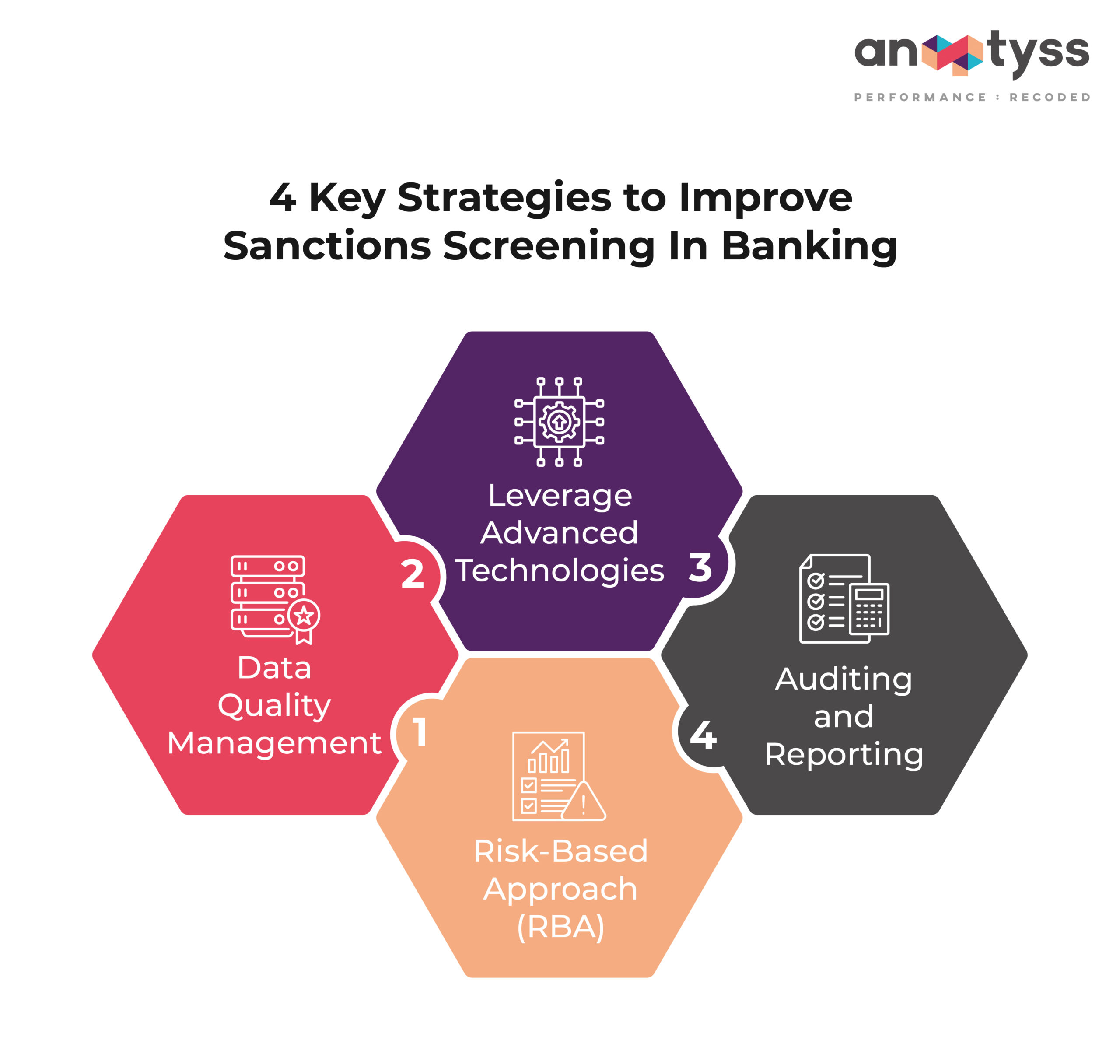
4 Key Strategies to Improve Sanctions Screening In Banking infographic

1. Leverage Advanced Technologies

Legacy solutions may struggle to keep pace with the rising complexity of global sanctions. Therefore, banks and financial institutions need to invest in newer technologies such as artificial intelligence (AI) and machine learning (ML) to automate the screening process, improve accuracy, and reduce false positives.

Financial institutions can use real-time data processing and monitoring to:

2. Data Quality Management

Poor data quality underlines the risk-based approach that leads to inefficiencies and compliance gaps. Therefore, it is important to regularly assess the quality of sanctions data and ensure it is up-to-date, accurate, and sourced from reliable internal and external (third-party) channels. To manage and improve data, financial institutions can focus on the following:

  1. Understand the data you collect, store, and process.
  2. Review and audit the collected data for accuracy, completeness, quality, consistency, relevance, and timeliness.
  3. Eliminate data silos.
  4. Establish effective data governance practices.

3. Risk-Based Approach (RBA)

Risk-based and tailored screening solutions are crucial to prevent delays in low-risk payments and ensure compliance. RBA enables financial institutions to assess and understand the risks to which they are exposed and take the necessary measures to mitigate them.

Financial institutions can refer to the Financial Action Task Force’s (FATF) guidance for risk-based approach (RBA).

4. Auditing and Reporting

Conduct regular audits to assess the effectiveness of the sanction screening processes and controls. It helps:

Conclusion

Improving sanction screening in banking is a dynamic and continuous process. It requires a combination of technology, training, data management, customization, collaboration, regulatory alignment, and rigorous auditing.

By adopting these strategies, banks can enhance their sanction screening processes, ensuring compliance, and mitigating financial crime risks effectively.

An enterprise-grade solution, such as ALFA offers a viable solution to improve the sanctions watchlist screening process with real-time monitoring. It also enables financial institutions to effectively mitigate financial crime risks, including transaction laundering, and comply with AML regulations.

How Blockchain Can Help Banks Enhance AML Compliance?

Financial crimes, such as money laundering, fraud, terrorist financing, etc., are serious crimes that are constantly evolving with the advancements in technology.

In today’s digital-first world, criminals always try to come up with more innovative and sophisticated ways to avoid the attention of the authorities. However, financial institutions, such as banks, are under constant pressure to facilitate safe and efficient transactions with their clients.

This blog discusses the AML compliance challenges in the digital age and how Blockchain technology is enabling financial institutions to effectively navigate the compliance landscape while ensuring superior customer experience (CX).

What is Blockchain?

Blockchain is a decentralized, distributed, and cryptographic ledger technology consisting of digital transaction records across multiple computers on a public or private network. The ledger is public and transparent which makes it difficult to alter the transactions.

The decentralized, immutable, and cryptographically secure nature of Blockchain technology helps in transparency for AML compliance. It also allows financial institutions and regulatory authorities to effectively monitor, identify, and stop suspicious activities or transactions.

5 Key AML Compliance Challenges in the Digital Age

Financial institutions face various challenges when it comes to keeping up with the AML compliance requirements with their traditional approach. The existing transaction monitoring systems are insufficient to analyze and track the high-volume transactions or meet their pace.

1. Manual Processes

Traditional AML solutions heavily rely on transaction monitoring and reporting processes. This manual approach could be inherently time-consuming and requires humans to review and analyze the financial transactions, which can lead to:

2. Compliance Overhead

AML solutions are intricate and require meticulous integration into existing systems and processes. As a result, financial institutions need to hire the right talent and invest in specialized staff training, advanced technologies, and establish comprehensive monitoring and reporting mechanisms. However, this can increase the operational cost and require significant time and effort to ensure the AML controls align with the regulatory requirements.

3. Lack of Real-Time Monitoring

With limited oversight and the absence of real-time monitoring with traditional AML solutions, it is cumbersome for financial institutions and authorities to track and analyze the transactions. This leads to delays in response to potentially suspicious transactions.  Involved in money laundering, terrorist financing, or other illicit activities.

4. Limited Traceability

When it comes to tracing and investigating suspicious transactions, traditional AML solutions provide limited traceability. This makes it difficult to track down the source of funds, especially when the transaction involves crypto assets or cryptocurrencies. This can be an obstruction for the compliance teams in their efforts to detect and prevent suspicious activities involving the risk of money laundering or terrorist financing.

5. Slow Response

Traditional or existing AML solutions are more reactive. They help in detecting suspicious activities once they occur rather than preventing them in the first place.

How Blockchain Help Mitigate Financial Crimes

Most of these financial institutions that were fined had failed to implement effective Know Your Customer (KYC) processes, which led to violations of AML regulations.

Below are some examples of how Blockchain technology helps financial institutions combat financial crime and ensure financial crime compliance.

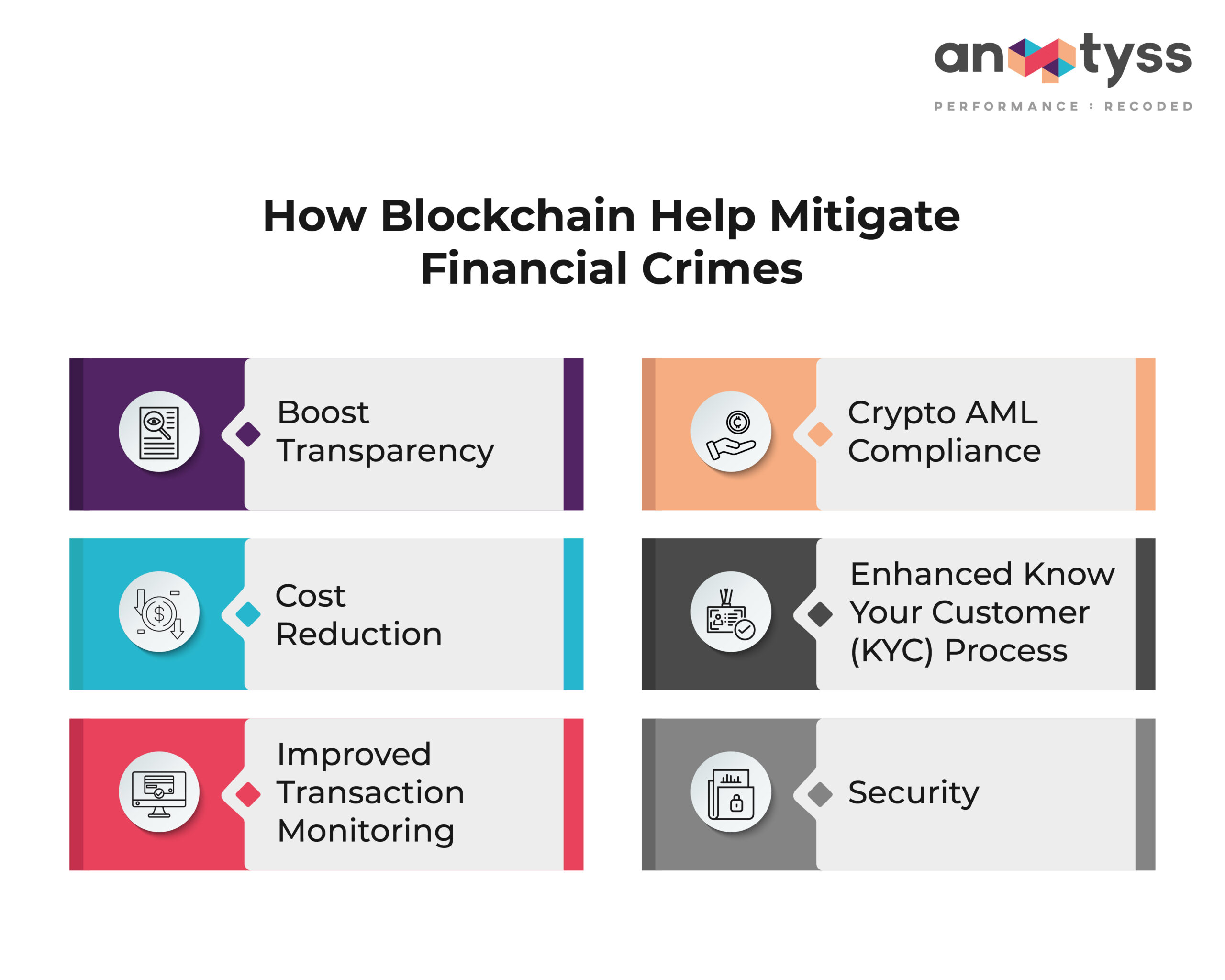
How Blockchain Help Mitigate Financial Crimes

1. Boost Transparency

Blockchain’s decentralized and distributed ledger technology enhances transparency by providing a single immutable record, shared among all participants. This means every transaction is recorded and visible on the network, which reduces the opacity linked with traditional systems.

As a result, it helps deter illicit activities and makes it more challenging for criminals to conceal, move, or manipulate transactions. This can further help financial institutions from reputational damage and showcase their commitment to preventing money laundering and other financial crimes.

2. Enhanced Know Your Customer (KYC) Process

Blockchain enables separate storage of client information, which is tamper-proof and immutable. The background information and identification stored on a blockchain network help streamline the Know Your Customer (KYC) process, making it easier, faster, more comprehensive, and secure against human error or internal fraud. Once the details are logged, they can’t be altered.

3. Improved Transaction Monitoring

Blockchain facilitates real-time transaction monitoring with its transparent and traceable nature. This feature allows financial institutions to monitor transactions more effectively and identify and investigate suspicious activities promptly. It can also reduce false positives and errors, which is a major pain when it comes to transaction monitoring.

For instance, financial institutions can utilize smart contracts as a tool to enforce AML compliance. Smart contracts are self-executing programs that are designed to automatically execute when predetermined terms and conditions are met. Smart contracts can help identify and flag potentially suspicious transactions for additional review if they exceed the threshold levels or are detected as high-risk.

4. Crypto AML Compliance

Cryptocurrency or Convertible Virtual Currencies (CVCs) are increasingly used for financial crimes, such as money laundering, and pose a significant threat to AML compliance efforts.

However, blockchain provides solutions to overcome the challenges of cryptocurrency compliance. Cryptocurrency operates on Blockchain technology to record and confirm trades. When cryptocurrency is bought, sold, or exchanged, a blockchain collects and records the transaction information.

By implementing the AML measures with the help of Blockchain smart contracts, financial institutions can enforce the compliance rules to ensure the transaction meets the regulatory requirements. This can help prevent money laundering and ensure crypto transactions meet the AML compliance criteria.

5. Security

Blockchain employs cryptographic technology to secure the transactions and protect them from potential risks of hack or fraud. The immutable records created by the blockchain ensure the added block to the chain can neither be altered nor removed. This helps minimize and mitigate the risk of financial crimes, such as fraud or unauthorized access.  Also, it makes it nearly impossible for criminals to tamper with or erase evidence of illicit activities.

6. Cost Reduction

Blockchain helps streamline processes and reduce the requirements of intermediaries by automating the processes without manual intervention with the help of smart contracts. This can significantly reduce:

The auditable nature of blockchain further makes it easier for financial institutions, regulators, and auditors to efficiently trace transactions on the blockchain. This reduces the time and resources required for auditing and reporting.

Conclusion

Blockchain technology is still evolving and is in the early stages. However, it has the potential to help financial institutions overcome the challenges of traditional AML compliance solutions in today’s digital-first world and significantly reduce the risks of financial crimes.

To learn more, you can also read our guide to Anti-Money Laundering for financial institutions and AML compliance checklist to effectively combat and mitigate financial crimes, such as money laundering, terrorist financing, fraud, etc.

Cybersecurity Laws, Regulations, and Standards for the Financial Services Industry  

With the growing amount of personal and business data in the custody of financial institutions, they face unprecedented risks to data security and higher incidents of data privacy violations.

Many of these risks are due to cyberattacks and cybersecurity breaches, which continue to increase in the number of incidents reported and their sophistication levels.

The overall cost of cybersecurity attacks and data breach incidents is significant across industries globally.

The 2023 IBM Cost of Data Breach report estimates the global average cost as US$ 4.45 million. In 2022, the IBM Ponemon report indicated that financial services were the second-most affected industry due to data breaches (cyberattacks being a significant cause) and incurred an annual cost of US$ 5.9 million.

Explore how banks can manage cybersecurity risks using ERM frameworks to build resilience and meet compliance mandates.

Regulating Cybersecurity in Banking and Financial Services: Key Regulations and Laws

Despite the growing media coverage around cybersecurity – threats, protective measures, challenges, etc. – a sizable scope exists for driving “ground-level” action to protect data privacy.

Several data privacy and data protection regulations and laws have been enacted to make sure that organizations, including financial institutions, comply with the requirements. Many of these laws explicitly lay down the guidelines concerning cybersecurity. The following is an outline:

1. General Data Protection Regulation (EU-GDPR) – 2016

Overview: According to GDPR.EU, GDPR is “the toughest privacy and security law in the world.” It obligates all organizations that collect and process the data of the people based in the European Union to follow the prescribed guidelines.

GDPR Cybersecurity Guidelines

1. Article 5 – Principles relating to the processing of personal data

Organizations must process data based on the seven principles for accountability and protection, which include:

  1. Data must be processed lawfully, fairly, and with transparency
  2. Data must be processed only for the specified and legitimate purpose
  3. Data must be maintained accurately and up to date
  4. Data must be stored only till the specified timeline and as necessary for its purpose
  5. Data processing must maintain the security, integrity, and confidentiality
  6. A dedicated Data Controller is accountable for all the facets of GDPR compliance
2. Article 25 – Data protection by design and by default
  1. The data controller must implement the necessary and adequate “technical and organizational” measures, such as pseudonymization at the time of data processing. They must integrate the necessary safeguards into data processing to preserve the rights of data subjects.
  2. These measures must ensure the processing of personal data – the amount of data, the extent of processing, and storage duration – that is necessary for the specific purpose.
  3. The data controller and the organization must be able to demonstrate compliance with the requirements in accordance with Article 42 GDPR Certification.
3. Article 32 – Security of processing

The controller and processer must implement the necessary technical and organizational measures, including:

  1. Pseudonymization and encryption of personal data
  2. Confidentiality, integrity, availability, and resilience of data processing systems and services
  3. Timely restoration of the availability and access to personal data
  4. Regular assessment of the effectiveness of measures for data security

Administrative penalties for GDPR violation:

As per Art. 83 GDPR, failure to comply with GDPR can result in a fine of up to € 20 million or up to 4% of the total global annual revenue, whichever is higher.

For more on aligning data controls with risk-based frameworks, check out our white paper on the Future of Risk Management in Internal Controls.

2. H.R.5069 – Cybersecurity Systems and Risks Reporting Act of 2016

The H.R.5069 Act amends the Sarbanes-Oxley Act (SOX) of 2002 by extending the scope of SOX internal controls to cybersecurity systems and risks of publicly traded companies.

H.R.5069 Guidelines – Key Amendments to SOX

  1. The bill applies the same requirements to cybersecurity systems and cybersecurity systems officers with concerning the responsibility for financial reports and evaluation of internal controls.
  2. The Securities and Exchange Commission (SEC) shall issue rules to define cybersecurity expert
  3. The bill requires each issuer of securities to disclose the availability status of cybersecurity expert(s) in the audit committee.
  4. It requires the SEC to audit the issuer’s information systems and cybersecurity systems statements.

Pillars of data security as per SOX:

  1. Financial institutions must ensure the security of financial data
  2. They must make adequate provisions to check potential data breaches (including those due to cyberattacks) and financial data tampering and remediate the impact.
  3. Financial institutes need to maintain event records for audit and demonstrate compliance in 90-day

Failure to comply with the SOX Act, including the amended guidelines, can lead to penalties of up to US$ 5 million and 20 years of imprisonment.

3. Payment Card Industry Data Security Standard (PCI DSS) – 2004

PCI DSS is a standard for information security, which mandates implementing and meeting specific measures to protect the personal data of cardholders from cybersecurity breaches. The standard is governed by the Payment Card Industry Security Standards Council and focuses on reducing data breaches, identity theft, and credit card fraud.

PCI DSS Requirements – Key Principles for Cybersecurity

  1. Organizations including card service providers must maintain the security of systems and networks, including through the use of firewalls and encryption, to safeguard credit card transactions.
  2. They must protect cardholder information such as date of birth, social security numbers, phone numbers, etc.
  3. Institutions providing card services should set up a vulnerability management program to assess risks and manage vulnerabilities that can lead to cyberattacks and breach of confidential cardholder data.
  4. They must maintain robust controls to govern the access to sensitive data across physical and electronic checkpoints and conduct regular network and system testing and monitoring to ensure ongoing data security

PCI DSS violation can result in penalties that can range from US$ 5000 to US$ 100, 000 per month, which is based on the company size and extent of violation.

4. Gramm-Leach-Bliley Act (GLBA) Safeguards Rule – 2023

GLBA is a federal law that obligates financial institutions to safeguard their customers’ sensitive data and apprise them of their information-sharing practices. The three main components of GLBA include:

  1. The Financial Privacy Rule: mandates financial institutions to explain their data collection and data sharing practices to customers
  2. The Safeguards Rule: obligates institutions to set up systems to protect sensitive data
  3. The Pretexting Provisions: Forbids the practice of collecting data deceptively

The Safeguards Rule – officially called Part 314 Standards for Safeguarding Customer Information – essentially defines the requirements for data security and cybersecurity measures.

The Nine Elements of GLBA for Information Security

  1. The financial institution must designate a competent individual to oversee and implement the information security program and they should also enforce it
  2. The information security program should consider the findings of a risk assessment that includes parameters for categorizing risks and evaluating confidentiality, integrity, and availability of information systems and sensitive data.
  3. The institution should design and implement the necessary measures to control the identified risks, conduct timely reviews, identify and manage the data and information systems, multi-factor authentication, encryption, etc.
  4. They should routinely test and monitor key controls, systems, and procedures, including penetrating testing and vulnerability evaluation.
  5. The financial institution must implement policies and procedures to drive the action per the information security program.
  6. They must conduct the necessary due diligence with regard to selecting and managing the service providers, including through measures such as periodic assessments, safeguards, etc.
  7. They should regularly update the information security program based on the findings.
  8. The financial institution should have a documented incident response plan to guide and manage the necessary actions to mitigate the impact of a security event.
  9. The qualified individual must report regularly to the board of directors.

Also see how AI-powered automation is transforming compliance workflows by enhancing control, reporting, and operational resilience.

5. Federal Financial Institutions Examination Council (FFIEC) Audit

The FFIEC Audit IT Examination Handbook outlines specific guidance for effective IT audits to evaluate risk management practices, internal controls, and policy compliance.

The following is a summary of the prescribed actions:

  1. Management should implement a formal internal audit program
  2. The board of directors should set up an effective risk-based audit function
  3. Senior management should partner with the IT audit towards application development, testing, etc.
  4. The board of directors should ensure that the outsourced IT audit functions undergo evaluation of internal controls

How to Conduct AML Risk Assessment: Types and Implementation

In the modernizing financial services landscape, the risks of financial crimes such as money laundering and terrorist financing have increased substantially. For instance, Fintech innovations like digital payment systems allow convenient monetary transactions, nearly anytime and anywhere globally, with more flexibility and access. Fraudsters and criminals exploit vulnerabilities in these evolving systems to launder illicit funds, concealing the source of money.

Financial institutions must detect and evaluate these anti-money laundering (AML) risks and build counter capabilities.

This blog explains AML risk assessment, its importance, types, and the steps to developing an AML risk assessment framework.

Key Takeaways:

What is AML Risk Assessment?

AML risk assessment is a process to evaluate and analyze the potential involvement of a customer or entity in financial crimes, such as money laundering and financing of terrorism. AML risk assessment is one of the most crucial and integral aspects of the AML compliance program and risk-based approach (RBA) to managing financial crimes.

With AML risk evaluation, banks and financial institutions can efficiently identify, analyze, and mitigate potential money laundering and terrorist financing risks.

Banks and financial institutions can follow the guidelines and instructions that are regularly shared and updated by regulatory bodies, such as the Financial Action Task Force (FATF), to conduct risk assessments. This can help financial institutions identify and combat financial crime activities and protect their business and themselves from unintentionally participating in or facilitating financial crimes or illegal activities.

Importance of AML Risk Assessment

Several reasons make AML risk assessment crucial for financial institutions across the globe. It helps banks and financial institutions:

Types of AML Risk Assessments

AML risk assessment is categorized into four types to address the specific and distinct money laundering risks.

1. Customer Risk Assessment

This category evaluates money laundering risks associated with an individual customer. For example, individuals, such as non-resident aliens, politically exposed persons (PEPs), and professional service providers pose a higher risk. This includes analyzing:

2. Product and Services Risk Assessment

This category evaluates the risks associated with specific financial or non-financial products or services offered by a bank or financial institution, that can inadvertently assist criminals in money laundering or terrorist financing activities. Criminals may also exploit these products and services to launder illicit funds. For example,

3. Geographical Risk Assessment

This assessment considers money laundering risks associated with businesses in specific countries or regions. Geographical risk assessment considers factors such as:

4. Business Risk Assessment

This category involves the assessment of money laundering risks associated with corporate clients and businesses for these factors:

Steps for Building an Effective AML Risk Assessment Framework

AML risk assessment is important for regulatory compliance and protecting a business and its reputation. It includes KYC processes, such as Customer Due Diligence (CDD), Enhanced Due Diligence (EDD), and Transaction Monitoring, to evaluate customer identities and risk profiles and monitor their activities. An AML risk assessment framework can help financial institutions curtail suspicious activities, such as money laundering or terrorist financing, proactively.

Below are the steps banks and financial institutions can follow for conducting effective AML risk assessment and compliance risk management.

Step 1: Identify Inherent Risks

Inherent risks are the risks posed by an error or omission due to factors other than a failure in internal control measures. It represents the financial institutions’ exposure to money laundering risk if not dealt with. Therefore, banks and financial institutions must:

  1. Identify the inherent risks
  2. Organize them into weak, intermediate, and strong categories

Step 2: Implement Risk Controls

After identifying the inherent risks and residual risks, financial institutions can implement risk mitigation controls to address these risks. These controls will help:

  1. Reduce the likelihood of illicit activities, such as money laundering and terrorist financing
  2. Uphold a robust AML compliance program
  3. Ensure adherence to rules and regulations

Step 3: Monitor and Review the Residual Risks

After implementing the risk controls, it’s important to continuously monitor and review residual risks to strengthen the AML risk assessment program. Residual risk refers to risks that remain after implementing the controls and procedures to mitigate or eliminate the high risks associated with the bank’s business processes, geographical locations, systems, customers, products, and services.

Banks and financial institutions must calculate and determine the residual risks. This can be done by subtracting the quality of risk management or the impact of risk controls from the inherent risk.

Residual Risk = Inherent Risk – Quality of Risk Management

Residual risk calculation helps:

  1. Identify the strengths and weaknesses of the existing risk management and control framework
  2. Acknowledge the existing risks
  3. Re-evaluate risk appetite
  4. Continuously incorporate or update risk controls and other processes to ensure a responsive AML compliance program that stays updated with the changes in regulations and industry standards

Expert Guidance for Evaluating AML Risks

AML risk assessment is vital for banks and financial institutions to comply with AML laws and regulations and mitigate the risks of money laundering and terrorist financing. If they fail, they may face litigations and penalties for regulatory violations that can lead to financial losses and reputational damages.

Anaptyss helps banks and financial institutions identify risks across products and services, customers, and locations to establish global AML control standards. We also help determine the effectiveness of existing internal preventative and detective AML risk controls.

How to Navigate Cross-Border AML Regulatory Compliance Challenges?

Financial institutions often encounter vast compliance challenges while operating in the domestic market. The regulatory challenges become even more complex for financial institutions with a global presence or conducting cross-border operations.

To navigate the global regulatory compliance landscape, many banks and financial service institutions still rely on manual processes, which are prone to errors and conflicts and consume time.

This blog discusses the challenges of managing cross-border regulatory compliance and best practices for banks to effectively navigate these challenges while enhancing customer experience (CX) and employee satisfaction.

What is Cross-Border Compliance?

Cross-border compliance refers to the practice of adhering to laws, regulations, and standards when conducting banking operations across national boundaries. The primary objective of cross-border compliance spans the following aspects:

Why is Cross-Border Regulatory Compliance Important?

Cross-border compliance is crucial for financial institutions that are expanding to other jurisdictions or operating internationally. Compliance with the prevalent laws, standards, and regulations of local jurisdictions in which the bank or financial institution operates helps them in the following ways:

In contrast, failure to comply with regulations can lead to severe consequences, including:

The 4 Key Challenges to Cross-Border Regulatory Compliance

Meeting cross-border regulatory compliance can be challenging due to the differences in laws, regulations, and cultural norms and increased scrutiny by regulatory bodies across the globe.

Financial institutions face the following prominent challenges to cross-border compliance:

1. Rapidly Changing Diverse Regulatory Frameworks

One of the most crucial challenges with cross-border compliance is the ever-evolving financial services regulatory frameworks.

Each country has its regulatory requirements and frameworks that are subject to frequent updates based on technological advancements, market shifts, societal expectations, employment laws, and emerging risks. Understanding and adhering to these varying regulatory compliance requirements can be daunting, complex, and time-consuming for multi-national financial institutions.

2. Language, Cultural, and Ethical Differences

Due to cultural, language, and ethical differences, regulatory documents and communications are often not clear, which leaves room for ambiguity and leads to misunderstanding and misalignment between the financial institutions and the regulatory authorities in different jurisdictions.

Misinterpretation and miscommunication related to legal documents or contacts can have gross consequences. In addition, certain business practices in one jurisdiction or country may not be acceptable or illegal in another. This can further lead to miscommunication, reputational damage, legal issues, and compliance failures.

3. Data Privacy and Cybersecurity

Cross-border data transfer and handling of sensitive and confidential customer data pose another significant compliance challenge.

Banks and financial institutions must comply with data protection regulations, such as the GDPR, that can be stringent and have extraterritorial reach. However, keeping up with these constantly evolving data privacy and cybersecurity laws can be daunting for financial institutions, which may also lead to conflicts due to different regulations in different jurisdictions.

4. Resource and Supply Chain Constraints

Compliance efforts require dedicated resources. This could be a challenge for many banks and financial institutions, especially SMEs, that may find it challenging to allocate sufficient resources to meet the cross-border regulatory requirements effectively.

Global supply chains are intricate and involve multiple suppliers and partners across borders. Ensuring compliance with the supply chain can be challenging if they are in jurisdictions with regulatory laws and standards.

Top 5 Best Practices to Mitigate Cross-Border Compliance Challenges

By taking these steps, organizations can improve their ability to overcome cross-border compliance challenges, effectively manage risk, mitigate breaches, and ensure compliance with applicable laws and regulations in the jurisdictions where they operate. To effectively navigate the complexities of the global business environment, maintaining a commitment to compliance, ongoing monitoring, and continuous improvement is essential.

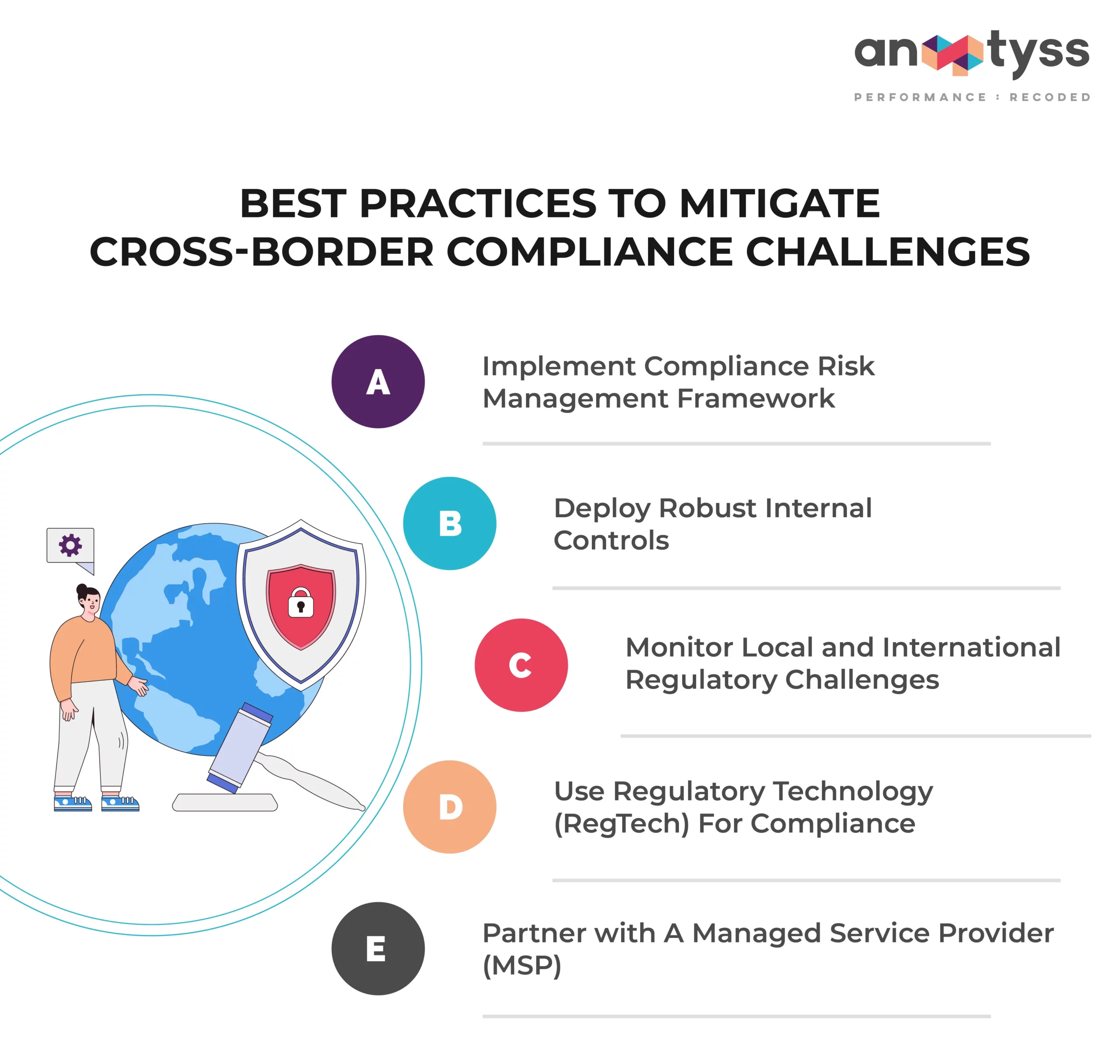
Best Practices to Mitigate Cross-Border Compliance Challenges

1. Compliance Risk Management

Compliance risk management (CRM) is a process of identifying, analyzing, and monitoring risks to banks’ compliance status. With an effective enterprise risk management framework, financial institutions can effectively identify and assess potential risks, including cross-border compliance risks and challenges, that are specific to the business or organization and the jurisdiction where they are operating. While assessing the compliance risks, consider the following factors:

2. Robust Internal Controls

Internal controls for monitoring, auditing, and reporting help banks and financial institutions detect non-compliance and prevent compliance violations. Design internal controls to specifically address the cross-border compliance issues.

Also, regular control testing is critical to ensure that the internal controls are robust and effective in mitigating cross-border compliance risks. Control testing also helps detect the existing and emerging gaps and weaknesses in the internal controls and updates them to mitigate cross-border compliance risks. You can follow the 10 best practices for internal control testing and learn the key steps to implement a control testing program.

3. Monitor Regulatory Challenges

Regular monitoring of changes in compliance and regulatory requirements and being aware of the changes in the laws or standards in the jurisdictions is crucial for financial institutions to deal with and be agile in adapting cross-border compliance changes or frameworks.  Financial institutions can:

4. Use Regulatory Technology (RegTech) for Compliance

Financial institutions must leverage regulatory technologies, such as advanced data analytics, AI, ML, blockchain, etc. to streamline their compliance management. Below are some examples of how financial institutions can leverage these technologies in managing different aspects of compliance management.

5. Partner with a Managed Service Provider (MSP)

Managed services provider can help financial institutions streamline their financial services and ensure compliance with industry regulations. By partnering with MSPs, financial institutions can have immediate access to global regulatory expertise that can help them stay updated about the regulatory changes across different jurisdictions.

They also provide 24/7 support with continuous monitoring of regulatory changes, conduct comprehensive risk assessments to identify potential compliance gaps and conduct due diligence on customers, partners, and entities involved in cross-border transactions, which is crucial to meet AML/CTF and BSA regulations.

However, there are several considerations that a financial institution needs to take into account while choosing the right managed service provider that meets their requirements and helps them effectively address compliance challenges.

Conclusion

Cross-border compliance presents unique challenges for financial institutions operating in different countries or states. To effectively navigate the cross-border regulatory compliance challenges and meet financial crime compliance (FCC) requirements of different jurisdictions, financial institutions require a proactive and strategic approach.

Anaptyss is helping financial institutions across the globe with their Digital Knowledge Operations™ framework that helps you transform your front, middle, and back office business and technology operations in financial services and meet cross-border financial crime compliance.

What is Transaction Laundering: A Growing Threat to AML Compliance

In the rapidly expanding world of e-commerce, a stealthy and potent threat known as transaction laundering is creating significant challenges for financial institutions. Also called ‘unauthorized aggregation,’ this criminal activity involves an unapproved business secretly processing payments through a legitimate merchant’s account, effectively bypassing the bank’s due diligence.

This process hides illegal transactions within seemingly legitimate payment flows, making it incredibly difficult for authorities to trace illicit funds. In this blog, we will explore the impact of transaction laundering on AML efforts and outline key strategies for effective financial crime compliance.

The Impact of Transaction Laundering on Financial Services

Transaction laundering has severe consequences, exposing merchant services providers (MSPs) and acquiring banks to significant legal, financial, and reputational risks. By unknowingly processing illicit funds, institutions can become unwitting accomplices in criminal activities like money laundering, terrorist financing, and drug trafficking.

If an acquiring bank fails to meet its anti-money laundering (AML) obligations in a transaction laundering case, the damages can be extensive:

Therefore, understanding the intricacies of this threat is the first step toward implementing robust AML measures. Explore how institutions are enhancing AML programs with real-time payment fraud detection to stay ahead.

How Transaction Laundering Works

The process typically involves a series of calculated steps to conceal the origin and nature of illicit funds.

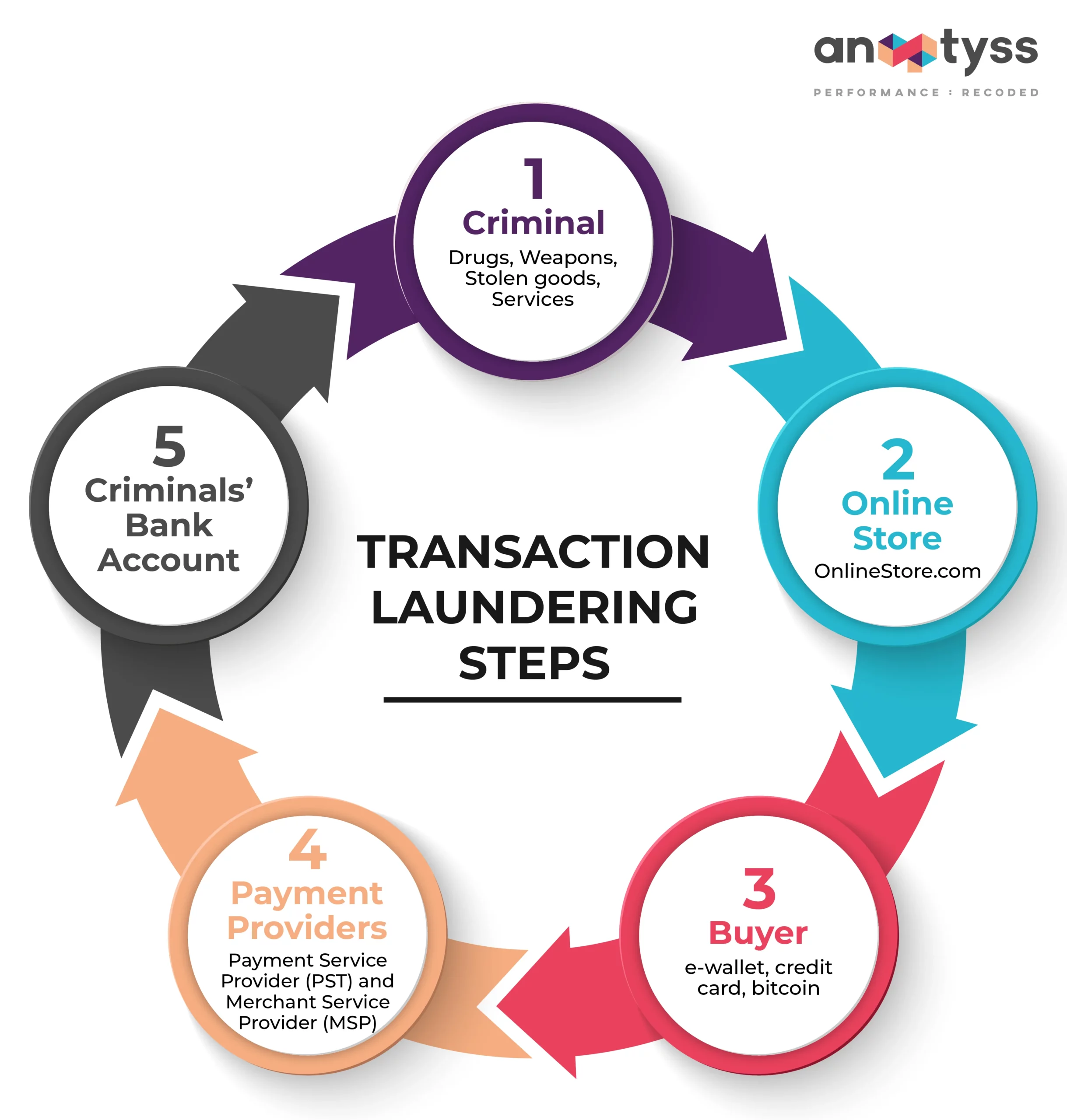
Transaction Laundering Steps

Step 1: Setting Up a Front

Criminals establish a legitimate-seeming online storefront (the “front merchant”) that gets approved by a payment service provider (PSP). In the background, they operate one or more undisclosed websites selling illegal goods or services.

Step 2: Funneling Illicit Sales

When a customer buys something from an illegal site, they are redirected or passed through to the payment page of the legitimate front merchant to complete the transaction.

Step 3: Processing the Payment

The PSP processes the payment, believing it is for a legitimate good or service from the approved front merchant. The funds are then deposited into the criminal’s bank account, successfully laundered.

6 Key Challenges in Identifying Transaction Laundering

Detecting transaction laundering is difficult because it is designed to mimic legitimate activity. Key challenges include:

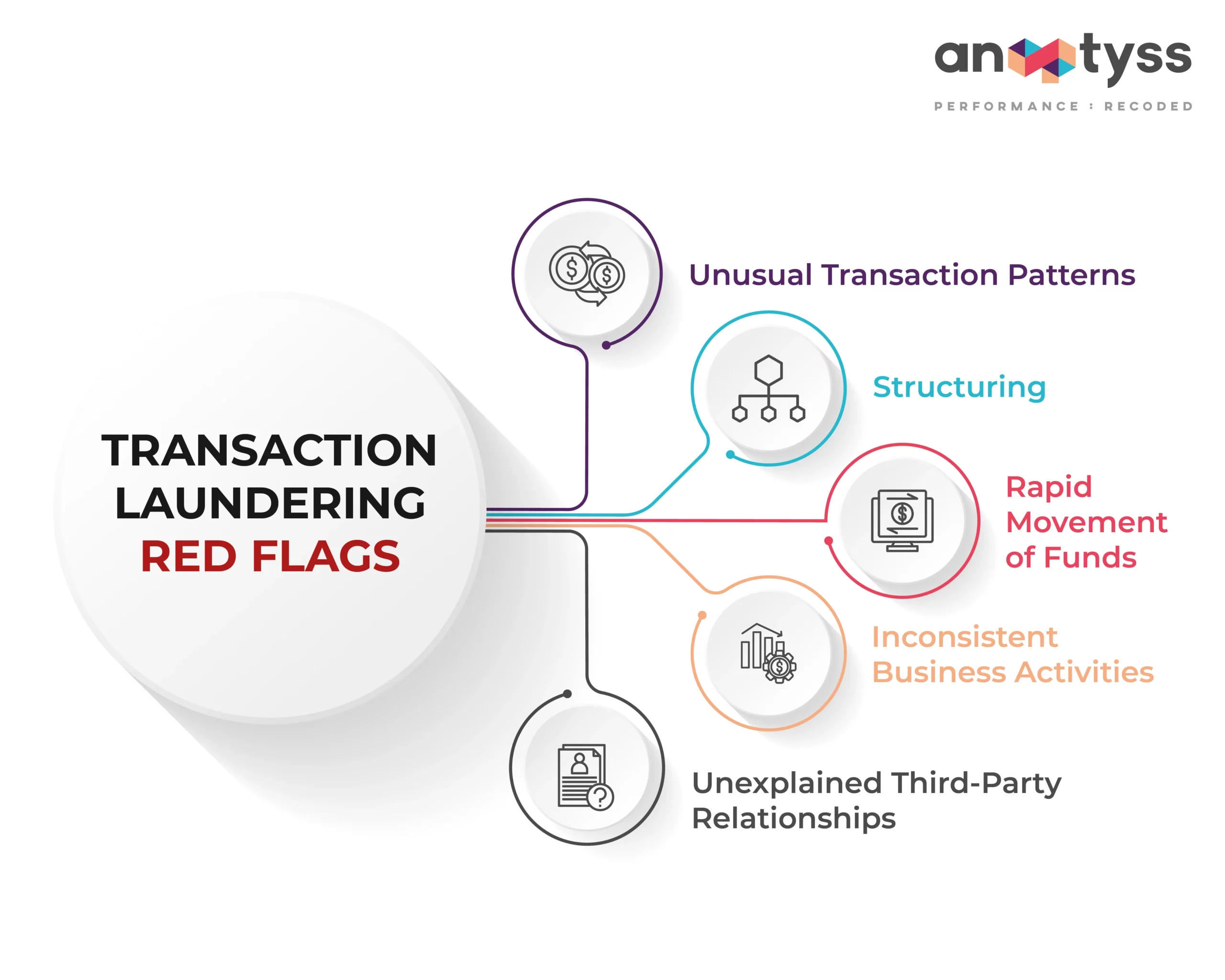
Identifying Red Flags for Transaction Laundering

Financial institutions can train their systems and staff to look for the following red flags:

Transaction Laundering Red Flags

Dive deeper into behavioral red flags with our blog on FATF Red Flags for Money Laundering and Terrorist Financing.

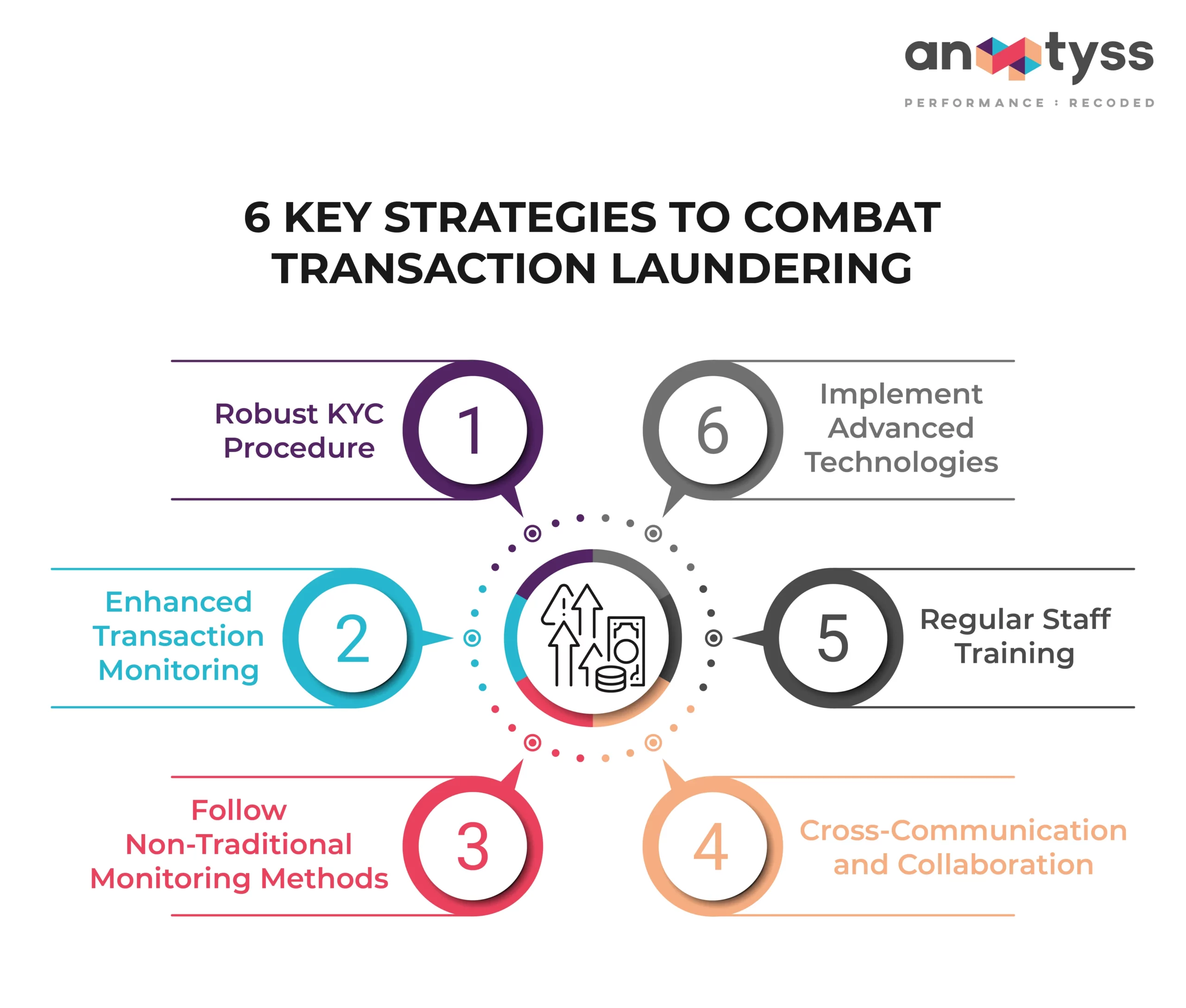
6 Key Strategies to Combat Transaction Laundering

Financial institutions can employ a multi-layered approach to fight against transaction laundering:

6 Key Strategies to Combat Transaction Laundering

Frequently Asked Questions (FAQ)

Prevent Transaction Laundering and Meet AML Compliance

Transaction laundering is a significant and evolving threat to the integrity of the global financial system. By understanding its mechanics, recognizing the red flags, and implementing robust, multi-layered defensive strategies, financial institutions can protect themselves from severe risks and contribute to a safer financial ecosystem.

See how a US-based bank achieved a 75% reduction in false alerts using our proprietary AML solution—proving that intelligent automation works.

An enterprise-grade solution, such as ALFA, offers a viable path to effectively mitigating financial crime risks, including transaction laundering, and complying with AML regulations. It combines these critical aspects in a customized manner to help financial institutions fulfill their AML obligations.

Regulatory Technology (RegTech) for Compliance in the Financial Services Industry

RegTech or Regulatory Technology refers to technology that helps financial institutions manage their regulatory and compliance requirements efficiently and cost-effectively.

RegTech solutions automate and streamline compliance processes, allowing financial institutions to address the complexities due to the increasing data and evolving regulations. This helps them reduce costs and minimize the risks associated with compliance expenses and penalties due to regulatory violations.

5 Key Regulatory Challenges in the Financial Services Industry

Below, we have listed five primary compliance challenges banks and financial institutions face while addressing compliance requirements.

1. Cross-Border Compliance Complexities

Many banks and financial institutions operate in different jurisdictions and need to ensure that they comply with the local laws, regulations, and standards. However, meeting cross-border compliance can be a challenging task due to:

2. Transaction Monitoring and Reporting Accuracy

Violations or failure to adhere to the compliance requirements for transaction monitoring and reporting can have severe consequences.

However, ensuring accuracy and efficiency in transaction monitoring and reporting is a significant operational challenge due to the sheer volume of transactions that are often overwhelming and may result in significant false positives. This can further increase the workload for manual reviews and lead to operational challenges.

3. Rising Cyber Attacks and Data Breaches

Banks and financial institutions hold sensitive, private, and confidential data, such as personally identifiable information (PII), making them a prime target for cyber-attacks. Ransomware or internal exploits can jeopardize the banks’ or financial institutions’ compliance efforts and potentially cripple the businesses.

While regulators have responded and introduced new regulatory standards, technologies, and guidance, many financial institutions and firms often struggle to implement these security programs, frameworks, internal controls, and policies effectively due to a lack of expertise.

4. Integration of Fintech

Technology has undeniably enhanced speed, performance, and reliability across industries, including financial services. However, the integration of financial technologies (also termed FinTech) has compounded the intricacies of compliance.

Fintech solutions, including mobile e-commerce, digital currencies, and web-based tools have introduced new compliance risks, regulatory uncertainty, and challenges concerned with data security, privacy, and cross-border compliance.

5. Rising Compliance Costs

When considering “costs” in a regulatory context, the immediate association is often with the consequences of non-compliance. However, compliance itself is a tangible financial investment, and the associated costs can be substantial.

According to LexisNexis Risk Solutions’ 2021 True Cost of Financial Crime Compliance Study, the estimated cost of financial crime compliance in Canada and the U.S. for 2021 was $49.9 billion. This was a 19% increase from 2020.

How RegTech Solutions Can Help Financial Institutions Meet Regulatory Compliance?

Following are the key areas where RegTech solutions are applied to efficiently meet and fulfill various compliance requirements.

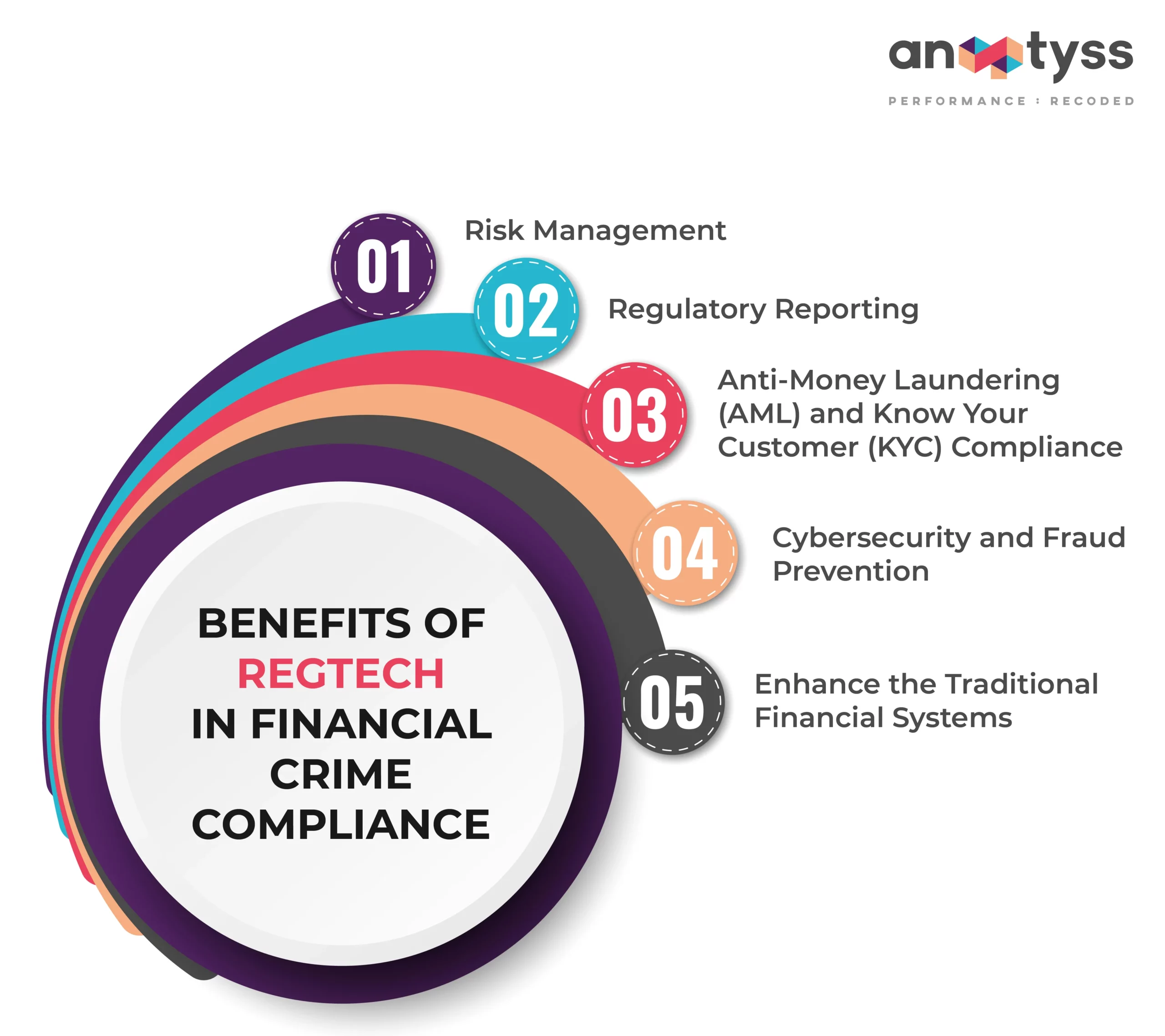
Benefits of RegTech in Financial Crime

1. Anti-Money Laundering (AML) and Know Your Customer (KYC) Compliance

Banks and financial institutions can use next-gen AI-based KYC and AML screening solutions, such as Alfa™, to automate critical KYC/AML processes. These processes include customer due diligence, identity verification, watchlist screening, and transaction monitoring to detect and prevent money laundering, financing of terrorism, and other illicit activities.

2. Risk Management

With advanced analytics and monitoring solutions, banks and financial institutions can efficiently assess and manage various types of financial crimes and enterprise risks, including fraud, operational, credit, and market risks, to ensure compliance with regulatory requirements.

3. Regulatory Reporting

This includes implementing systems to collect, manage, and report data to regulatory authorities based on compliance reporting requirements, such as those related to financial transactions (SARs) or market activities.

4. Cybersecurity and Fraud Prevention

This includes the use of technology to enhance cybersecurity measures, detect and prevent fraudulent activities, and ensure compliance with data protection and privacy regulations, such as HMDA, PCI-DSS, SOX, and GDPR.

5. Enhance the Traditional Financial Systems

Use of blockchain to create transparent and immutable records. With smart contracts, banks can automatically execute, control, or document events based on predetermined conditions, enhancing the integrity of financial transactions and compliance processes.

34% of businesses say that RegTech solutions are influencing the management of compliance: Thomson Reuter’s Cost of Compliance Report 2021

Conclusion

Meeting regulatory requirements is complex and involves substantial costs and efforts. RegTech solutions, such as ALFA, can support banks and financial institutions with their compliance needs and help them navigate the complexities of a continuously evolving AML/KYC regulatory environment, market trends, and customer expectations.
DKO™
Life@Anaptyss
Careers