Hyper-Personalization in Insurance – Key to Meet & Exceed Customer Expectations

Hyper-personalization in insurance is a new norm that has emerged as a powerful tool to meet and exceed customer expectations. With the help of data analytics and connected devices, insurance companies can individualize or tailor their products, services, and interactions for each customer and stay ahead of the curve with hyper-personalization.

What is Hyper-Personalization in Insurance?

Hyper-personalization is a more advanced way insurance firms can tailor their efforts to serve individual customers.

Segmentation creates groups based on customer activities, likes, and dislikes, while hyper-personalization goes above and beyond traditional methods of customer segmentation and targeting. It is more about drilling down to minute differences, anticipating customer needs, and meeting those needs individually.

“84% of people say that being treated as a unique person is critical to winning their loyalty.”

The key to hyper-personalization lies in the ability to gather and analyze data from various sources, such as

Hyper-personalization involves learning more in-depth about customers by analyzing their data using advanced analytics and emerging technologies, such as artificial intelligence (AI) and Machine Learning (ML), for real-time analysis.

Data analysis provides valuable insights into customer behavior, allowing insurance companies to deliver the right products at the right time from the right channel – the 3 Rs of hyper-personalization.

For instance, until now, insurers have been using data to identify low-risk customers and offer them cheaper premium options. With hyper-personalization, insurers can also manage their risk more effectively while offering lower premiums more efficiently and dynamically.

However, insurance companies need to ramp up their data analytics capabilities and continue their efforts to prioritize customer experience (CX) empathetically, which is critical to enhancing customer retention and acquisition rate.

Benefits of Hyper-Personalization for Insurance Companies

By implementing hyper-personalization, insurers can gain numerous benefits. These include:

1. Superior Customer Experience

It allows insurers to enhance customer satisfaction and loyalty by delivering personalized experiences that meet and exceed customer expectations. With hyper-personalization, insurers can:

Customers who receive customized products and services are likely to become brand advocates for the insurance company, which can help insurers gain new customers through referrals and recommendations.

“80% of customers are inclined to purchase from a company that offers personalization or personalized experiences.”

2. Improved Risk Assessment

Hyper-personalization enables insurance companies to improve risk assessment and pricing accuracy. By analyzing individual customer data, insurers can better understand risk profiles, identify potential fraud, and price policies more accurately. This not only benefits the insurer but also ensures that customers receive fair and competitive pricing based on their unique circumstances.

3. Boost Operational Efficiency

Lastly, hyper-personalization in insurance can lead to operational efficiencies and cost savings. By partnering or collaborating with InsurTechs, insurers can create profitable products and automate workflow processes. InsurTechs are leveraging technologies like artificial intelligence and machine learning to streamline:

This is helping the insurers:

4. Increased ROI

By providing tailored products and solutions to the customers, insurers can reduce the policy cancellation rates, which can help boost their customer retention and cross-sell additional policies or upsell higher coverage levels. Since hyper-personalization enables targeted marketing efforts, it can significantly cut down the ad and marketing spend. Additionally, by understanding the behavior of individual policyholders, insurers can detect fraud claims and reduce financial losses, thereby increasing the overall ROI.

“Effective hyper-personalization can result in an 8x return on marketing investment and boost sales by 10% or higher.”

Challenges to Hyper-Personalization Implementation in Insurance

While there are several benefits to hyper-personalization, there are a few considerations and challenges that insurers must address. These include:

1. Data Privacy and Security Concerns

Insurance companies must prioritize data privacy and security to maintain customer

trust. This involves:

2. Data Quality and Accuracy

High-quality and accurate data is the backbone of hyper-personalization. To ensure that the data is reliable and up-to-date, insurance companies must prioritize data cleansing and validation processes.

3. Ethical Use of Data

It’s critical to respect customer preferences and use their data most ethically. This includes:

90% of people say they are happy to share data if it enhances their purchasing experience.

4. Implementation Complexity

Implementing hyper-personalization requires significant investments in technology infrastructure, advanced data analytics capabilities, and a skilled workforce. To achieve this, insurance companies can:

Strategies for Hyper-Personalization in Insurance Sector

Here are some strategies for implementing hyper-personalization in the insurance sector.

1. Identifying Customer Needs

To improve customer experience and satisfaction with hyper-personalization, it’s critical to first understand the customer. In addition to demographics, such as age, gender, education, etc., insurers need to dig deeper layers, gather data, and analyze it. This includes geographic, psychographic, and behavioral data. The data can be gathered from first and third parties.

First-party data is collected by the insurance companies which includes previous communications, behavior, demographics, etc.

Third-party data allows the insurer to fill in the gaps of knowledge and identify behavioral traits not known to the organization by their interactions. This includes social media posts, credit scores, etc. By combining both data sources, insurers can deliver relevant messaging at the right time to maximize conversion and provide a truly personalized experience for the customer.

2. Invest in Data Assets

Insurance companies should generate data pipelines to capture proprietary information (first-party data) from various sources, such as CRM, account data, web and marketing data, claims and fraud data, etc. This data is most valuable and can be augmented. It’s also important to keep the customer data fluid by implementing a process to collect, update, manage, and secure data proactively.

3. Use Technology (InsurTech)

After understanding the importance of personalization, insurance companies need to have the right data and technical capabilities to understand their customers and implement hyper-personalization. To know the customers better and offer them exactly what they want, insurers need to analyze the gathered data efficiently by using advanced analytics and emerging technologies, including artificial intelligence (AI) and machine learning (ML). They can also use these technologies to develop and deploy:

This can help insurers quickly get deeper insights into customer data, detect frauds, assess risks, and the impact of hyper-personalization on ROI. Real-time analysis also enables insurers to dynamically personalize customer interactions.

Custom Landing Pages

Create custom landing pages for specific customer segments displaying tailored content, products, and offers for maximum conversions.

Conclusion

In the digital age, customers expect organizations to understand their needs and offer personalized experiences across all industries. The insurance sector is no exception.

Hyper-personalization has the power to transform the insurance industry and become necessary to exceed customer expectations. By harnessing the power of data and leveraging advanced technologies, insurance companies can deliver more personalized experiences, customized products, and proactive support that resonate with individual customers.

Those who achieve hyper-personalization are going to thrive in this competitive landscape and build a strong relationship with their customers that goes beyond customer loyalty. To stay ahead of the curve, insurance companies need to have a technology platform that can help them understand and adapt to the changing customer behavior.


The Challenges of Cryptocurrency Compliance – How Banks Can Overcome Them

Cryptocurrency is a digital or virtual currency that has revolutionized the financial services industry. Cryptocurrency offers both opportunities and poses unique challenges to banks, financial institutions, businesses, and individuals across the globe.

In recent years, the rapid growth of the cryptocurrency market has raised serious concerns regarding regulatory compliance, risk management, and financial crime.

The 3 Key Regulatory Compliance Challenges of Crypto Assets

The rapid growth of crypto assets, such as cryptocurrencies, has brought forth a host of compliance challenges for banks and other financial institutions.

1. Decentralized Nature and Lack of Regulatory Guidelines

With no centralized authority or governing body to monitor crypto transactions, it is difficult to identify the parties involved.

Governments and regulatory bodies are also struggling to keep up with the pace of technological advancements, resulting in a lack of clear guidelines for financial institutions. This lack of regulations and transparency makes it easier for criminals to exploit crypto assets for illicit activities such as money laundering and terrorist financing.

2. Higher Degree of Anonymity

The anonymity and pseudonymity associated with cryptocurrency transactions pose a significant risk, making it difficult for financial institutions to keep track of the source and the destination of the funds.

The KYC procedures associated with traditional banking do not easily apply to cryptocurrencies. Also, cryptocurrency transactions are linked to wallet addresses rather than individuals, which creates compliance gaps that banks need to address with an effective financial crime risk management (FCRM) plan.

3. Crypto-Enabled Financial Crimes

Criminals exploit the unique features of crypto assets for activities such as:

It is difficult for financial institutions and law enforcement agencies to trace the transaction path that involves cryptocurrencies, making it a favorable means of payment for illegal actors.

Strategies to Overcome Compliance Challenges Due to Cryptocurrency

The following strategies can help financial institutions address the challenges posed by crypto assets such as cryptocurrency.

1. Enhance AML and KYC Process

AML, KYC, and CFT regulatory measures play a crucial role in ensuring the legitimacy of cryptocurrency transactions and ensuring financial crime compliance (FCC). To prevent financial crimes linked with cryptocurrency, banks need to take measures such as:

Compliance with AML, KYC, and CFT regulations helps protect financial institutions from legal and reputational risks. It also demonstrates banks’ or financial institutions’ commitment to combating financial crimes.

2. Blockchain for Compliance

Blockchain is a trustworthy, transparent, and distributed ledger technology (DLT) that banks and financial institutions can leverage to streamline financial transactions and boost their compliance efforts. It can help:

  1. Trace/track the flow of cryptocurrency funds
  2. Increase the transparency and accountability of cryptocurrency transactions
  3. Identify and report suspicious activities
  4. Detect patterns of money laundering
  5. Automat AML and KYC compliance processes with Smart contracts
  6. Reduce the risk of fraud and hacking

However, leveraging Blockchain technology and analysis requires specialized technical expertise to be an effective tool in crypto compliance efforts.

3. Behavior-Based Suspicious Activity Monitoring

Banks and financial institutions can use behavior-based monitoring to detect suspicious activity in cryptocurrency transactions.  This involves analyzing the behavior of cryptocurrency users. It helps banks identify unusual patterns of activity indicating potential involvement in illicit activities.

For instance, a sudden increase in the transaction volume or transactions involving unusual locations indicates red flags for money laundering or terrorist financing.

Leveraging advanced and emerging technologies such as advanced analytics, AI/ML, NLP, etc., can help

4. Peer-to-Peer Analysis and Risk-Based Monitoring

Peer-to-peer analysis can be useful in monitoring cryptocurrency transactions, as peer-to-peer exchanges are often used by criminals to convert cryptocurrencies into fiat currency. By monitoring these exchanges, banks can identify suspicious activity and prevent money laundering.

Risk-based monitoring is another effective technique for cryptocurrency compliance. By assessing the risk associated with each transaction and assigning a risk score, banks can focus their resources on high-risk transactions while processing low-risk transactions quickly. This approach enhances the effectiveness of transaction monitoring and reduces false positives.

5. Implement Robust Risk Management Framework

To operate safely in the cryptocurrency environment, banks and financial institutions must ensure effective enterprise risk management.

The inherent risks associated with cryptocurrencies require banks to implement robust risk management frameworks to protect themselves and their customers.

With an effective risk management process, banks can effectively assess the potential risks associated with each transaction/customer and evaluate:

Compliance Solutions for Banks and Financial Institutions

As the cryptocurrency industry continues to evolve, banks and financial institutions must seek compliance solutions to navigate the complex regulatory landscape.

One solution is to partner with specialized firms or managed service providers that offer expertise in the cryptocurrency and compliance space. These firms can assist banks in developing and implementing robust compliance programs tailored to their specific needs.

Anaptyss with 8+ decades of combined expertise provides tailored solutions to help banks and financial institutions stay compliant and secure in the world of cryptocurrencies.

Operational Risk Management (ORM) in Financial Services

Operational risks present extreme complexities to mitigation strategies due to diverse and volatile risk factors that span multiple aspects such as technology, people, policies, and external factors.

For instance, the sheer availability of data can give rise to challenges in data processing, privacy, security, etc., leading to the risks of data theft or misuse. The ongoing need to adopt new/disruptive technologies to keep up with the evolving market can also spawn unique risk scenarios concerning cybersecurity and technological breakdown.

Operational risks can result in substantial financial losses, damage to reputation, penalties, and customer dissatisfaction. This blog discusses the types of operational risks and challenges to managing and mitigating them to ensure stability and resilience.

Types of Operational Risks

Operational risks can be categorized into various types such as the following:

1. IT/Technology Risks

IT disruption is a serious risk today where cyberattacks have become more advanced and IT failures a common sight. This risk relates to disruptions in technology infrastructure, such as system failures, data breaches, Wi-Fi/VPN failures, and ransomware attacks.

The financial services sector witnessed a staggering 238% increase in cyberattacks during the pandemic, and this threat has persisted into 2022

2. Regulatory Violations

The ongoing risk of non-compliance can result in significant penalties and reputational damage. Staying ahead of the ever-evolving regulatory landscape and ensuring that the processes align with the latest compliance requirements can be daunting. The following add another layer of complexity, making it further challenging to maintain a comprehensive oversight:

3. Human Error

Human error, including mistakes, misconduct, and negligence, can significantly increase operational risks that can lead to failures and implications such as:

4. Fraud

Banks are dealing with more people using online banking. In the digital world, online financial services are essential, but they also come with a risk of fraud and theft. The ease of online/digital banking creates opportunities for various forms of fraud, including:

Fraud and theft typically arise from weaknesses in internal controls, processes, and systems. It can lead to financial losses and adverse impact on the reputation and the banks’ or financial institutions’ bottom line.

In 2022, digital fraud attempts have gone up by 24% compared to last year.

5. Employee Wellbeing

Employee well-being is one of the top operational risks and concerns for financial institutions. Many employees are stressed due to uncertainty. Burnout is becoming common, and it can be difficult to balance work and life.

According to a survey, 62% of financial employees want to change careers, mainly because of a bad work-life balance. That’s despite 77% feeling supported by their employer last year.

This situation poses a challenge for companies. If not handled well, organizations might face a higher risk of losing their staff.

4 Common Challenges in Operational Risk Management

Following are some Intrinsic challenges financial institutions may encounter in operational risk management.

1. ORM-ERM Alignment

The alignment between the ORM-ERM is a critical challenge that financial institutions often face when it comes to managing operational risks.

Operational risk management specifically addresses operational and compliance risks. It comes under the ERM umbrella and focuses on things that are non-financial and can have a financial impact. While ERM addresses risks across the organization with a much broader perspective. Lack of alignment between the two can lead to the following challenges:

2. Diverse Risk Types

Operational risk comprises numerous diverse risk types, each with varying characteristics, and impacts, requiring specific mitigation strategies. These risks range from technology and compliance risks to human error and fraud. As a result, they can create challenges for the ORM initiatives, such as:

3. Fluid Roles Definitions

The roles of the operational risk function and other oversight groups, such as compliance, financial crime, cyber risk, and IT risk, have not been clearly defined, leading to:

4. Skill Gaps and Lack of Resources

Skill gaps and lack of resources also pose a significant challenge to financial institutions when it comes to effectively managing operational risks in their line of business. They may arise due to a limited resource pool and struggles related to employee retention.

Insufficient resources and expertise can lead to:

5 Key Strategies for Effective Operational Risk Management

Financial institutions must adopt a multifaceted approach to navigate the complexities of operational risk management. Here are key strategies for effectively managing operational risks:

1. Robust Internal Controls

Banks must establish strong internal controls and processes to minimize the occurrence of errors or fraudulent activities. This may involve:

It is also important to test the internal controls to ensure their effectiveness.  To learn more, refer to our previous blog on 10 Best Practices for Internal Control Testing in Banking.

2. Avoid Unnecessary Risks

It is critical to continually evaluate and minimize avoidable operational risks. For this, financial institutions need to have a thorough understanding of potential risks. They also need to prioritize those based on potential impact and likelihood. To achieve this, it is important to enable employees through:

It is also important to ensure a positive relationship between the risk and returns. Financial institutions should evaluate and eliminate processes that do not reward the organization but solely incur unnecessary risk.

3. Data and Real-time Analytics

Replacing subjective controls and self-assessments with real-time risk indicators and targeted analytics is crucial.

Advanced analytics, including machine learning, coupled with dashboards can significantly improve the detection of operational risks and reduce false positives.

Examples include:

4. Employee Training and Awareness

Financial institutions should recruit individuals and develop specialized expertise in managing different types of operational risks, such as cyber risks, fraud, etc.

To minimize human errors, financial institutions need to ensure continuous workforce training, educate their employees about potential risks, and provide them with the necessary tools and knowledge. This will also help identify and report risks promptly.

To achieve this effectively, financial institutions can consider digital learning and knowledge management solutions such as Fluent to train their workforce and build hands-on execution capabilities within a few weeks to months.

5. Incident Management Plan

Banks should establish robust incident management and business continuity plans to ensure a swift response to any operational disruptions. These plans should outline the steps to be taken in the event of an incident and specify the roles and responsibilities of key stakeholders. These include but are not limited to the following:

  1. Preparation
  2. Detection/Identification
  3. Containment and eradication
  4. Documentation and reporting
  5. Recovery
  6. Post-incident review

Conclusion

In an era where the financial landscape continues to evolve at a rapid pace, financial institutions must enhance overall operational resilience by prioritizing employee training, establishing robust internal controls, and continually refining processes to minimize the occurrence and impact of human errors and other operational risks.

Anaptyss as a strategic partner helps financial institutions with innovative solutions to identify and mitigate operational risks and strengthen resilience. By partnering with Anaptyss, financial institutions can gain access to cutting-edge technology and a team of experts dedicated to managing enterprise risks and boosting operational resilience.

How to Enhance the Efficiency of Financial Crime Compliance Program

A Financial Crime Compliance (FCC) program, also called the anti-money laundering (AML) program, ensures alignment with applicable laws, regulations, policies, and standards and mitigates financial crime risks by checking unethical activities. FCC programs play a critical role in safeguarding the integrity of financial systems globally.

Enhancing the efficiency of a financial crime compliance program is of utmost importance for organizations, as it helps them minimize risks, reduce costs, and improve their overall effectiveness in preventing financial crimes.

Moreover, a well-functioning and efficient FCC program also ensures compliance with regulations, protects the organization’s reputation, and maintains the trust of customers and stakeholders.

This blog shares the top five key strategies to enhance the efficiency of financial crime compliance programs.

5 Key Strategies to Boost the Efficiency of a Financial Crime Compliance (FCC) Program

The following strategies can help improve the efficiency and effectiveness of a financial crime compliance program:

1. Improve Data Quality

Regulatory compliance programs require accurate data and a balance between data quality and time spent in data gathering. To improve data quality, financial institutions need to focus on the following:

  1. Conduct formal data assessment to understand what data you collect, store, and process
  2. Review and audit data for accuracy, completeness, quality, consistency, relevance and timeliness
  3. Define data quality standards and parameters
  4. Eliminate data silos
  5. Implement robust data governance

2. Use Advanced Analytics

Advanced analytics can enhance the effectiveness and efficiency of financial crime compliance programs. It helps:

  1. Process large amounts of data in near real-time
  2. Enable faster and more accurate identification of suspicious activities
  3. Reduce false positives and focus on high-risk activities
  4. Enhances the ability to identify emerging risks and adapt to changing patterns of financial crimes
  5. Integrate various data sources, both internal and external, to gain a holistic view of potential risks and threats
  6. Allocate resources effectively and prioritize their efforts

It further helps implement the following to identify complex patterns and relationships between entities, transactions, and behavioral patterns that humans may fail to notice:

3. Risk-Based Approach (RBA)

With a risk-based approach, financial institutions can assess and understand the money laundering and terrorism financing risks to which they are exposed and take the necessary measures to mitigate them.

Financial institutions can refer to the Financial Action Task Force’s (FATF) specific guidance for risk-based approach (RBA) in financial institutions to combat financial crimes, such as money laundering, financing of terrorism, proliferation of weapons of mass destruction, and meet the financial crime compliance. These include:

  1. Assigning resources and organizing internal controls to dissuade and detect financial crimes
  2. Risk Assessment to identify and understand the money laundering and terrorist financing risks to your business and/or jurisdiction
  3. Rigorous Customer Due Diligence (CDD) and Enhanced Due Diligence (EDD) for higher-risk customers
  4. Continuously monitor customer transactions and relationships to detect PEPs, and suspicious activities and update risk assessments as necessary
  5. Train and educate staff about the risk-based approach (RBA) and AML/CTF obligations

4. Skill Development – Continuous Upskilling and Reskilling

A skilled, well-trained, and knowledgeable team is the backbone of compliance monitoring. Maintaining compliance while simultaneously upskilling and reskilling the workforce enables financial institutions to:

  1. Stay competitive
  2. Ensure sustainable growth
  3. Adapt to emerging market trends
  4. Maintain compliance with continuously evolving regulatory standards

However, upskilling the workforce requires substantial time, resources, commitment, and patience. With digital learning or e-learning solutions, such as Fluent, financial institutions can transform their talent and knowledge base effectively.

5. Streamlining Processes and Automation

Streamlining processes and automating manual tasks is another crucial step toward enhancing the efficiency of financial crime compliance programs. By identifying and eliminating unnecessary and redundant steps with automation, organizations can optimize and streamline compliance processes.

Leverage automation to:

  1. Automate repetitive tasks such as filing Suspicious Activity Reports (SARs), customer due diligence, transaction monitoring, etc.
  2. Reduce manual efforts and human errors
  3. Free up resources for more strategic activities

Conclusion

Enhancing the efficiency of financial crime compliance is an ongoing journey. In a world where financial crime knows no borders, an efficient compliance program becomes an indispensable shield, safeguarding the ethical core of businesses and preserving the integrity of transactions.

Anaptyss offers comprehensive financial crime compliance and fraud prevention solutions that are tailored to the needs of banks and financial institutions. With deep domain expertise and ALFA, an AI/ML-powered solution, Anaptyss helps strengthen anti-money laundering (AML) and compliance capabilities.

How to Effectively Manage Claims and Reduce Costs in the Insurance Sector

Claims management is a complex process that involves several steps, from claim submission, investigation, and assessment to negotiating settlement and disbursal. A well-managed claim can make a huge difference and define a hassle-free insurance process or a prolonged, frustrating one.

The ultimate goal of claims management for insurance companies that cover property and casualty (P&C) or life and annuities (L&A) is to find ways to ensure that legitimate claims are settled promptly, efficiently, and accurately while reducing the costs of handling the insurance claims.

To achieve this, more and more insurers are figuring out efficient ways to streamline their business processes, prevent fraud, provide superior customer experience, and reduce indirect and direct expenses on claims settlement.

Common Challenges in Claims Management and High Claim Cost

Paying out claims to policyholders is one of the most significant expenses for insurance companies. In addition, the claims management process often involves multiple claim situations and several challenges that can cause a delay or error in the claim approval/disbursal process, damage the insurer’s reputation, and increase the cost of claims. These challenges include:

1. Fraudulent Claims

Insurers lose billions of dollars every year globally due to fraudulent claims. It’s one of the major challenges that can also increase costs due to investigation expenses, administrative expenses, operational disruption, etc.

2. Inefficient Claims Processing

Inefficiencies in the claims process can lead to delays, increased costs, and customer dissatisfaction. These inefficiencies can occur due to a lack of process automation, legacy systems, and multiple fragmented touchpoints.

3. Scarcity of Trained Professionals

With advances in technology and medicine, regulatory changes, customer expectations, etc., claims are becoming more complex and require specialized expertise and highly skilled staff to handle the processes.

4. Fragmented Touchpoints and Lack of Transparency

The First Notification of Loss (FNOL) is the first step in claims processing, wherein the policyholder shares the information about the incident with the insurer. The claim information is transmitted back and forth between claimants, insurance companies, adjusters, and attorneys, which can lead to delays and impact both the insurer and the customer, who may feel a disconnect and lack of transparency. The lack of a unified data platform is the primary technical reason that hampers information sharing among all stakeholders.

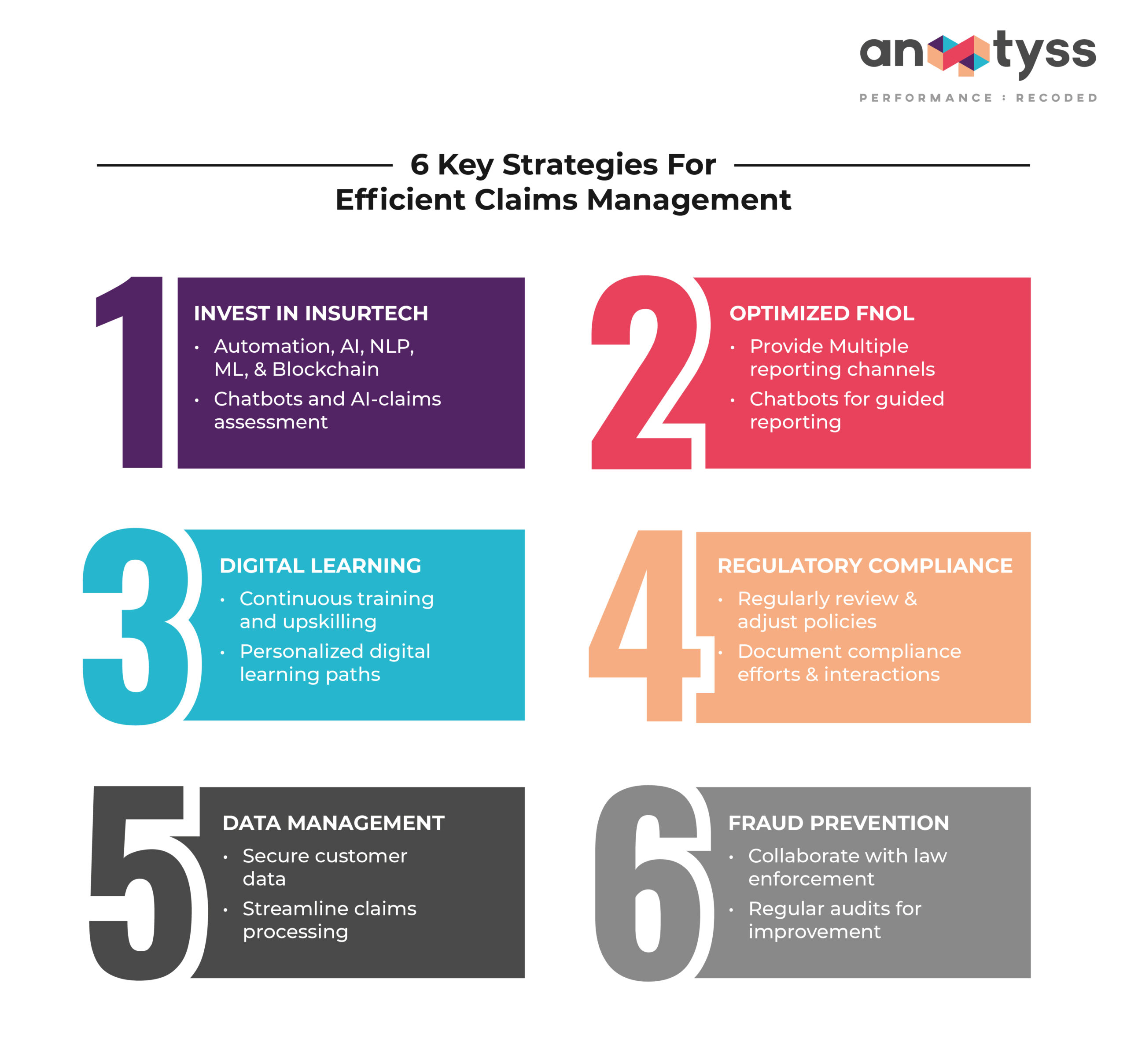
6 Key Strategies for Efficient Claims Management

Effective claims management requires a combination of strategies to ensure that claims are handled promptly, efficiently, and accurately.

6 Key Strategies For Efficient Claims Management infographic

1. Invest in Insurtech

Insurance technology solutions can help streamline the claims management process. These include technologies such as automation, advanced data analytics, AI, NLP, and ML. They can help reduce errors, improve efficiency, and decrease administrative and operational costs involved in managing claims. Some examples of insurtech in claims management are:

  1. Chatbots and virtual assistants for real-time (24/7) support
  2. AI-Claims assessment to quickly and accurately assess claims
  3. Automation, such as Robotic Process Automation (RPA)
  4. Blockchain to improve transparency and security of claims data
  5. Documentation digitization with natural language processing (NLP) and optical character recognition (OCR)
  6. Auto-generated analytics dashboard for real-time insights into claims portfolio

2. Optimize First Notification of Loss (FNOL)

Customer experience is a critical part of claims management. It can affect the reputation of the insurance company based on the FNOL process, which sets the tone for the entire claims experience.

Therefore, insurance companies in P&C or L&A must consider enhancing the FNOL process. For this, they can:

3. Continuous Training and Upskilling with Digital Learning

Insurance companies need to invest in continuous training and upskilling programs to educate their claims professionals and ensure that they acquire the necessary relevant skills and knowledge to handle complex claims accurately and efficiently.

Insurers can leverage digital learning or eLearning courseware for workforce training and upskilling. For instance, Fluent, a proprietary digital learning and knowledge management solution allows employee training through personalized learning paths at their own pace with 24/7 access to learning materials.

4. Dealing with Regulatory Complexity

In the world of insurance, there’s a complex maze of rules and regulations, and these rules can vary from place to place and depending on the type of insurance. Making sure we follow all these regulations can be quite a resource-draining task, and if we don’t get it right, we could face legal trouble and financial penalties.

5. Protecting Data Privacy

Insurance companies handle a ton of personal and sensitive customer data, which can make us a prime target for cyberattacks. Ensuring that this data stays safe and private is a major concern for us. Plus, effectively managing and making sense of all this data to make our claims process smoother can sometimes be a real challenge.

6. Minimize Fraud

Scammers and fraudsters involved in organized crimes often target insurance companies in P&C due to the low-risk and high-gain market. To minimize fraudulent claims, insurance companies must:

Aside from these strategies, insurance companies must invest in the requisite legal expertise to handle claims-related litigation and manage the costs associated with it.

Conclusion

For insurance companies, nothing could be better than processing claims quickly as they hear about a casualty, and they know that the claim is not fraudulent or made up and dishonest. A well-managed claims process can enhance customer satisfaction, reduce costs, and increase profits.

By partnering with a managed services provider (MSP), insurance companies can get access to global talent, insurance technology (insuretech), domain expertise, and infrastructure. A strategic partnership can go a long way and help insurers quickly ramp up or ramp down their capacity by onboarding, training, and upskilling the workforce, including agents and brokers.

A managed services partnership model can improve claims management, free up the in-house resources for more critical tasks, and reduce costs. This in turn can enhance customer satisfaction, which is critical for the company’s reputation and long-term success.

How to Optimize Premium Collection in Insurance: 5 Key Strategies 

Insurance is a fiercely competitive market, and premium collection is one of the most critical aspects of the insurance industry. It is the lifeblood of the industry, which involves collecting payments or dues from policyholders and ensuring that they receive the coverage they have invested in.

It is estimated that the supplier-customer chain model drives approximately 70% of the overall sales or revenue that any insurance company makes.

In addition, intermediaries (brokers and agents) also contribute significantly to this supplier-customer chain management. The problem is that the intermediaries get the insurance from the insurance companies but they don’t pay for it right away.

Usually, the brokerage models have a 30, 60, or 90-day credit-line period. Failing to collect these payments effectively can cause trouble for the insurer and the insured, sometimes with severe consequences.

Therefore, insurance companies need to streamline their premium collection process and methods to sustain operations and achieve profitability while meeting regulatory requirements.

The Importance of Optimizing Premium Collection Strategies

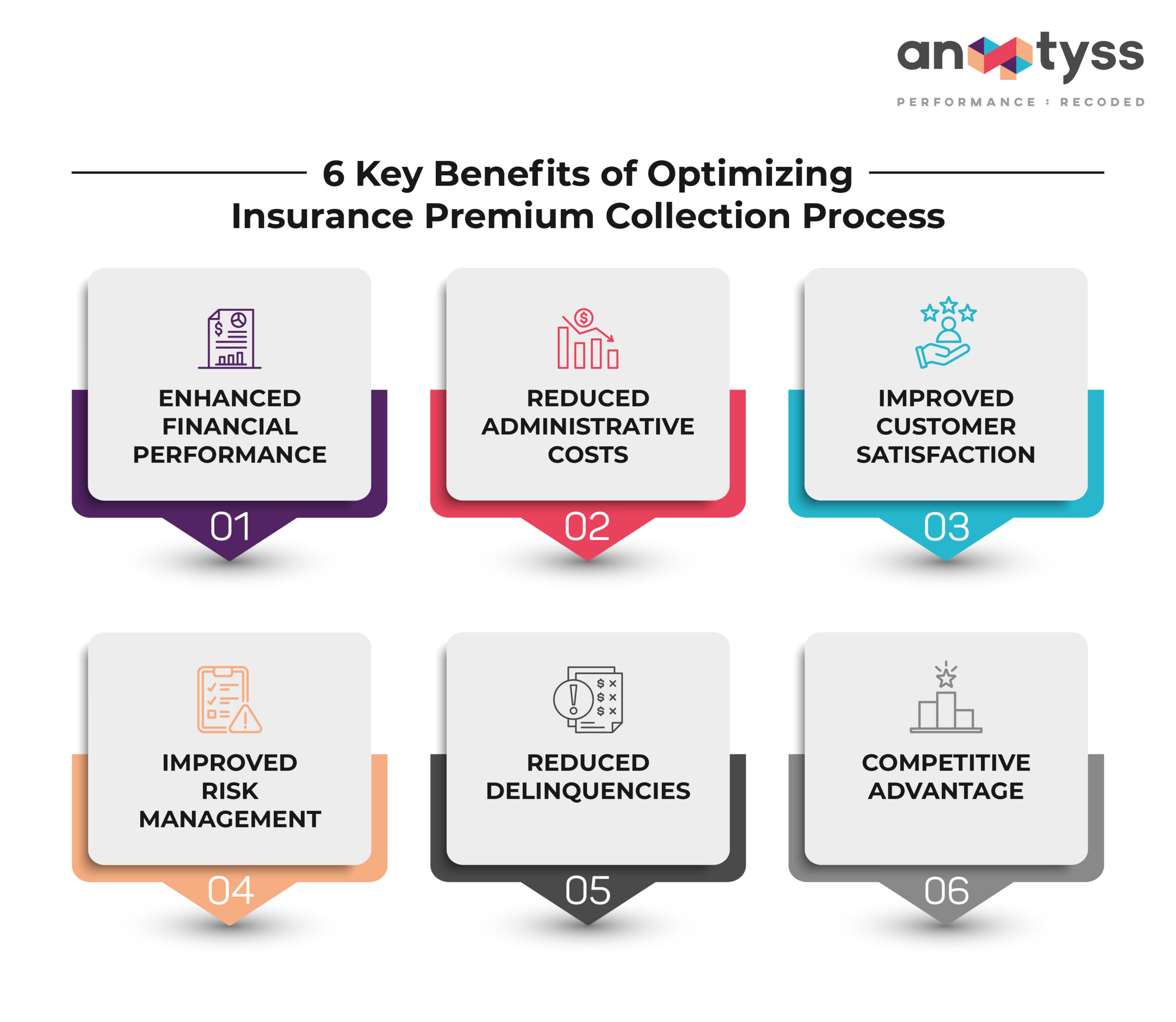
Optimizing the premium collection process can help insurance companies streamline cash flow and plug revenue leaks, resulting in the following benefits:

  1. Enhanced financial performance
  2. Reduced administrative costs
  3. Improved customer satisfaction
  4. Improved risk management
  5. Competitive pricing to policyholders
  6. Reduced delinquencies and late payments

6 Key Benefits of Optimizing Insurance Premium Collection Process infographic

Challenges in Insurance Premium Collection

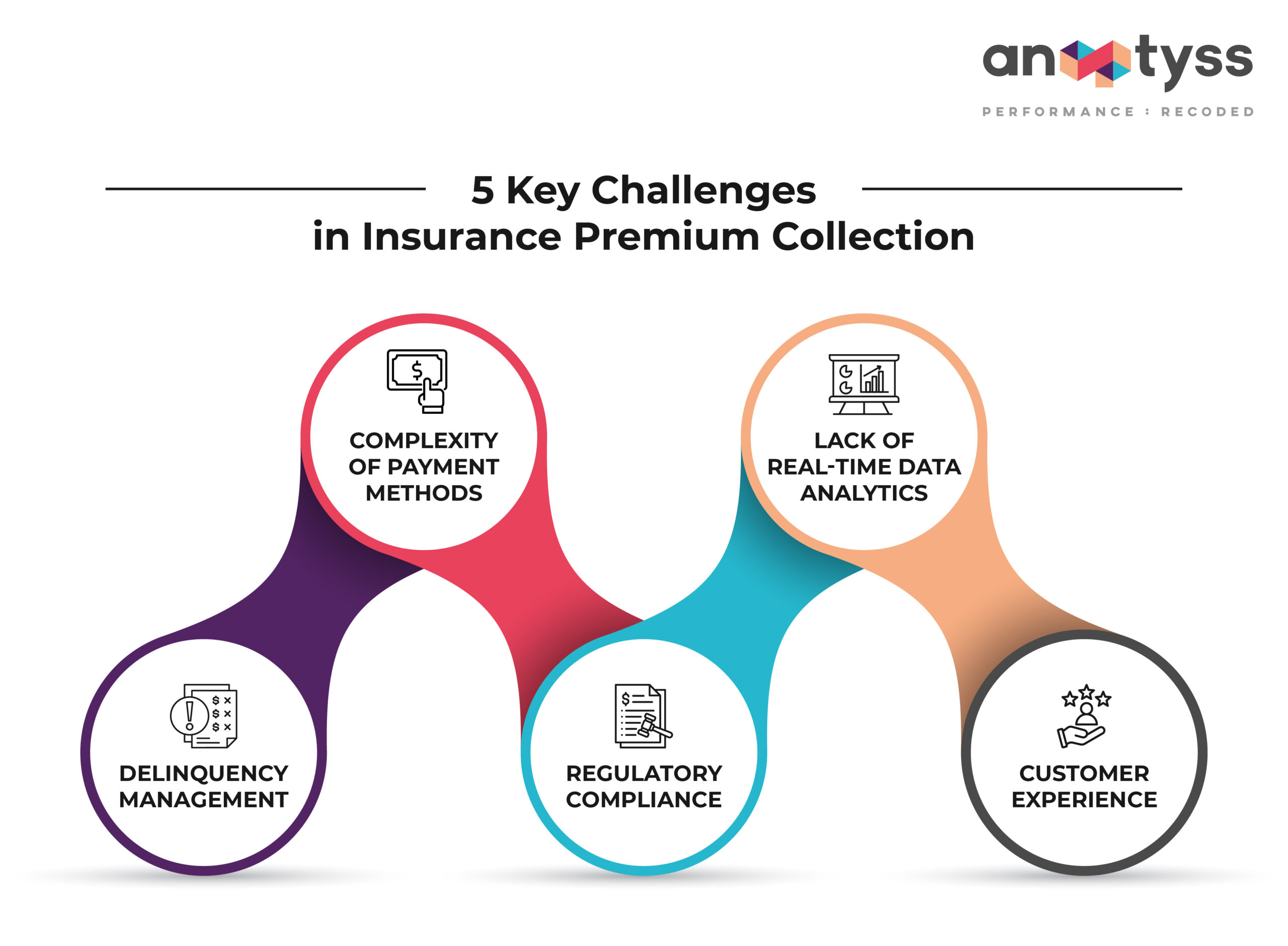
There are three major challenges that insurance companies face when it comes to premium collection:

5 Key Challenges in Insurance Premium Collection infographic

1. Complexity of Premium Payment Methods

Traditional payment methods, such as checks and cash, are prone to error and can be time-consuming and inconvenient for policyholders. This can lead to delays in premium collection and may increase administrative costs for insurers.

2. Lack of Real-Time Data Analytics and Monitoring

Many insurers still rely on legacy systems that do not offer real-time insights related to premium payments, customer behavior, or transactions. As a result, insurers may struggle to identify and address payment issues promptly.

3. Delinquency

Managing overdue premiums can be resource-intensive and can increase the administrative costs linked with managing delinquent accounts. This also leads to a loss of revenue due to unpaid premiums and impacts cash flow.

These can lead to delayed premium collection, increased customer dissatisfaction, and potential revenue loss.

5 Key Strategies for Optimizing Premium Collection

To optimize premium collection, insurance companies can consider the following strategies:

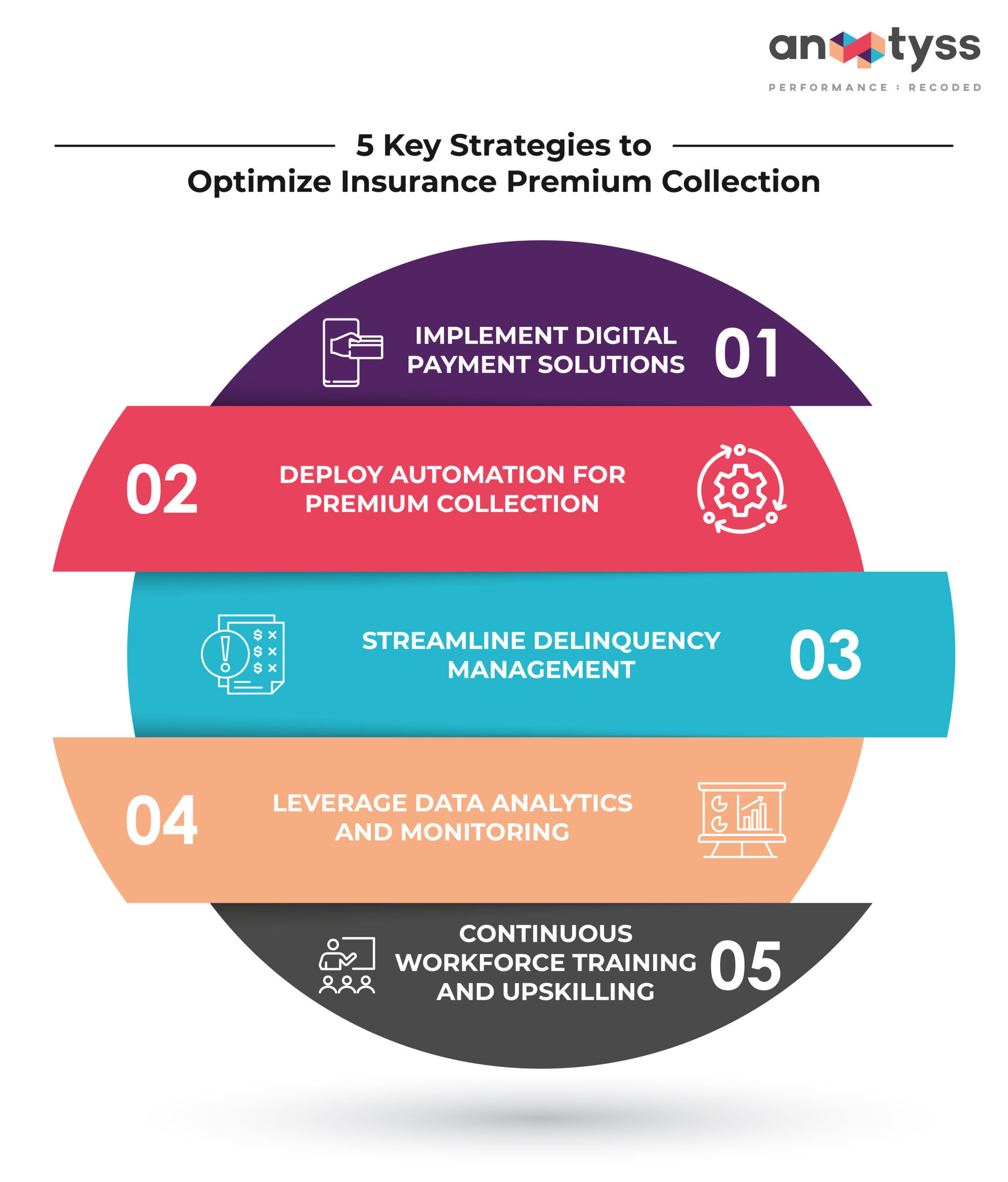
5 Key Strategies to Optimize Insurance Premium Collection infographic

1. Implementing Digital Payment Solutions for the Premium Collection

To optimize premium collection, insurance companies must embrace digital payment solutions and offer secure online payment options to allow policyholders to pay their premiums conveniently anytime, anywhere, using their preferred payment method. This helps:

2. Deploy Automation for Premium Collection

Automation is one of the key enablers for optimizing premium collection processes in the insurance sector. By automating routine tasks and workflows, insurance companies can streamline their operations and focus on critical tasks or cases that require personalized attention. This helps boost customer service and ensure collection success.

For this, insurance companies can follow these tips:

3. Streamline Delinquency Management

Collecting insurance premiums on time can be challenging for insurers. However, it’s critical to maintain healthy financial status and ensure policyholders are covered for the protection they have paid for. To streamline delinquency management and ensure smooth cash flow, insurers can follow these tips:

4. Leverage Data Analytics and Monitoring

Insurance companies need to adopt a data-driven approach to optimize premium collection. By analyzing and monitoring payment patterns, customer behavior, transactions, and other relevant data, insurers can gain invaluable insights into payment trends and identify potential risks as well as gaps.

Continuous monitoring and evaluation of premium collection processes also help minimize revenue leakage, identify areas for improvement, and implement necessary changes to improve the overall collection process.

For example, real-time transaction tracking and reporting can enable insurers to monitor payment status and address any payment issues promptly, such as declined transactions.

5. Continuous Workforce Training and Upskilling

Train your staff with a focus on empathy and problem-solving skills to grow their knowledge base and handle delinquency effectively. Training and upskilling are also important to ensure employees, agents, and brokers understand the legal aspects of the premium collection and grace periods.

Insurers can provide the following training or initiate upskilling programs to effectively reduce delinquency in the insurance and optimize the premium collection process:

This also provides a sense of value to the employees as they feel the company is investing in them and teaching them new skills and abilities that will make them better. As a result, they feel more productive and improve their workplace capabilities.

Conclusion

Optimizing premium collection strategies is crucial for insurance companies to build profitable operations. By offering convenient and secure digital payment options, leveraging data analytics, and streamlining processes through automation, insurers can enhance collection efficiency, reduce administrative costs, and improve customer satisfaction.

By addressing the challenges in premium collection, such as delinquency, insurance companies can optimize their premium collection process and ensure a smooth cash flow for long-term success.

How to Enhance Customer Experience (CX) in the Insurance Sector?

The insurance industry is a complex ecosystem in which the customer journey often involves multiple touchpoints, from the initial research phase to the purchasing of a policy, from filing a claim to renewing a policy. Each interaction shapes the customer’s perception of the insurer. In addition, customer expectations have also evolved.

Therefore, it is high time for insurance companies to expand their focus beyond managing risks and mitigating losses to becoming trusted advisers and allies to their policyholders (customers).

Importance of Customer Experience (CX) in the Insurance Industry

The insurance industry is built on trust.

Customers rely on insurance providers to protect their assets and health and provide financial security in times of need. Therefore, delivering on promises and providing a positive customer experience is crucial in establishing and maintaining this trust.

According to the report “The State of Connected Customer,” 84% of customers think that how a company treats them is just as important as what it sells. However, many businesses, including the insurance sector, are not able to meet these customer expectations.

Customers having a seamless and personalized experience with their insurance provider are more likely to feel valued and satisfied. This, in turn, can increase customer loyalty and retention.

Insurance companies that fail to prioritize customer experience are likely to experience the risk of losing customers to competitors who provide a superior CX.

According to the Capgemini report survey, more than 50% of customers prefer to use three or more channels to research and purchase insurance coverage on average.

Therefore, enhancing customer experience should not just be a matter of good business practice. It is critical for insurance companies’ long-term success and sustainability.

Challenges in the Insurance Industry

The insurance industry faces three main challenges in providing a superior customer experience and service quality.

  1. The complexity of insurance products and processes makes it difficult for the customer to comprehend the terms, coverage, and exclusions, leading to confusion, frustration, and poor customer experience.
  2. Lack of personalization in insurance products and services also poses a significant challenge, as many insurers still rely on a one-size-fits-all approach, which fails to meet customer expectations.
  3. The traditional paper-based manual processes and lengthy claim settlement procedures further contribute to delays and dissatisfied customers.
  4. Single-channel communication for policy issuance, insurance renewals, and customer interaction can help

11 Key Strategies for Enhancing Customer Experience in the Insurance Sector 

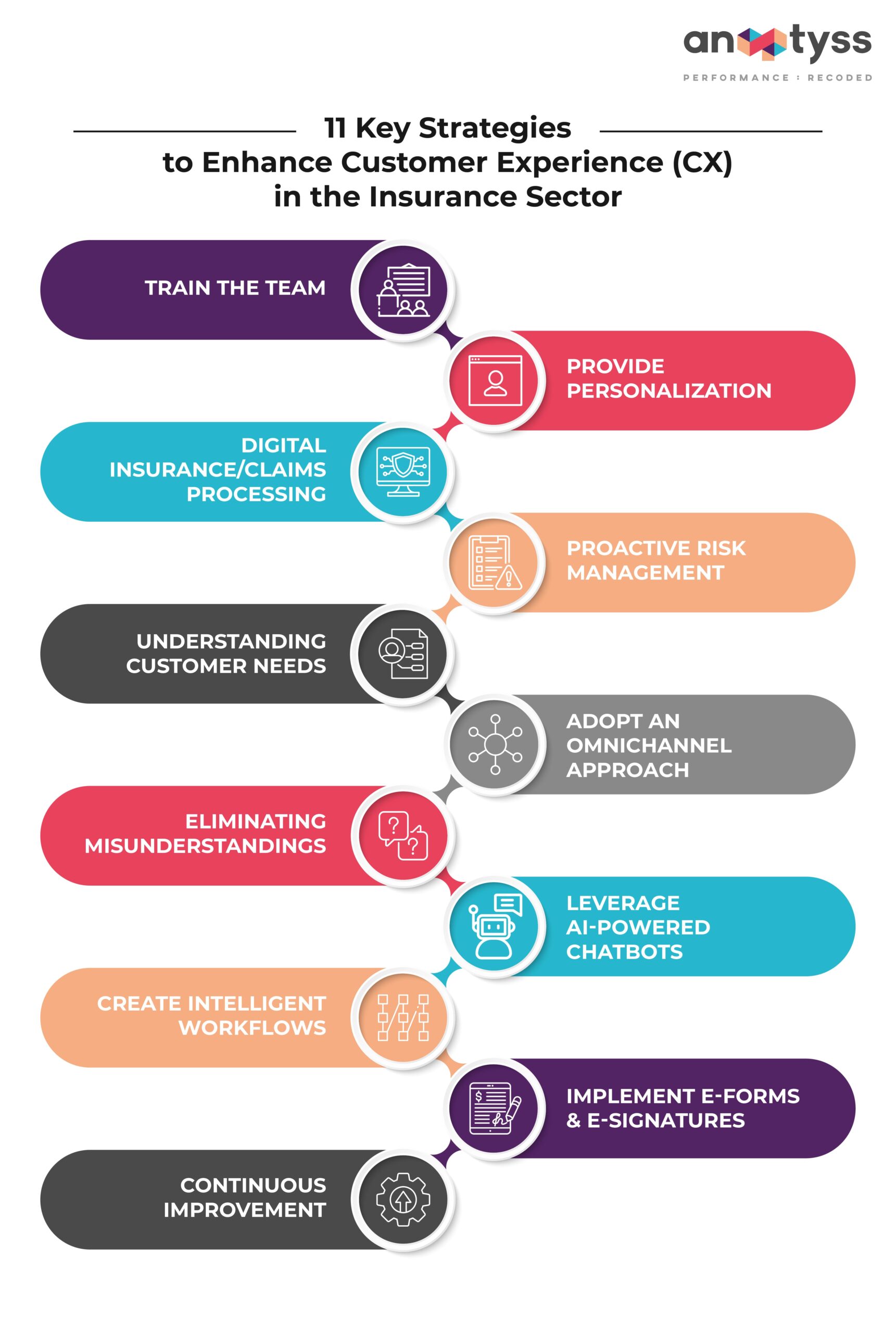
11 Key Strategies to Enhance Customer Experience (CX) in the Insurance Sector infographic

1. Train the Sales and Servicing Team

A well-trained and knowledgeable team is the backbone of excellent customer experience (CX). Invest in comprehensive training programs and technology to help human agents handle customer queries and concerns effectively.

To ensure they have a deep understanding of insurance products, coverage options, and claims procedures, Insurers should:

2. Provide Tailored & Personalized Insurance Solutions

The insurance sector is a highly competitive market that leads to a constant battle of attracting new customers and retaining existing ones. As a result, customers become a mere number than actual people. Treating customers as a commodity is a sure-shot way of losing them permanently. Instead, insurance companies need to focus on hyper-personalization for superior customer experience.

According to McKinsey & Company report, “personalization — or reaching customers at the right time with targeted messaging, offers, and pricing — is the future of insurance marketing.”

For this, insurance companies can:

Addressing customers’ requirements can make them feel valued and demonstrate that the insurer understands their needs and is committed to providing a tailored experience.

3. Digital Insurance/Claims Processing

In the digital age, customers have easy access to information and alternatives they can use to compare insurance providers and policies and switch to a different insurer in a few clicks.

Therefore, insurance companies must embrace digital transformation and streamline their insurance and claims processing.

Automating and digitizing the processes can improve efficiency and increase convenience and transparency.

4. Proactive Risk Management

The insurance industry encounters various risks in its line of business. These risks include financial, strategic, operational, compliance, reputational, ESG, etc., which can have catastrophic effects on the organization and threaten long-term sustainability. Therefore, insurance companies need a proactive approach toward risk management that helps focus on anticipating risk to prevent damage.

A proactive risk management program helps eliminate potential risks before they harm the business. The following are critical for a proactive risk management program:

Proactive risk management also requires process automation, AI tools, and data analytics to analyze and measure risk and the efficiency of risk controls.

5. Understand Customer Needs & Behavior

Understanding the following is crucial to enhancing the customer experience:

To gain insights into customer expectations and pain points,

Insurers also need to understand why a customer buys a policy and what benefits they will get.

This understanding can help the insurance company be more customer-centric and proactive in anticipating customer needs and making informed decisions for a personalized experience.

6. Listen to Customers – Adopt an Omnichannel Approach to Interact with Customers

Actively listen and respond to customer feedback. Encourage customers to share their experiences, whether positive or negative. Also, demonstrate that their opinions matter.

By listening to the customers, insurers can:

For this, insurers can take the following steps:

7. Eliminate the Risk of Misunderstanding and Frustration

Misunderstanding of policy coverage is one of the biggest frustrations that customers face. Therefore, insurance providers must stay transparent with their policies, pricing, and procedures. The following points can help eliminate potential risks of misunderstanding:

Eliminating misunderstandings can instill confidence in customers and assure them of the expected coverage.

8. Leverage Artificial Intelligence (AI)-Powered Chatbots & Personalized Interactions

Emerging technologies, such as Artificial Intelligence (AI), Machine Learning (ML), Natural Language Processing (NLP), etc., have revolutionized customer service in various industries, including the insurance sector.

To ensure superior customer experience, insurers can Implement AI-powered chatbots to enable personalized interaction with customers. The benefit of deploying these chatbots is that:

9. Create Intelligent Workflows for the Agents/Brokers and the Policyholders

Implement and deploy smart automation to automate and streamline workflows for both agents/brokers and policyholders.

Use intelligent digital solutions to automate routine and manual tasks to reduce the workload and allow agents to focus on innovative ideas that convert into business and provide personalized service/advice to customers.

For instance,

10. Implement eForms and eSignatures

Replace traditional paper-based forms with electronic forms (eForms) to eliminate time-consuming and frustrating errors. Implement eSignatures to reduce customer rework and legal & compliance Issues.

eForms and eSignatures can help insurers streamline the application and claims processes, making them more efficient and error-free.

By digitizing these processes and providing customers with user-friendly, accessible means of submitting information and applications, insurers can reduce costs and enhance overall customer experience while fostering a competitive edge in the digital landscape.

11. Continuous Improvement

Continuous improvement is fundamental to improving customer experience and fostering customer-centricity that empowers organizations to deliver a better experience.

It involves feedback loops with customers to improve their experience, resulting in stronger customer loyalty and sustained business success. It also involves:

Embrace Customer – Centricity in the Insurance Sector

Customer experience plays a critical role in the success of insurance companies. Organizations that prioritize customer-centricity and embrace strategies to enhance CX are going to gain a competitive edge and build long-term customer loyalty.

By training the team, providing personalized tailored solutions, leveraging digital technology, listening to customers, and understanding their needs, the insurance provider can improve its products and services, eliminate errors, and augment the overall customer experience.

How to Deliver Effective Insurance Services with Managed Services and Digital Solutions

In the fast-paced world of insurance, staying ahead of the competition requires more than just offering competitive rates and excellent customer service. Insurance providers must continually adapt to evolving market trends and emerging technologies to ensure their operations remain efficient, cost-effective, and customer-centric.

One way to achieve this is through adopting digital solutions and leveraging managed services to run operations. Unlike traditional outsourcing, managed services in financial services are strategic partnerships that can help financial institutions in the insurance sector harness the power of digital technologies. The strategic arrangement can streamline insurance operations, enhance the often-complex policy issuance process, meet regulatory demands, mitigate risks, and provide superior customer experience.

10 Key Roles of Managed Service Providers (MSPs) in Insurance

Managed services are provided by a third-party provider (MSP) to help an organization manage its insurance operations. MSPs offer a strategic partnership that can help insurers overcome the challenges related to scalability, compliance, risk, specialized expertise, etc.

Managed Services provide flexibility to quickly ramp up or ramp down the workforce and respond to the changing market demands while ensuring profits. From hiring and onboarding high-quality talents to training and upskilling, MSPs take care of all the stages and help insurance companies meet the rising customer needs effectively.

Managed services for an insurance company can cover various activities and help reduce costs by outsourcing non-core functions.

1. New Business

MSPs can be invaluable partners, especially for new businesses entering the insurance sector. They can get quick access to specialized expertise that can help them navigate complex challenges and risks in the sector. MSPs can help streamline the process by providing insurers with access to digital technologies that can automate tasks such as quote generation, policy set-up, and issuance. These digital solutions can also create smart workflows for policyholders and agents/brokers to track and update pending requirements, from policy set-up to claim management.

2. Policy Administration

Managed service providers can handle policy issuance, changes, renewals, and cancellations. They can also manage underwriting tasks, including risk assessment and pricing, make amendments efficiently, and streamline document processing, storage, and compliance. They also implement automation to handle routine policy administrative tasks to speed up the processes, minimize human errors, and reduce manual workload.

3. Claims Processing

Outsourcing claims processing can help insurance companies improve claims efficiency, reduce fraud, and enhance customer service. Managed service providers can handle everything, from data capture, data entry, and claims intake to claim validation and settlement. They assist insurers in validating the accuracy of claim information and allow faster claims processing for improved customer experience.

4. Customer Service

Managed service providers can assist with customer inquiries, policyholder support, and related tasks through automation, self-service options, and various communication channels, including call center services (phone), email support, and chat. They help enhance customer experience by answering common queries and inquiries, resolving issues, and ensuring clear and timely communication.

5. Data Management and Analytics

Data is critical in the insurance industry. Managed services can include data entry, data cleansing, data analytics, and reporting services to help insurers extract insights from vast amounts of insurance data and make data-driven decisions related to:

6. IT Infrastructure and Support

Many insurance companies outsource their IT infrastructure and support, including data centers, network management, cybersecurity, and helpdesk services, to ensure the reliability and security of their systems. MSPs may manage and maintain an insurer’s IT infrastructure, including servers, networks, and security systems, to provide high availability, data security, and disaster recovery.

7. Document Management

Handling, processing, and storing documents is crucial to insurance operations. Managed services can provide document scanning, indexing, storage, and retrieval solutions.

8. Compliance and Regulatory Support

Insurance is heavily regulated, and compliance is paramount. Managed service providers can assist with compliance monitoring, reporting, and adherence to regulatory requirements. This also includes reviewing policies, processes, and documentation to align with regulatory requirements. They also help insurance companies to compile and file necessary compliance/audit reports accurately and timely for compliance.

9. Fraud Detection and Prevention

Managed services can offer insurance fraud detection and prevention solutions, such as machine learning algorithms and analytics, to identify patterns, anomalies, and inconsistencies and detect potentially fraudulent claims or activities. They also assess claimants’ behavior to find if it aligns with typical patterns, such as their claim history, medical history, and geographic location. If deviations are found, they raise red flags.

10. Digital Transformation

As the insurance industry evolves, managed services can support digital transformation initiatives, including the implementation of advanced technologies like AI, machine learning, and blockchain. They can help insurers respond quickly and stay competitive in the continuously evolving market.

By outsourcing these activities to a managed services provider, insurance companies can free up their resources to focus on core business activities.

Partner with MSPs to Unlock Excellence in Insurance

In a highly competitive insurance services landscape, staying ahead requires a strategic approach to operations. Managed Service Providers specializing in insurance services are instrumental in helping insurers optimize operational efficiency, with a particular focus on policy issuance.

By leveraging digital solutions, automation, data analytics, and expertise, MSPs enable insurance companies to streamline their processes, enhance customer experiences (CX), mitigate risks, reduce costs, and stay agile in an ever-changing industry.

At Anaptyss, we are committed to empowering insurance companies with the tools and support they need to thrive in the digital age. Our tailored solutions and expertise in insurance services are designed to keep our clients at the forefront of the industry, delivering effective insurance services that meet the evolving needs of policyholders.

In conclusion, the partnership between insurance companies and Anaptyss is a win-win scenario. As a Managed Service Provider specializing in insurance services, our primary objective is to help insurance companies thrive by providing them with the tools, expertise, and resources they need to excel in a competitive marketplace. Insurers can focus on core business activities while we handle the complexities of managing their operations efficiently. Together, we can create a more resilient, customer-centric, and competitive insurance industry.

How to Choose the Right Managed Services Provider for Your Financial Services

Choosing the right managed services provider (MSP) for your financial services operations is a critical decision for the success and stability of your organization. A strategic partnership with MSP can go a long way and help shape your financial institution’s journey toward efficiency and innovation.

When evaluating potential providers, it’s critical to consider factors, including their industry expertise, capabilities, scalability, customization, and most importantly, a proven track record. An MSP partner with specialized industry knowledge can help your bank or financial institution effectively navigate challenges and mitigate risks, including compliance risk management.

5 Key Considerations While Choosing Managed Services Provider for Financial Services

1. Industry Expertise and Experience

The financial services industry has unique technological and regulatory requirements. Therefore, you must look for providers with a deep understanding and proven track record in the financial services industry.

An experienced MSP understands the nuances, compliance-specific requirements, and security protocols, and provides tailored solutions for your specific needs with global consistency. Below are some key factors to evaluate the expertise and experience of MSP:

2. Technology Capabilities

Assess the provider’s technological infrastructure and capabilities. Ensure they have the necessary systems and infrastructure to support your organization’s operations and deliver the desired outcomes. Below are some key points you can consider:

This case study shows how a community bank with the help of a reputed MSP could identify 48% more accurate fraud transactions with a customized automated data validation tool.

3. Data Security and Compliance

Compliance and data security are most critical and paramount in the financial services industry. Therefore, it is critical to ensure that the provider has robust security measures in place and adheres to industry regulations and standards.

Also, visit their premises to verify that they employ robust security measures and conduct regular audits to ensure the safety and security of sensitive financial data. Compliance- focussed partner mitigates the risk of data breach and potential penalties. Look for the following factors in the MSP for the evaluation:

4. Scalability and Flexibility

The banking industry is dynamic and needs to adapt to the changing market demands and ramp up/ ramp down the operations based on the changing business needs. Ensure that the service provider offers the required scalability to support the bank’s growth trajectory. They must have the capacity to handle demand fluctuations and meet the following criteria:

5. Agility to Support Business Continuity

Issues, risks, and challenges can arise at any time. A dependable managed services provider should offer round-the-clock monitoring and support. Swift response times and proactive monitoring can help minimize disruptions and allow your financial institution to provide uninterrupted services to clients. In addition, consider the following key factors for the evaluation of MSP support:

A case study shows how Anaptyss helped a community bank commission a fully automated digital knowledge management and e-learning center of excellence for banks with a 100% updated knowledge repository and 1900+ digitized business process blueprints.

Also, see how agile methods drive success from this real-world example where a US‑Based Consulting Firm Attained 60% Faster Turnaround Through Agile Program Management and Business Analytics.

3 Common Misconceptions About Managed Services Providers

Despite the numerous benefits of managed services, some common misconceptions may deter financial institutions or banks from embracing this transformative approach.

Below we have addressed the three most common misconceptions:

1. Loss of Control

One concern often raised is the fear of losing control over critical functions by outsourcing them to a managed services provider. However, reputable providers work in close collaboration with their clients, ensuring alignment with organizational goals and objectives. Financial institutions retain control and oversight while benefiting from the provider’s expertise and resources.

2. Lack of Customization

Another misconception is that managed services offer a one-size-fits-all approach, lacking customization for specific business needs. However, leading providers understand the unique requirements of financial institutions and tailor their services accordingly. They work closely with organizations to design solutions that align with their objectives, ensuring a customized approach.

3. Security Risks

Data security is a top concern for financial institutions, and some may worry about the potential risks associated with outsourcing sensitive functions. However, reputable managed services providers prioritize security and invest in robust measures to protect data and ensure compliance with industry regulations. By partnering with a reliable provider, financial institutions can mitigate security risks and enhance their overall security posture.

Conclusion

When it comes to choosing the right managed services provider for your financial services institution, the stakes are high. The correct partner can elevate your operations, enhance security, and drive growth.

At Anaptyss, we understand the unique needs of the financial sector and offer tailored managed services solutions that align with your institution’s vision and empower your financial services for success in the digital era.

For more on value‑driven delivery models, our white paper Modernizing Financial Services with a Value‑Based Delivery Ecosystem White Paper offers insights.

Further details can be found in our e‑book resources such as Enterprise Risk Management in the Banking and Financial Services Industry.

How are Managed Services Different from Traditional Outsourcing in Banking?

Managed services and outsourcing are often used as synonyms. However, there is a major difference between the two. Managed Services Providers (MSPs) provide on-demand support and offer a range of benefits, from cost reduction, scalability, and access to specialized expertise to better organize, operate, and safeguard businesses. As a result, many banks and financial institutions are turning to managed services as a more strategic response.

Traditional Outsourcing in the Banking Industry

Historically, banks have relied on various outsourcing models to maximize their resource efficiency. These models have evolved from business process outsourcing (BPO) to cost mutualization.

While cost reduction remains a key driver for outsourcing decisions, firms are now also seeking specialized knowledge and long-term partnerships to manage critical processes that require vast internal and external resources, drive innovation, and maintain a competitive advantage.

However, traditional outsourcing models may no longer be suitable for banking operations due to high risks and the need for close integration with the organization, such as compliance, which costs the banking industry nearly $270 billion annually. Meeting regulatory compliance demand alone costs ~10% of the operating costs.

It is estimated that banks have spent ~$200 billion on consulting services post-financial crisis for regulatory compliance.

Evolution from Traditional Outsourcing to Managed Services

Managed services represent the next stage in the evolution of outsourcing. It refers to the strategic partnerships that are built on experience-driven and outcome-based relationships. These collaborations emphasize a high degree of operational integration and scalability, harnessing specialized domain skills, process expertise, and technology intervention offered by the managed services partner.

Unlike traditional outsourcing, managed services providers help financial institutions leverage their expertise, resources, and infrastructure to streamline operations, enhance efficiency, and achieve specific goals, all while maintaining a strong focus on delivering valuable outcomes and compliance.

It also helps banks and financial institutions:

Managed services also provide access to the latest technologies and knowledge base that can help banks improve the outcomes for critical risk, regulatory, cyber, legal, and compliance operations.

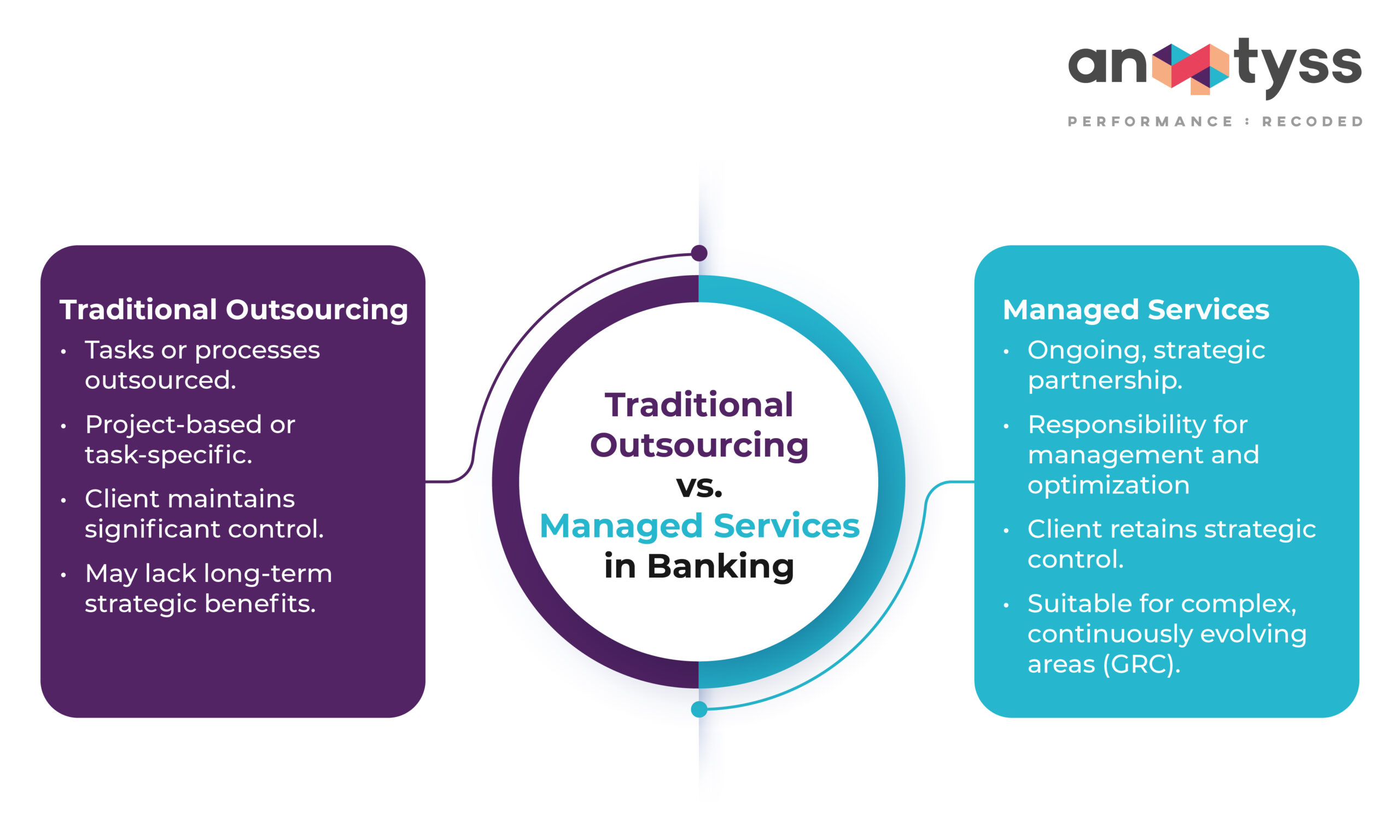
Traditional Outsourcing vs. Managed Services in Banking

Benefits of Managed Services in Banking

Managed services play a crucial role in streamlining financial services by providing a range of solutions and services that help financial institutions better optimize and operate their businesses.

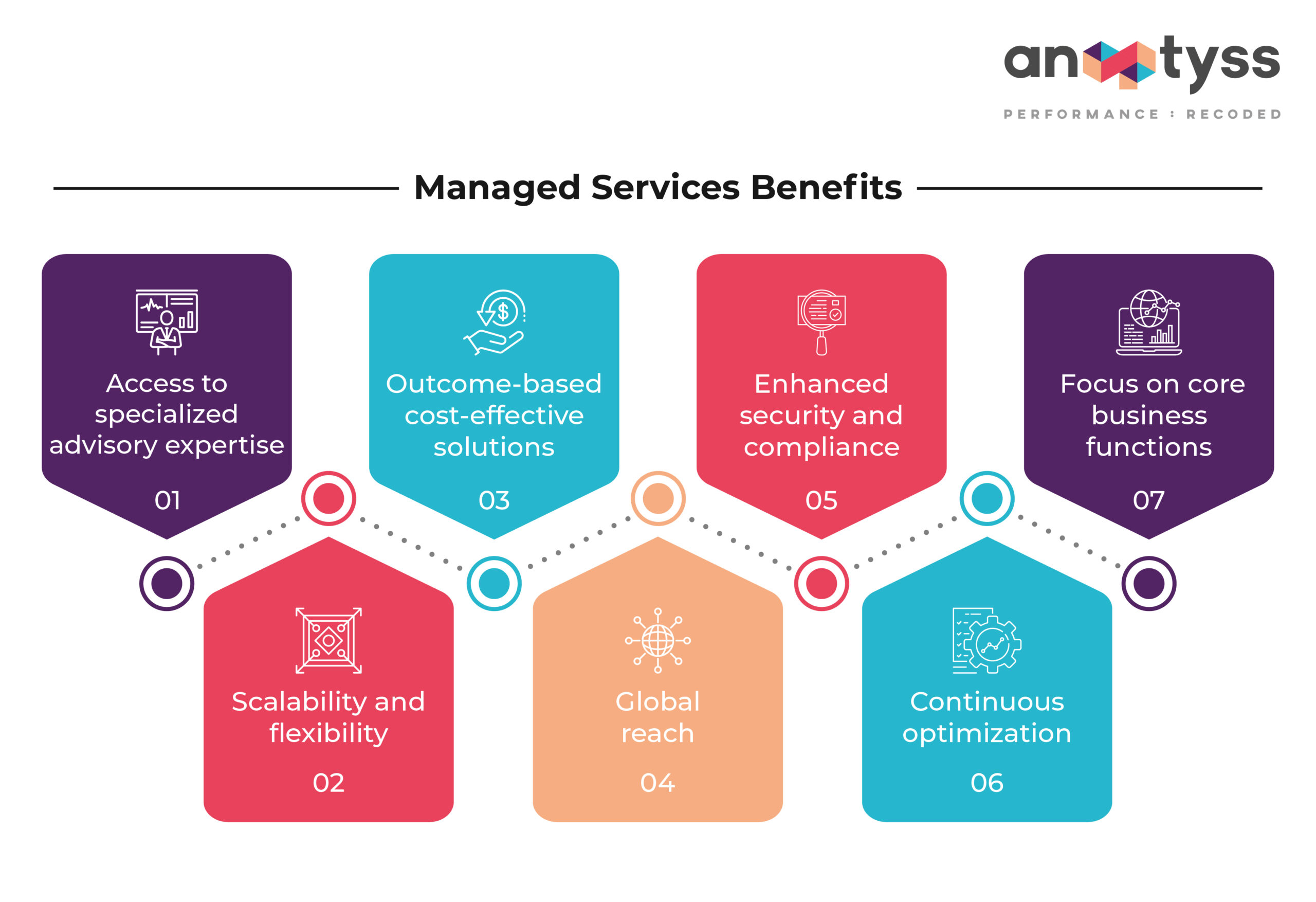
Managed Services Benefits

  1. Immediate Access to Domain Expertise: Managed services offer specialized knowledge, expertise, and talent at scale to solve complex problems and meet fluctuating market demands. For example, internal control testing is one of the areas where banks can leverage specialized talent and expertise to identify weaknesses and manage enterprise risks.
  2. Outcomes-Based Delivery & Value-Based Pricing: The managed services partnership model emphasizes collaboration and outcomes-based pricing, where service providers have a vested interest in achieving the desired outcomes for their clients.
  3. Improved Project Control and Manageability: Managed services model provides closer integration with the organization, allowing for greater control and collaboration compared to transactional outsourcing models.
  4. Scalable Operations to Support Ramp Up/Ramp Down: Financial services can leverage scalability with this model, which is an effective solution to address demand fluctuations across markets and time frames.

What to Look for in a Managed Services Provider?

When it comes to choosing the right managed services provider for financial services, the stakes are high. It’s one of the most crucial decisions to make that can elevate your operations, enhance security, and drive growth.

Although cost is an important consideration, it should not be the sole determining factor. Instead, organizations should focus on:

  1. Strategic fit
  2. Level of investment
  3. Global consistency
  4. Domain and regulatory maturity

A well-structured partnership with a managed services provider can provide access to innovative technologies, deep industry knowledge, and a scalable global delivery infrastructure.

Below are the 5 key considerations when it comes to choosing managed services providers for financial services:

  1. Industry expertise and experience
  2. Technology capabilities
  3. Data security and compliance
  4. Scalability and flexibility
  5. Support

To illustrate the potential benefits of managed services, here’s a case study that outlines how Anaptyss helped a community bank commission a fully automated digital knowledge management and e-learning center of excellence with a 100% updated knowledge repository and 1900+ digitized business process blueprints.

Conclusion

As banks and financial institutions continue to face regulatory and market challenges, managed services offer a strategic response to achieve cost efficiency, enhance compliance, and strengthen risk management capabilities. The potential rewards of adopting managed services are significant, from cost efficiency to access to the latest technologies and expertise. Managed services provide a strategic solution for banks to navigate the challenges of risk management, compliance, and operational efficiency in an increasingly complex and dynamic industry.

DKO™
Life@Anaptyss
Careers