Boosting Workforce Training in Banking with Digital Learning

Banking and financial services are transforming due to technological disruption, changing customer preferences, and regulatory shifts. While financial institutions are looking to adopt digital solutions and optimize processes, they know their workforce (or talent pool) is the key to navigating the change.

Employee training is a recognized way for workforce skilling; however, organizations including financial institutions, now look for more effective learning approaches that can allow:

  1. Rapid skilling: Faster onboarding and transition of new talent to production
  2. Flexible training: Supporting individual preferences for inclusion and engagement
  3. Scalable learning: Ramp up/ramp down programs to support batching
  4. Measurable outcomes: Ability to track, measure, and report the learning outcomes

How does Digital Learning Support Workforce Training in Banking?

Digital learning or e-learning can help banks augment their workforce skills and build hands-on execution capabilities within a few weeks to months, as follows:

1. Flexible and Scalable Training

Digital learning offers more choices to upskill and reskill workforces on niche processes:

According to the PwC report – a substantial 46% of financial services CEOs worldwide say that significant retraining/upskilling stands as the most important initiative to close a potential skills gap. Digital learning platforms play a crucial role in addressing these skill gaps through upskilling and reskilling initiatives.

2. Employee Onboarding

Traditional employee onboarding methods typically face resource constraints in terms of time, logistics, and costs. The digital learning approach can help banks transcend these limitations and save significant time and cost.

 3. Knowledge Management

According to the PwC report – 44% of CEOs worldwide responded that they are missing their growth targets due to the ‘availability of key skills.’

4. Determine Operational Efficiencies

With tech-enabled learning, banks, and financial institutions can improve their processes by identifying, collecting, and distributing the knowledge when necessary, leading to smoother operations. Digital learning in knowledge management can produce significant outcomes to enable banks:

Benefits of Digital Learning in the Banking Industry

The digital learning approach can support knowledge management and transfer by capturing, organizing, and sharing operational capabilities in the form of digital learning repositories (DLR). These repositories can be further updated by identifying the skill gaps, curating up-to-date content, and using digital learning platforms regularly (preferably every 6-months) to organize and structure the content for easy accessibility.
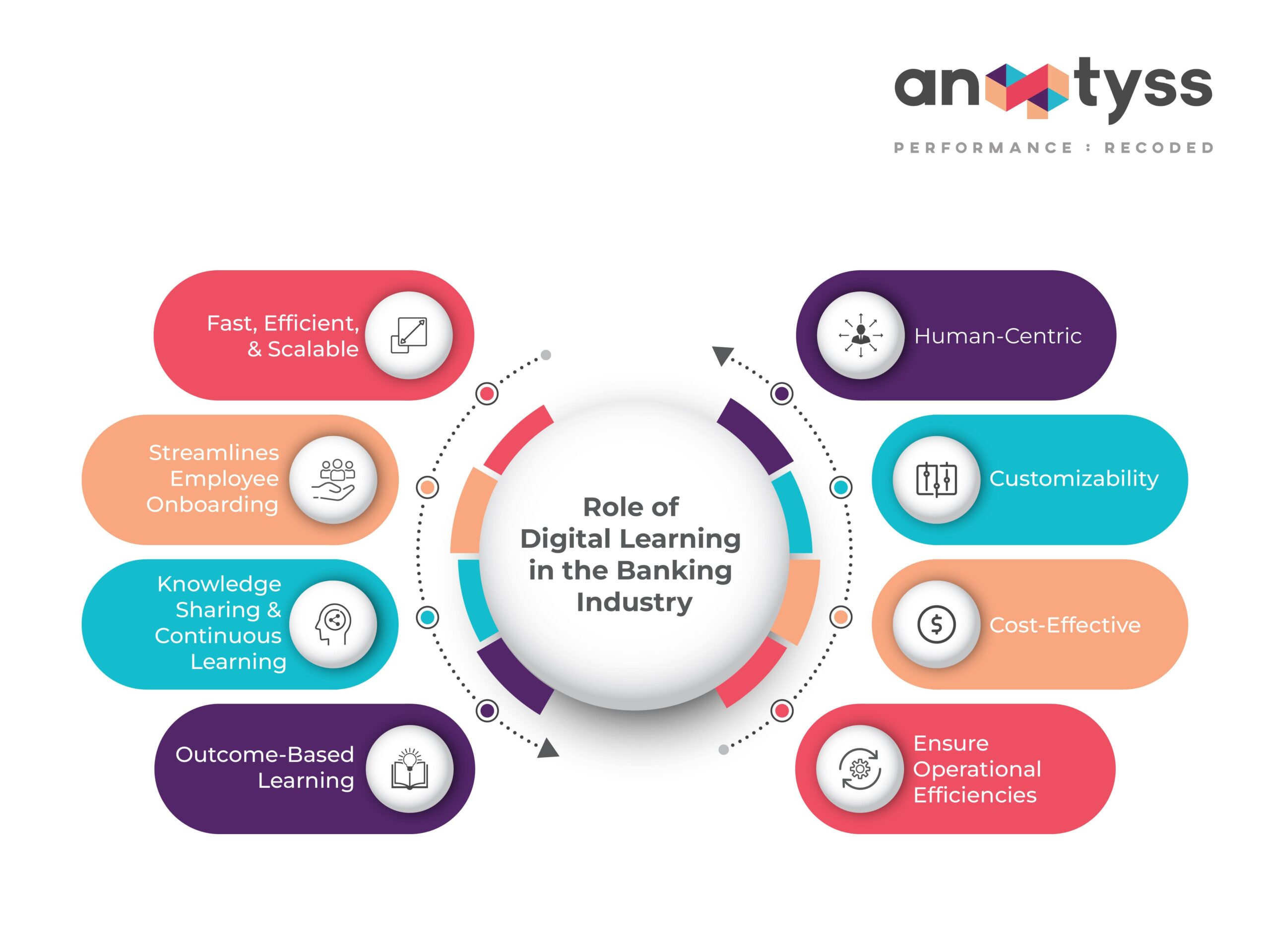
Role of Digital Learning in the Banking Industry

1. Outcome-Based Learning

Outcome-based learning program refers to defining specific learning outcomes or goals that employees are expected to achieve by the end of the onboarding, training, or upskilling program. They are designed to help employees acquire skills relevant to the current market and emphasize employee demonstration rather than curriculum.

It also provides them with insightful data on the progress and assessment of the employees that helps them keep track of and monitor the effectiveness of their knowledge management initiatives.

This further enables them to identify gaps and areas for improvement, ensuring meaningful long-term outcomes.

According to this L&D 2023 Workplace Learning Report, 25% of skill sets for jobs have changed by around 25% since 2015. By 2027, this number is expected to double.

2. Human-Centric

With digital learning platforms, banks, and financial institutions can efficiently deliver tailored content to new hires or existing employees based on their strengths and weaknesses for personalized and effective learning. It helps them retain top talents and ensure faster employee development. It further helps banks:

3. Customizability

Banks and financial institutions can personalize learning experiences to meet specific needs, preferences, and objectives. With digital learning platforms, banks can create a learning environment that resonates with their organizational business objectives and requirements of the diverse skill set of their workforce. It enables banks to:

4. Cost-Effective

Banks can reduce training costs by implementing digital learning or eLearning and replacing classroom training with online learning. It can help save on resources and eliminate the expenses related to printing materials, trainers, travel, or physical venues. It also helps banks:

89% of L&D pros agree that proactively building employee skills will help navigate the evolving future of work

Conclusion

Digital learning can help banks upskill the workforce, manage knowledge, and onboard new talent. A digital learning solution such as Fluent™ addresses workforce training and knowledge management through tailored courseware, digital knowledge libraries, and built-in analytics.

The Role of Managed Services in Streamlining Financial Services

In the digital-first world, the financial services industry is constantly evolving, navigating the unpredictable economic and regulatory landscape driven by the need to streamline operations and increase productivity.

To compete and stay ahead in the market, financial institutions are increasingly considering the managed services model to better organize, operate, and safeguard their business.

Managed services are different from the traditional outsourcing that banks, up until now, relied on to maximize their resource efficiency. Managed services provide a range of solutions and services that help financial institutions better optimize their operations, drive growth, and accelerate digital transformation in this unpredictable fast-paced environment.

6 Key Challenges in the Financial Services Industry

The financial services industry operates in a complex and highly regulated environment, facing numerous challenges that are unique to their line of business. Some of the key challenges include:

1. Need for Scalable Operations and Delivery Capacity

At times, financial institutions may need the capacity to serve higher volumes of customer requests and transactions. As demand increases in the market, banks and financial institutions often struggle to find and hire skilled employees quickly to meet the rising workloads.

This shortage of talent pool and skilled workforce to meet the rising demands also puts a strain on existing resources. As a result, it can divert attention from core banking functions, digitization initiatives, and innovation.

2. Maintaining Operational Efficiency and Throughput

As the customer base increases, banks need to deploy their in-house employees to support the increased workload and influx of larger transaction volumes to ensure consistency in their services. This increases overheads and inefficiencies leading to downtime, slower response rates, bottlenecks, and errors. The situation can impact quality and lead to risks.

3. Regulatory Compliance in an Emerging Landscape

To stay compliant with the constantly evolving regulatory compliance, laws, industry standards, etc., requires extensive monitoring. However, when customer interaction and transactions increase with the rise in demand, it can potentially lead to compliance gaps and hefty penalties.

4. Effective Adoption of Technology

Many banks and financial institutions are still running on legacy systems and have been slow in adopting digital solutions. They often struggle when it comes to introducing or implementing new technologies hampering their ability to gear up for transforming their capabilities. This could be due to a variety of reasons, such as

5. Employee Onboarding, Training, and Upskilling

Continuous employee training and upskilling are crucial for engaging talent and building operational expertise. However, banks often encounter resource constraints in terms of logistics, time, and costs. In addition, the following are also some major challenges that banks encounter when it comes to onboarding, training, and skilling workforce:

The U.S. Chamber of Commerce Foundation reported that 74% of hiring managers in the United States faced difficulty finding skilled candidates for their job openings in 2019.

6. Business Continuity

Business continuity in banks and financial institutions may be affected due to several factors, including regulatory violations, cybersecurity threats, staffing demands due to a sudden rise in market demand, IT failures, geopolitical events, etc.

Lack of a comprehensive and documented recovery plan, inadequate backups, system or network vulnerabilities, insufficient technology infrastructure, etc., can hinder the restoration after a disruption, leading to extended downtime, and risk of non-compliance, and reputational and financial loss.

These challenges can overwhelm banks and financial institutions, especially SMEs, and can hinder their productivity and growth. With managed services, financial institutions can receive expert and timely support and specialized services to overcome these obstacles.

5 Key Benefits of the Managed Services Model in the Financial Services Industry

A strategic partnership with a managed services provider can go a long way and help the financial services industry transform, run business operations and processes, and improve operational quality and efficiency. Particularly the people, processes, and locations, which are expensive to maintain.

Managed service partners leverage emerging technologies such as artificial intelligence, machine learning, and automation to streamline redundant processes and eliminate manual tasks. For instance, robotic process automation (RPA) can automate repetitive and rule-based processes. This can further

By outsourcing most of the non-core functions to the managed services provider, financial institutions can effectively allocate their in-house resources to focus on value-added activities and innovation.

In addition, managed services in the financial services industry offer the following key benefits:

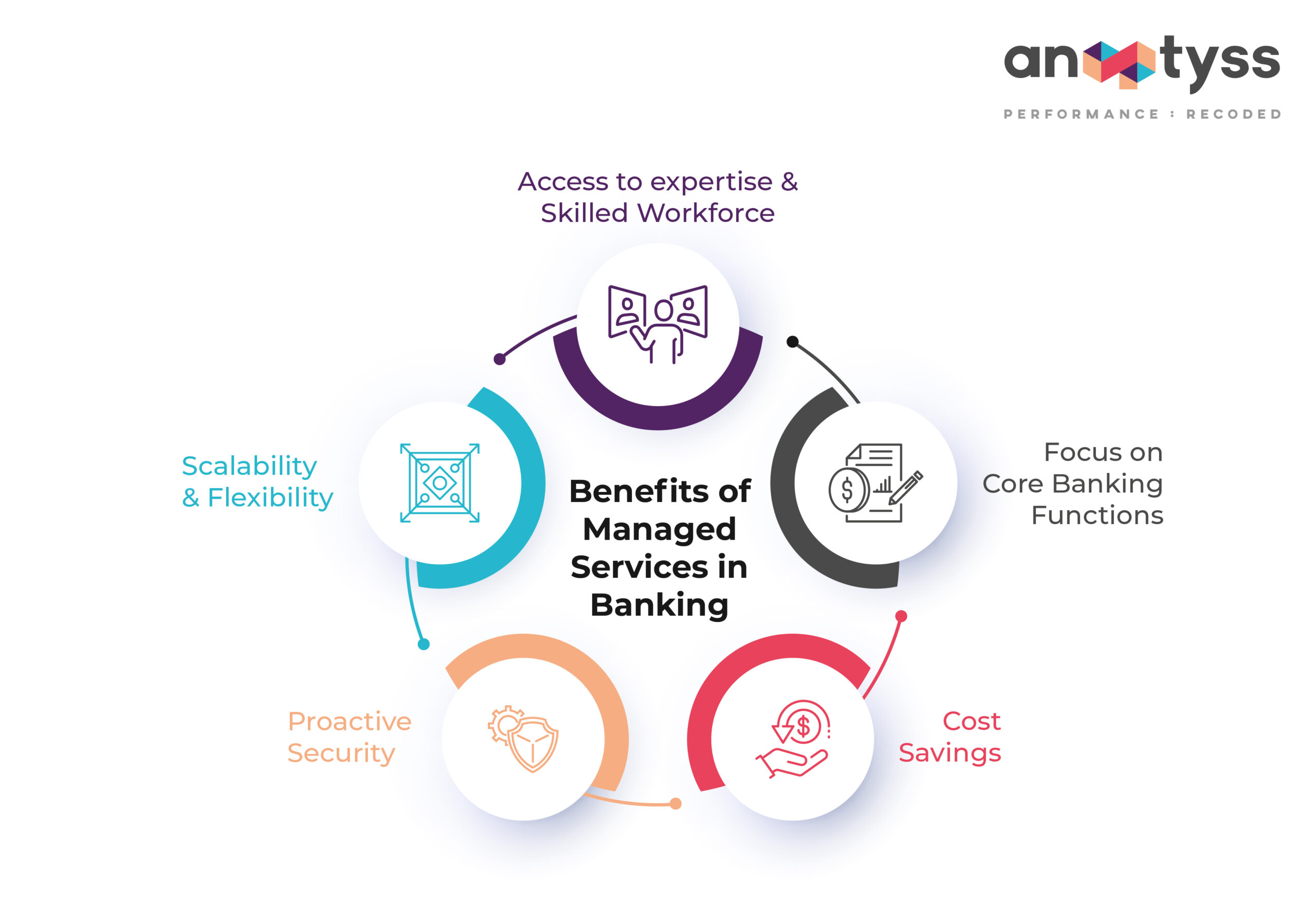
Benefits of Managed Services in Banking

1. Access to Expertise

Managed services providers bring a wealth of industry knowledge and expertise to the table that enables financial institutions to tap into specialized skills and best practices. A strategic partner can help financial institutions improve their operational efficiency and customer experience by:

This expertise also allows banks and financial institutions:

Also, the solutions and expertise provided are customized to the banks’ specific needs with global consistency.

2. Access to Specialized and Global Talent Pool

Financial institutions can have ready access to a specialized global talent pool and a wider range of potential candidates for recruitment for delivering specific processes. In addition, they:

They also leverage the best practices in talent retention and provide valuable market insights, such as the latest industry trends, salary ranges, etc. to help mortgage institutions make informed decisions related to talent acquisition and retention.

A survey by Deloitte found that 44% of financial services organizations, including the mortgage sector, experienced difficulty recruiting and retaining skilled professionals.

Suggested Read: Unleashing Growth with “Right- shoring” Model

3. Improved Scalability and Flexibility

Managed services offer the flexibility to scale operations up or down based on demand, allowing organizations to respond quickly to market fluctuations or changing market conditions while ensuring profits.

They can help banks meet the sudden rise in staffing, resources, and infrastructure challenges, especially concerning the hiring, onboarding, and training of high-quality talent.

This scalability ensures that financial institutions can meet customer needs effectively, without the risk of over or under-investment.

4. Regulatory Reporting and Compliance

When it comes to dealing with regulatory reporting, banks may find themselves struggling to keep up with an ever-changing regulatory landscape with constantly evolving rules and requirements. This is where managed services step in to make things easier for financial institutions.

They provide experts from the industry who understand the intricacies of the regulations and reporting standards. They help them collect and organize the necessary data for accurate and timely reporting, which is crucial to avoid penalties, reputational loss, and trouble with regulatory bodies.

A study by Robert Half reported that 42% of finance executives found it challenging to recruit skilled professionals with regulatory compliance expertise.

They also help banks stay up-to-date with regulatory changes and ensure banks remain compliant with the latest standards.

5. More Than Cost Savings

Partnering with a managed service provider isn’t just about cost savings associated with labor, infrastructure, and technology investments; it’s a strategic investment with the array of benefits we mentioned above. Managed services providers often operate at scale, allowing financial institutions to benefit from economies of scale and access specialized expertise, which is too expensive and time-consuming to build in-house. Financial institutions can also capitalize on the predictable outcome-based pricing models with reduced exposure to financial risks.

Managed Services – Success Stories

To learn more about the transformative power of managed services in the financial services industry, read the following case studies that showcase successful implementations to address specific challenges faced by financial institutions and deliver tangible results in terms of efficiency, customer experience, and cost savings.

Conclusion

Managed services can propel transformative innovation, elevate operational resilience, and help achieve regulatory excellence for banks and financial institutions. They provide expert support, scalable solutions, and advanced digital solutions to manage banks’ daily operations and enable them to focus on their core/strategic programs and innovation to enhance customer experiences and stay ahead of the competition.

A Complete Guide to Credit Risk Management: Processes, Best Practices & Techniques

Credit risk, the potential for financial loss resulting from a borrower’s failure to repay a loan, is a fundamental challenge in banking. It can manifest in many forms, including loan defaults, liquidity shortfalls, and moral hazards. While these risks are inherent to lending, systematic credit risk management can significantly curtail and mitigate them.

This guide sheds light on the essential processes, best practices, and techniques that form the bedrock of a resilient credit risk management framework.

The Core Principles of Credit Assessment

Effective risk management begins with a thorough assessment of every potential borrower. This involves two key practices.

1. Consider the 5Cs of Credit Risk

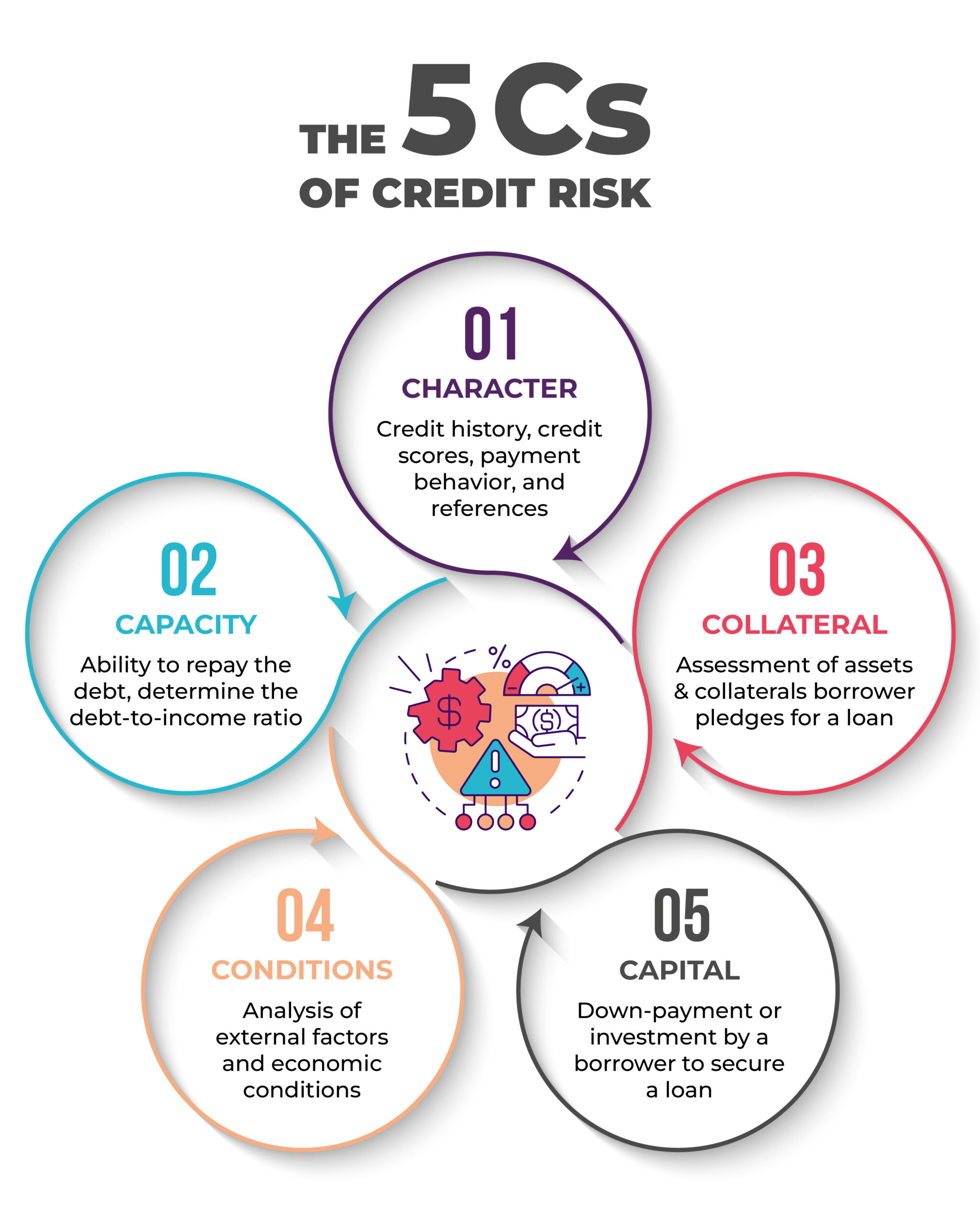
The 5Cs provide a foundational framework for evaluating the creditworthiness of a borrower and identifying inherent risks.

The 5 Cs of Credit Risk infographic

2. Establish Robust Underwriting Standards

Stringent, well-defined underwriting standards ensure that only eligible, low-risk applicants are approved for loans. This practice safeguards against excessive risk and helps determine the appropriate loan amount, terms, and interest rates. While the FDIC doesn’t set specific standards, its guidelines emphasize:

Developing a Resilient Credit Risk Framework

Beyond individual assessments, a successful strategy relies on a robust institutional framework.

3. Implement Clear Credit Policies & Procedures

A formal credit policy is the foundation of effective risk management. It should provide well-defined criteria and clear guidelines for making lending decisions, outlining the terms of sale, credit extension procedures, and the collections process.

4. Maintain Adequate Allowance for Loan and Lease Losses (ALLL)

The ALLL (originally the ‘reserve for bad debts’) is a crucial buffer to absorb estimated credit losses within a bank’s loan portfolio. Maintaining an adequate ALLL ensures that the institution has sufficient funds to cover potential defaults without jeopardizing its financial stability.

5. Build a Skilled Credit Risk Management Team

An effective framework requires a skilled team with diverse capabilities in risk assessment, statistical modeling, and data analysis. Banks must invest in hiring experienced professionals and providing continuous workforce training through digital learning solutions to address skill gaps and keep the team updated on emerging threats and technologies.

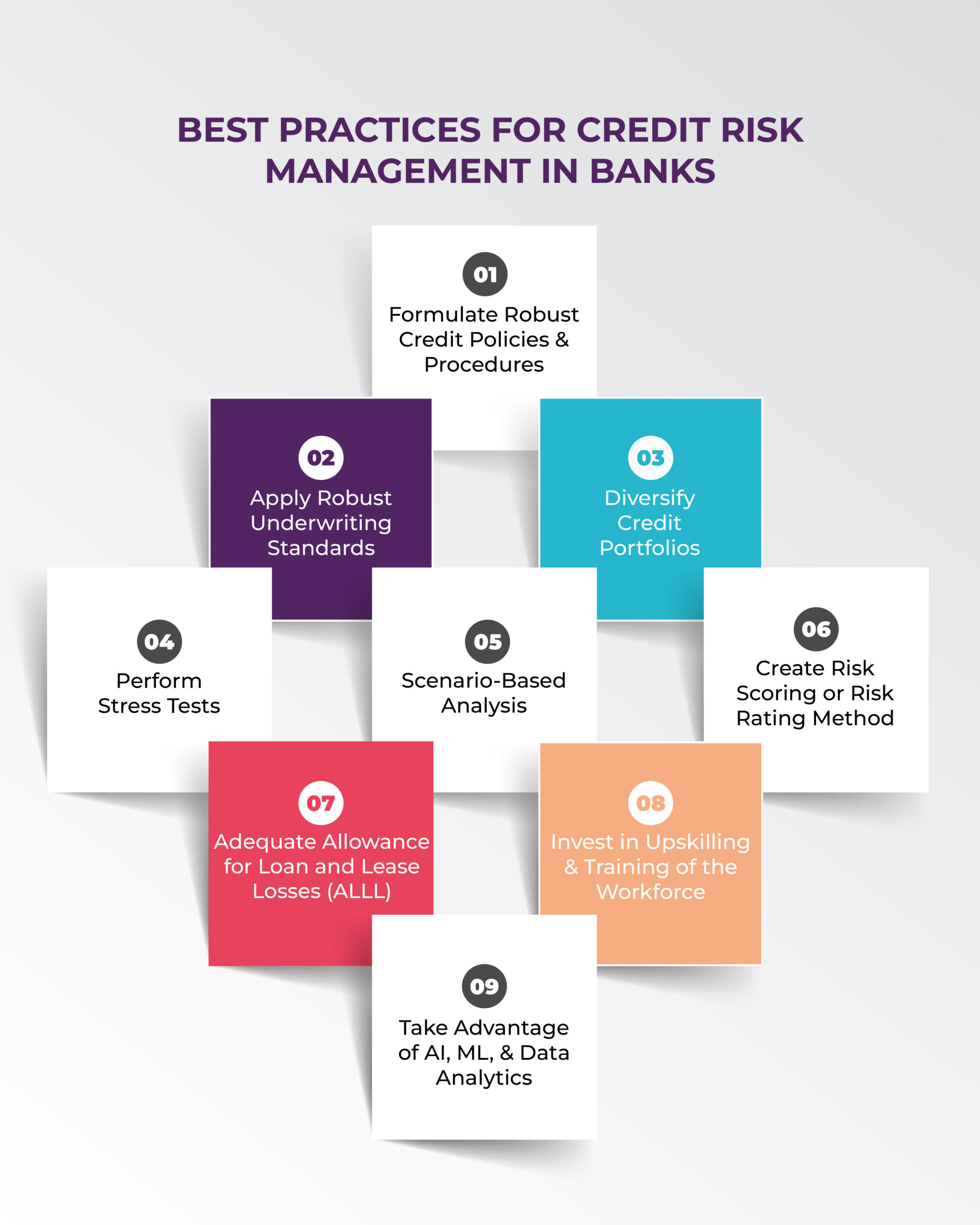
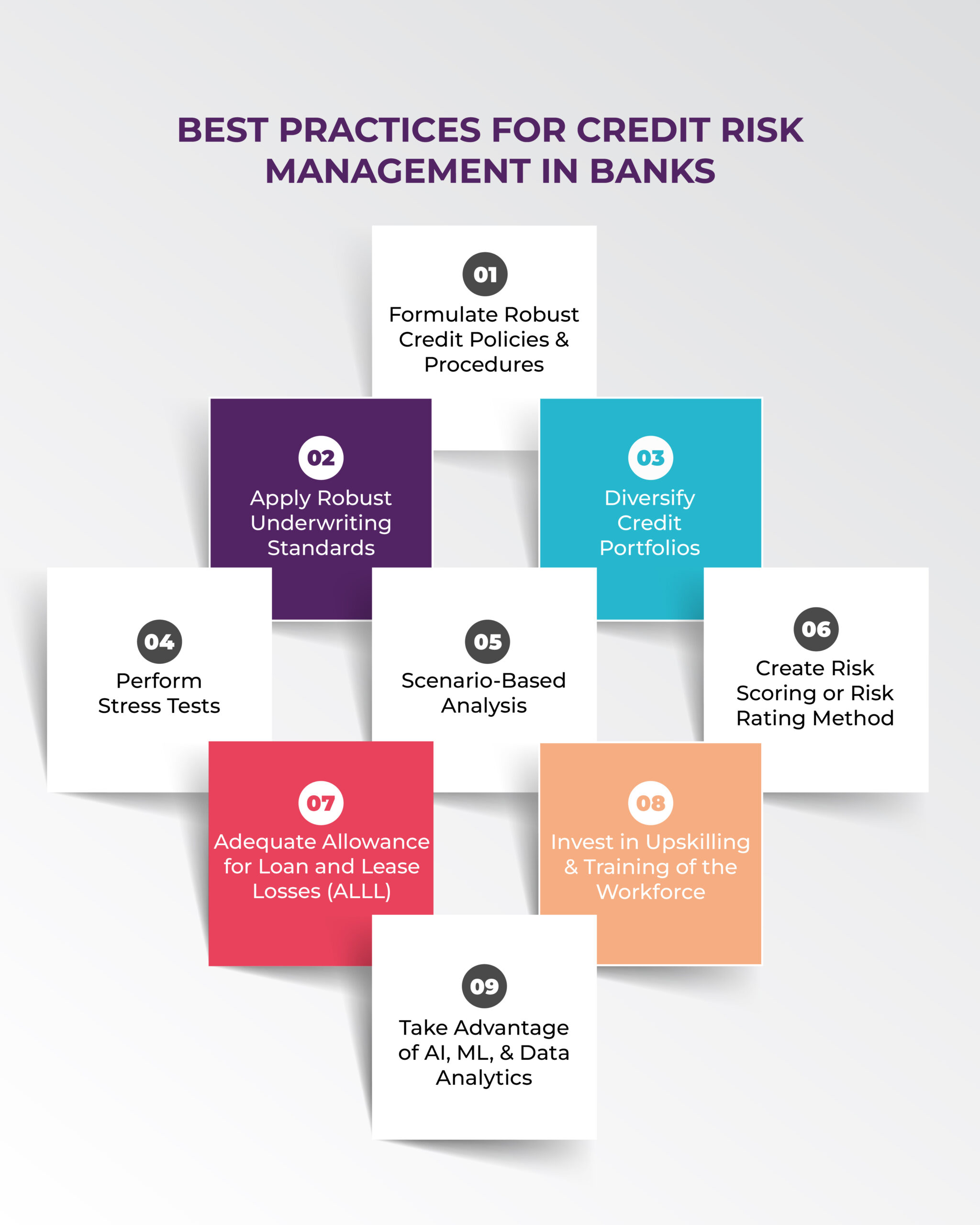
Best Practices for Credit Risk Management in Banks infographic

Ongoing Monitoring and Analysis Techniques

Credit risk is not static. Continuous monitoring is essential to identify and manage emerging risks.

6. Implement Continuous Credit Risk Monitoring

Regularly assessing changes in a borrower’s risk profile is crucial. This involves periodic credit assessments, account reviews, and timely follow-ups on overdue payments to get early alerts on potential issues like a declining credit score, a new lawsuit, or a bankruptcy filing.

7. Conduct Stress Testing and Scenario Analysis

These forward-looking techniques help banks understand their vulnerabilities. For a deeper understanding, explore the role and importance of stress testing in credit risk management.

8. Leverage New-Age Technologies

By using intelligent digital solutions powered by AI, machine learning, and big data analytics, banks can gain deeper insights into their credit risk exposure. Technology is key to understanding how AI is reshaping credit risk analytics and portfolio performance.

Effective Credit Risk Mitigation Techniques

When risk is identified, banks can use several techniques to minimize its potential impact.

9. Diversify Portfolios

Avoiding credit concentration in a few specific customers, industries, or sectors is a fundamental mitigation technique. By creating a well-diversified credit portfolio, banks can reduce the impact of an adverse event affecting a single area. This is a core component of modern credit portfolio management.

10. Use Collateral for Security

Requiring customers to provide assets as collateral can significantly reduce risk exposure. If a borrower defaults, the lending institution can seize and sell the collateral to recover its losses.

11. Obtain Credit Insurance

Credit insurance policies offer an additional layer of protection by covering a significant percentage of losses that may occur due to borrower defaults.

12. Implement Effective Collection Strategies

Proactive and effective collection strategies can greatly reduce credit losses. This includes regular follow-ups on overdue payments, offering flexible payment plans where appropriate, and maintaining open communication with borrowers.

Frequently Asked Questions (FAQ)

Conclusion

Robust credit risk management is a dynamic, continuous process. It relies on a comprehensive lifecycle of assessment, building a strong framework, continuous monitoring, and proactive mitigation. By implementing the best practices discussed in this guide, banks and financial institutions can significantly improve their strategies, protect themselves from potential losses, and ensure long-term stability and success.

The Rise of Cryptocurrency: Benefits, Risks, and Mitigation Strategies

The world transcended from national or regional markets to a global marketplace in the 21st century, placing the impetus on transactions among organizations of all sizes across continents. A small souk owner in the Middle East can source products from Europe, and an e-commerce shop in the U.S. can source products from Asia.

This voluminous global marketplace bore the burden of huge forex charges levied by financial institutions across the globe, and cryptocurrency came as an answer.

Benefits of Cryptocurrency for the Globalized Marketplace

Cryptocurrencies are a modern solution to many traditional banking challenges faced by businesses when transacting across borders. Cross-border trade has its challenges, and with the evolution of product sourcing practices across the globe, it is now a bigger challenge for the banking industry and businesses, especially small and medium enterprises. Here is how cryptocurrencies can help businesses grow with seamless cross-border trades.

1. Low Transaction Charges

Forex charges, currency conversion charges, etc., increase the operational costs of businesses having multi-country operations. Whether a business is offering services or products in another country or procuring materials overseas, forex costs increase operational costs. Cryptocurrencies solve this challenge as their value remains the same across countries with low conversion charges.

2. Transaction Speed

Transfer of cryptocurrency from one wallet to another takes no time. Once the user places a request to transfer crypto to someone, there are no time delays. This solves a major issue faced by businesses during foreign remittances. There are instances where banks take more than 48 hours to remit a foreign transfer.

3. Inflation Protection

One unique offering of cryptocurrency is inflation protection. The changes in global forex rates often create challenges for global businesses as they often increase the procurement costs of goods and services if the value of the currency comes down. However, with cryptocurrency, the user is protected against these sudden fluctuations.

Suggested Read: Cryptocurrency and Money Laundering: An Overview

Cryptocurrencies and Financial Crime Risks

Financial crimes have seen a major transition over the years, and cryptocurrencies are now reportedly becoming the first choice for illicit activities. Whether it is a hacker demanding a ransom or a nefarious element financing terrorism, they nowadays prefer cryptocurrency as their go-to medium to exchange currencies.

This change is not only impacting the number of cybercrime incidents but also enabling cybercriminals to hit larger targets. According to Immunefi, the total number of large-scale cybercrimes rose from 104 reported incidents in 2021 to 134 cases in 2022. The scale of targeting also rose manifolds with the largest successful hack of $625 Million on the Ronin Bridge Crypto Exchange. According to CBS News, in the year 2022, $3.8 Billion were stolen from the crypto market by hackers.

Crime Science Journal did a study with eminent leaders in the financial markets and academic institutions and came to the following conclusions.

  1. There are more than 47 types of financial crimes that can be committed using cryptocurrencies.
  2. Ransomware and Pump and Dump schemes were the most floated and profitable frauds in the crypto markets.
  3. Most of these threats seem harmless small financial crimes but they can be further used for heinous crimes like terror or terrorist financing.

However, these threats and crimes are far less than the total volume of $1.6 trillion (CoinMarketCap, 2021) invested in the Cryptocurrency markets. This huge investment of users across the globe has forced governments to think of regulations rather than a blanket ban on cryptocurrencies.

Suggested Read: Mitigating Financial Crime Risks in the Age of Cryptocurrency – Whitepaper

Financial Crime Risks Posed by Crypto Transactions

Industry experts believe without cryptocurrencies it was neither possible to have such a growth in the number of successful incidents nor it was possible to scale a hack beyond $100 million.

Experts also believe that the misappropriation of funds is not as scary as the result of such funds. These stolen funds might be used for terror financing, child sexual abuse materials, ransomware, human trafficking, scams, dark net markets, election manipulation, stolen funds movement, financing sanctioned entities, and other innumerable similar activities.

Financial watchdogs like Chainalysis have reported that out of 20 billion in illicit transactions, we can trace back almost 44% of them to sanctioned entities.

Boom Bust and Market Manipulations

Cryptocurrency values have soared in the past decade in an unimaginable pattern. The currency is not linked to the performance of any asset, the availability of any resource, or the geopolitics of any region or country. It is free and independent currency and has shown traits that  make it hard to regulate.

During pandemic  while every global currency was on a decline, Crypto showed an astronomical rise but when the global markets became stable it lost 2/3rd of its value. This became a challenging task for financial analysts to understand how cryptocurrencies work. We have seen many cryptocurrencies, exchanges, etc., either lose their value or vanish in a fraction of a second. This adds more volatility to an already volatile financial market.

Another  area of concern is the vulnerability of the crypto exchanges themselves. In 2021, the hackers successfully attacked three crypto exchanges.

  1. $625 Million lost by Axie Infinity to hackers.
  2. $570 Million lost by Binance to a hacker in October’21.
  3. $477 Million lost by FTX which resulted in its total collapse.

Apart from the above given real threats, the crypto markets showed random upward and downward movements as well. These rises and falls cannot be attributed to any real-world situations.

Many crypto exchanges were seeing a great market response and were observing a great volume of trades getting destroyed by a few tweets or a market hoax as well.

Investors in these cryptocurrencies have lost millions while some have gained in these turbulent conditions. This poses a great question in terms of market integrity and user protection.

Cryptocurrency Regulation in Banking and Financial Services

The banking sector was always in the fray with the crypto market, and the major talking point till 2021 was to bring in a blanket ban on cryptocurrency, as it posed a threat to the banking sector. However, with law enforcement agencies catching up, the banking sector has shown the first signs of trust in the crypto market.

The 2022 update of the Basel framework has incorporated the guidelines for banks to handle crypto-asset risks. This is the first formal recognition of cryptocurrencies as an asset in the banking industry.

Government Responses to Crypto

Governments across the globe are taking proactive measures to formulate a framework to regulate these largely unregulated transactions. Liechtenstein Blockchain Act was the first action brought by a government to regulate crypto transactions.

The “Comprehensive Framework for Responsible Development of Digital Assets” of the U.S. government was a careful step taken by the U.S. government to bring in regulations followed by the EU and others.

Law Enforcement Catchup

Law enforcement agencies across the globe have finally caught up on Bitcoin agencies and organizations. The year 2022 has been the most successful year in the Bitcoin history to bring new hope among Bitcoin investors.

  1. $3.6 Billion was seized from two individuals involved in the 2016 Bitfinex hack.
  2. $3.36 Billion was seized from hackers who stole it from the Darknet market Silk Road.
  3. $30 Million seized from the North Korean hacking syndicate Lazarus Group stolen from Ronin Bridge.
  4. Seizure of Hydra Dark Web Marketplace’s infrastructure by German authorities.
  5. Popular Bitcoin exchanges and others have started to work closely with law enforcement agencies. Binance alone has responded to 47,000 law enforcement requests, has increased its security staff by 500%, and has joined the National Cyber-Forensics and Training Alliance (NCFTA).

This catchup by the agencies in 2022 has significantly brought down the total holdings of illicit cryptocurrencies to almost a quarter of what it was in 2021.

This is a good news for cryptocurrencies at large as it brings positive vibes back into the crypto domain.

Suggested Read: How Money Laundering Schemes Changed in the Digital Age

Mitigating Financial Crime Risks Due to Cryptocurrency – Potential Approaches

There is an immediate need to formulate a global cryptocurrency regulatory body just like various other U.N. bodies working in their respective areas. This body will have to formulate a global guideline emphasizing these factors:

1. Segregation of Assets

All cryptocurrencies and exchanges should have a clear distinction between the assets owned by them and the assets of the investors or traders. This clear demarcation will help the authorities stop any misappropriation of the investor-pooled resources by the exchanges.

2. Currency Backing

Every currency on the planet is backed by a government or a reserve. There should be a global framework that should ensure the cryptocurrencies are backed by some kind of collateral real-world asset.

3. Prudential Requirements

Every cryptocurrency should stand by the global standards of prudential requirements. There should be a well-defined process of customer KYC, licensing of exchanges, etc., to bring more trust to these exchanges.

4. Ban on DeFi, Mixers, etc.

A few platforms like wallets, mixers, DeFi, etc., have become anonymizers for criminals. Criminals send their currencies to these exchanges which mix them with fairly deposited funds of other users and give back a mix of both legal and illegal currencies to every depositor. Hence, this makes it impossible for the authorities to trace back the source, as the wallet becomes the source for every member of this pool.

Conclusion

Cryptocurrencies are here to stay, and banks now need to think of them as assets owned by their investors. The Basel 2022 updates have given clear guidelines to banks to start working in this direction and develop  a mechanism that  coexists with the current  system.

There are a large number of threats associated with the crypto market. However, if banks and government agencies work hand in hand with major crypto exchanges, the world can leverage a new form of currency that works across borders offering seamless transactions in the global marketplaces.

Credit Risk Management in Banking: Challenges and Solutions

Credit risk is the ever-present possibility that a borrower will default on their debt, and it remains one of the most significant threats to a bank’s stability. In a landscape of high economic uncertainty, proactively managing this risk isn’t just a best practice—it’s essential for survival.

A successful credit risk management strategy mitigates losses, curtails fraud, and maximizes the risk-adjusted rate of return. However, navigating this complex environment presents significant hurdles.

This blog explores the top challenges in credit risk management today and provides actionable solutions to overcome them.

Top Credit Risk Challenges and Solutions

Challenge 1: Complex and Evolving Regulatory Requirements

Keeping pace with regulatory shifts is a primary challenge. Compliance burdens from bodies like the Dodd-Frank Act impose complex demands regarding risk assessment, capital adequacy, stress testing, and reporting. Failure to comply can lead to hefty penalties, loss of stakeholder trust, and reduced business opportunities.

Solution — Foster a Culture of Proactive Compliance

Institutions must embed compliance risk management into their core operations.

Challenge 2: Poor Data Quality and Availability

Effective risk assessment relies on vast amounts of high-quality data. However, many banks struggle with data silos, legacy systems, unreliable third-party data, and a lack of data governance. This hampers the ability to make informed, accurate decisions.

Solution — Implement a Unified Data Governance Strategy

Centralizing and managing data is critical.

Challenge 3: Inaccurate Risk Assessment

Accurately evaluating a borrower’s creditworthiness is the heart of credit risk management. This task is complicated by individuals or SMEs with limited credit histories. An inaccurate assessment can directly lead to a higher risk of default and financial loss.

Solution — Leverage Technology and Strong Internal Controls

Banks can improve accuracy by combining technology with proven processes.

Challenge 4: Counterparty Risk

Counterparty risk—the threat that another party in a contract will fail to fulfill its obligations—is a major concern. A single counterparty default can trigger a cascade of financial losses and destabilize a portfolio.

Solution — Diversify and Secure Agreements

Mitigating this risk requires a multi-faceted approach.

Challenge 5: Rapidly Changing Market Conditions

The financial industry is in constant flux due to volatile market conditions, new financial products, and evolving customer behaviors. An institution’s inability to adapt quickly to these shifts can expose it to unforeseen risks and significant losses.

Solution — Build Agility with Analytics and Training

Flexibility is key to navigating market volatility.

Challenge 6: Shortage of Skilled Personnel

Modern credit risk management demands a diverse skillset in statistical modeling, data analysis, and risk assessment. Finding and retaining talent with this expertise is a significant challenge for many institutions.

Solution — Partner with Specialized Managed Services

Collaborating with a managed services provider can immediately scale up a lender’s capabilities.

Challenge 7: Adopting and Integrating New Technologies

While technology offers powerful solutions, its implementation can be a challenge in itself. Integrating systems like blockchain into legacy infrastructure requires significant investment and expertise, but it can fundamentally enhance security and transparency.

Solution — Embrace a Strategic Technology Framework

Institutions must create a clear roadmap for technology adoption.

Frequently Asked Questions (FAQ)

Conclusion

Credit risk management is a multifaceted discipline that requires a comprehensive and proactive approach. By understanding the key challenges—from regulatory pressures and data integrity to market volatility and talent shortages—and implementing targeted solutions, banks can not only protect themselves from losses but also build a more resilient and profitable future.

Anaptyss helps banks manage credit risks with its exclusive Digital Knowledge Operations™(DKO™)-based approach. Our customized solutions, powered by advanced data analytics and AI/ML capabilities, enable institutions to assess credit risks efficiently and make data-driven decisions for effective risk management.

A Guide to Credit Risk Management for Banks and Financial Institutions

Credit risk is a major financial risk that occurs when a borrower or entity fails to repay the owed principal and interest to the bank or financial institution. Payment defaults may occur on credit cards, mortgages, fixed-income securities, etc. It is a significant concern for financial institutions and investors as it can lead to:

Therefore, banks and financial institutions must manage credit risks by analyzing the borrower’s creditworthiness.

The blog overviews credit risk management, credit risks, the five Cs to measure credit risks, associated challenges, and the best practices to manage and mitigate credit risks.

What is Credit Risk Management?

Credit risk management is one of the most critical components in the banking sector, essential to maintaining the financial stability of banks and preventing financial and reputational losses. It also helps ensure that banks and financial institutions can continue to lend mortgages or loans to individuals and businesses.

Credit risk management involves preventing, detecting, identifying, measuring, monitoring, and mitigating different credit risks.

Regulatory Guidelines for Credit Risk Management in Banks

After the 2007-2008 financial crisis, the Federal Reserve, the Office of the Comptroller of the Currency (OCC), and other regulatory bodies implemented stringent rules for the banks. These rules were formed to ensure adequate risk management protocols.

The crisis also highlighted the necessity of effective credit risk management practices in the banking sector for maintaining compliance and safeguarding the banking system.

The Dodd-Frank Wall Street Reform and Consumer Protection Act was also passed in response to the financial crisis in 2007-2008 to make the US financial system safer for consumers and protect them from egregious practices like predatory lending. Enacted in 2010, the act introduced several guidelines to improve credit risk management in the financial industry. These include:

  1. Stress Testing
    Requires banks and financial institutions to conduct regular stress tests to evaluate their ability to withstand adverse financial conditions.
  2. Risk Retention
    Risk-retention requires securitizers to retain a portion of credit risk linked to securitized assets.
  3. Volcker Rule
    Restricts the banks from engaging in proprietary trading and high-risk investment activities.
  4. Systemic Risk Oversight
    Established Financial Stability Oversight Council (FSOC) to identify and address systemic risks in the financial system.

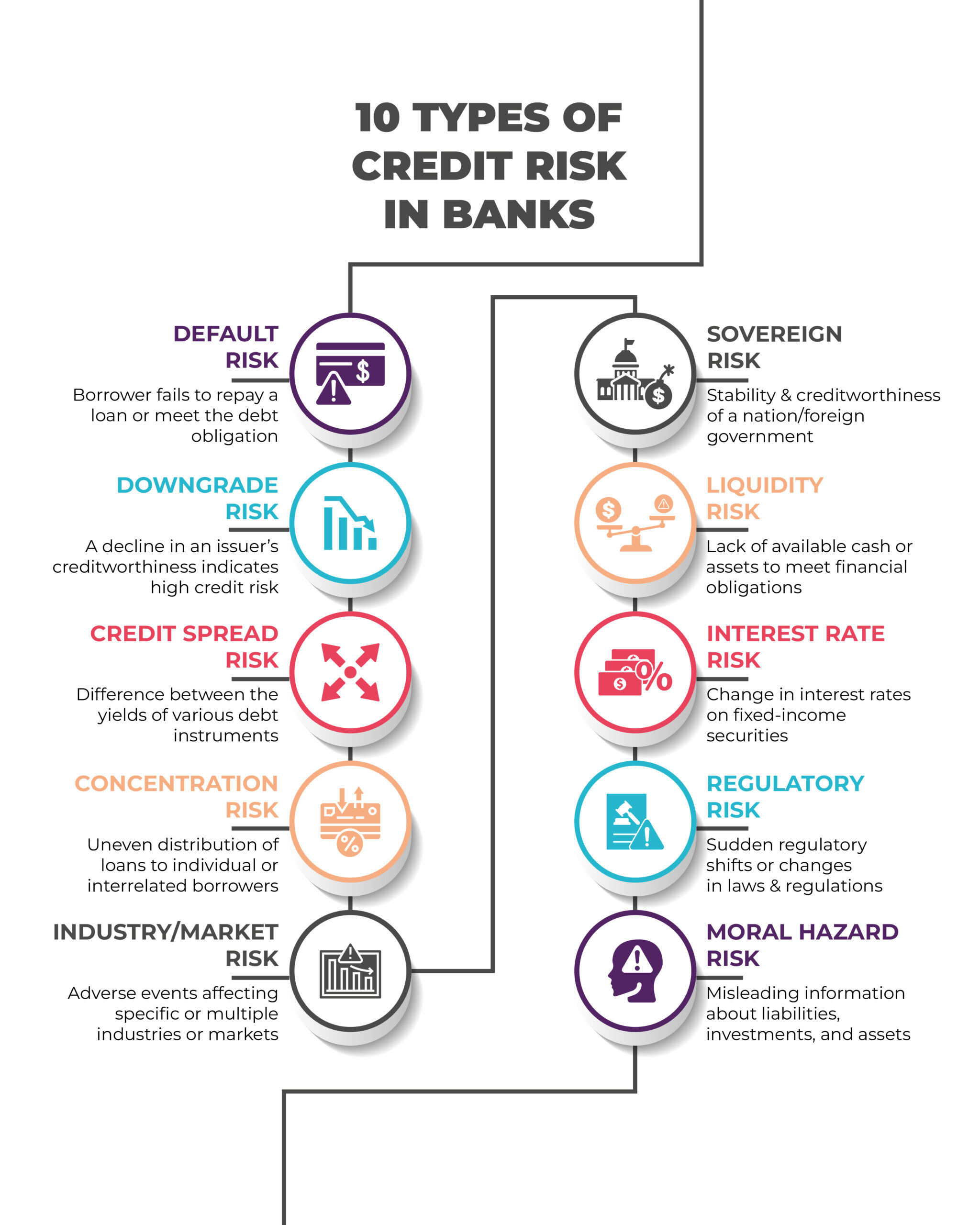
10 Types of Credit Risk in Banks

To effectively manage credit risk, it is essential to understand the different types of credit risks.

1. Default risk

When a bank grants a loan or mortgage to a borrower, there is a probability that the loan or a part of it (principal or interest) remains unpaid. It is a well-known and fundamental credit risk type where a borrower does not repay their loan or fails to meet the debt obligation, such as a loan, credit card, or bond. Credit default incurs monetary losses for the bank or financial institution.

2. Downgrade Risk

Credit rating agencies help banks and financial institutions evaluate the issuer’s creditworthiness. Downgrade risk occurs when an issuer’s rating is downgraded by credit rating agencies, indicating a higher level of credit risk. Agencies lowering or downgrading the rating can increase borrowing costs and potential losses for banks and financial institutions.

3. Credit Spread Risk

Credit spread risk refers to the changeability or potential for the difference between the interest rates of the borrower’s debt and risk-free return rates or government bonds. A wider spread indicates an increase in credit risk, which can lead to financial losses for banks and stakeholders.

4. Concentration Risk

This risk occurs due to a bank’s exposure to a specific industry sector, borrower, or region. This can increase the vulnerability to adverse events that can impact the concentrated positions of the bank or financial institution, leading to significant financial losses.

5. Industry/Market Risk

The risk arises due to adverse events or specific factors that affect a particular industry or market and degrade the value and performance of the investment. Industry or market risks lead to losses for the bank, investors, and financial institutions.

6. Sovereign Risk

These are potential risks associated with the stability and creditworthiness of a nation or a foreign government, which can result in a default on its debt obligations or financial commitments.

7. Liquidity Risk

Liquidity risk is caused by a lack of available cash or marketable assets. It is the risk for the banks and financial institutions where they fail to meet financial commitments and short-term obligations due to a lack of access to sufficient funds.

8. Interest Rate Risk

These are the risks posed by changes in the interest rates that can impact the value and performance of investments, such as fixed-income securities. When the interest rate rises, the value of bonds and fixed-income securities in the secondary market declines, leading to investment losses for banks or financial institutions.

9. Regulatory Risk

It refers to risks of adverse consequences arising from the shifts in regulatory framework or changes in laws, regulations, industry standards, or government policies that may directly or indirectly impact the bank’s or financial institution’s operations and profitability.

10. Moral Hazard Risk

Moral hazard is common in the lending and insurance sector. It refers to a situation wherein a party in a contract provides misleading information about its liabilities, investments, credit capacity, and assets. In this risk, the party may take uncommon risks or decisions to make profits before the contract settles without having to suffer any consequences. This can lead to significant losses to the lender or the bank.

10 Types of Credit Risk in Banks infographic

Challenges in Credit Risk Management

Banks and financial institutions encounter several challenges to effectively managing credit risks. These include:

1. Economic Uncertainty

Economic volatility and uncertainty present challenges to credit risk management as they can impact the borrowers’ creditworthiness, making risk assessment and management more challenging.

2. Regulatory Changes

Compliance with Basel III, IFRS 9, and stress testing imposed by regulatory authorities is crucial for financial institutions. However, changing regulatory requirements and accounting standards impact credit risk management.

3. Cybersecurity Risks

Cybersecurity risks are a major concern, which has increased with the digitization of banking and financial services. Cyber-attacks lead to data breaches that can compromise sensitive information.

4. ESG Factors

Environmental, Social, and Governance (ESG) factors are gaining importance in risk management. Therefore, banks and financial institutions must understand and incorporate ESG risks into their credit risk management frameworks to identify potential risks associated with:

5. Data Quality and Availability

Banks often face challenges with critical factors such as data quality, data governance, and availability, which hampers decision-making and accurate risk assessment.

6. Portfolio Concentration

Concentration risk remains one of the major challenges as it leads to significant exposure to a specific sector, region, or borrower that can lead to potential losses.

7. Change in Customer Behavior

Changes in customer behavior can increase the likelihood of defaults. For instance, alteration in their spending habits or financial stability. Similarly, a shift in industry dynamics due to technological disruption or regulatory changes can impact the financial health of the institution and its ability to meet credit obligations.

Best Practices & Strategies for Credit Risk Management in Banks

Effective credit risk management in banks involves a combination of credit risk measurement, policies, and monitoring techniques.

1. Robust Credit Policies and Procedures

Establish comprehensive credit policies and procedures. Also, include clear guidelines for,

2. Robust Underwriting Standards

Implement rigorous credit underwriting standards to efficiently assess borrower creditworthiness and mitigate default risk. This involves a thorough analysis of:

3. Diversify Credit Portfolios

A well-diversified credit portfolio helps minimize concentration risk. By spreading credit exposures across various industries or sectors, and borrower types, financial institutions can reduce the impact of adverse events and prevent potential losses.

4. Stress Testing and Scenario-Based Analysis

Conduct regular stress tests and scenario-based analyses to assess the impact of adverse economic conditions. This helps:

5. Risk Rating

Create a separate risk scoring or risk rating method for internal purposes to ensure accurate assessment and classification of the borrowers based on credit quality. It can be designed with qualitative and quantitative factors, such as financial analysis, ratios, etc. This improves

6. Adequate Allowance for Loan and Lease Losses (ALLL)

ALLL helps analyze credit losses in the bank portfolio of loans and leases. It ensures that banks have sufficient funds to cover potential credit losses. By maintaining appropriate ALLL, banks and financial institutions can estimate and maintain adequate allowances.

7. Skilled Credit Risk Management Team

Build a skilled credit risk management team with diverse skill sets, including statistical modeling, risk assessment, and data analysis. For this, banks and financial institutions can:

Banks can leverage digital learning solutions to provide a sustainable, efficient, and measurable way to train the workforce in credit risk management.

8. Take Advantage of AI, ML, & Data Analytics

Use advanced technologies and intelligent digital solutions to establish a robust reporting and analytics framework. This helps banks gain insights into their:

It also helps ensure accurate and timely reporting for informed decision-making and effective credit risk mitigation.

Best Practices for Credit Risk Management in Banks infographic

The 5 Cs of Credit Risk Management

The Five Cs of Credit Risk Management enables banks and financial institutions to measure the borrower’s creditworthiness by evaluating the following:

1. Character (or Credit History)

Banks and financial institutions need to look into the borrower’s reputation or record related to financial matters. To determine this, banks can look for credit scores, credit history, payment behavior, and references to analyze their integrity and willingness to repay the loan.

2. Capacity

To ensure the borrower’s ability to repay the debt, banks and financial institutions need to look for indicators, such as their income, cash flow, and financial and employment stability. For organizations, banks need to look at their cash flow statements to determine the debt-to-income ratio and efficiency in paying back the debts from their income.

3. Collateral

It includes an assessment of assets or collateral submitted by the borrower to secure a loan. Banks and financial institutions or lenders should assess the value and marketability of submitted collaterals and assets to mitigate credit risk and safeguard themselves in case the borrower stops making the payments or defaults.

4. Conditions

The assessment of external factors may impact the terms of the loan and the borrower’s ability to repay the debt. Evaluating the suitability of the terms and economic conditions for a borrower’s needs and financial situation. The “conditions” parameter is evaluated qualitatively, and it is one of the most subjective of the five Cs.

5. Capital

Banks and financial institutions need to evaluate borrower’s financial resources and equity by considering factors such as

Banks and lenders must consider these factors and subtract overall liabilities from total assets to determine the capital position of the borrower.

The 5 Cs of Credit Risk infographic

Emerging Trends in Credit Risk Management

Some notable emerging trends in credit risk management include:

These solutions help banks and financial institutions:

With big data technologies, banks can process unstructured data from various reliable data sources to gain deeper insights into credit risk.

In addition, ESG factors have become increasingly important, prioritizing addressing climate risk and incorporating sustainable lending practices into credit risk management frameworks.

Conclusion

Credit risk management is a fundamental aspect of banking operations with a continuously changing regulatory landscape. Effective credit risk management helps banks ensure long-term financial stability and regulatory compliance. This comprehensive guide serves as a roadmap for banks and financial institutions, providing valuable insights, strategies, and best practices for credit risk management.

Internal Control Testing: 10 Best Practices for Banks

Control testing assists banks and financial institutions to evaluate their internal controls, including corporate governance & accounting processes, to mitigate risks, meet regulatory compliance, detect and prevent fraud, and optimize operational efficiency.

According to the Committee of Sponsoring Organization of Treadway Commission (COSO), “internal control is a process, effected by an entity’s board of directors, management and other personnel, designed to provide reasonable assurance regarding the achievement of objectives.”

With a thorough and effective assessment of the internal controls, procedures, and processes, banks can identify risks, remediate them, and establish a robust and risk-resilient ecosystem.

Purpose of Internal Control Testing

Suggested Read: The Role of Control Testing in Mitigating Enterprise Risks in Banking

10 Best Practices for Internal Control Testing in Banks

Here are the 10 key “internal control testing” best practices banks and financial institutions can implement to protect their business, assets, and clients.

1. Comprehend the Internal Control Environment

A thorough understanding of the current internal controls and process environment is critical, which includes –

2. Document the Control Structure

Create detailed documentation of the control structure, including –

This documentation will serve as a reference point during the testing process.

3. Develop a Testing Plan

Prepare a comprehensive testing plan that outlines the following elements:

This testing plan should also include a schedule and resources required for the testing process.

4. Select Appropriate Testing Methods

Several methodologies are available for testing internal controls. These include:

5. Risk-Based Approach

Control testing based on the risk-based approach requires banks to assess and determine high-risk areas and prioritize them in the scope. The purpose of a risk-based approach or RBA is to reduce and restrict the risk within acceptable levels, ensuring business continuity.

Suggested read: FATF Risk-Based Approach to Managing Financial Crime Compliance

6. Document the Testing Procedures

Document the steps taken during the control testing process, including,

This documentation should be detailed enough to allow future review and re-testing if required.

7. Evaluate the Effectiveness of Controls

Assess the effectiveness of controls by comparing the test results against predetermined control objectives. Determine whether the controls are operating effectively and report any deficiencies or weaknesses.

8. Report and Communicate Findings

Communicate the findings clearly and persuasively to the management and board of directors. Prepare a comprehensive report containing detailed information on the testing results. It should include:

9. Monitor Remediation Actions

Establish periodic updates for remediation efforts to track and monitor the progress of remediation actions taken to address the detected control deficiencies and vulnerabilities. This helps the organization to determine the effectiveness of the changes to internal controls, and address the risks.

10. Continuous Control Monitoring

Internal control testing should not be a one-time event. It should be complemented by continuous monitoring mechanisms, such as

These mechanisms help the organization –

10 Best Practices for Internal Control Testing in Banks

Conclusion

Control requirements change constantly due to new policies, industry standards, and regulations, necessitating continuous control testing and updates to mitigate risks.

Anaptyss offers control testing expertise to help banks and financial institutions implement and test internal controls and frameworks. Our expertise spans risk identification, design, testing, performance assessment, evaluation, and remediation. We also help banks address enterprise risk management (ERM) challenges due to limited resources, gaps in skills or expertise, regulatory shifts, technological constraints, and resistance to change.

How to Implement Control Testing Programs to Mitigate Risks in Banks

Internal controls help banks and financial institutions detect mistakes, fraud, and non-compliance, and reduce risks. In addition, control testing plays a vital role in assessing these internal controls and is critical to ensure they are working as intended.

With effective control testing, banks can determine the existing and emerging risks, gaps, and weaknesses in the internal controls and update them to mitigate several types of enterprise risks. It also helps banks and financial institutions safeguard their business against potential risks, such as financial fraud, asset loss, or discrepancies in financial reporting. It ensures that the organization meets the regulatory laws and compliance obligations.

Control Testing Methodologies to Mitigate Risks

Control testing methodologies vary based on the risks faced by banks or financial institutions. Below are some common methodologies and approaches that banks can employ to test internal controls.

1. Walkthrough Testing

The Walkthrough testing method involves tracing the transaction path or process from the beginning to the end. It ensures that all the controls are working effectively. It also provides a comprehensive understanding of internal control and helps find any vulnerabilities or gaps in the controls that organizations can promptly fix and strengthen their internal controls.

2. Evaluate Key Controls

Another methodology is the testing of the key controls. Banks identify controls that are most critical in mitigating risks and focus their testing efforts against these controls. By testing key controls, banks can efficiently allocate their resources and prioritize areas that pose the highest risks. These key controls include:

    1. Internal Controls for Financial Reporting
    2. AML and KYC controls
    3. Credit risk management controls
    4. Information security and cybersecurity controls
    5. Compliance controls
    6. Operational risk management controls

3. Compliance Control Testing

Compliance control testing is an essential process component of internal control testing in the banking and financial services sector.

It involves assessing the effectiveness of internal controls to ensure compliance with regulatory requirements and industry standards. It focuses on areas, such as

  1. Anti-money laundering (AML)
  2. Know your customer (KYC)
  3. Data privacy and information security

4. Risk-based Control Testing Approach

With risk-based testing (RBT), banks can test their internal controls based on the possibility of risks and failure of internal controls. They can then create internal control tests to analyze the internal risk controls and tweak or update the controls to mitigate risks.

5. Data Analytics and Automated Testing

Banks and financial institutions can leverage advanced data analytics tools to analyze large volumes of data and identify anomalies or patterns that may indicate potential risks or control failures.

This enables banks to perform more efficient and effective control testing and identify gaps or weaknesses in internal controls in near real-time. This helps them detect and address risks promptly.

Control Testing Methodologies for Banks infographic

5 Key Steps to Implement Control Testing Program

To implement an effective control testing program, banks, and other financial institutions can follow these key steps:

Step 1. Identify Key Risk Areas

The first step is to identify the enterprise risks. Banks should conduct an extensive risk assessment of the organization and processes to identify the key risks they face. This will help:

Step 2. Develop and Perform Control Testing

After identifying the risks, develop a ‘Control Testing Framework’ to conduct control testing activities. One can also use a framework, such as:

These frameworks outline the objectives, scope, and control testing methodologies for effective control testing.

Step 3. Evaluate Findings

After performing control testing, evaluate the key findings and identify control vulnerabilities and deficiencies. They also need to assess the severity and impact of these deficiencies and prioritize remediation efforts.

Step 4. Implement Corrective Actions

Develop and implement corrective actions to address control deficiencies. This may involve:

Step 5. Monitor and Review

Control testing is an ongoing process, and banks should establish mechanisms to monitor and review the effectiveness of controls regularly. This includes:

5 Key Steps to Implement Control Testing Programs in Banks infographic

Best Practices for Control Testing

To ensure the effectiveness of control testing, consider the following best practices:

1. Risk-Based Approach

Risk-based approach control testing helps banks and financial institutions focus on high-risk areas that can have a significant impact on the bank’s operations.

2. Independent Testing

To ensure objectivity, reduce the risk of bias and conflict of interest, set up a team or assign an individual to test controls independent of the processes being tested.

3. Continuous Control Monitoring

Control testing should be complemented by continuous monitoring mechanisms, such as automated alerts and exception reporting. This allows for real-time identification of control failures and timely remediation.

4. Documentation and Reporting

Banks must maintain documentation of control testing activities, including:

This document provides evidence of control effectiveness and supports regulatory compliance.

5. External Audits

Banks should consider engaging external auditors for independent assessment of their control testing program. This provides independent reviews of the banking operations and internal controls and helps identify blind spots or areas for improvement that may be overlooked by the internal stakeholders.

Conclusion

Control testing plays a crucial role in banks and financial institutions to find vulnerabilities and fix them to mitigate risks and meet compliance effectively. Through methodologies discussed in this blog, such as walkthrough testing, banks can identify weaknesses and improve the internal controls or redesign them to address the issues that bypassed the preventive controls.

Anaptyss as a strategic partner helps banks identify risks and co-create effective internal controls and enterprise risk management frameworks with a systematic approach, including risk identification, testing design, performance assessment, evaluation, and remediation. Anaptyss enables banks to address challenges like limited resources, regulatory shifts, technological constraints, and resistance.

The Role of Control Testing in Mitigating Enterprise Risks in Banking

Banks and other financial institutions face a wide range of enterprise risks that can impact their operations, financial stability, reputation, and customer trust.

Implementing and testing internal controls in banks — i.e., policies, procedures, and practices — can help financial institutions mitigate these risks and establish a robust and risk-resilient ecosystem.

The following points summarize the reasons that make internal control testing critical for risk management in banking:

The responsibility for establishing and maintaining internal control lies with the bank’s board of directors and senior management. They cannot delegate this responsibility.

This blog explains the purpose and benefits of control testing for risk mitigation, highlighting the impact of control testing as an industry best practice.

Internal Controls in the Banking Sector

Internal controls in banking comprise the systems, policies, procedures, and processes crucial for maintaining the safety and soundness of banking operations and ensuring the integrity of the financial system.

There are two categories of internal controls:

1. Preventive Internal Controls

These are proactive internal controls designed to reduce the likelihood of potential errors, risks, frauds, and non-compliance issues through:

2. Detective Internal Controls

Detective internal controls are reactive and designed to identify or detect frauds, errors, or non-compliance after they occur. These controls help banks detect irregularities and address the issues that bypassed preventive controls. These internal controls include:

Control Testing for Risk Management

The purpose of control testing is to safeguard the business against potential risks, such as financial fraud, asset loss, or any other failures in financial reporting. Additionally, it plays a vital role in ensuring that the business meets its regulatory compliance obligations.

It also helps banks stay aware of emerging risks and add new internal controls or modify the existing ones to mitigate risks.

Why Control Testing – Purpose and Benefits

In addition to designing and implementing internal controls, banks, and financial institutions must evaluate and test these internal controls. The purpose of testing internal controls is to check their effectiveness and efficiency.

If the controls are effective, the risk is low, and vice versa.

Control testing is the key to mitigating enterprise risks in the banking industry, and it provides the following benefits:

1. Identify Gaps and Vulnerabilities

Control testing helps banks evaluate the design and operating effectiveness of internal controls to uncover any weaknesses or gaps that may expose banks and financial institutions to risks. It also allows them to:

According to the OCC Handbook, effective internal control objectives include ensuring efficient and effective bank operations, accurate recording of transactions, reliable financial reporting, effective risk management systems, and compliance with laws, regulations, and internal policies.

2. Strengthen Trust Among Stakeholders

Control testing assures all stakeholders, including customers, shareholders, and regulators, that the bank has robust systems and processes in place to manage risks effectively. It enhances trust and confidence in the bank’s operations and financial reporting, which is crucial to maintaining a positive reputation and attracting investors.

3. Meet Compliance

It enables banks and financial institutions to meet regulatory requirements, safeguard financial system integrity, and protect consumers. Control testing also:

4. Improve Control Effectiveness and Efficiency

Control testing provides valuable insights and automation opportunities. By understanding how controls operate and where weaknesses exist, banks can identify areas for optimization and implement technological solutions to improve their internal controls for effective enterprise risk management.

5. Improve Operation and Reporting

Control testing enhances the overall efficiency and effectiveness of banking operations. It helps banks:

Conclusion

Control testing plays a crucial role in mitigating enterprise risks in the banking industry. By evaluating the effectiveness of internal controls, banks can identify and address weaknesses before they escalate into significant issues.

Anaptyss assists banks in developing and implementing effective internal controls and frameworks for control testing programs with a systematic approach, including risk identification, testing design, performance assessment, evaluation, and remediation. It enables banks to address challenges like limited resources, regulatory shifts, technological constraints, and resistance to change.

How to Manage Fraud Risks in Wealth and Asset Management

Wealth and asset management firms are prone to fraud risks that can severely impact clients and financial institutions. In recent years, fraud incidents in the wealth and asset management industry have surged. An EY report reveals that 68% of firms in this sector encountered a rise in fraud incidents during 2020.

These risks include various deceptive practices such as:

Wealth and asset management firms must recognize and understand fraud risks to implement effective controls and preventive measures for avoiding financial losses and maintaining the integrity of the financial system.

According to the EY report on wealth and asset management fraud insights, the fraud landscape in wealth and asset management is constantly evolving, driven by

According to the report, some firms have seen annual fraud losses skyrocket by up to 500% over the past three years due to major events.

This blog explores some of the key fraud risks encountered by wealth and asset management firms and provides valuable insights into combating these risks.

Fraud Risks in Wealth and Asset Management

Below are some of the key fraud risks in wealth and asset management that bad actors are leveraging to get unauthorized access and control of customer accounts.

1. Cybersecurity Threats

With the increase in reliance on digital technologies, wealth and asset management firms are at high cybersecurity risks. Financial institutions, including wealth and asset management firms, are vulnerable to data breaches, phishing attacks, ransomware, and other cyber threats. Cybercriminals constantly seek to exploit vulnerabilities in systems to gain unauthorized access to sensitive client information and transaction details that can be used for account takeover or new account fraud.

2. Insider Threats

Addressing insider threats within the firm is critical to ensure the security and integrity of the organization. These threats involve individuals within the wealth and asset management firm having authorized access to sensitive information and confidential resources. They can exploit their privileges for malicious purposes or access critical systems/client information for personal gains or share with third parties to commit fraud.

For instance, they can disclose non-public information to make investment decisions and provide an unfair advantage, undermining marketing integrity and customer confidence.

These threats can be distinguished into three categories:

On average, the reported fraud losses for wealth and asset management firms range from $1 million to $5 million per year- EY Report.

3. Investment Fraud

Fraudulent investment schemes, such as Ponzi schemes, misrepresentation, or misleading investment advice, can lead to financial and reputational losses for the clients and the firm. In these frauds, the funds collected from new investors are returned to earlier investors, and so on. This also includes,

4. Money Laundering

Wealth and asset management firms are prime targets for money laundering activities, where illicit funds are disguised as legitimate money to hide their origins and then moved into the formal financial system with a series of transactions. Wealth and asset management firms inadvertently get involved in money laundering schemes as and when they fail to detect suspicious activities or monitor transactions.

5. Compliance and Regulatory Risks

Failure to comply with industry standards, laws, and regulatory requirements exposes firms to fraud risks, fines, and reputational damage. This includes,

Strategies to Combat Frauds for Wealth and Asset Management Firms

Wealth and asset management firms can refer to the following strategies to strengthen their fraud prevention and detection capabilities:

1. Insider Threat Control Programs

Wealth and asset management firms must implement an insider threat program. They can have their fraud response team handle insider threats or set up a separate team responsible for managing insider threats.

Regardless of the setup, wealth and asset management firms must leverage tools to identify insider threats. These include:

2. Implement Strong Internal Controls

Financial institutions should establish robust internal controls to prevent and detect fraudulent activities and limit access to sensitive information. Regular monitoring and audits can help identify anomalies and potential red flags. These controls may include:

3. Enhance Technological Capabilities:

Leveraging intelligent digital solutions powered by artificial intelligence, machine learning, and data analytics technologies can strengthen fraud detection capabilities. These tools are designed for the following purposes:

For example, ALFA, or Automated Learning for Financial Alerts is a specialized AI/ML-based solution for real-time transaction monitoring, watchlist screening, and KYC risk profiling.

Some firms face false-positive rates exceeding 97%, burdening fraud teams with excessive alert volumes — EY Report

4. Digital Training and Upskilling/Reskilling

Wealth and asset management firms should prioritize training and awareness programs to educate their employees about fraud risks and encourage reporting of suspicious activities. As bad actors are leveraging new and complex ways to commit fraud, employees need to continually acquire new skills and knowledge to effectively detect, prevent, and respond to fraudulent activities. These can include:

A digital learning and knowledge management solution such as Fluent can help ramp up employee awareness and technical skills in areas such as fraud risks, cybersecurity issues, money laundering, etc.

Conclusion

Fraud challenges in wealth and asset management require constant vigilance and proactive measures from financial institutions. By implementing robust internal controls, leveraging technology, fostering a culture of integrity, and digital training and upskilling programs, wealth and asset management firms can safeguard client investments, meet regulatory compliance and prevent losses.

DKO™
Life@Anaptyss
Careers