How Money Laundering Schemes Changed in the Digital Age

Technological developments, especially in the financial services sector, have provided criminals with new avenues of money laundering. For instance, criminals exploit potential vulnerabilities in online platforms such as e-commerce websites and digital payment systems to layer and integrate illicit funds into legitimate transactions.

Cryptocurrency further obfuscates money laundering gambits as it provides a high degree of anonymity and enables cross-border transactions that are difficult to trace.

This blog outlines money laundering techniques gaining prevalence in the digital era and methods to mitigate the risks. Curtailing money laundering can help financial institutions reduce the costs due to violations and increase operational margins in the long run.

Digital Money Laundering Techniques

Money laundering is an age-old financial crime that has evolved significantly in the digital age. Criminals are now exploiting technological advancements to launder illicit proceeds across the globe. These include:

1. Digital Transaction Layering

Money laundering in the digital era has evolved to sophisticated layering techniques. Criminals exploit the speed, anonymity, and global reach of digital transactions to obscure illicit funds through mechanisms such as:

These techniques make it difficult for banks and law enforcement authorities to track or uncover the underlying criminal activities.

2. Currency Mixing

Also known as coin mixing or coin tumbling, digital currency mixing is a technique criminals employ to enhance the anonymity and privacy of the transactions conducted using virtual currencies or cryptocurrencies, such as Bitcoin, Ethereum, etc. They leverage cryptocurrency tumblers or mixers to obfuscate the origin of the digital currency by blending multiple transactions and combining them with other funds or cryptocurrencies from different sources.

The decentralized nature, use of complex algorithms, and intricate cryptographic techniques make it challenging for financial institutions, regulators, and law enforcement agencies to combat digital currency mixing.

3. Exploitation of E-Commerce and Online Marketplaces

Online marketplaces offer a vast reach, ease-of-use, and a certain level of anonymity. Criminals  exploit these online marketplaces, including e-commerce portals and virtual/online gaming platforms, to convert or move their illicit funds into/through:

These exploits make it difficult for the agencies to differentiate between legitimate and fraudulent or suspicious transactions.

4. Shell Companies and Offshore Accounts

Shell companies exist only on paper and lack any substantial operations or assets. Offshore accounts provide financial anonymity and privacy to fraudsters and criminals.

Criminals and fraudsters establish offshore accounts in the name of shell companies to mask their involvement and distance themselves from illegal activities. Further, money laundering via offshore accounts involves the following stages to anonymize the transactions:

The entities and accounts are often registered in jurisdictions with lax regulations, making detection and investigation more difficult.

5. Social Media Mules

People are spending more time on social media nowadays, making it attractive for criminals. Fraudsters and money launderers use online social media platforms to run fake-money-making schemes or programs to lure people and involve them with the scheme.

The launderers then use the persons’ personal bank accounts to funnel the illicit proceeds. They use these people as money mules and often target those with no criminal record to reduce the risk of getting caught.

In a nutshell, here’s how it works:

This increases the intricacy of transactions, making the money laundering process difficult to detect.

6. Gig Economy

Criminals are actively exploiting the Gig economy, which has seen significant growth in recent years. Freelance services are one of the most prevalent activities that criminals exploit by creating fraudulent gig worker accounts or using legit gig workers as intermediaries to transfer illicit proceeds.

This allows launderers to blend illicit funds with legitimate earnings and makes it difficult to detect or trace the origins of money.

Mitigating the Money Laundering Risks

Mitigating money laundering in the digital age requires a multi-faceted approach that combines regulatory measures, technological solutions, and collaborative efforts. Here are some strategies banks and financial institutions can employ to combat money laundering in the digital age:

1. Leverage Advanced Data Analytics, AI, and ML

Dealing with cybercrime threats case-by-case is no longer feasible due to the vast threats. Financial institutions need to harness the power of advanced data analytics, artificial intelligence (AI), and machine learning (ML) to strengthen their fight against money laundering techniques. Employing digital solutions powered by these cutting-edge technologies can help banks and financial institutions analyze vast amounts of transactional data in real-time and combat money laundering. It can also help them:

2. Collaboration and Information Sharing

Collaboration and information sharing between financial institutions, law enforcement agencies, and regulatory bodies play a pivotal role in effectively detecting, preventing, and disrupting money laundering activities.

For instance, sharing insights, intelligence, and suspicious transaction reports can enhance the ability of banks and financial institutions to detect and investigate complex and digital money laundering schemes.

Further, banks can use the information sharing platform and publicly available reports by various regulatory bodies, stock exchanges, international organizations, and independent entities to effectively combat money laundering. These include:

3. Know Your Customer (KYC) Regulations

Stringent KYC regulations are an integral part of anti-money laundering (AML) efforts that require financial institutions to maintain a robust customer identification and verification process to prevent money laundering, terrorism financing, and other financial crimes.

Efficiently verifying customer identity, conducting due diligence on high-risk customers, and monitoring transactions can help banks and financial institutions detect suspicious activities and prevent potential money laundering on online marketplaces, social media, and the gig economy. It includes:

4. Blockchain Analysis

Cryptocurrencies are increasingly used in money laundering schemes. However, they always leave a digital trail on the blockchain. However, techniques such as coin mixing, stealth addresses, and enhanced privacy features offered by cryptocurrencies make it more challenging to trace transactions.

With blockchain analysis tools, forensic techniques, and domain expertise, investigators at the bank or law enforcement authorities can:

This analysis involves:

Suggested reading:

Whitepaper – Mitigating Financial Crime Risks in the Age of Cryptocurrency

Combating Money Laundering with Domain Expertise and AI/ML-Powered Digital Solution

Money laundering strategies are becoming more intricate and sophisticated with the advancements in technology. However, with the right combination of advanced data analytics, digital solutions, collaboration, and due diligence financial institutions can safeguard the integrity of the financial system and combat money laundering activities in the digital age.

Anaptyss helps banks and financial institutions strengthen their anti-money laundering (AML) and countering finance for terrorism(CFT) compliance capabilities with its specialized financial crime compliance and fraud prevention practice.

By leveraging deep domain expertise and ALFA – AI/ML-powered digital solution for real-time transaction monitoring, watchlist screening, and KYC risk profiling – Anaptyss helps financial institutions design and implement robust AML programs to counter money laundering in the digital age.


Best Practices for Effective Governance, Risk, and Compliance Management

The banking industry has experienced some of the most unprecedented transformations in recent years. To navigate the complex regulatory landscape while ensuring success, safeguarding reputation, and stakeholder trust, banks must maintain strong and effective governance, risk, and compliance (GRC) management systems. It helps banks to anticipate and manage potential business risks and ensure they remain compliant with industry regulations and standards.

This article discusses the best practices for effective governance, risk, and compliance (GRC) management in the banking sector.

Best Practices for Effective Governance, Risk, and Compliance in Banking

Governance, risk, and compliance are the three main components of GRC.

Below are some of the best practices that banks and financial institutions can implement for effective GRC management.

  1. Define Roles and Duties

    For effective decision-making and oversight, the management, directors, executives, and other stakeholders must have clearly defined roles and responsibilities. Setting performance standards, reviewing progress, and holding individuals accountable for their actions are all part of this.

  2. Encourage Transparency and Communication

    Banks must create communication channels amongst all the stakeholders and encourage the sharing of information and comments that align with the bank’s goals and objectives.

  3. Promote Diversity and Inclusion

    An inclusive board of directors, executives, and management team can provide valuable perspectives and boost decision-making with better insights required for effective governance.

  4. Implement Effective Risk Management

    A strong enterprise risk management framework is also an important part of good governance. Banks must define their risk appetite, and tolerance level, and consider all relevant risks and compliance requirements to identify, assess, mitigate, monitor, and report risks regularly.

  5. Maintain High Ethical Standards

    Banks and financial institutions need to maintain high ethical standards and foster decision-making. Banks must ensure that their actions are consistent with their organizations’ values and principles to avoid unethical behavior.

  6. Identify and Analyze Risks

    Banks must identify and assess risks on a regular basis by utilizing a comprehensive enterprise risk management framework that considers all sorts of risks, such as operational, liquidity, credit, reputational, and market concerns.

  7. Determine Risk Appetite and Tolerance Levels

    Determining the risk appetite and tolerance levels of the bank is crucial as it guides decision-making and ensures that risks are managed within acceptable limits.

  8. Regular Audits

    Conduct regular internal and external audits to identify, assess and monitor the areas for improvement for a robust GRC process.

  9. Form a GRC Committee

    Create a GRC committee involving the board of directors with cross-functional representation.

  10. Apply Risk Mitigation Techniques

    Applying risk mitigation techniques is important to effectively manage the identified risks. This includes building contingency plans to address potential crises and adopting controls, rules, and procedures to help efficiently prevent, reduce the impact, or mitigate risks.

  11. Risk Monitoring and Review

    Banks need to constantly identify, monitor and review their risks and risk controls to ensure that their risk management techniques remain effective and risks are within acceptable limits.

  12. Include Risk Management in Decision-Making

    Banks must incorporate risk management into their decision-making processes to make better decision while making strategic and operational choices in their line of business.

  13. Maintain Regulatory Compliance

    Banks must comply with regulatory requirements and industry standards. This includes adherence to the laws, rules, regulations and standards that can affect their operations and business activities.

  14. Educate Employees

    Banks must train and educate their staff on GRC awareness, principles, and practices to ensure that they understand the importance of GRC, the bank’s policies and processes, and their roles and duties.

  15. Incorporate Digital Solutions

    Adopt and incorporate the use of AI and ML-powered digital solutions to automate and support GRC activities, including transaction monitoring, risk assessment, watchlist screening, compliance monitoring, and risk reporting.

By implementing these best practices, banks and other financial institutions establish effective governance, risk, and compliance management and ensure:

Conclusion

Effective GRC management is critical to ensuring the resilience, stability, and success of banks in a rapidly changing regulatory compliance and operating environment. By implementing robust GRC management and adopting the best practices for effective governance, risk, and compliance management, banks can unlock the path to success in banking.

Anaptyss helps banks and financial institutions with its exclusive Digital Knowledge Operations™(DKO™)-based enterprise risk management (ERM) approach, providing deep domain expertise for effective governance, risk management, and adherence to regulations.

How AI and Machine Learning Are Transforming Wealth and Asset Management Services

Modern technologies, such as Artificial Intelligence (AI) and Machine Learning (ML), are helping the services industry to meet the rising client expectations for personalized and efficient financial services.

As a result, the banking services industry is also actively embracing AI and ML technologies to improve their efficiency, productivity, and client experience.

These technologies are also helping banks and other financial institutions, including wealth and asset management firms to –

In this article, we will explore the impact of AI and Machine Learning technologies on various aspects of wealth and asset management, such as portfolio optimization, risk management, client profiling, and personalization.

Wealth Management and Asset Management Evolution

The wealth and asset management sector has come a long way from the days of traditional financial consultants who use to give their clients financial and investment advice. The expansion of digital technology has resulted in the emergence of various intelligent solutions that allow wealth and asset management firms to manage portfolios and make informed decisions.

The integration of AI and ML in wealth and asset management has further boosted this transformation, as these technologies are known to enhance efficiency and effectiveness across the firm and improve the accuracy and quality of investment decisions.

Compared to traditional human-driven processes, AI and ML-powered technology-driven approaches with intelligent digital solutions can analyze vast amounts of data, identify patterns and trends, and make data-driven decisions. This can help banks and other wealth and asset management firms to,

Benefits of AI and ML in Wealth and Asset Management

AI and Machine Learning technologies – backed with human-led domain expertise and managed services – can help wealth and asset management firms increase their operational efficiency and margins while reducing costs. Here’s how –

  1. Enhanced Data-Driven Decision-Making (DDDM)

    AI and ML algorithms can process vast amounts of data, facts, and metrics from various sources, such as publicly available market data, economic indicators, and client information, to quickly identify patterns and trends and augment human expertise by providing data-driven insights and recommendations for informed investment decisions.

  2. Portfolio Management and Optimization

Wealth and asset management firms can optimize their clients’ portfolios by leveraging predictive analytics and data-driven insights. This can help them enhance portfolio performance, perform financial health checks, identify investment opportunities, and minimize risk.

  1. Effective Risk Management

    Risk management is critical for the success of banks and financial institutions. Managing risks involves identifying and mitigating various risks such as market risks, credit risks, cyber security risks, operational risks, reputational risks, etc.
    With AI-and-ML-driven solutions with deep learning and natural language processing, institutions and firms can better understand the threats, effectively manage associated risks and minimize potential losses by analyzing historical data and identifying patterns and trends.

  1. Enhanced Personalized Client Experience

    Banks and financial institutions can deliver personalized financial advice and tailored investment solutions to clients specific based on historical data, their specific needs, preferences, and risk appetite. This can help boost client satisfaction and foster long-term relationships while lowering costs and reducing error rates.

  2. Automation

    Intelligent automation with AI and robotic process automation (RPA) can help banks and other financial firms in the wealth and asset management industry to automate various routine tasks, such as

This also helps the firms to focus on more valuable activities, including

  1. Innovation and Disruption

    The integration of AI and ML in wealth and asset management has led to the emergence of robotic advisory technology, which uses algorithms to make specific recommendations about investment advice, and strategies, analyze portfolios, and offer proactive support to clients based on the client’s risk profile and goals.
    Robotic advisors have become increasingly popular in recent years due to their low-cost and accessibility to traditional wealth management services, especially for newer generation tech-savvy investors.
    Robo-advisors are automated investment platforms that use AI and Machine Learning algorithms to provide investment advice and manage portfolios for clients.

Conclusion

As the wealth management landscape continues to evolve due to changes in demographics, regulatory reforms, and technological innovation, AI and ML-based digital intelligent solutions have emerged as critical enablers of transformation and growth.

Anaptyss, as a strategic partner with deep-domain expertise and proprietary Digital Knowledge Operations™ framework, helps wealth and asset management firms deliver more effective digital services and customer experience.

The organization offers implementation capabilities to support technology adoption and streamline operations through managed services.

Risk Management Lifecycle for the Banking Industry

A comprehensive understanding of the risk management lifecycle and risk management strategies is critical to addressing the risks and threats banks and financial institutions encounter throughout their operational lifecycles. Banks need to be agile and proactive in their approach to risk management to make informed decisions and safeguard their assets and reputation.

What is the Risk Management Lifecycle?


Risk Management Lifecycle is a holistic and structured approach to developing an effective risk management strategy. It is a continuous process that involves risk identification, assessment, mitigation, monitoring, and reporting to ensure that a bank or institution is well-prepared to respond to potential risks and uncertainties in its line of business.

In this blog, we provide a comprehensive overview of the Risk Management Lifecycle for enterprise risk management in the banking industry and discuss the 5 stages of the risk management lifecycle essential to develop an enterprise risk management strategy to effectively identify and mitigate the various business risks.

Stages of Risk Management Lifecycle

The Risk Management Lifecycle in ERM comprises 5 crucial stages to form a continuous risk management process. These include:

Risk Management Lifecycle

1. Risk Identification

Also referred to as risk profiling, it is one of the most crucial steps of the risk management lifecycle that helps banks prepare for potential adverse events and minimize their impact. It involves identifying potential internal and external existing or emerging risks and threats that may obstruct or harm the banks’ or the financial institutions’ strategic goals. Risk identification is accomplished by using techniques such as:

2. Risk Assessment

After risk identification comes Risk Assessment wherein the identified risks are assessed and analyzed in the following terms:

Risk assessment helps prioritize the resources and attention toward critical risks the bank or financial institution needs to address. Apart from this, the risk management team also formulates various processes for implementing and mitigating risks in the coming risk management lifecycle.

The goal of risk assessment is to:

3. Risk Mitigation

The principle of risk mitigation is to prepare for the risks after evaluating or analyzing the risks and periodizing the plan around the impact. Risk mitigation helps institutions prepare for the worst-case scenarios.

In this stage, the risk management team or the CRO evaluates and implements the risks and risk controls to,

This is achieved by providing training and awareness programs for employees and implementing new policies, processes, systems, and controls for mitigating the risks.

We have already discussed the following risk mitigation strategies in another blog:

4. Risk Monitoring

Risk monitoring provides a clear view of the risk landscape based on the line of business. However, it is also a critical and challenging stage of the risk management lifecycle, which involves the risk management team or the CRO evaluating various processes, functions, etc., to identify and monitor the Key Risk Indicators (KRIs) that provide information on the performance of risk controls and mitigation strategies across the organization.

Risk monitoring frequency is often based on the bank and the legal or regulatory requirements. This can be categorized into:

  1. Voluntary Risk Monitoring: Risk monitoring that is not required by regulatory authorities or law. However, it is part of the risk management plan or strategy.
  2. Mandatory Risk Monitoring: When the organization is legally bound to monitor risks to meet regulatory compliance and legal obligations such as transaction monitoring to stay compliant with AML/CFT regulations.

The purpose of risk monitoring is to,

5. Risk Reporting

The last stage of the risk management lifecycle is risk reporting, which involves compiling a complete report on all previously detected and assessed risks that were either mitigated or monitored. This includes frequent risk assessments, control audits, performance evaluations, and consideration of external risk variables that may emerge throughout the next risk management lifecycle.

The goal of risk reporting is to:

Conclusion

Effective risk management is essential for organizations to achieve their objectives and safeguard their assets and reputation. To implement a successful Risk Management Lifecycle for effective ERM strategy, banks, and financial institutions need to develop processes to identify, assess, mitigate, and control risks.

As a strategic partner, Anaptyss provides a consultative, data-driven, and tailored approach to banks and other financial institutions in implementing intelligent digital solutions appropriate for the organization’s size, and complexity level. With its exclusive Digital Knowledge Operations™ (DKO™) framework, Anaptyss is helping financial institutions effectively manage critical enterprise risks across all levels.

Identifying Predicate Offenses to Strengthen AML/CFT Compliance Strategy

Understanding predicate offenses is critical for banks and financial institutions to prevent, detect, and report money laundering activities and strengthen their Anti-Money Laundering (AML) and Counter Financing of Terrorism (CFT) compliance strategies.

This blog overviews predicate offenses and explains how banks and financial institutions can prevent money laundering and strengthen their AML/CFT capabilities.

Predicate Offenses, Money Laundering, and AML/CFT Compliance

To effectively combat money laundering activities and meet AML/CFT compliance requirements, banks and other financial institutions must understand and address the predicate offenses used for generating illicit funds.

Predicate offenses are criminal activities that generate illicit funds laundered through the financial system. They are one of the critical aspects of money laundering activities and a primary source of illegal funds.

Money laundering is the process of concealing the origin and ownership of illicit funds generated by criminals through predicate offenses. The primary goal of money laundering is to allow criminals to access their unlawful funds without drawing the notice of law enforcement and regulatory authorities.

AML/CFT compliance is a set of regulatory requirements and best practices for banks and financial institutions to detect, prevent, and report terrorist funding and money laundering operations.

Predicate offenses aid in generating illicit gains. Without them, there would be no monies to launder.

Implementing an effective AML/CFT compliance plan is critical for banks to protect financial systems’ integrity and thwart money laundering and other illicit activities.

However, banks need to first understand the nature of the predicate offenses and ways to identify and prevent them to develop a robust AML/CFT compliance strategy.

Types of Predicate Offenses

Below we have listed some of the most common types of predicate offenses that criminals employ to generate and launder illicit funds through the financial system.

1. Drug Trafficking

Drug trafficking is one of the key sources of generating large sums of illicit funds across the globe. It refers to the illegal production, delivery, sale, and distribution of drugs by criminal groups.

The sum generated by drug trafficking is often used for illegal activities, including money laundering to disguise their illicit proceeds, make them appear legitimate by moving them into the financial system, and evade detection by law enforcement and regulatory authorities.

2. Human Trafficking

Human trafficking is a prime and one of the most profitable predicate offenses generating significant illicit proceeds, which are often laundered through the financial system. According to International Labor Organization, human trafficking generated $150 billion in 2020.

It involves criminal movement, recruitment, transportation, and exploitation of humans, including men, women, and children for forced labor, criminal activity, sexual exploitation, organ harvesting, etc.

3. Market Abuse & Insider Trading

Market abuse and insider trading are other predicate offenses that criminals use to manipulate the market and gain secret information from within the organization or publicly traded company. They misuse positions of authority to generate large sums of illicit funds and inject them into the financial system through money laundering

4. Corruption & Bribery

Corruption, bribery, and money laundering are interlinked. Bribery, kickbacks, and other forms of corruption generate a large sum of illegal funds. Officials in power then use money laundering techniques to conceal their funds while evading all forms of control and sanctions.

5. Tax Evasion

Tax evasion refers to the deliberate attempt of underreporting or non-reporting taxable income and making fraudulent claims on tax returns. This predicate offense helps avoid detection by tax authorities and generates significant illicit profits, which are then moved into legitimate finance.

6. Fraud & Forgery

Fraud and forgery are also predicate offenses for money laundering. These include deceptive acts of making illegal or unethical funds through investment scams, embezzlements, and Ponzi schemes, which need to be laundered.

AML/CFT Compliance to Combating Predicate Offenses

AML/CFT compliance is crucial in helping banks and financial institutions combat predicate offenses. The AML/CFT regulations mandate institutions to apply processes and controls to efficiently detect, prevent, and report money laundering and terrorist financing activities.

By implementing the measures designed to identify and mitigate risks associated with predicate offenses, financial institutions can effectively detect, prevent and report suspicious activities to the regulatory bodies, meeting compliance.

These measures include:

By implementing these measures and controls, banks and other financial institutions can ensure they are not facilitating predicate offenses and money laundering activities.

AML/CFT compliance also helps financial institutions cooperate with regulatory authorities and law enforcement bodies in investigating and prosecuting predicate offenses. This can further help the competent authorities dismantle criminal syndicates and recover the illicit proceeds of predicate offenses.

To learn more, please refer to our guide to Anti-Money Laundering (AML) in banking and finance.

Strengthen AML/CFT Compliance with Automated Transaction Monitoring and Reporting

Banks and financial institutions need to continually monitor and assess their internal controls, processes, and reporting mechanisms to ensure the effectiveness of their AML/CFT compliance strategy. In addition, they need to proactively engage with law enforcement and regulatory authorities to report information and intelligence related to predicate offenses and money laundering activities.

This can help them strengthen their overall AML/CFT compliance strategy and effectively combat predicate offenses.

Anaptyss assists banks and financial institutions understand predicate offenses and ways to identify them and co-creates a robust AML/CFT compliance program.

6 Types of Money Laundering Typologies Banks Must Know

‍Money laundering is one of the most critical challenges faced by banks and financial institutions in the United States and other countries.

Money Laundering refers to the process of disguising the illicit money generated through criminal activities such as terrorist funding, drug trafficking, human trafficking, etc., as legitimate by hiding the origin, source, and ownership of the funds, making it appear to have been generated from a legal source.

Criminals employ various sophisticated money laundering typologies to evade detection and make it difficult for banks and financial institutions to identify and report suspicious transactions. Thus, banks and financial institutions must learn about the different types of money laundering typologies to develop effective strategies to identify and prevent money laundering activities.

In this blog, we discuss money laundering typologies and how banks can prevent, detect, and address these typologies to effectively combat money laundering activities and meet AML/BSA compliance.

Types of Money Laundering Typologies

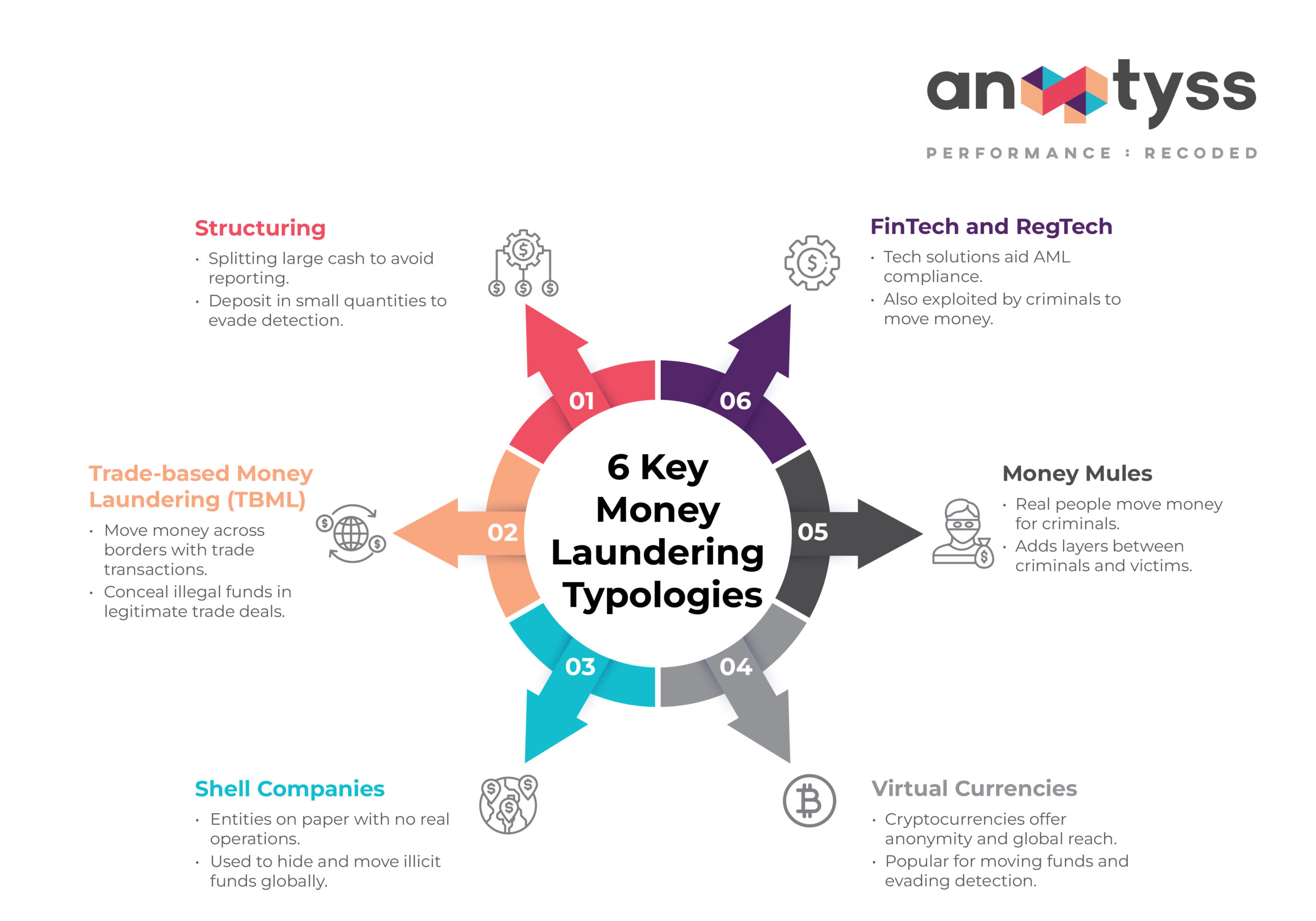
Criminals use several types of money laundering typologies that banks and financial institutions should know. These typologies include:

6 Key Money Laundering Typologies and How Banks Can Address Them

1. Structuring

Structuring, also referred to as “smurfing” or “structuring transactions,” is a type of money laundering typology that entails avoiding reporting requirements by splitting large cash and depositing them in a series of small quantities. Criminals often utilize this typology to evade detection and scrutiny by institutions and law enforcement.

2. Trade-based Money Laundering

Trade-based money laundering (TBML) is a type of money laundering that involves the use of trade transactions to move money across borders and conceal illegal funds.

Banks must be vigilant when dealing with trade transactions and improve their due diligence procedures, closely monitor trade transactions, collaborate with other stakeholders, and monitor and detect any signs of suspicious activity.

3. Shell Companies

Shell companies are entities that exist only on paper. They have no real address, business, assets, or operations. Criminals use these shell companies to hide and move their illicit funds across borders.

Banks must have effective due diligence processes in place to identify and be aware of the risks associated with shell companies. Banks and financial institutions must identify the individuals behind the companies, linked assets, and their business operations.

4. Use of Virtual Currencies

Money laundering using virtual currencies and cryptocurrencies has become increasingly popular among criminals as they offer a high level of anonymity, decentralization, and global reach, making them one of the most popular instruments for criminals and money launderers. They utilize cryptocurrencies to move their illicit funds across borders at ease and infiltrate traditional financial systems while evading detection.

5. Money Mules

Money mules are real people who physically move illegitimate money on behalf of someone. Criminals often recruit money mules to launder their illicit proceeds. These money mules are used to add layers between the criminals and the victims, making it harder for law enforcement to catch the culprit. In today’s digital banking age, criminals are also leveraging money mules to digitally transfer illicit money using digital accounts and wallets.

6. FinTech and RegTech

In addition, the rapid expansion of financial technology (FinTech) and regulatory technology (RegTech) solutions presents banks with both opportunities and obstacles in their way to meeting AML obligations. Although both FinTech and RegTech technologies help improve the AML compliance program efficacy and efficiency, they are also being used by criminals and syndicates to move their illegitimate money.

How Banks Can Prevent, Detect, and Address Money Laundering Typologies

As the complexity and sophistication of money laundering schemes increase, banks also need to employ innovative strategies and technologies to strengthen their AML compliance capabilities. These strategies include:

1. Artificial Intelligence, Machine Learning & Data Analytics

By implementing modern technologies, such as machine learning and artificial intelligence with data analytics, banks and financial institutions can make their AML compliance programs more efficient and effective. These technologies enable banks to process and analyze large volumes of customer and transaction data to precisely and accurately identify patterns and detect potential money laundering typologies.

Machine learning algorithms can be trained to automatically recognize the common patterns and schemes linked with money laundering activities and fraudulent transactions and reduce false positives.

Similarly, banks can implement Natural language processing (NLP) techniques to analyze unstructured data, including customer activities on social media, and their communications to gain insights into their behavior and risk profiles.

2. Collaborate with Multiple Data Sources and Information Sharing

Collaboration and information exchange is crucial for institutions to remain ahead of the most recent trends and hazards associated with money laundering. This includes exchanging knowledge, intelligence, and best practices with other institutions, regulators, law enforcement agencies, and industry associations.

In the fight against money laundering, public-private partnerships (PPPs) and information-sharing platforms, such as the Joint Money Laundering Intelligence Taskforce (JMLIT) in the United Kingdom and the Financial Crimes Enforcement Network (FinCEN) Exchange in the United States, can aid in fostering cooperation and coordination among stakeholders.

In addition, banks can collaborate with FinTech and RegTech firms to develop and implement innovative AML solutions, such as blockchain-based transaction monitoring systems and AI-powered customer due diligence platforms.

3. Enhanced Due Diligence (EDD)

EDD is a critical component of the Know-Your-Customer (KYC) process that involves gathering information and data about the customer or entity for a higher level of identity assurance. It also involves additional reviews and investigations on high-risk customers, large transactions, or jurisdictions.

Banks should consider implementing EDD KYC measures as they are more rigorous and robust than the Customer Due Diligence (CDD) KYC process and helps better understand, evaluate, and manage the risks associated with a high-risk customer onboarding.

Conclusion

Combating money laundering activities requires banks and financial institutions to stay up-to-date with the latest trends, techniques, and threats employed by criminals to wash out their ill-gotten funds. In addition, banks also need to maintain a strong compliance culture and implement innovative digital solutions to effectively prevent, detect, and report money laundering activities to the regulatory bodies. This can help them protect their reputation and meet various AML regulations and guidelines based on FATF directives, BSA, and more.

Anaptyss is helping banks and financial institutions in the United States by leveraging ALFA and deep-domain expertise. ALFA is our enterprise-grade solution that offers real-time transaction monitoring, KYC risk profiling, watchlist screening, and alerts investigation to help banks and financial institutions mitigate financial crimes and fulfill their AML obligations.

Pig Butchering Scams: Red Flags and Mitigation

Pig butchering scams involve scammers contacting potential victims and gaining their trust by befriending or flirting with them. Gaining a victim’s trust can often take several months, depending on the perpetrator’s commitment.

A pig butchering scammer usually creates a fake social media account on the platforms to contact potential victims. Their goal is to find a victim and become their “friend” or “lover” through loving conversations or “love bombing.”

One of the most lucrative of these is being run by criminal gangs across Southeast Asia, called the “pig butchering romance scam.”

The scammers refer to their victims as pigs, whom they fatten to be “butchered” – or conned, out of as much money as possible.

The victim is gradually convinced to invest in crypto as much as possible before the fraudster takes the money and disappears.

The scammers pressure victims to invest more money and tie it to their relationships. When the victim tries to withdraw funds or shows signs of ending their investments, the account is closed, and the money is gone. Some victims are asked to pay extra fees to withdraw money, while others are simply ignored and locked out of their accounts.

Pig Butchering works by criminal networks placing fake job advertisements to attract young people from China and other countries. These individuals are then held, against their will, in secure compounds where they are forced (under threat of violence) to commit cyber-enabled fraud against victims primarily located in Western countries, including the U.S. and Europe.

The typology is controlled by organized criminal gangs operating from Southeast Asia, including Special Economic Zones (SEZ) in countries, like Myanmar, Laos, Cambodia, and Thailand. In 2022, U.S.-based victims alone lost approximately $3.3 billion to crypto-related investment frauds.

Red Flags Indicators of Pig Butchering Scam

1. Unexpected Contact

Never respond to unwanted messages from unknown contacts, even from seemingly benign subjects, primarily through text messages and encrypted messaging programs.

2. Rejecting Video Chats

If someone you’ve been messaging consistently refuses to engage in face-to-face interactions, they probably aren’t the person in their profile picture.

3. Request for Financial Information

Do not share personal financial information with people you have never met in person. If a new virtual friend or romantic connection starts asking financial questions, put the brakes on the relationship.

4. Invitation to Invest in Certain Financial Products

Beware of unsolicited investment tips or advice, especially from someone you’ve only spoken to online, even if they recommend you trade with their account. Always ask what the source stands to gain by sharing tips with you and whether the deal fits your financial goals and investment strategy.

5. Unknown or Confusing Investment Opportunity

Carefully evaluate the product and the person and/or company seeking the investment. In addition to the standard search, try additional words such as “fraud” or “fraud” to see the results. Consider referrals from a third party or investment professional who has no interest in the investment to see if the promoter is a registered investment professional.

6. Unknown Trading Systems

Do your research before transferring money, especially in emerging markets like cryptocurrencies, where there are hundreds of exchanges and new ways of trading are constantly evolving. Who controls the platform? What are the security measures? How to withdraw money if necessary? If you don’t know the answers to these questions, don’t put your property there.

7. Extravagant Claims and Heightened Emotions

Take a closer look at any investment that offers many higher-than-average returns or is advertised as “guaranteed”. Scammers also often use information about you to appeal to your emotions—for example, “Don’t you want money to send your kids to college?”

8. A Sense of Urgency About an Upcoming News Release or Stock Price Increase

Remember that insider trading is illegal, and you should never trade a company’s stock based on material, non-public information.

Pig Butchering Tactics

The following is a list of tactics, drawn from law enforcement investigations, employed by organized crime gangs to target their fraud victims:

Mitigation and Measures to Combat Financial Crime

The Financial Action Task Force (FATF) recommendations outline a comprehensive and consistent framework of measures for the banks and financial institutions to combat financial crime, such as “Pig Butchering.”

Examples of Generic Controls and Mitigating Activities to Identify Pig Butchering

Examples of Specific Mitigation Measures Used by US Financial Institutions

Conclusion

To effectively tackle frauds, including pig butchering, financial institutions and VASPs alike should assess their potential exposure to this typology. Law enforcement agencies must collaborate globally on investigations, and public and private sectors must continue to collaborate through information sharing mechanisms.

Anaptyss as a strategic partner helps banks and other financial institutions strengthen their financial crime compliance (FCC) capabilities through domain expertise and intelligent AI and ML-powered digital solutions to detect financial crimes while reducing false positives.

Governance, Risk, and Compliance in the Banking Industry

Governance, Risk, and Compliance (GRC) refers to organizations’ strategy for corporate governance, risk management, and compliance with government laws and industry regulations.

It helps banks and financial institutions manage/mitigate risks and ensure regulatory compliance while safeguarding sensitive data, their reputation and improving their bottom line.

In this blog, we will discuss the importance of GRC in the banking industry, the role of technology & training in GRC, and share some of the best industry practices for implementing effective GRC programs.

Governance, Risk, and Compliance (GRC) in Banking

GRC consists of three main components:

1. Governance

Governance refers to the set of rules, processes, and policies essential for the proper functioning of the bank or financial institution. It covers,

Governance ensures that higher management can direct and influence activities at all levels of the bank or financial institution and ensures corporate activities are aligned with customers and organizations to support the business objectives.

In the banking and financial industry, GRC is an essential component for,

Good corporate governance also requires clear lines of authority and decision-making with transparency and accountability. It is critical for maintaining the trust of customers, shareholders, and regulators

2. Risk Management

Risk management refers to banks’ or financial institutions’ processes and procedures for identifying, assessing, and mitigating various risks that can prevent or hinder the institution from achieving its short-term or long-term objectives and lead to losses.

Banks and financial institutions face a range of internal and external risks, threatening the stability and profitability of the institution.

Internal risks include,

External risks include,

For effective enterprise risk management in banking, Chief Risk Officers (CROs), Operational Risk Managers (ORMs), and other stakeholders need to have a comprehensive understanding of these risks to develop appropriate risk controls and mitigation strategies.

3. Compliance

Compliance refers to banks’ or financial institutions’ level of adherence to laws, industry standards, regulations, and best practices mandated by the relevant governing or regulatory bodies.

In banking, compliance is crucial for,

Banks and financial institutions need to meet regulatory compliances, including,

Besides, compliance is an ongoing process that requires continuous monitoring and reporting. It also requires consistent development of policies and procedures that help the bank or the institution comply with the applicable laws and regulations.

Implementing and monitoring internal controls, as well as assigning specific roles, responsibilities, and accountability, are all part of effective compliance risk management (CRM) in banking. It maps risk management accountability, ensuring that the company complies with all applicable legal and industry requirements.

Benefits of GRC in the Banking Industry

GRC policies and best practices implementation is a complex task. However, if implemented properly, it can provide the following benefits to the institution,

GRC can assist banks in demonstrating their commitment to ensuring fair and safe transactions and gaining consumers’ trust, which is crucial for banks to retain their business.

Best Practices for Effective Governance, Risk, and Compliance in Banking

An effective GRC requires a holistic approach that encompasses all aspects of the organization across all levels and creates an environment that empowers employees and efficiently coordinates behaviors and resources. Below are some best practices for effective GRC in banking:

An effective GRC implementation for banks can help banks secure sensitive customer and transaction data while minimizing compliance and governance risks.

GRC Implementation with Deep-Domain Expertise

Poor Governance, Risk, and Compliance (GRC) practices or implementation can have adverse consequences for banks and financial institutions, ranging from financial losses to reputational harm and legal ramifications.

While the banking industry continues to grow, GRC will remain essential for risk mitigation and compliance risk management.

Anaptyss with its exclusive Digital Knowledge Operations™(DKO™)-based enterprise risk management (ERM) approach provides deep domain expertise to banks and financial institutions for effective governance, risk mitigation, and meeting regulatory compliances.

Benefits of Enterprise Risk Management in the Banking Sector

The financial sector is one of the most risk-prone industries, and banks are at the forefront of this risk. Banks need to continuously manage and monitor various risks due to credit and liquidity issues, market volatility, operational disruption, cybersecurity incidents, environmental, social, governance (ESG), etc.

Enterprise Risk Management (ERM) plays a critical role in mitigating the risks. Thus, implementing enterprise risk management (ERM) practices is a need across all financial institutions, irrespective of their size.

ERM refers to a structured approach to addressing (preventing, detecting, and mitigating) various organizational risks. It is a cyclical process of identifying, assessing, managing, and monitoring ongoing and new risks across an organization.

This blog discusses the key benefits of implementing enterprise risk management (ERM) in banking to help them streamline their risk management strategies and maximize profits.

9 Key Benefits of Implementing ERM in the Banking Sector

ERM implementation in banking can provide numerous benefits. Here are some key benefits of implementing ERM in banks and financial institutions.

1. Improve Risk Awareness

ERM encompasses all areas of organizational exposure to risks, including financial, operational, reporting, and compliance. A benefit of enterprise risk management is the oversight it provides.

ERM helps banks effectively identify and recognize the risks and communicate their impact to the leadership team, improving the response and decision-making ability for organizational growth.

2. Meet Regulatory Compliances

The financial services industry is heavily regulated, obligating financial institutions to comply with various global regulatory and compliance requirements.

A tailored enterprise risk management process can help financial institutions take a proactive approach to risk management. ERM provides a framework for managing risks, helping banks comply with regulations and demonstrate their compliance to the regulators.

ERM allows banks to effectively identify and assess risks across the organization and implement measures to mitigate, eliminate, or transfer these risks. By doing so, banks can maintain regulatory compliance, prevent operational disruptions and penalties, minimize losses, and improve risk management practices.

3. Reduce Losses & Increase Profitability

Financial institutions face numerous risks that can lead to monetary losses. Effective risk management can help banks reduce their costs by identifying the potential risks in advance and managing them proactively to minimize the likelihood of losses, reduce their risk exposure, and prevent losses.

It can also help institutions –

4. Safeguard Reputation

A robust ERM can help financial institutions safeguard their reputation and protect customer data, promote trust among customers, and avoid penalties from regulators.

Effective risk management can assist banks in improving their reputation by demonstrating their commitment to stakeholders and customers by effectively managing the risks. This can help gain trust and improve the bank’s reputation in the financial services market.

5. Improve Customer and Employee Satisfaction

Assessing various enterprise risks associated with new and ongoing initiatives within the organization is a critical component for efficient operations. By ensuring strong enterprise-wide risk management processes, banks can build customer confidence and improve business prospects over time.

With a well-thought-out and developed enterprise risk management plan, institutions can maintain a sense of security and confidence among customers and employees about the banks’ ability to maintain trust and deliver products and services.

An effective ERM plan also helps engage employees, leading to better results, sustainable growth, more customers, and higher customer satisfaction and loyalty.

Suggested Read: Address Various ERM Implementation Challenges

6. Improve Operational Efficiency

With a proactive approach to risk management, financial institutions or the banking industry can improve their resource usage and avoid costly outcomes of unexpected events. ERM helps them respond effectively in the event of a crisis when they occur, minimize disruption, and restore operations as quickly as possible.

ERM implementation provides banks with a framework that helps streamline their risk management processes and improve overall efficiency.

7. Meet Strategic Goals

A robust ERM program plays a critical role in shaping the organizations’ strategic goals, crucial for sustaining organizational growth that otherwise can be derailed by risks from internal or external threats.

ERM helps organizations and companies look at their risk profile holistically and proactively manage their risks, make informed decisions, and ensure that strategic goals are on track and targets are achievable while minimizing the potential negative consequences. It also helps in improving –

8. Focused Risk Analysis and Reporting

ERM helps financial institutions and businesses assess, identify, and report risks proactively and holistically. It also helps bring focus on key risks and reporting for accurate and timely decisions crucial for the organizations to achieve strategic objectives.

By focusing on key risks, banks, and financial institutions can effectively allocate resources that can help them make better-informed decisions to manage potential risks, thereby improving transparency and enhancing customer and employee confidence.

9. Better Decision Making

ERM provides banks with a comprehensive view of the risks they face. This allows banks to make informed decisions regarding risk-taking activities.

Banks can weigh the potential risks and rewards of different activities and make decisions that align with their risk tolerance levels.

ERM Implementation with Domain-Centric Approach

Effective enterprise risk management (ERM) implementation is critical to banks’ success. ERM provides banks with a framework to manage risks effectively and integrate the best practices for risk management into their overall strategy. By implementing ERM in the organization, banks can improve their decision-making processes, boost their reputation, maximize profits, and minimize losses.

Anaptyss as a strategic partner assists banks with tailored digital solutions for implementing effective enterprise risk management programs, including control design, testing, and risk governance.

How to Overcome Potential Challenges in ERM Implementation

Enterprise Risk Management (ERM) is a top-down approach to managing organization-wide risks, ensuring profitability, performance, and regulatory compliance.

The practice of ERM is crucial in banking as it can help banks and other financial institutions prevent, detect, assess, and mitigate risks due to operational disruption, financial volatility, non-compliance, regulatory violations, etc.

However, ERM implementation in the banking industry poses unique challenges, especially to the small-and-medium-sized institutions.

This blog discusses the top challenges in ERM implementation in banking and shares some effective strategies and best practices to address those.

Enterprise Risks Management (ERM) Implementation Challenges

Financial institutions may choose from various ERM frameworks and standards such as COBIT, COSO, ISO 27001, RIMS, SOC 1 Type 2, SOC 2 Type 2, CMMC, NIST, and FedRAMP, etc.

They may also consider customizing a framework based on their business goals, structure, technology, and available resources. However, implementing an enterprise risk management framework can be immensely complex.

Below are the top challenges often encountered by Chief Risk Officers (CROs), Operational Risk Managers (ORMs), and other stakeholders while implementing an ERM program.

1. Resistance to Change

ERM implementation requires changes in existing policies, processes, and procedures. However, the typical resistance to change can lead to pushback and potentially sabotage the project. The reluctance may occur due to employees’ experience with past organizations or apprehension of potential loss of jobs when the process involves automation or modern digital technologies.

2. Lack of Qualified Personnel

ERM implementation requires niche domain expertise and guidance from senior stakeholders such as the CRO. It also requires strong leadership with a commitment to adequate resources and time for an effective ERM process. The lack of qualified personnel with optimal expertise can hamper implementation and jeopardize the success of the ERM program.

3. Lack of Perceived Benefits of ERM

One of the challenges in ERM implementation is the lack of perceived value of ERM, which causes other organizational initiatives to take precedence. As a result, management prioritizes other objectives and may not allocate sufficient resources to identify risks and implement ERM.

4. Lack of Management Support

Reporting the impact of ERM on strategic goals may present difficulties, particularly during the project’s initial phases. Reporting issues may hamper the trust-building process with stakeholders and curtail their support. This situation can derail ERM implementation due to inadequate resources and buy-in from other stakeholders. 

5. Difficulties in Defining/Quantifying Risks

Establishing a formal risk management framework and common risk nomenclature are among the most difficult challenges in building or implementing a risk management program. Failure to constitute a consistent risk definition and procedures can jeopardize the program’s success and aggravate the organization’s risks.

6. Challenging Regulatory Environment  

The ever-changing regulatory environment results in disparate regulatory norms across different jurisdictions, high scrutiny, and fear of compliance failures despite best efforts due to human error or unanticipated events. The obligation to comply with various laws and regulations in a volatile market and geopolitical landscape necessitates a highly diligent approach to adopting, customizing, and implementing ERM.

7. Cost Justification

Demonstrating an ERM framework’s value to justify costs in an ROI-driven environment could hamper decision-making. ERM risk-and-reward metrics are less prescriptive and thus remain voluntary for many organizations, resulting in a value proposition that lacks regulatory language and compliance encouragement.

8. Planning Horizon 

The time or planning horizon for an enterprise risk management assessment depends on the organization’s willingness to invest in risk management. Companies often prefer short-term planning horizon, as it generally needs less training, is less expensive, and provides risk estimation than long-term ones. For successful ERM objectives, banks and financial institutions must choose a solution consistently.

 9. Lack of Ownership

Another significant difficulty in developing and implementing an ERM framework is determining who should own the ERM, which is frequently debated and unclear at the board, director, audit committee, and management levels.

10. Risk Reporting 

Organizations frequently struggle with determining what information to disclose to internal and external constituents, as well as how to communicate the risk. Furthermore, concealing sensitive information while offering risk insights is crucial to avoid business lawyers raising issues with external regulators, stakeholders, and auditors.

Strategies to Address ERM Implementation Challenges

Successful implementation of ERM depends on various factors. Financial institutions need various additional pre-requisites to overcome multiple inherent challenges for ERM to be successful, including:

1. Gradual Implementation

Incremental changes instead of making large-scale changes at once can reduce risks, increase agility, and support transparency. Institutions need to have realistic ambitions and make small-scale changes. This will help build credibility in the organization and ease up the ERM implementation.

2. Consistent Communication

Communicating the benefits of ERM to all stakeholders, including employees, management, and the board of directors can help overcome the resistance to change. Consistent reporting of the impact of ERM implementation on the organization’s strategic goals, risk exposure, and decision-making can help. Banks can also involve employees in the implementation process by soliciting their feedback and addressing their concerns.

3. Support from Top Management

Gaining strong support from the top management can foster ERM implementation in the organization. The team concerned can garner the necessary support by highlighting the benefits of ERM and demonstrating its alignment with the organization’s strategic goals. Further, risk officers can involve stakeholders in the ERM implementation process by keeping the management informed and incorporating their inputs/feedback.

4. Diligent Needs Assessment

The institution must conduct a thorough needs assessment to determine the resources required for ERM implementation. Following this step, they need to prioritize the activities and allocate resources, accordingly. Additionally, financial institutions may also consider outsourcing some of the ERM implementation activities to third-party providers. This can help them freeup their internal resources for important operational/business activities.

Best Practices for ERM Implementation

Following are some of the best practices that can help financial institutions overcome ERM implementation challenges:

1. Develop a Comprehensive ERM framework

A comprehensive ERM framework should outline the risks, risk tolerance, risk appetite, organizational objectives and goals, implementation plan, and risk management processes. It should also define the roles and responsibilities of all stakeholders and provide clear guidelines for risk-taking and decision-making.

2. Perform a Thorough Risk Assessment

Conduct a complete risk assessment, covering all aspects to identify and prioritize risks at the business level. This evaluation should consider the organization’s business objectives, data insights, and stakeholder inputs.

3. Prepare a Risk Management Plan

A risk management plan based on the risk assessment results can be crucial in specifying the mitigation strategies. The plan should include measures such as risk mitigation, risk transfer, risk avoidance, and risk acceptance. It should also establish risk tolerance limits and provide rules for risk monitoring and reporting.

4. Create an Implementation Plan

Planning is a critical step in ERM implementation and comprises the following:

5. Communicate the Plan to Stakeholders

The implementation strategy should be communicated to all stakeholders, including the management team, staff, customers, and suppliers. The communication should be straightforward and concise, emphasizing the benefits of ERM.

Conclusion

The numerous challenges associated with ERM implementation can derail or sabotage risk management projects and make the process frustrating and time-consuming. However, with the right approach and best practices, institutions can overcome these challenges and implement ERM successfully.

Additionally, monitoring and reporting the progress of ERM projects is critical to bring in the necessary changes for effective outcomes.

Anaptyss provides a domain-led Enterprise Risk Management practice to help banks and financial institutions implement ERM frameworks, securing their business from critical risks across all levels.

DKO™
Life@Anaptyss
Careers