Watchlist screening is a fundamental process where financial institutions check customers—both individuals and entities—against global watchlists. The purpose is to detect and prevent involvement in financial crimes such as money laundering, terrorism financing, and fraud, forming a critical part of the compliance framework.
These databases are maintained by regulatory and law enforcement agencies worldwide. Key lists include:
The US OFAC Specially Designated Nationals (SDN) List
The UK Office of Financial Sanctions Implementation (OFSI) UK Sanctions List
The EU Consolidated Sanctions List
The United Nations Security Council (UNSC) Consolidated List
An effective watchlist screening process is non-negotiable for identifying high-risk entities and protecting the integrity of the financial system.
Why Effective Watchlist Screening is Crucial
Watchlist screening is a cornerstone of the Know-Your-Customer (KYC) process and a vital component of a bank’s overall Financial Crime Compliance (FCC) program. The databases contain detailed information on high-risk profiles, including:
Suspected terrorists and terrorist financiers
Politically Exposed Persons (PEPs)
Sanctioned individuals, entities, and countries
Narcotics traffickers and money launderers
Specially Designated Nationals (SDNs)
Optimizing this process delivers significant benefits:
Safeguards the organization from financial and reputational risks
Streamlines the customer screening and onboarding process
Ensures compliance with global regulatory norms like AML/CFT
Reduces the manual workload for compliance departments
Avoids severe non-compliance penalties, sanctions, and legal action
Approaches to Watchlist Screening
Screening customer information against global watchlists requires precision and attention to detail. Institutions typically use one of three approaches.
1. Manual Screening
In this traditional method, compliance analysts manually review customer information against watchlists. While it allows for contextual, intuitive decision-making that can be good at identifying nuanced false positives, it is also prone to human error, slow, and not scalable for high volumes.
2. Automated Screening
This modern approach uses software, often powered by AI and machine learning, to rapidly process and analyze large datasets against watchlists. It is fast, efficient, and scalable. However, rule-based systems can lack context, sometimes leading to a high volume of false positives that can negatively impact the customer experience.
3. The Hybrid Approach (Recommended)
The most effective strategy combines automation with human expertise. An automated system performs the initial mass screening to flag potential matches, which are then escalated to human analysts for investigation and contextual review. This approach balances speed and scale with accuracy and nuance.
Key Challenges in Watchlist Screening
Improving effectiveness requires understanding the primary hurdles:
High Volume of False Positives — Automated systems often flag legitimate customers who have similar names or details to individuals on a watchlist, creating a massive workload for compliance teams.
Data Variations and Quality — Inconsistent data formatting, aliases, cultural name variations, and transliteration errors can lead to both missed matches (false negatives) and incorrect matches (false positives).
– Dynamic and Disparate Lists — Global watchlists are constantly being updated by numerous different agencies, making it difficult to maintain a single, consolidated, and up-to-date screening database.
Resource Constraints — Managing the high alert volumes and complex investigations requires significant time, budget, and skilled personnel, which can be challenging for institutions of all sizes.
5 Strategies to Enhance Watchlist Screening Effectiveness
Institutions can apply the following techniques to overcome challenges and improve their screening process.
Standardize and Enrich Your Data
Data standardization is the process of converting all customer data into a single, consistent format. By ensuring high-quality, standardized data across all sources, you significantly reduce errors and enable systems to compare information more accurately.
Refine and Tune Matching Algorithms
Matching algorithms, including fuzzy logic and phonetic matching, are the core of an effective screening system. Banks must continuously work to refine and tune these algorithms to reduce false positives and improve the accuracy of true matches, tailoring the rules to their specific risk appetite and customer base.
Consolidate Multiple Data Sources
By integrating multiple data sources—from government lists like the OFAC SDN list to commercial and internal databases—banks can create a more comprehensive and up-to-date screening environment. Data consolidation helps reduce gaps and improves the overall reliability of the screening process.
Leverage Artificial Intelligence (AI) and Machine Learning (ML)
Modern AI and ML technologies can dramatically improve the efficiency and accuracy of screening. By training models on historical data, banks can recognize complex patterns, identify potential matches that traditional methods miss, and significantly reduce false positives. Explore how Generative AI is transforming financial crime compliance.
Implement a Risk-Based Approach
Not all customers pose the same level of risk. By segmenting customers based on their risk profiles, banks can apply more stringent screening measures (like more frequent checks or enhanced due diligence) to high-risk customers, allowing them to focus resources where they are needed most.
Frequently Asked Questions (FAQ)
What is “fuzzy matching” in watchlist screening?
Fuzzy matching is an algorithmic technique that identifies potential matches that are not identical but are very similar. It accounts for common errors like misspellings, typos, and variations in names or addresses, helping to catch clever attempts to evade detection.
How often should an institution update its watchlists?
Watchlists should be updated as frequently as the issuing bodies release new versions. For critical lists like the OFAC SDN list, this should be done in near real-time. A daily update cycle is a common best practice for most major lists.
What is the difference between a PEP and a sanctions list?
A sanctions list contains names of individuals and entities with whom business is legally prohibited. A Politically Exposed Person (PEP) list contains names of individuals who hold prominent public functions. Being a PEP is not an accusation of wrongdoing, but it automatically classifies the individual as high-risk, requiring enhanced due diligence.
AI-Powered Automated Global Watchlist Screening
Anaptyss helps banks and financial institutions implement cutting-edge solutions for enhanced watchlist screening. Our enterprise-grade solution, ‘ALFA’, is powered by AI and ML technologies for real-time transaction monitoring, watchlist screening, and KYC risk profiling. See how we helped one client achieve a 75% reduction in false alerts.
ALFA empowers banks to transform their screening processes for effective compliance with all AML, KYC, and CDD regulations.
In the intricate world of banking, a single compliance misstep can lead to significant legal and financial repercussions. As regulatory landscapes continually evolve, banks must implement robust Compliance Risk Management (CRM) frameworks to navigate these complexities.
This article delves into the core components of CRM, emphasizing its pivotal role in safeguarding financial institutions against potential legal challenges and ensuring unwavering adherence to industry standards.
Compliance refers to how a bank or any other organization adheres to applicable laws, policies, and regulations in the jurisdiction they operate. Meeting compliance is critical for banks and other financial institutions to ensure customers’ and shareholders’ satisfaction, protect employees, gain trust, and build a reputation in the market.
Compliance starts at the top and it’s all about treating the customers fairly and winning the customers’ trust. Over the past decade, Compliance Risk Management has become one of the most significant concerns for financial institutions as they prepare to operate in the ever-evolving regulatory landscape, avoid hefty regulatory fines, and safeguard their reputation.
What is Compliance Risk Management?
Compliance Risk Management (CRM) refers to the process of identifying, analyzing, and monitoring the risks to a bank or financial institution’s compliance status vis-à-vis the regulatory norms and industry standards.
CRM includes implementing and monitoring internal controls and assigning dedicated roles, responsibilities, and accountabilities. This step maps risk management accountabilities, assuring that the business conforms to the applicable legal and industry obligations.
It also includes documenting the potential liabilities and losses the organization may face if it fails to comply, such as fines, legal penalties, sanctions, and business and reputational loss. It also comprises the necessary risk mitigation and remediation procedures to keep compliance risks at an acceptable level, preferably within the organization’s risk appetite.
A well-developed enterprise risks management framework (EMRF) with the requisite compliance risk management controls, policies, and procedures can help financial institutions strengthen their compliance risk programs and mitigate or eliminate the gaps across their operations.
Compliance Risks in the Banking Industry
Compliance risk, also called integrity risk, refers to legal or regulatory sanctions, loss of reputation, or material or financial losses due to a bank’s failure to comply with applicable regulations, laws, rules, and banking industry standards.
Financial institutions must manage compliance risks by implementing, monitoring, and testing necessary controls and policies to detect and mitigate potential compliance risks.
Compliance risks are often overlooked as they blend in with operational risks, which can hamper specific preemptive and mitigative measures, exposing the financial organization to risks such as:
Legal penalties
Payment of damages/reparation
Limited business opportunities
Diminished or tarnished reputation
Reduction in the franchise value
Reduced expansion potential
Void contracts
Types of Compliance Risks in the Banking Industry
Below are some common compliance risks banks are exposed to:
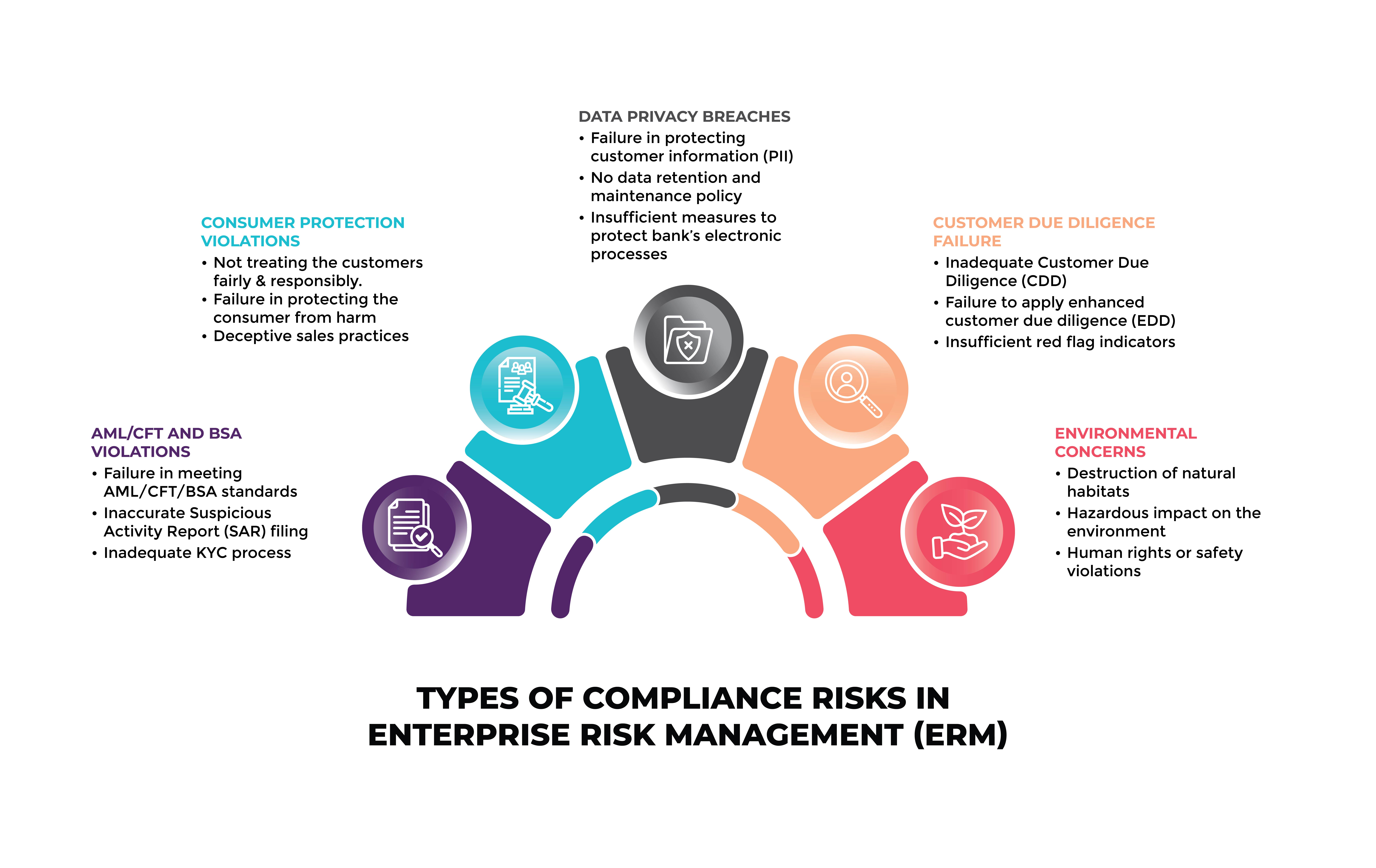
1. AML/CFT and BSA Violations
The Bank Secrecy Act (BSA) and USA Patriot Act are laws to direct globally concerted efforts for Anti-Money Laundering and Countering the Financing of Terrorism (AML/CFT).
Banks or financial institutions found guilty of violating AML/CFT standards or BSA regulations can face significant legal and regulatory consequences. This includes hefty fines by regulators that can cause financial losses and reputational damage.
2. Violations of the Consumer Financial Protection Act
The U.S. federal and state laws mandate banks and financial institutions to treat their customers fairly and responsibly. They must implement controls and measures to protect their consumer from any harm caused by,
Discrimination
Deceptive practices
Unfair fees
Any other forms of mistreatment
Banks or financial institutions must send up-to-date information about new products and services and ensure they are simple to understand, easily accessible, and not deceptive.
If an institution is found violating consumer protection laws, it may suffer reputational damage and regulatory enforcement, resulting in loss of clients and business opportunities.
Some of the key guidelines in data privacy laws include:
Banks and any other organization collecting and using personal data need to obtain prior explicit consent from the customer
They must implement appropriate controls to securely collect and use the data for the intended purposes only
The entity must retain the personal data or any other sensitive information for the permitted duration and then destroy it using approved tools and procedures
Newer regulations hold banks more accountable for consumer data protection, privacy, and security incidents.
Banks also need to protect their electronic processes from disruption by threat actors, including unauthorized or ex-employees. Failure in implementing robust cybersecurity controls and procedures can expose the bank to cybersecurity risks, such as data breaches, financial fraud, and financial crimes, and lead to regulatory sanctions or civil lawsuits.
4. Customer Due Diligence Failure
Customer Due Diligence (CDD) is a major part of the Know-Your-Customer (KYC) process. It refers to the bank’s processes to collect and evaluate information about a potential customer. This is done to uncover any potential risks to the institution or bank in doing business with the specific person or organization.
Failure to authenticate its customers’ identities and understand their business activities, financial transactions, and risk exposure may cause CDD failures, leading to credibility loss, financial crimes, and sanctions by regulators.
Manage Compliance Risks with an Enterprise Risk Management Framework
The banking industry is one of the most heavily regulated industries with a plethora of regulations and laws. Banks need to continuously analyze the new compliance rules and requirements and apply adequate control measures and monitoring systems to stay compliant.
However, managing compliance risks traditionally in a growingly stringent regulatory environment with hundreds of rules and regulations poses unique challenges.
Anaptyss as a strategic partner helps banks streamline compliance management and keep up with regulatory changes by identifying the risk areas associated with banking operations or tasks. We help implement risk controls and risk management frameworks to mitigate various enterprise risks efficiently.
Our exclusive Digital Knowledge Operations™ (DKO™)-based approach combines domain expertise and digital solutions in a customized manner to help financial institutions manage enterprise risks and fulfill regulatory compliance requirements, meet applicable rules and laws, including AML/CFT and various other obligations.
Money laundering has been rising globally despite the growing laws and regulations and clamping down from enforcement agencies. The annual laundered sum is a staggering 2-5% of global GDP ($800 billion – $ 2 trillion) as per the UNODC estimate.
While money laundering techniques grow more obscure, their exploitation of fiat and virtual currencies continues to baffle financial systems, aggravate terrorist financing, and impact the economic and geopolitical landscape.
Financial institutions need a deeper understanding of the red flags that indicate money laundering, terrorist financing, and other illicit transactions. More so due to the expanding ambit of red flags for new laundering techniques and typologies.
This blog outlines FATF red flag indicators for detecting money laundering and terrorist financing on account of virtual assets (VAs); however, these recommendations apply to fiat currencies as well.
FATF Red Flag Indicators of Money Laundering and Terrorist Financing
The red flags for suspicious activities relate to broad aspects, including transactions, transaction patterns, anonymity, senders and recipients, source of funds, and geographical parameters. FATF guidelines recommend deeper assessment and reporting of the perceived risks based on pertinent observations. Here is an outline:
1. Red Flags for Transactions
The FATF guidelines states, “Red flags traditionally associated with transactions involving more conventional means of payment remain relevant to detecting potential illicit activity related to VAs.” The foremost indicator is structured transactions or systematic transfers in smaller denominations, typically within the ceiling limits to evade detection and reporting of anomalies.
Abrupt and large transactions within 24 hours and irregular “one-off” transaction patterns within a longer timespan also indicate a red flag for illicit transactions based on VAs or traditional currency. Multiple, large transactions to a new account or a recently activated account also point to potentially illicit transactions.
2. Suspicious Transaction Patterns
A large deposit to open a new account might indicate a red flag, particularly when the amount doesn’t reconcile with the customer profile. In tandem, a customer that begins to trade a significant amount of the deposit on the same day or soon after or takes out the whole amount might draw a red flag.
Another notable pattern involves using multiple accounts to make transactions that deviate from the user’s standard behavior. For example, deposits from unrelated wallets or accounts to other accounts or exchanging virtual assets for fiat currencyat a loss.
3. Red Flags Related to User Anonymity
Virtual assets inherently enable anonymity, which hampers the detection of illicit transactions associated with money laundering and terrorist financing. In the context of behavioral patterns and customer relationships, the factor of anonymity may trigger a red flag. For example, the use of multiple VAs by a customer despite additional fees or moving a virtual asset to an anonymity-enhanced cryptocurrency (AEC) should raise suspicion.
Transactions in virtual assets with exposure to known illicit sources like darknet marketplaces, gambling sites, Ponzi schemes, etc., also indicate potential money laundering.
4. Red Flags Related to Senders or Recipients
The FATF guidelines highlight specific irregularities related to account creation and customer due diligence or CDD. For example, a customer using different identities to open accounts to avoid restrictions or initiating transactions from non-trusted or flagged IPs or those from sanctioned jurisdictions raises a red flag. Within the same Virtual Asset Service Provider (VASP), repeated attempts to open an account also count as atypical behavior.
In the CDD process, multiple issues may trigger a red flag for money laundering and terrorist financing; incomplete or inadequate KYC data, declined requests for KYC documentation, and gaps and inaccuracies in the source of funds and sender-receiver relationship are some of these irregularities.
5. Source of Funds or Wealth
Many money laundering indicators emerge from tainted funding sources based on criminal activities such as narcotics trafficking, fraud, extortion, etc. Foremost is the use of tainted VA addresses and cards that associate with fraud, ransomware schemes, darknet, etc.
Drawing substantial funds or fiat currency through a debit or credit card linked to a VA wallet, followed by conversion to fiat currency also indicates a red flag. Schemes wherein the source or origin of funds remains unknown, with possible links to shell entities or incoming transactions from unknown sources also raise suspicion.
6. Geographical Indicators of Money Laundering
Geographical red flags are based on jurisdictional disparities in terms of AML/CFT regimes, implementation, reporting obligations, and preventive measures. Perpetrators exploit unintentional gaps in the regulatory frameworks to launder money as it moves through different jurisdictions.
One of the indicators is when the source or destination of funds is a VA exchange unregistered in the customer’s jurisdiction. Another scenario involves the use of a VA exchange in risky jurisdictions with insufficient AML/CFT regulations.
Setting up offices in an inadequately regulated jurisdiction, with no rational explanation also raises a red flag for suspicious financial activities.
Detecting Red Flags is Key to Supporting AML/CFT Regulations
The trail of red flags continues to grow in sync with emerging laws, regulations, and amendments that strive to curtail the money laundering menace. Being aware of the latest red flags is crucial for financial institutions to take the necessary measures for gaining regulatory alignment.
Anaptyss offers solutions such as domain-led consulting, implementation expertise, and training solutions to help institutions understand applicable red flags and act upon them.
Based on the Digital Knowledge Operations™ approach, Anaptyss’ financial crime compliance practice enables a realistic and tailored way to detect and address red flags.
Financial institutions operate in an environment fraught with uncertainties, from market volatility to regulatory changes. Establishing a comprehensive Enterprise Risk Management (ERM) framework is imperative to navigate these challenges effectively.
This article delves into the four pivotal components that form the backbone of a resilient ERM framework, ensuring institutions are well-prepared to identify, assess, and mitigate potential risks.
What is Enterprise Risk Management Framework (EMRF)?
An enterprise risk management framework (ERMF) is a template or guideline that enables a systematic approach to identify, analyze, and mitigate risks or prepare for potential internal and external business risks.
ERMF helps financial institutions with fundamental guidance to design, implement, monitor, review, and improve risk management across all levels. This guidance is vital to address the risks and minimize or nullify their reputational and financial impact.
Components of an Effective Enterprise Risk Management Framework
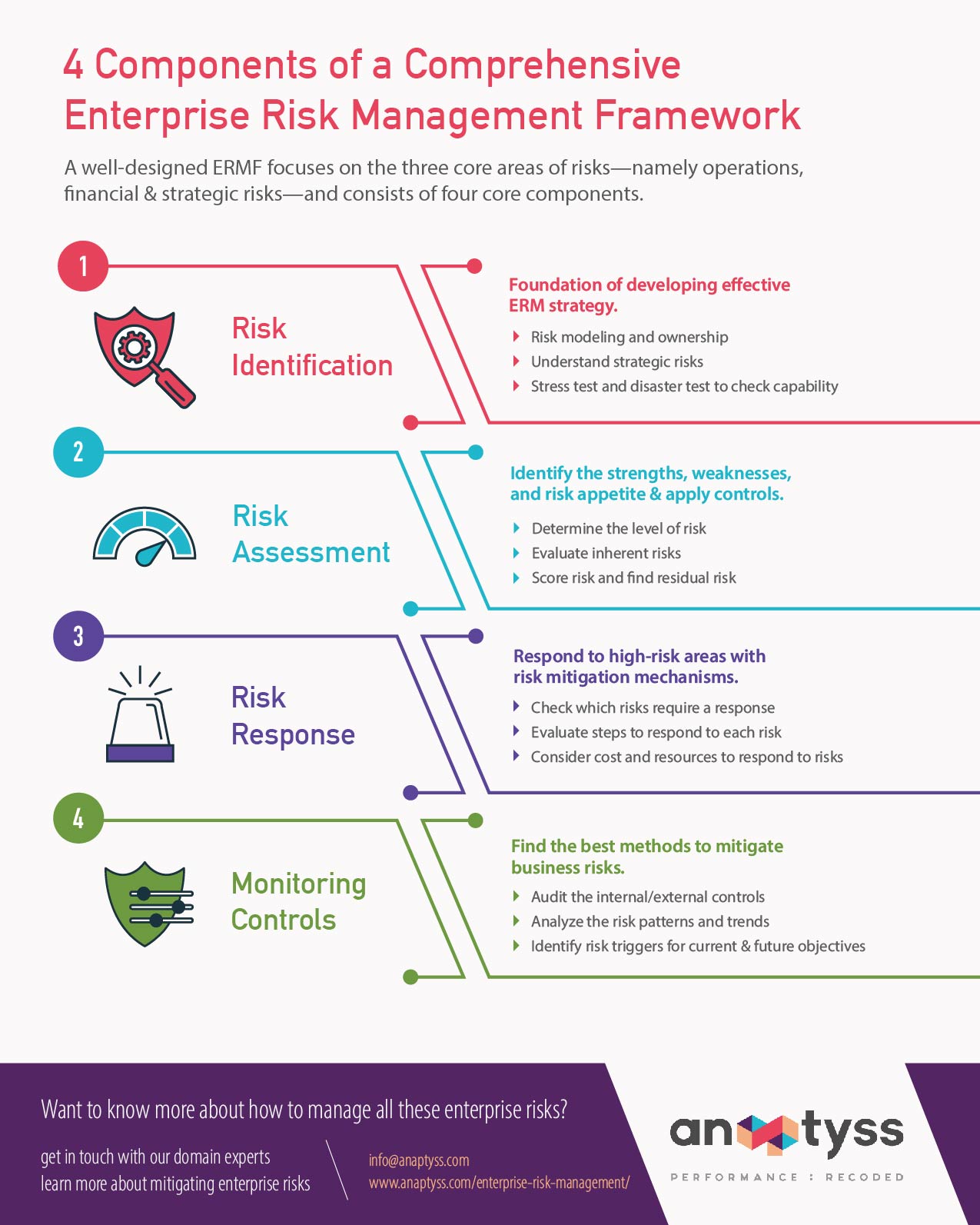
A well-designed Enterprise risk management framework helps a bank’s board of directors and senior management customize their business needs and analyze the amount of risk exposure, risk appetite, and risk controls. Fundamentally, an ERMF consists of four key components:
1. Risk Identification – A Crucial Component of Enterprise Risk Management Framework
Risk identification is one of the most crucial components of an enterprise risk management framework. It forms the foundation for developing an effective and robust enterprise risk management strategy.
This includes identifying and generating a comprehensive list of potential risks that can disrupt the business or lead to failure. Banks and financial institutions must review their portfolio and document the threats that can prevent them from achieving their business objectives.
This ERMF component also helps institutions define ways to take advantage of risk to obtain a competitive advantage and operate from a strategic perspective rather than an operational standpoint.
Essentially, risk identification involves the following stages:
a. Risk Modelling:
This stage helps financial institutions identify high-risk areas that require the most attention based on historical data and experts’ evocation. With risk modeling, institutions can precisely understand the risk probability, its potential severity, and its outcomes.
It also provides the leadership team with an accurate picture of the organization by evaluating the systems and processes in realistic and hypothetical scenarios. It further helps them understand risk tolerance and build systemic resiliency to withstand the various impacts and extremely negative consequences.
b. Risk Ownership
Risk ownership and management are to put accountability in place. It is the most critical component of an ERM framework, giving control to individuals over processes and holding them accountable for managing the risk in the organization.
If something goes wrong, the person or individual (risk owner) at the senior leadership having direct oversight or responsibility is held responsible. This setup can help mitigate and manage the risk and prevent aggravation of mistakes.
The risk owner has the following responsibilities:
Identify, assess, manage, and monitor the risks
Clearly articulate the risks in the risk statements
Determine the appropriate level of risk tolerance
Integrate risk management into daily operational activities
Find and fix gaps in the mitigation and monitoring activities
Scan the internal and external environments to track new or emerging risks and opportunities
c. Strategic Plan
This stage refers to understanding the financial institution’s strategic objectives and identifying risks that can hamper the goals or objectives. An effective enterprise risk management framework prioritizes the understanding of business risks and steps to protect the assets and business. It involves five steps:
Define the business objectives and strategy
Find key performance indicators (KPIs)
Identify the risk that can hamper performance
Find key risk indicators and tolerance levels
Integrate risk reporting and monitoring
d. Stress Test
By performing stress tests, organizations can evaluate and identify the effects of potential risk factors. It includes scenario and sensitivity testing, which helps the financial institution determine if they have enough capabilities and capital to withstand a risk event or financial crisis. This also includes testing the security threats.
Stress tests can help develop contingency and risk mitigation plans, and set risk exposure limits, risk appetite, and strategic choices. It also serves the following purposes:
Risk identification and control
Complement risk quantification methodologies
Support capital management
Improve liquidity management
e. Disaster Test
Disasters pose a broad range of economic, financial, human, societal, and environmental impacts that can have long-lasting, multi-generational effects leading to business disruption. The disaster test involves evaluating organizations’ capability to withstand and remain stable after a natural or man-made disaster and during the war. This helps financial institutions:
Analyze disaster risks
Communicate disaster risks to decision-makers
Document the risk
2. Risk Assessment
Conducting an enterprise-wide risk assessment is critical to mitigating losses in the banking and financial services industry. It helps financial institutions identify risks and evaluate the following,
Level of risks, i.e., Inherent or Residual
Score the risks by analyzing the impact and likelihood or probability of occurrence
Steps to minimize risks within the defined risk appetite of the financial institute or organization
Banks need to evaluate the inherent risks posed by an error or omission due to factors other than a failure in internal control measures. Then they must quantify the inherent risks by assigning calculated risk scores to the products, services, customers, and geographical locations.
Although it is not easy to spot inherent risks, they most likely occur in the financial services sector due to the complex regulatory environment and lack of proper controls or when the organization doesn’t have an internal audit team or committee with a financial background.
Auditors and analysts, while reviewing financial statements, need to look for inherent risks and understand the line of business to detect and control them.
Banks and financial institutions also need to calculate and determine the residual risks by subtracting the quality of risk management or the impact of risk controls from the inherent risk.
Residual risk refers to risks that remain after implementing the controls and procedures to mitigate or eliminate the high risks associated with the bank’s business processes, geographical locations, systems, customers, products, and services.
Residual risk consideration is critical from the standpoint of regulatory requirements and compliance as it helps:
Identify the strengths and weaknesses of the existing risk management and control framework and acknowledge the existing risks
Re-evaluate organizations’ risk appetite
Incorporate risk controls and other available options to combat the intolerable risks
3. Risk Response
Banks and financial institutions can respond to high-risk areas with proper controls and risk mitigation mechanisms. The purpose is to decide concerning risks that require a response based on risk assessment results.
The leadership team can take necessary actions or respond to the risks in four different ways:
Avoid: Refers to the strategy of removing the threats or eliminating the situations or conditions that lead to risks or allow their existence
Mitigate or Reduce: Inevitable risks need mitigation to reduce their negative impact, occurrence, and likelihood. Reducing risks that are beyond a bank’s risk appetite or tolerance level is a reasonable response to risks and threats
Transfer: Risk transfer is a strategy to pass the risk to a third party. Unlike the first two risk responses that help reduce or eliminate the risk occurrence, this strategy helps financial institutions transfer the responsibility of enterprise risks to a third party. For example, insurance provides safety in the event of loss
Accept: Acknowledge the risk but take no action. This response is reasonable when a risk is beyond the bank’s risk appetite or tolerance levels, or the risk probability is so low that it does not make sense to transfer, reduce/mitigate or avoid the risk.
By implementing a well-defined risk management strategy, banks can respond to risk appropriately, minimize the risk impact across the organization and efficiently counter various threats. Here are some factors banks need to consider while responding to risks:
Consider the risk impact and likelihood found during the risk assessment
Consider the options to respond to the risk, i.e., whether to accept, avoid, mitigate/reduce, and/or transfer (outsource to third parties/insurance)
Evaluate the steps to respond to each risk
Consider the cost and resources required to respond to the risk
Estimated time to implement the response
4. Monitoring the Controls
Monitoring the controls implemented to manage enterprise risks is critical for continually checking, supervising, and observing the risks and determining the best method to mitigate those risks.
It also assists banks to identify deviations from the required or expected level of performance and ensure the following:
Implement the appropriate risk response as planned
Evaluate the effectiveness of risk responses (also known as risk audits)
Determine the risk triggers for current and future goals
Monitor and verify the protocols for risk management/control
Examine risk patterns and trends
All actions taken by internal and external teams or parties that may influence operations or consumers are under the supervision of monitoring controls.
To assess their operations, policies, and procedures and discover and notify the management of unprotected risks, banks might also create an internal committee or employ an external auditor.
Co-Create & Implement a Robust Enterprise Risk Management Framework with DKO™
A robust enterprise risk management framework can help prevent, detect, and mitigate risks based on an institution’s exposure, risk appetite, and risk controls.
However, effective implementation of an ERMF poses unique challenges due to the lack of domain expertise, evolving compliance landscape, agility issues, technological gaps, etc.
As a strategic partner, Anaptyss assists banks and other financial institutions in implementing enterprise risk management frameworks, including control design, testing, and governance.
The exclusive Digital Knowledge Operations™ (DKO™)-based approach helps with the tailored implementation of ERMF as per the institution’s policies, structure, technology setup, objectives, and resources. It offers a realistic way to help banks address critical enterprise risks through effective implementation.
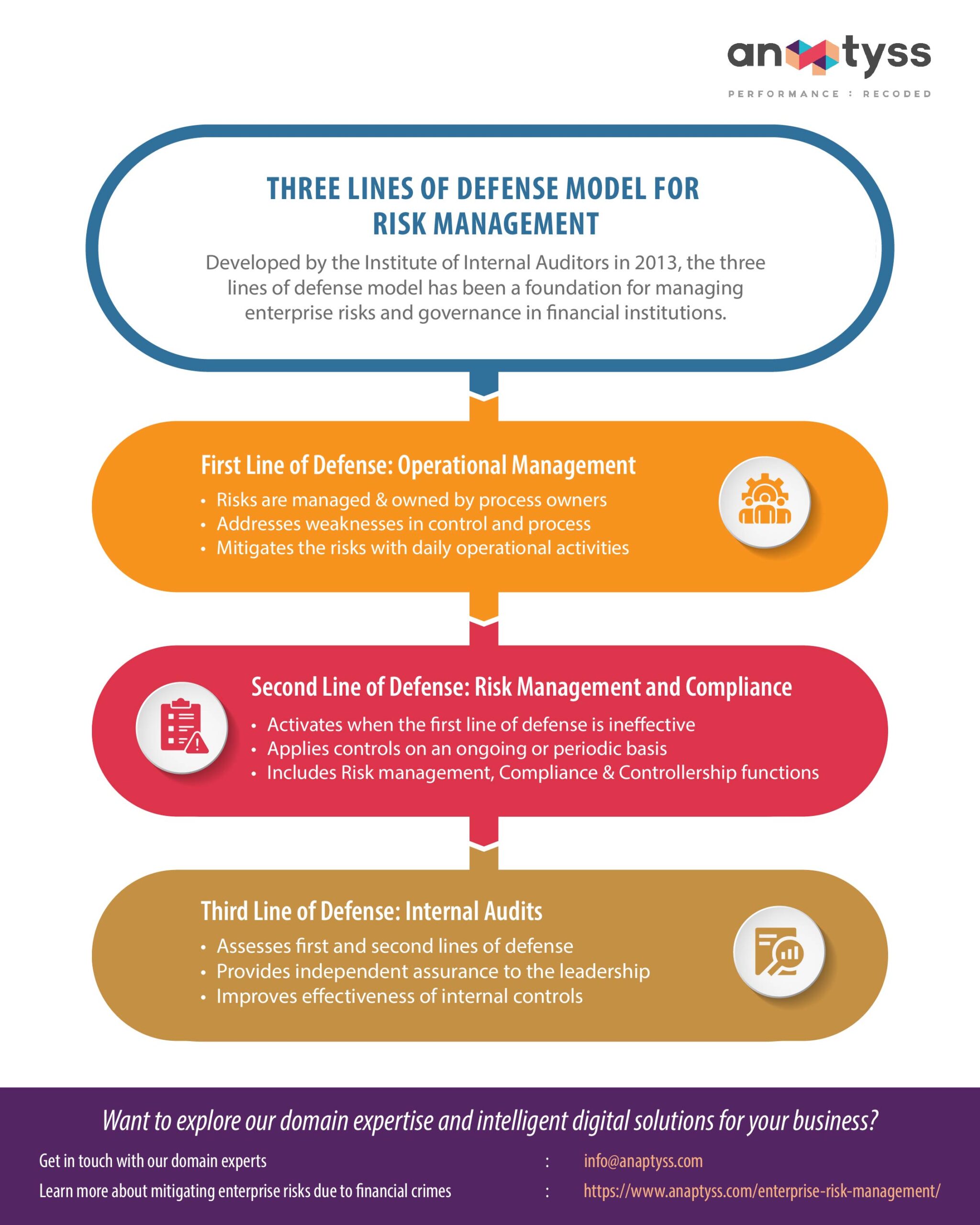
Developed by the Institute of Internal Auditors in 2013, the three lines of defense model (3LoD/TLoD) is one of the most common benchmarks for assigning risk management and control responsibilities effectively and efficiently. The three lines of defense model has been a foundation for managing enterprise risks and governance in many organizations, with each playing a distinct role in risk management.
By adopting the three lines of defense model, banks and financial institutions can effectively structure and implement risk management and internal controls. Further, it can help banks define roles and responsibilities to help prevent, detect, and mitigate various enterprise risks.
In this blog, we will have a closer look at the three lines of defense model, briefly discuss each line of defense, and the importance of internal controls in corporate governance for effective enterprise risk management.
Operational Management – The First Line of Defense
The first line of defense lies with the management or process owners in the organization, who are responsible for owning and managing risks, maintaining internal controls, and executing the control procedures daily.
It consists of identifying, assessing, designing, operating, and implementing controls, internal policies, processes, and procedures to manage and mitigate the risks associated with daily operational activities.
Process owners need the necessary skills, knowledge, and authority to understand the institution’s objectives, environment, and risks and apply relevant policies and risk controls to mitigate them.
Risk Management and Compliance – The Second Line of Defense
The second line of defense – comprising compliance and risk management systems -becomes active when the first line of defense is absent or ineffective. Its purpose is to identify risks and ensure effective management of the first-line-of-defense controls by providing compliance functions and oversight to the frameworks, tools, techniques, and policies.
The second line is independent of the first line and applies controls on an ongoing or periodic basis based on broad risk assessment criteria, and includes the following functions:
Risk management function
Facilitates and monitors the implementation of risk management practices through operational management. It also assists risk owners define and report the following throughout the organization:
Target risk exposure
Adequate risk-related information
Compliance function
Keeping an eye on various specific risks. This may include noncompliance with applicable regulatory norms and laws.
Controllership function
For monitoring financial risks and financial reporting issues
Internal Audits – The Third Line of Defense
The third line of defense comprises internal audits that provide independent assurance and evaluation through a risk-based approach to the effectiveness of controls and procedures for managing various risks.
Its key role is to assess the first and second line of defense to assure the senior management, board, regulators, and auditors (both internal and external) that controls laid in the organization are operating effectively from both design and operational points.
While internal audits may not implement or direct the processes, they can provide recommendations or advice for effective governance, internal controls, and risk management.
This helps bring a systematic approach to evaluate and improve the effectiveness of internal controls, risk management, and governance processes and achieve the objectives.
Benefits of the Three-Lines-of-Defense Model
Following are the 3 key benefits of implementing an effective and efficient three-lines-of-defense model.
Improve Coverage
The model enables financial institutions to increase their coverage of risks and internal controls. It helps allocate the ownership and performance of the risks and controls across the defense lines while avoiding unnecessary duplicate work, unintended risks, and gaps in the controls.
Improve Control Culture
It helps improve the control culture throughout the organization by increasing awareness of risks and controls, which enables the organization to identify and mitigate risks arising from incompatible responsibilities or potential conflicts of interest.
Improve Reporting
It also helps in timely and insightful reporting while avoiding potentially duplicate and irrelevant information for the board and executive management through a coordinated approach.
Internal Controls, Governance & Risk Management
For effective and efficient corporate governance and risk management, it is critical to establish the three lines of defense model.
Internal controls are the policies, processes, and procedures to safeguard the organization by preventing, detecting, and mitigating risks.
Corporate Governance refers to directing, controlling, and evaluating the organization and setting forth the governance structure by a supervisory board to identify rights and responsibilities for managing conflicts of interest between/among shareholders and company management.
Internal controls are also integral to enterprise risk management (ERM) as they help monitor activities and take corrective measures to attain organizational goals.
These may include processes or procedures such as risk assessment to detect areas of inaccuracies and improve them for effective risk management.
Internal controls and enterprise risk management (ERM) are the core components of corporate governance. They help financial organizations identify, analyze, score, and mitigate risks, which is critical for business operations and mandatory for regulatory compliance.
Four Lines of Defense Model
The Financial Stability Institute (FSI) published a paper titled “The four lines of defense model” for financial institutions. The paper discusses past failures and weaknesses in the three-lines-of-defense model and proposes the four-lines-of-defense model in financial institutions.
The four-lines-of-defense model (4LoD or FLoD) precisely addresses the deficiencies in the three-lines-of-defense model by assigning specific roles to external parties (such as external auditors or banking supervisors).
It may provide an autonomous assessment of the first three lines of defense, specifically the audit of the organization’s financial reporting and compliance with regulatory requirements.
It intends to enhance the coordination between internal auditors and external parties, providing additional assurance to senior management, shareholders, and external parties. This setup plays an important role in an organization’s overall governance and control structure.
The Three-Lines-of-Defense Model: Key to Effective Enterprise Risk Management
Financial institutions can embrace and benefit from the three-line defense model, which aims to provide effective and efficient coordination of control responsibilities and communication on risk management and internal controls.
However, implementation of the three lines of defense, including stronger governance, can be challenging without effective coordination, leading to duplicate efforts and/or key risks being misjudged.
Anaptyss as a strategic partner offers 8+ decades of combined deep-domain expertise for comprehensive risk management and governance by modernizing, strengthening, and implementing the traditional three lines of defense model. We can also conduct/facilitate external audits to manage business risks and opportunities.
The U.S. Department of the Treasury on April 06, 2023, released a report, titled Illicit Finance Risk Assessment of Decentralized Finance (DeFi). The report indicates significant potential risks associated with decentralized finance and its adverse impact on the efforts to counter terrorist financing and money laundering activities.
The report outlines the key finding and recommendations to identify and address potential gaps and make DeFi less susceptible to exploitation by bad actors or criminals.
What is Decentralized Finance or DeFi?
DeFi does not have a generally accepted definition but it broadly refers to virtual assets and services that allow peer-to-peer transactions through self-executing code based on public blockchain technology. DeFi lacks a centralized intermediary, posing unique threats and risks in the form of illicit financial activities.
The DeFi technology is presented in four layers:
The Settlement Tier: This tier involves the recording of transactions, wherein participants have addresses that can hold virtual assets and interact with each other.
The Asset Tier: These are virtual assets, such as coins and tokens, in a DeFi service.
The Protocol Tier: This tier entails code deployment and execution on a blockchain and may include smart contracts or auxiliary software.
The Application Tier: This refers to the front-end user interface or application programming interfaces (APIs) and codes that allow users or participants to interact with smart contracts, i.e., self-executing code or programs stored on a blockchain.
Although DeFi services are an important part of the virtual asset ecosystem, they represent only a small portion of the total activity in virtual asset markets.
Illicit Finance Risk Assessment of DeFi – Key Findings of the U.S. Treasury Report
Threat actors, such as scammers, ransomware attackers, and state-sponsored and financially motivated cybercriminals, such as the North Korean cyber actors, use DeFi services to move and launder illicit proceeds.
These threat actors often take advantage and exploit vulnerabilities that stem due to non-compliance by DeFi services with sanctions and AML/CFT obligations.
Other vulnerabilities include,
DeFi services that are out of scope for existing AML/CFT obligations
Weak or non-existent AML/CFT controls for DeFi services in foreign jurisdictions
Poor cybersecurity controls by DeFi services
Lack of cybersecurity and audits in DeFi services
Concentrated administrator rights
In the United States, the Bank Secrecy Act (BSA) obligates a wide range of financial institutions, including DeFi services, to detect and prevent money laundering and terror financing activities.
A DeFi service – centralized or decentralized – functioning as a financial institution per BSA must comply with BSA/AML/CFT obligations.
The report also recognizes that some DeFi may fall outside the BSA’s current definition of a financial institution. Referred to as ‘disintermediation’ in the assessment report, these DeFi services have a reduced likelihood of implementing AML/CFT measures, resulting in gaps in identifying and reporting suspicious activities to law enforcement and competent authorities.
Globally, according to the Financial Action Task Force (FATF)—the global standard-setting body for AML/CFT—DeFi services that lack an entity with sufficient control or influence over the service may not be explicitly subject to AML/CFT obligations, potentially leaving DeFi services with gaps in other jurisdictions.
Treasury Department Recommendations
The risk assessment report suggests recommendations to mitigate the illicit finance risks associated with DeFi services, which include:
Reinforcing the US AML/CFT regulatory supervision
Address AML/CFT regulatory gaps in DeFi services
Provide additional guidance on AML/CFT obligations for the private sector on DeFi services’ AML/CFT obligations
Increase compliance by virtual asset firms with BSA obligations
Engage with foreign jurisdictions to incorporate FATF standards and close the FATF implementation gaps in DeFi services
Advocate for DeFi services to implement real-time analytics, monitoring, and rigorous testing of code
Further, the Treasury Department also seeks public input on the risk assessment. It poses several questions considered part of the recommendations above for public comments, such as
What factors should be considered to determine whether DeFi Service is a financial institution under the BSA?
How can the U.S. AML/CFT regulatory framework effectively mitigate the risks of DeFi services that currently fall outside of the BSA definition of a financial institution?
Are there additional recommendations for clarifying the DeFi services covered by the BSA?
How should AML/CFT obligations vary based on the different types of DeFi services?
Meet AML/CFT Compliance with Consulting-Led Approach
Non-compliance, cybersecurity vulnerabilities, and lack of implementation of the AML/CFT standards in DeFi Services pose greater risks and vulnerabilities, enabling state-sponsored and financially motivated threat actors to transfer and launder illicit proceeds.
AML/CFT obligations include requirements to establish and implement an effective AML/CFT program and reporting, including suspicious activity reporting (SAR) requirements.
Anaptyss helps banks and other financial institutions, including DeFi services strengthen their anti-money laundering and countering finance for terrorism (AML/CFT) capabilities.
Our proprietary Digital Knowledge Operations™ (DKO™)-based approach combines domain expertise and digital solutions in a customized manner to help financial institutions fulfill AML/CFT obligations.
Financial Action Task Force (FATF) is an intergovernmental policy & standard-setting body of the U.S. Department of the Treasury dedicated to countering terror financing and money laundering activities.
The FATF Recommendations set an international standard that countries need to implement through measures adapted to their legal, administrative, and operational frameworks and financial systems.
It provides a comprehensive and coherent framework for measures that countries should take to combat money laundering, financing terrorism, and financing proliferation of the weapons of mass destruction.
Evolution of FATF Standards
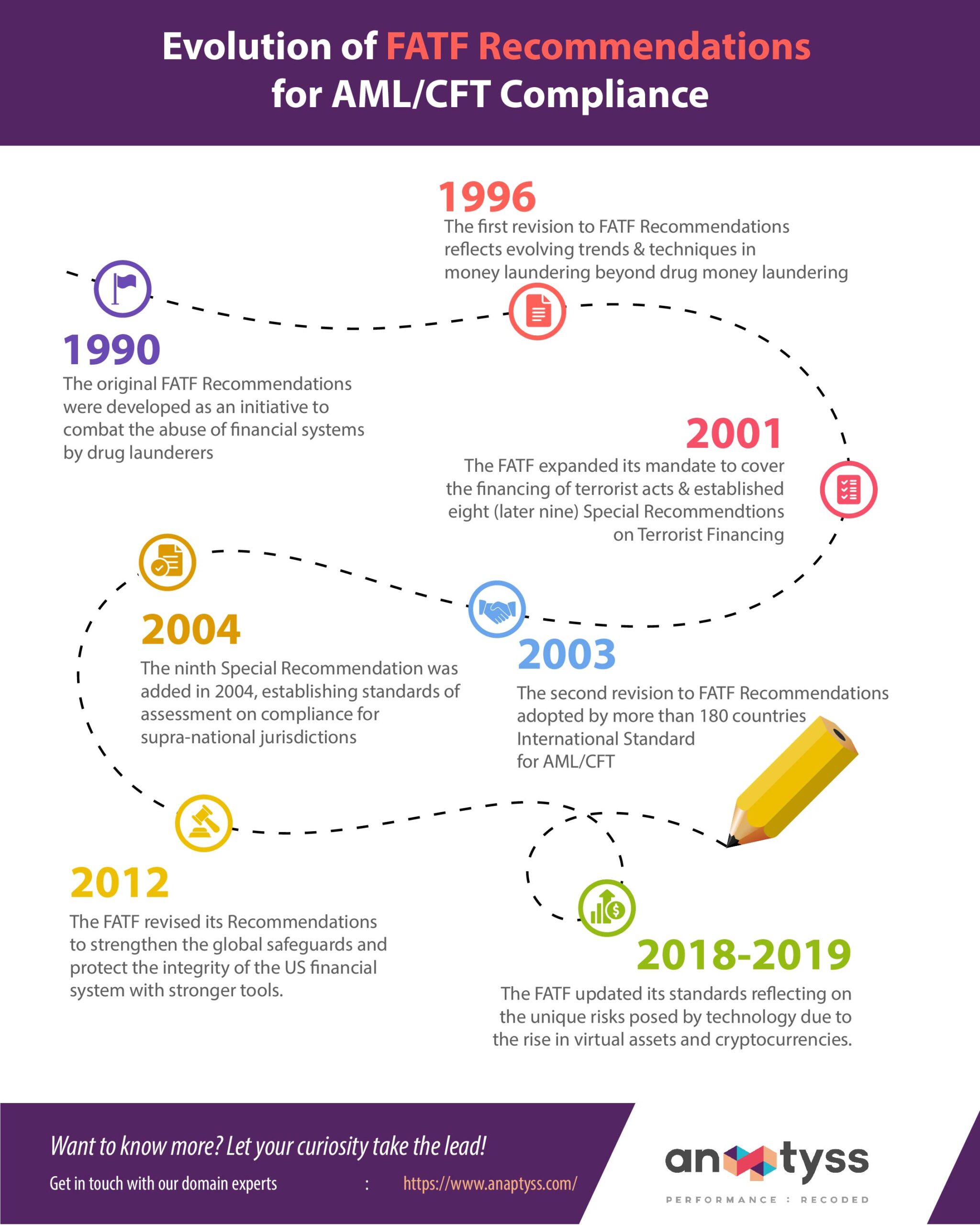
FATF 40+9 Recommendations provide a basic framework to detect, prevent, and suppress the financing of terrorism and terrorist acts. It sets international standards for combating terrorist financing and money laundering (ML). Here’s a summary of the evolution and history of the FATF Recommendations:
The original FATF Recommendations were developed in 1990 as an initiative to combat the abuse of financial systems by drug money launderers.
In 1996, the Recommendations were revised for the first time to reflect evolving trends and techniques in money laundering and to expand their scope significantly beyond drug money laundering.
In October 2001, the FATF expanded its mandate to cover the financing of terrorist acts and organizations and took the important step of establishing eight (later nine) Special Recommendations on Terrorist Financing.
The FATF Recommendations were revised for the second time in 2003 and have been adopted by more than 180 countries with specific recommendations and are widely recognized as the International Standard for Anti-Money Laundering and the Financing of Terrorism (AML/CFT) Amendments to address new and emerging threats and to clarify and strengthen many existing obligations while maintaining the necessary stability and discipline of recommendations.
The ninth FATF recommendation was added in 2004, establishing standards of assessment on compliance for supra-national jurisdictions.
After conducting a major review of the recommendations, FATF revised them in 2012 to strengthen the global safeguards and protect the integrity of the US financial system with robust tools to help the government take stringent actions against financial crime.
In 2012, the additional eight recommendations were also incorporated with the 40 recommendations with special emphasis on the predicate offenses for moving the illicit proceeds.
In October 2018 and June 2019, FATF updated its standards reflecting on the unique risks posed by technology due to the rise in virtual assets and cryptocurrencies.
FATF standards have also been revised to strengthen requirements for higher-risk situations and allow countries to take a more targeted approach in areas where risks remain high or where enforcement could be strengthened.
All FATF and FSRB members must implement the initiatives set out in the FATF Standards and get their implementation rigorously assessed through peer review processes and those of the International Monetary Fund and the World Bank – based on the FATF Common Assessment Methodology.
FATF also produces guidance, best practice documents, and other advice to help countries implement FATF standards. The revision of the recommendations involved extensive consultation and benefited from the comments and suggestions of these stakeholders. The FATF calls on all countries to take effective measures to align their national AML/CFT systems with the revised FATF recommendations.
FATF’s 40 Recommendations
Below is a list of the FATF’s 40 Recommendations broadly classified under 7 categories:
AML/CFT policies and coordination (Recommendations 1, 2)
Money laundering and confiscation (Recommendations 3, 4)
Terrorist financing and financing of proliferation (Recommendations 5-8)
Preventive measures (Recommendations 9-23)
Transparency and beneficial ownership of legal persons and arrangements (Recommendations 24, 25)
Powers and responsibilities of competent authorities and other institutional measures (Recommendations 26-35)
International Cooperation (Recommendations 36-40)
Therefore, all countries can’t take the same measures to combat these threats. These recommendations thus represent an international standard that countries should implement through measures adapted to their circumstances.
FATF’s 9 Special Recommendations:
The 9 Special Recommendations (also known as Recommendations IX) act in tandem with the 40 Recommendations as a simple framework to aid the detection, prevention, and eradication of terrorism funding.
The 9 Special Recommendations are:
Ratification and implementation of UN instruments
Criminalization of terrorist financing and related money laundering
Freezing and confiscation of terrorist assets
Reporting of suspicious transactions related to terrorism.
International cooperation
Alternative remittance
Wire transfers
Non-profit organizations
Cash couriers
FATF Methods for Assessing Compliance with FATF Recommendations and the Effectiveness of AML/CFT Systems.
To safeguard the financial system against exploitation, the FATF methodology lists 11 essential areas or immediate results that should be attained. The FATF methodology is also used to assess the effectiveness of a country’s actions and whether they meet the technical requirements of FATF recommendations.
The FATF conducts ongoing peer reviews of how its members implement FATF recommendations. These are peer reviews where members from different countries rate another country. An evaluation process will be established to assess compliance with FATF recommendations and the effectiveness of anti-money laundering and anti-money laundering systems.
Assessments emphasize two specific areas: technical compliance and efficiency.
Performance is the focus of all evaluations. The country must demonstrate that it has an effective framework to protect the financial system against abuse of the risks involved. The evaluation team looks at 11 key areas, or immediate outcomes, to determine the effectiveness of the state’s efforts.
The assessment also examines whether the country has met all the technical requirements of FATF Recommendations in laws, regulations, and other legal instruments to combat money laundering and terrorism, and the proliferation of weapons of mass destruction.
The peer review report provides a comprehensive description and analysis of the country’s system to prevent criminal abuse of the financial system, as well as recommendations to the country to further strengthen the system.
FATF Compliance with Domain-Centric Approach
The FATF recommendations are the building blocks of an effective framework to combat money laundering and terrorist financing. However, they must be effectively implemented and not simply transposed into national legislation, regulations, or operational frameworks.
The measures must be adapted to the national situation of the country and mitigate the specific risks that the country faces.
Anaptyss as a strategic partner assists banks and financial institutions meet FATF recommendations and regulatory requirements for AML/CFT compliance by leveraging its exclusive Digital Knowledge Operations™ framework and deep-domain expertise in countering finance for terrorism (CFT) and anti-money laundering (AML).
Enterprise Risk Management (ERM) in the banking industry refers to risk management strategies and systems to identify, manage, and prepare for the potential financial, operational, and event risks that can harm or interfere with operations, short-term or long-term goals, and lead to losses.
ERM is a top-down approach that looks at risks – strategically and holistically – for a bank or financial institution. It enables institutions to develop and incorporate a consistent risk-based approach (RBA) to managing risks across the organization. ERM’s goal is to minimize the impact of adverse risk events and protect the organization from the potentially destructive consequences of new and evolving risks.
This guide outlines the types of enterprise risks in banking and the importance of a well-defined ERM practice to support regulatory requirements such as BSA/AML/ CTF compliance, mitigate risks, minimize losses, and improve growth and profitability.
Importance of Enterprise Risk Management
Enterprise risk management entails defining and implementing practices, policies, and frameworks to handle various risks. It helps financial institutions, including banks, lenders, wealth and asset management companies, and others increase their risk-taking capabilities and identify potential risks to prevent losses and damages due to unexpected adverse outcomes.
It also helps increase awareness of business risks, improve readiness for meeting regulatory mandates, and increase operational alignment.
Enterprise Risk Management (ERM)
SCOPE
Traditional Risk Management (TRM)
Considers all types of risks
Isolates different risk types
Focuses on interrelationships between risks
May lack a comprehensive perspective
INTEGRATION
Integrates with strategic planning
Operates in separate silos
Aligns risk with strategic goals
Fragmented approach
RISK CULTURE
Views risk as a shared responsibility
Delegates risk management
Fosters a risk-aware culture
Less emphasis on a risk-aware culture
REPORTING AND COMMUNICATION
Effective communication and reporting
Relies on individual risk reports
Provides a holistic view of risks
Focuses on specific risk categories
STRATEGIC ALIGNMENT
Aligns risk with strategic objectives
No explicit linkage to strategic objectives
Strategizes risk management
Focuses on risk mitigation
Three Lines of Defense Model
Banking institutions typically organize their ERM structure around the Three Lines of Defense model, which provides clear delineation of roles and responsibilities:
a. First Line of Defense
Operational management and front-line employees who own and manage risks as part of their daily activities. They implement day-to-day controls and are the first to identify potential risks.
b. Second Line of Defense Risk management and compliance functions that provide oversight and support to the first line. These include specialized functions that develop and monitor risk management frameworks and compliance policies.
c. Third Line of Defense Internal audit functions that provide independent assurance to the organization’s board and senior management. They evaluate the effectiveness of governance, risk management, and control processes.
Risk Management Lifecycle
The ERM process consists of several critical stages that ensure comprehensive risk coverage:
Risk Identification Recognizing and understanding existing risks and those that may arise from new business initiatives or external market conditions
Risk Assessment and Measurement Accurate and timely measurement of risks at individual transaction, portfolio, and enterprise levels
Risk Monitoring Ongoing surveillance of risk levels to ensure timely review of risk positions and exceptions
Risk Control Establishing and communicating risk limits through policies that define responsibility and authority
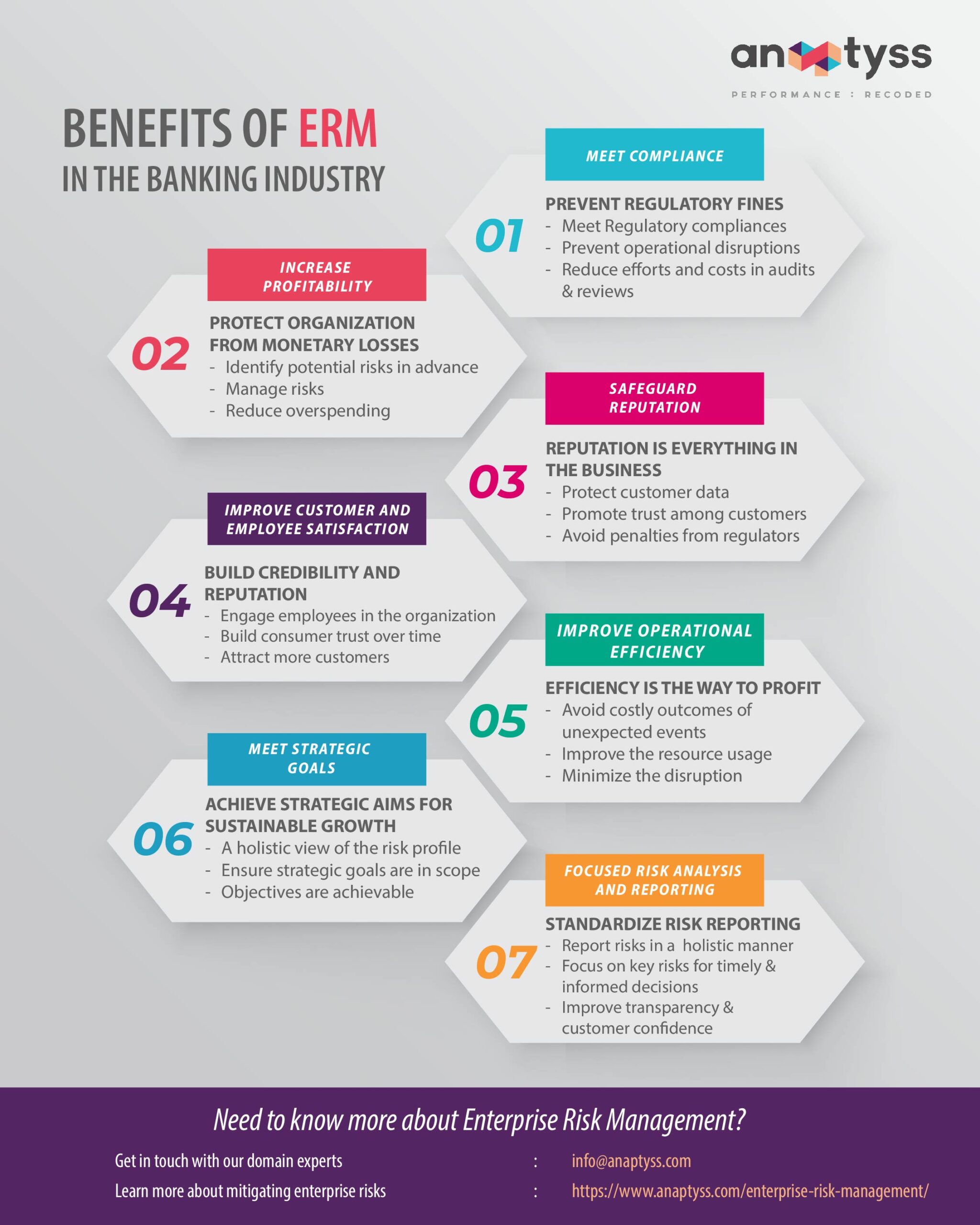
Benefits of Enterprise Risk Management in Banking
Enterprise risk management can help banks and other financial institutions in various ways, such as:
1. Meet Compliance
Financial institutions are tightly regulated and must comply with various global regulatory requirements to avoid penalties, operational, and reputational risks. By implementing a tailored enterprise risk management process, financial institutions can maintain regulatory compliance and prevent operational disruptions and penalties.
2. Increase Profitability
Financial institutions are also exposed to numerous risks that can lead to monetary losses. An effective ERM can help institutions identify potential risks in advance and manage them proactively to prevent losses. It can also help institutions avoid overspending in fixing problems that can be prevented with effective ERM.
3. Safeguard Reputation
Reputation is everything in the business. A robust ERM can help financial institutions safeguard their reputation and protect customer data, promote trust among the customers, and avoid penalties from the regulators.
4. Improve Customer and Employee Satisfaction
Assessing the risks associated with any new initiatives in the company is critical to operating efficiently. By ensuring strong enterprise risk management processes, banks can build customer trust over time and increase business prospects. An effective ERM plan also helps engage employees in the organization, leading to better results, sustainable growth, more customers, and improved customer satisfaction.
5 Improve Operational Efficiency
With a proactive approach to risk management, financial institutions or the banking industry can improve their resource usage and avoid costly outcomes of unexpected events. ERM helps them respond effectively in the event of a crisis when they occur, minimize the disruption, and restore operations as quickly as possible.
6. Meet Strategic Goals
Strategic aims are important for any organization for sustainable growth that may get derailed due to risks posed by internal or external threats. ERM helps organizations and businesses to have a holistic view of their risk profile and ensure their strategic goals are in scope and objectives are achievable.
7. Focused Risk Analysis and Reporting
ERM helps financial institutions and businesses assess, identify, and report risks proactively and holistically. It also helps bring focus on key risks and reporting for accurate and timely decisions crucial for the organizations to achieve strategic objectives. By focusing on key risks, banks, and financial institutions can effectively allocate resources that can help them make better-informed decisions to manage potential risks, thereby improving transparency and enhancing customer and employee confidence.
Types of Enterprise Risks in the Banking Industry
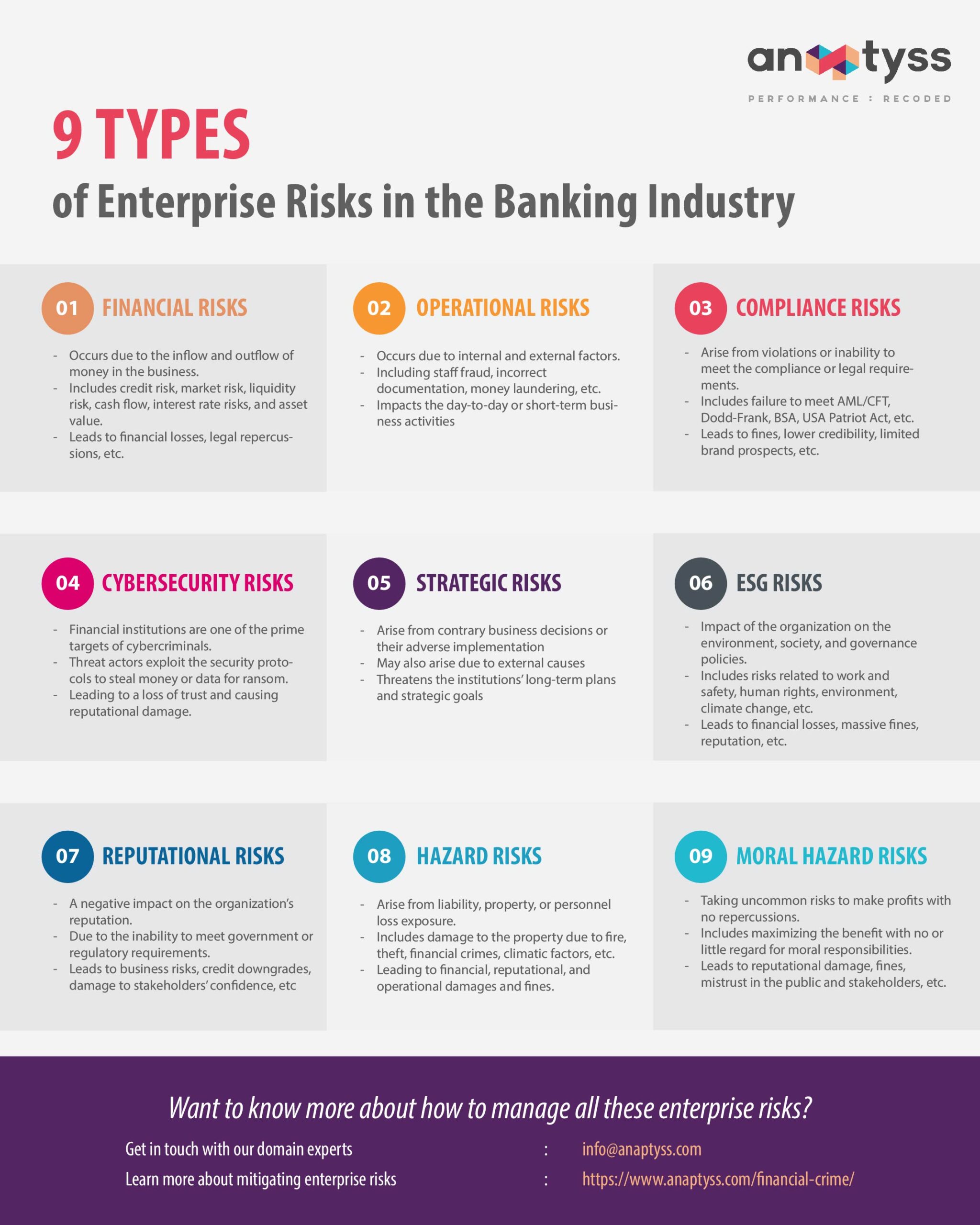
Enterprise risks do not come into play when something goes wrong. They always exist throughout the business cycle. Thus, a bank or financial institution must know the nine types of enterprise risks they are exposed to and consider them in their ERM strategy.
1. Financial Risks
Financial risks refer to the financial consequences that may occur due to the inflow and outflow of money in a business and can lead to sudden financial losses. It includes credit risks, market risks, liquidity risks, governance risks, etc.
2. Strategic Risks
Strategic risks arise from contrary business decisions or their adverse implementation, external causes leading to a change in the business decision or the direction of the business.
3. Reputational Risks
Reputational risk refers to a negative impact on the organization’s reputation arising from non-compliance with regulatory norms, losing customers’ data, unethical employee behavior, etc., and leads to business risks or credit downgrade.
4. Operational Risks
Operational risks occur due to internal and external factors, failed or inadequate internal processes, people, systems, or external events. These risks can impact the day-to-day business activities and short-term goals.
5. Compliance Risks
Compliance risks occur due to financial institutions’ inability to meet the laws, rules, regulations, procedures, standards, and financial crime compliances, such as AML, CFT, BSA, Dodd-Frank, USA Patriot Act, etc., damaging the brand credibility.
6. Cybersecurity Risks
Phishing attacks, trojans, ransomware, spoofing, etc., are some of the cybersecurity risks that banks need to deal with to protect customer data from theft, misuse, and unauthorized access, failing which can cause damage to reputation and business.
7. Environmental, Social, and Governance (ESG) Risks
ESG risks are related to organizations’ response to climate change, working and safety conditions, regard for human rights, compliance with the pertaining laws, etc., that can impact reputation, financial position, and operational performance;
8. Hazard Risks
Hazard risks are associated with the health and safety of the customers and employees and include damage to the property due to fire, theft, financial crimes, climatic factors, or from liability, property, or personnel loss exposure.
9. Moral Hazard Risks
Moral hazard risks in banking refer to taking uncommon risks or decisions to maximize profits without any repercussions for risky or bad corporate behavior with little to no regard for moral responsibilities.
Enterprise Risk Management Framework for Banks
Enterprise risk management framework (ERMF) for banks and financial institutions refers to the set of components that provide the fundamental arrangement for designing, implementing, monitoring, reviewing, and improving risk management at all organizational levels.
It helps financial institutions and organizations identify, analyze, respond to, and control internal and external risks.
Components of Enterprise Risk Management Framework (EMRF) for Banks
A well-designed ERMF can help banks’ boards of directors and senior management determine the amount of risk exposure, their risk appetite, and risk controls. Fundamentally, an ERMF consists of four key components:
1. Identifying the Areas of Risk
Identifying risks is the foundation of developing an effective and robust enterprise risk management strategy. Banks and financial institutions must review their portfolio to identify or generate a comprehensive list of potential risks and operate from a strategic perspective rather than an operational standpoint. Risk identification involves the following:
a. Risk Modelling
Helps identify areas that require the most attention. These areas are carefully analyzed to understand the risks and their outcomes precisely. This provides an accurate picture of the organization on how it can withstand or handle extremely negative consequences.
b. Risk Ownership
Risk Ownership and management put accountability in place. It is the most effective component of the ERM that includes giving control to the individuals in the organization over the processes. And if something goes wrong, the person or individual is held responsible and may prevent mistakes from turning into bigger issues.
c. Strategic Plan
This refers to understanding the strategic objectives and identifying the risks that can prevent the banks and financial institutions from achieving the organization’s goals or execution of objectives.
d. Stress Test
By performing stress tests, organizations can identify if they have enough capabilities and capital to withstand a financial crisis. This also includes testing the security threats.
e. Disaster Test
The test involves verifying an organization’s capability to withstand and remain stable after a natural or man-made disaster and during war-like situations.
2. Risk Assessment
A robust risk assessment is critical to mitigate losses in the banking and finance industry as it helps determine the level of risk, score risk by analyzing the impact and likelihood or probability of occurrence, and steps to minimize risks within the defined risk appetite of the institute or organization.
Banks need to evaluate the inherent risks posed by error or omission to factors other than failure in the internal control measures. Then quantify the inherent risks by assigning calculated risk scores to the banks’ products, services, customers, and geographical locations. This will help you calculate the residual risk by subtracting the quality of risk management or the impact of risk controls in place from the inherent risk.
Residual risk refers to risks that remain even after implementing the processes and procedures to mitigate or eliminate the high risks associated with the bank’s business processes, systems, customers, geographical locations, and products and services. In risk assessment, considering the residual risks is critical from a regulatory requirements and compliance perspective. It helps you,
Identify the strengths and weaknesses of the existing control framework and acknowledge existing risks
Re-verify organizations’ risk appetite
Implement controls and available options to counter the intolerable residual risks
3. Risk Response
Banks and financial institutions can respond to the areas of high risks with proper controls and risk mitigation mechanisms in place. The purpose is to decide which risks require a response based on the results of risk assessment. By implementing a well-defined risk management strategy, banks can reduce the risk across the organization and counter the threats. Here are some considerations banks need to ensure while responding to the risk:
Consider the ratings of the risk impact and likelihood you found during the risk assessment.
Consider your options to respond to the risk, i.e., whether to accept, avoid, mitigate, and/or transfer (outsource to third parties/insurance).
Evaluate your steps to respond to each risk.
Consider the cost and resources required to respond to the risk.
Estimated time to complete the implementation of your response.
4. Monitoring Controls
Monitoring controls and strategies for risk management is critical for checking, supervising, observing, and determining the risk status and finding the best method to mitigate the business risk. It also helps banks identify change from the performance level required or expected and ensure the following:
Implement the optimal risk response
Risk responses are effective (risk audits)
Identify risk triggers for current and future objectives
Track and validate risk management/control procedures
Analyze risk patterns and trends
Monitoring controls provide oversight for all the activities performed by internal and external teams or parties that can impact the operations and/or customers. Banks can also form an internal committee or hire an external auditor to review their processes, policies, and procedures to identify and inform the management of enterprise.
Strengthening ERM Alignment with Basel III Endgame Reforms
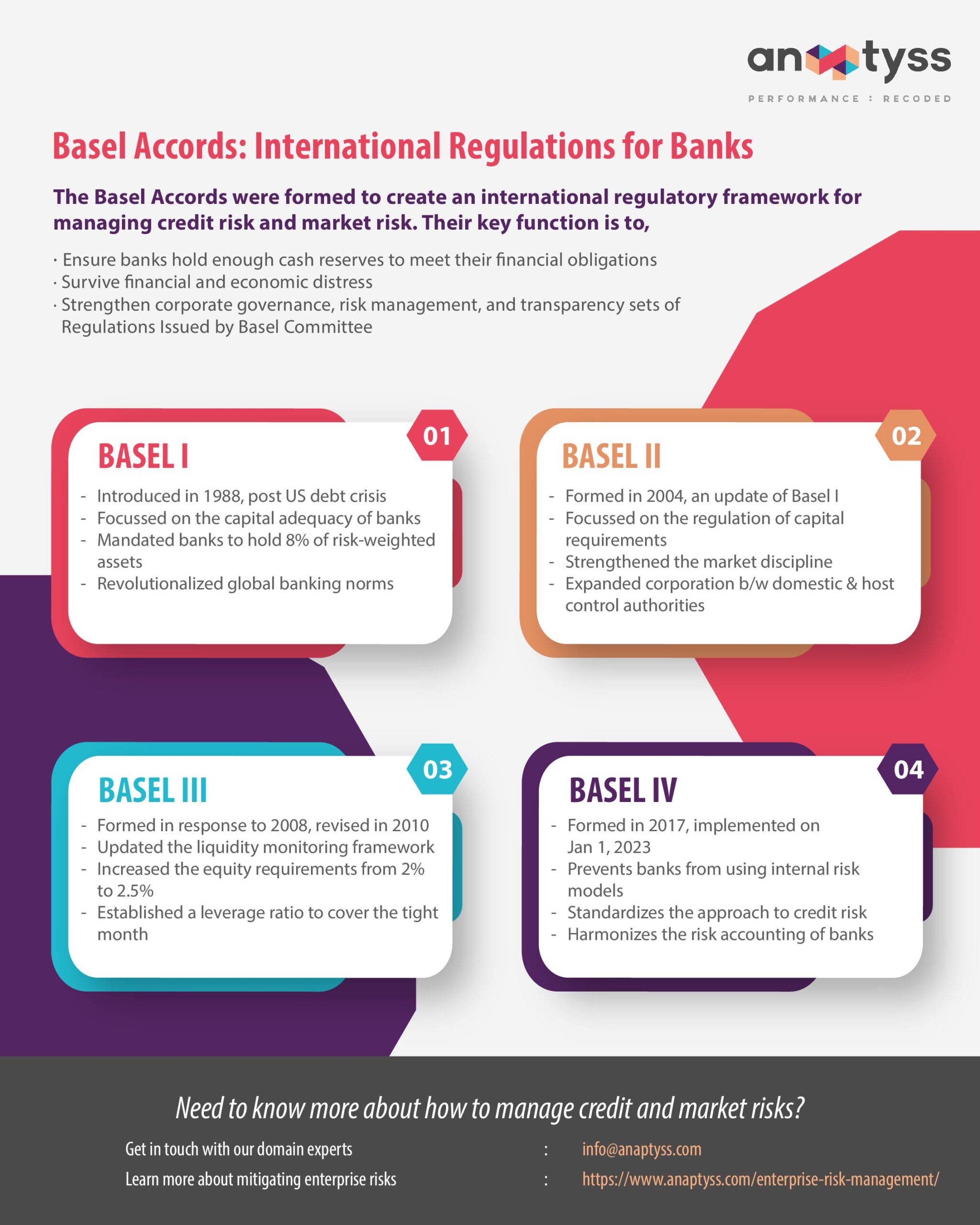
The Basel III Endgame — the final phase of post-crisis regulatory reforms issued by the Basel Committee on Banking Supervision — is now being implemented globally, with deadlines spanning 2025–2028. These reforms directly impact how banks assess, manage, and disclose risk.
Key areas impacted include:
Revised credit risk and operational risk calculations
Introduction of a 72.5% output floor on risk-weighted assets (RWAs)
More standardized approaches, limiting reliance on internal models
Greater focus on capital adequacy, consistency, and transparency
To comply with Basel III Endgame, financial institutions must enhance their ERM practices in the following ways:
Risk Appetite Alignment
Re-evaluate risk appetite frameworks under tighter capital constraints and output floor limits.
Risk Data Aggregation Improve collection, quality, and reporting of risk and loss event data, especially for operational and credit risk.
Scenario Planning & Stress Testing Strengthen stress testing using standardized loss metrics tied to business size and historical events.
Model Governance Transition from internally modeled risk to regulator-approved standardized methodologies, with robust documentation and audit trails.
Transparency and Disclosures Ensure ERM outputs feed directly into more rigorous disclosure requirements mandated by regulators.
Challenges in Building a Customized Enterprise Risk Management Framework
Organizations, including banks and financial institutions, may choose or apply ERM frameworks by industry, such as COBIT, COSO, RIMS, SOC 2 Type 2, ISO 27001, CMMC, and FedRAMP, or use these existing frameworks to build a customized ERM framework depending on the business goals, organization structure, available resources, and technology infrastructure. However, building a customized enterprise risk management framework is a complex task due to the following challenges:
1. Cost
Demonstrating an ERM framework’s value to justify costs in an ROI-driven environment could hamper decision-making. ERM risk and reward metrics are less prescriptive and thus remain voluntary for many organizations, resulting in a value proposition that lacks regulatory language and compliance encouragement.
2. Planning Horizon
The time or planning horizon for an enterprise risk management assessment depends on the organization’s willingness to invest in risk management. Companies often prefer short-term planning horizon as it generally needs less training, is less expensive, and provides risk estimation than long-term ones. For successful ERM objectives, banks and financial institutions must choose a solution consistently.
3. Defining Risks
Establishing a formal risk management framework and commonly applied risk nomenclature are the biggest challenges in developing or implementing a risk management program. Failing to establish a common risk definition or methodologies is likely to jeopardize the program’s success and aggravate the risks faced by the organization.
4. Ownership
Another prominent challenge in building and implementing ERM is the question—of who should own the ERM—which is often disputed and unclear at the board, director, audit committee, and management levels.
5. Risk Reporting
Organizations often find it challenging to answer what information to share with internal or external constituents and how to communicate the risk. Also, protecting sensitive information by hiding the specifics while providing risk insights is critical to avoid company lawyers raising the issues to external regulators, constituents, and auditors.
To standardize and strengthen enterprise risk governance, many banks and financial institutions adopt the COSO ERM Framework (Enterprise Risk Management – Integrating with Strategy and Performance). COSO, developed by the Committee of Sponsoring Organizations of the Treadway Commission, provides a principle-based, structured methodology for integrating risk into strategy, performance, and culture.
The COSO framework is increasingly relevant in today’s evolving risk and regulatory landscape, enabling banks to:
Embed risk oversight in strategic planning
Improve risk communication and transparency
Align risk tolerance with performance objectives
Manage emerging risks such as cyber, ESG, and geopolitical instability
The COSO ERM model is organized around five interrelated components:
Governance and Culture – Establishes risk oversight responsibilities, organizational values, and risk culture.
Strategy and Objective-Setting – Aligns risk appetite with strategy and sets measurable objectives.
Performance – Identifies and assesses risks, prioritizes responses, and assesses performance.
Review and Revision – Evaluates risk management performance and adjusts accordingly.
Information, Communication, and Reporting – Supports timely, relevant communication and reporting of risk.
By adopting COSO, financial institutions gain a common risk language and structure for consistent risk management across departments and geographies, which is critical when preparing for regulatory audits, investor expectations, and board-level risk accountability.
Enterprise Risk Management – Role of Data and Automation
Effective risk management and regulatory compliance have a great deal to do with ‘data’. Given the proliferation of data and its influence on decision-making, organizations, including financial institutions, must harness their data assets to draw insights.
Automation is also key to enhancing enterprise risk management processes and ensuring data integrity, tracking gaps, and tasks, and making the required information readily available for decision-making. With the implementation of intelligent digital solutions and automation powered by AI and ML, banks can manage their vast data efficiently, understand risks, and meet compliance in an autonomous manner.
Develop Robust Enterprise Risk Management Framework with DKO™
The lack of expertise to efficiently manage or counter the various business risks and threats could be a major decision-maker for investors, customers, and employees. Before implementing the enterprise risk management strategy, it’s critical to identify potential risks. However, keeping pace with the ever-changing risk landscape could be challenging for many banks and financial institutions as they face unique challenges that other businesses don’t.
As a strategic partner, Anaptyss provides a consultative, data-driven, and tailored approach powered by its exclusive Digital Knowledge Operations™ (DKO™) framework to banks and financial institutions in implementing intelligent digital solutions appropriate for the organization’s size, and complexity level, and important to keep the business safe from critical enterprise risks across all levels.
Banks and financial organizations encounter unique challenges and risks in their line of business. Unexpected threats and risks arising from a shift in the political landscape, natural disasters, critical events, cybercrimes, etc., can disrupt organizations’ business strategy, impact both short-term and long-term goals, and lead to bank failure impacting millions of people.
With a significant increase in the risks from cybercriminals, banks need to strengthen their IT or cybersecurity risk management framework to,
Prevent financial losses
Protect customer data
Safeguard reputation
Avoid penalties by regulators for non-compliance
Enterprise Risk Management Frameworks (EMRF) for Managing IT Risks
Below we have discussed some prominent ERM frameworks that banks or financial organizations can implement or customize to manage and mitigate various cybersecurity or IT risks to protect customer data, build credibility, and meet regulatory compliances.
1. ISO 27001 Risk Management Framework
Banks’ very foundation lies in building trust and credibility. As more and more people are using digital banking solutions and going cashless, the financial sector must take all measures to protect the organization’s and customers’ information from cyber-criminals.
ISO 27001 or ISO/IEC 27001 defines the international security certification requirements and standards representing the best practices and controls for the information security management system, procedures, policies, processes, and systems to oversee the risks related to information assets. These risks include,
Cyber-attacks
Hacking attempts
Data theft
The banking industry can benefit from ISO 27001 as they need to collect significant personal information from customers and store them in electronic data storage devices that remain at risk of theft or cyber-attack.
ISO 27001 requires the organization to identify the security risks in their line of business operation and deploy appropriate controls to mitigate these risks and address the three pillars of information security,
People
Processes
Technology
The ISO 27001 framework help banks or financial institutions develop and maintain information security and management system (ISMS) and controls to effectively identify and mitigate IT security or cybersecurity risks, safeguard sensitive and confidential information, and ensure customer trust.
By implementing the ISO 27001 requirements, banks and financial institutions can get the ISO 27001 certification and increase information security while reducing the efforts required during security audits.
Although ISO 27001 itself is not a security solution, it does encourage the organizations in the financial sector, such as banks, to follow stringent processes and behavior critical to reducing the risk of attacks.
2. FFIEC Risk Management Framework
The Federal Financial Institutions Examination Council (FFIEC) based risk management framework helps organizations identify the risks and verify cybersecurity preparedness. The FFIEC has developed the Cybersecurity Assessment Tool to assist financial institutions to measure the institution’s level of cybersecurity risks and preparedness.
It consists of two cybersecurity assessments,
Inherent Risk Profile: Refers to identifying the institutions’ inherent risks related to cyber risks at different risk levels:
Least inherent risk
Minimal inherent risk
Moderate inherent risk
Significant inherent risk
Most inherent risk
Cybersecurity Maturity: Refers to determining the financial institutions’ current state of cybersecurity preparedness. This is represented by maturity levels across five domains:
Cyber risk management and oversight
Threat intelligence and collaboration
Cybersecurity controls
External dependency management
Cyber incident management and resilience
3. OCC Risk Management Framework
The Office of the Comptroller of the Currency or OCC risk management guidance was one of the ongoing regulatory responses to the 2008 financial crisis issued in October 2013.
OCC framework manages risk using the three lines of defense model as described in the risk management framework —
Operational management
Risk management & compliance
Internal audit
The OCC-based risk management framework guides the institutes in identifying, monitoring, and management of risks across the enterprise.
The OCC also issued a new Model Risk Management booklet of the comptroller’s Handbook defining the eight categories of model risks for banking supervision,
Credit risk
Liquidity
Price
Interest rate
Compliance
Reputation
Strategic
Operational
The booklet also guides banks to manage third-party risks and addresses weaknesses related to the use of third parties in model development or related products and services as they can increase operational risks. Especially, when the management does not completely understand the third-part model’s applicability, capabilities, and limitations, if any.
It also highlights the weaknesses in the internal controls and emphasizes the security risks and weaknesses, such as poor API or controls to access, transmit and store customers’ sensitive and confidential information leading to increased operational risks for banks.
4. SOC 1 Type 2 Risk Management Framework
System and Organization Controls (SOC) is an essential risk management framework to ensure accurate reporting for the customers and keep people in the organization accountable and protected. Developed by the American Institute of CPAs (AICPA), the SOC audits aim to audit the internal process, procedures, and controls of the financial institution for managing risks.
SOC 1 Type 2—also known as ‘Report on Management’s Description of a Service Organization’s system & the sustainability of the Design & Operating Effectiveness of Controls’—consists of the same information as SOC 1 Type 1 with different elements.
Soc 1 Type 2 specifically addresses the design, implementation, and testing of the controls. It is specifically applicable for the service industry with a long-running system that is stable and capable of demonstrating the effectiveness of design controls over a period of time, usually for six months, as compared to a specific date in Type 1 but not longer than 12 months.
SOC 1 Type 2 focuses on operational efficacy rather than just the description and design of the controls.
Meet Compliance with Effective Enterprise Risk Management Framework
A well-designed ERMF helps banks’ boards of directors and senior management determine the amount of risk exposure, their risk appetite, and risk controls to address various risks in their business.
It not only helps them efficiently prevent, detect, and mitigate the risks, but also affects investors, customers, and employees’ decisions. By lowering the risks with an effective Enterprise Risk Management Framework, banks can reduce financial losses, and attract more customers and investors.
Anaptyss as a strategic partner helps banks and financial institutions in evaluating and implementing enterprise risk management frameworks based on the organization structure, business goals, technology infrastructure, and available resources.
We use our exclusive Digital Knowledge Operations™-based approach, combining domain expertise and AI/ML-powered digital solutions to help banks address critical enterprise risks across all levels.
Global banking has undergone transformative changes, largely influenced by the Basel Accords’ evolving frameworks. From the inception of Basel I to the forthcoming Basel IV, these accords have redefined regulatory standards, aiming to fortify the international financial system.
This comprehensive overview examines each iteration’s key reforms, shedding light on their significance and the future trajectory of global banking supervision.
Evolution of Basel Accords
The development of the Basel Accords continues to evolve. As a result, from 2012-2017, the commission dealt with questions about the obligations of banks to central counterparties, collateral requirements, measurement of counterparty credit risk, and calculation of securities capital requirements. They did this by introducing the Fundamental Review of the Trading Book (FRTB) capital requirements and improving the disclosure framework.
What Changed from Basel I to IV?
Basel I, II, III, and IV are the international banking accords issued by the Basel Committee on Banking Supervision (BCBS) for the banking sector to improve the quality of banking supervision and strengthen the international banking system worldwide.
Below we have discussed the evolution of the Basel Accords from Basel I to Basel IV highlighting the importance and reforms integrated into the Basel framework—a full set of standards of the Basel Committee on BCBS.
Basel Accords I: Basel Capital Accords
Basel I was created in the 1980s in response to the US debt crisis. The debt crisis has shown concern about the solvency relationships of international banks. The G10 supported the introduction of capital requirements and adequacy measures. As a result, updated banking requirements were sent to banks in July 1988.
The salient features of Basel I are as follows.
Basel-I required banks to hold at least 8% of risk-weighted claims.
The framework was introduced in all countries, not only the Member States.
The Agreement was amended in 1998 to include general bad debt provisions. The draft contract included credit risks and financial risks.
Basel Accord II: The New Capital Framework
The second Basel Accord was established in 2004. But it was preceded by constant efforts. In June 1999, the Commission proposed a new solvency framework to replace the 1988 agreement.
The salient features of Basel II are as follows.
The Treaty extended the rules established in the Treaty of 1998 (added details and details).
The new agreement revised the internal valuation process and used disclosure to strengthen market discipline.
As a result, it raised quality banking practices. The second agreement focused on the regulation of capital requirements.
It expanded cooperation between domestic and host control authorities.
Basel III: Response to the financial crisis of 2008
Basel III was only a response to the financial crisis of 2008. However, the banking system showed loopholes even before the collapse of Lehman Brothers (September 2008).
The banking sector had liquidity problems; it was simply bad management and a flawed incentive structure. The housing market collapse was simply the result of fundamental inefficiencies. The Basel decisions are constantly evolving, but banking systems will only stabilize if the guidelines are followed.
In September 2010, the Basel Committee presented another agreement on comprehensive capital planning and liquidity reforms. That agreement was called Basel III. Basel III was revised in December 2010.
The salient features of Basel III are as follows.
Basel III updated the liquidity monitoring framework.
It supported increasing the flexibility of banking systems. It focused on the quality and quantity of share capital.
It increased equity requirements from 2 percent to .5 percent and added a 2.5 percent buffer. Here, common equity refers to the percentage of risk-weighted assets of banks.
The agreement also established a leverage ratio that could cover the tight month (30 days)
Basel Accords IV: Completion of the Basel 3 reform package
In 2017, the Basel Committee agreed on changes to global capital requirements as part of the completion of Basel III. The changes are so far-reaching that they are increasingly seen as an entirely new framework, often referred to as Basel IV, also known as Basel 3.1, which will take effect under transitional rules from 2025.
Basel IV aims to level the playing field and harmonize the risk accounting of banks, not to increase the capital levels of banks around the world. However, the reforms are likely to have different effects across regions due to regional differences in the use of banks’ internal risk calculation models.
The salient features of Basel IV are as follows.
Basel IV prevents banks from using internal risk models to assess the credit risk of large companies with a turnover of at least EUR 500 million.
It also limits banks’ use of internal models across the lowest production level and changes the leverage, credit value adjustment (CVA), and operational risk frameworks.
The purpose of the reforms is to harmonize the method of calculating the credit risk of banks when determining their capital requirements.
The effect is greater in Europe and the Nordic countries, where banks are generally more users of internal risk models. For example, the European banking system needs about 19% more Tier 1 capital in its capital buffer, while Swedish banks need 28%. This is comparable to the rated Tier 2 capital of US banks.
Basel Compliance is important for banks and financial institutions to protect themselves from financial and operational risks. To comply with the Basel Accords recommendations and draft effective control frameworks and internal policies, you must have a thorough understanding of the banking domain and applicable regulatory mandates.
Furthermore, digital technologies play an important role in assisting and augmenting manual efforts. A domain-centric approach combined with digital solutions can provide the best strategy.
As a strategic partner, Anaptyss leverages its exclusive Digital Knowledge Operations™ framework and deep-domain expertise to help banks meet the Basel standards and compliance.