A Comprehensive Guide to the 9 Enterprise Risks in the Banking Industry

Enterprise risk management is more than just a regulatory checkbox; it’s the bedrock of a resilient financial institution. It refers to the process and systems in place to identify, manage, and reduce the adverse outcomes of risks.

Enterprise risks are a constant undercurrent that exists throughout the business cycle. In an era of economic volatility, digital transformation, and increasing regulatory scrutiny, a proactive approach to risk is non-negotiable. This guide will not only define the nine critical types of enterprise risks but also explore the practical implications and mitigation strategies for each.

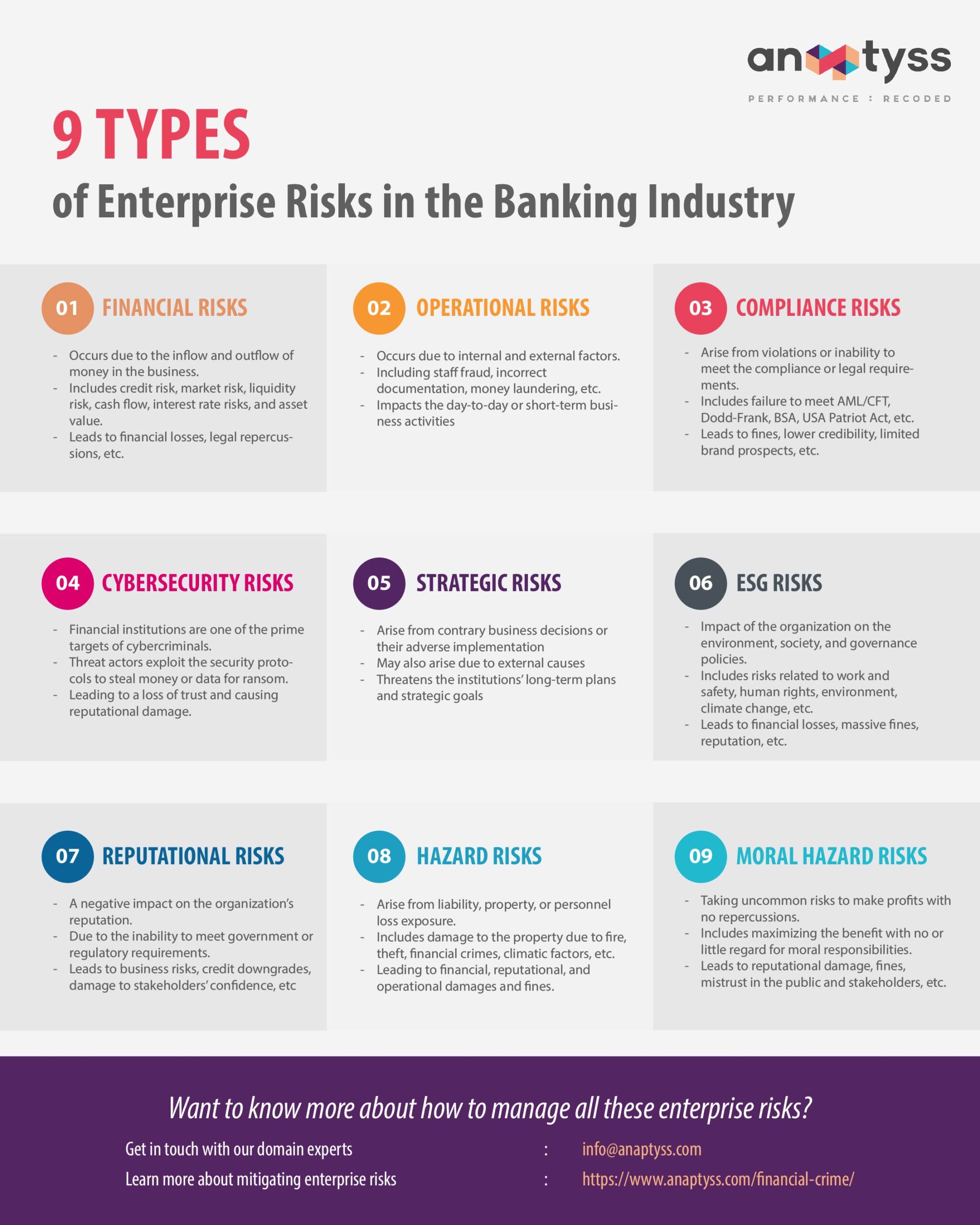
1. Financial Risks

Banks and financial institutions experience financial risks that occur due to the inflow and outflow of money, or the effect of market forces on financial assets, which can lead to sudden losses.

Financial risks include a spectrum of threats that directly impact the balance sheet:

Mitigation Strategies:

While banks are not protected from financial risks, they can lower their exposure by implementing a robust risk assessment framework. Key tactics include:

2. Operational Risks

Operational risks result from failed or inadequate internal processes, people, systems, or external events. These risks can impact day-to-day business activities and may occur due to both internal and external factors.

Examples of Operational Risks:

Mitigation Strategies:

3. Compliance Risks

These risks refer to violations of laws or legal requirements due to a financial institution’s inability to meet rules, regulations, procedures, and industry standards, such as anti-money laundering (AML), countering financing for terrorism (CFT), Dodd-Frank, BSA, USA Patriot Act, OFAC sanctions, etc.

The risk can expose a financial institution to severe consequences, including:

Mitigation Strategies:

4. Cybersecurity Risks

Financial institutions are prime targets for state-sponsored and financially motivated threat actors who exploit digital banking to steal customer data and money.

Key Cybersecurity Threats:

In addition, cybersecurity risks can also lead to reputational damage if a security incident takes place.

Mitigation Strategies:

5. Strategic Risks

Strategic risks arise from flawed business decisions or their adverse implementation. These risks may also arise due to external causes that lead to a change in business direction. These risks threaten an institution’s long-term plans and strategic goals.

Below are some examples of strategic risk that can derail an organization from achieving its goals:

Mitigation Strategies:

6. Environmental, Social, and Governance (ESG) Risks

Environmental, social, and governance (ESG) risks include risks related to climate change, working conditions, anti-bribery practices, human rights, environmental management, and compliance with pertaining laws.

These risks can affect a bank’s reputation, financial position, and operational performance. Every organization remains vulnerable to ESG risks that can lead to:

Mitigation Strategies:

7. Reputational Risks

Reputational risk refers to a negative impact on the organization’s reputation from the perspective of customers, investors, and regulators. A bank’s inability to meet regulatory requirements, ineffective service, a major data breach, unethical employee behavior, or mismanagement of records can damage the financial institution’s reputation and stakeholder confidence, potentially leading to customer attrition and a credit downgrade.

Similarly, a bank’s failure to evaluate borrowers and issuing large unsecured loans leading to fraud can also cause mistrust in the bank’s controls and checks.

Mitigation Strategies:

8. Hazard Risks

Hazard risks arise from liability, property, or personnel loss exposure. These risks are generally associated with the health and safety of customers and employees and the security of physical assets. Hazard risks include damage to property from fire, theft, natural disasters, etc.

Mitigation Strategies:

9. Moral Hazard Risk

Moral hazard is a situation where one party is incentivized to take unusual risks because they do not bear the full consequences of that risk. In banking, this means taking excessively risky decisions to make short-term profits. These risks arise from inadequate repercussions for risky or bad corporate behavior.

Mitigation Strategies:

9 Types of Enterprise Risk - Infographics

The Interconnected Nature of Banking Risks

It’s crucial to understand that these nine risks do not exist in a vacuum. They are often interconnected, where a failure in one area can trigger a cascade of events across others. For example:

Recognizing these connections is the hallmark of a truly mature Enterprise Risk Management framework.

Frequently Asked Questions (FAQ)

1. What is the most significant risk for banks today?

While credit risk has traditionally been the primary concern, many experts now point to cybersecurity and operational risks as the most significant threats due to the rapid digitization of banking services and the increasing sophistication of financial crime.

2. How has technology impacted enterprise risk management in banking?

Technology is a double-edged sword. It creates new risks (like cybersecurity threats) but also provides powerful new tools for managing them. AI and machine learning are now used for real-time fraud detection, predictive credit scoring, and automating compliance checks, making ERM more efficient and proactive.

3. What is the role of the board of directors in ERM?

The board of directors has ultimate oversight responsibility for risk management. Their role is to define the bank’s risk appetite, approve the ERM framework, and ensure that senior management is effectively identifying, measuring, monitoring, and controlling the institution’s enterprise risks.

Managing Enterprise Risks with a Preemptive & Domain-Centric Approach

A robust enterprise risk management framework (ERMF) can help banks assess, identify, and mitigate all types of risks, meet regulatory requirements, and avoid hefty fines. A proactive, holistic view is no longer a luxury—it is essential for survival and growth.

As a strategic partner, Anaptyss helps banks with real-world, tailored solutions such as domain-centric risk advisory, ERM framework design, technology solutions, and implementation expertise based on a multi-disciplinary enterprise risk management approach.

Anaptyss has helped financial institutions address critical risks, including credit risks, market risks, financial crime risks, operational risks, strategic risks, and hazards, safeguarding the business.


FATF Plenary February 2023: Key Outcomes

The second Plenary of the Financial Action Task Force (FATF) led by Singapore president T. Raja Kumar recently concluded its discussions. The discussion – attended by representatives from 200+ jurisdictions of the Global Network at the FATF headquarters in Paris – addressed vast issues and challenges related to the global financial system.

This blog shares the key outcomes of the FATF Plenary held on February 24, 2023.

Key Outcomes of the FATF Plenary 2023

Below is the summary of FATF plenary key takeaways:

1. Suspension of Russian Federation Membership

The FATF considers the Russian Federation’s military invasion of Ukraine illegal, unprovoked, and unjustified and reiterated its condolences to the people of Ukraine for the suffered losses. Hence, it suspended the Russian Federation’s membership in response to the ongoing Ukraine-Russia conflict.

The FATF has also issued several statements reminding all jurisdictions to be vigilant against risks from the circumvention of measures taken against the Russian Federation to safeguard the international financial system against illicit activities linked to the ongoing Russian invasion of Ukraine.

2. Mutual Evaluations of Qatar and Indonesia

FATF adopted the mutual evaluation report of Indonesia and Qatar, observed since June 2018. FATF concluded that Indonesia has a strong legal, regulatory, and institutional framework for fighting terrorist financing. Indonesia’s anti-money laundering progress was also found to be positive but they need to focus more on larger-scale money launderers and have been asked to improve risk-based supervision of designated non-financial businesses and professions. In addition, impose effective sanctions for non-compliance.

FATF also acknowledged Qatar’s efforts in improving the anti-money laundering and countering financing for terrorism (AML/CFT) regime in recent years, which resulted in strong compliance with FATF standards. Qatar’s assessment revealed that the country is taking positive steps to understand money laundering and terrorism financing risks by supervising both financial and non-financial sectors post implementing the financial sanctions.

The assessment reports of Qatar and Indonesia will be published after completing the consistency and quality review.

3. Strategic Initiatives

FATF’s priority is to increase the transparency and beneficial ownership of legal arrangements and provide new guidance for preventing criminals and sanction evaders from concealing illicit proceeds and financial activities behind an opaque corporate structure. These illegal financial activities include legal arrangements, shell companies, and other businesses.

4. Beneficial Ownership of Legal Persons

During the FATF discussions, members agreed to tougher global beneficial ownership standards and revised Recommendation 24, which requires countries to set up competent authorities with access to adequate and accurate up-to-date information on the right owners of the companies. It also mandates countries to ensure that beneficial ownership details are held by a public body to mitigate the associated risks.

5. Beneficial Ownership of Legal Arrangements

The members of the Plenary also agreed to enhance Recommendation 25 on legal arrangements to align its requirements with those for Recommendation 24 on legal persons. This is to ensure a balanced and consistent set of FATF standards on beneficial ownership. The FATF will create a guidance document to assist countries in implementing the revised Recommendation 25 requirements.

6. Disrupting Financial Flows from Ransomware

Ransomware attacks have seen a significant global increase in recent years against individuals, businesses, and government organizations. These attacks can have a crippling impact on business activities and lead to disruptions of essential services. In response to the growing ransomware attacks, FATF recently carried out research, analyzing the methods used by criminals to perform ransomware attacks and move illicit proceeds for money laundering.
FATF also identified jurisdictions with lax or non-existent AML/CFT controls as a concern.
To combat ransomware attacks, authorities need to build and leverage existing mechanism develop necessary tools and skills by including cyber-security and data protection agencies to tackle the money laundering of ransomware payments.

7. Money Laundering and Terrorist Financing in the Art and Antiquities Markets

FATF shared a report highlighting the use of third-party intermediaries laundering illicit proceeds from corruption, drug trafficking, and other crimes by trading high-value art and antiques. Terrorists are using cultural objects in areas they are active to finance their terror operations. The report also highlights many jurisdictions that do not have sufficient awareness of the risks linked with art and antique markets. As a result, it leads to a lack of expertise and difficulties in pursuing cross-border investigations.

The report includes risk indicators for identifying suspicious activities in the art and antiques markets and best practices to identify, trace, investigate, and address the challenges. The report was published on February 27, 2023.

Counter AML/CFT Compliance Risk with Domain-Centric Approach

As criminals seek new ways to launder money and inject illegal funds from drug trafficking, human smuggling, ransomware, art and antiques, etc., into the legal financial systems,  financial institutions must transform their capabilities to detect, prevent, and report such illicit suspicious activities to regulators.

With domain expertise and technology intervention, the financial service industry can strengthen its AML/CFT compliance.

Anaptyss as a strategic partner helps banks and financial institutions meet the FATF standards and challenges outlined in the latest FATF plenary. Read the complete FATF Plenary outcomes here.

FinCEN Alert (FIN-2023-Alert003) on Mail Theft-Related Check Fraud Schemes

The Financial Crimes Enforcement Network (FinCEN) has issued a new nationwide alert—FIN-2023-Alert003—to banks and financial institutions on theft-related check fraud schemes targeting the U.S. Mail.

Check fraud is the largest source of illicit proceeds in the United States. Frauds in general, including check fraud, are one of the largest sources of money laundering in the United States and a threat to the integrity of the US financial system. Fraud is also one of the AML/CFT National Priorities.

This blog shares key takeaways and red flags, providing a quick summary of the recent FinCEN alert on check fraud.

FinCEN Alert on Surge in Theft-Related Check Fraud

While the use of checks in the United States is declining, criminals have been increasingly targeting the United States Mail and the USPIS mail carriers in the last three years (since 2020—the COVID-19 pandemic) to commit check fraud.

Criminals steal all kinds of checks, including personal checks, tax refund checks, business checks, and other checks related to government assistance programs, such as unemployment benefits and Social Security payments.

After the initial theft and fraudulent negotiation of the stolen checks, criminals continue to exploit the victims’ personally identifiable information (PII) found in the stolen U.S. mail for future fraud schemes, such as credit account fraud or credit card fraud.

During March 2020 – February 2021, USPIS received 299,020 mail theft complaints—a rise of 161% from the same previous duration. Financial institutions also files more than 350,000 SARs to FinCEN in 2020 to report suspicious check fraud. Again, a 23% rise when compared to 2020. In 2022, the number of SARs filed related to check fraud reached 680,000+.

Red Flags Indicators to Mail Theft-Related Check Fraud

FinCEN in coordination with the United States Postal Inspection Service (USPIS) issued the alert to ensure financial institutions appropriately identify and report suspected check fraud schemes while filing the SARs linked to the U.S. mail theft.

The FinCEN Acting Director Himamauli Das said,

“FinCEN is proud to partner with the United States Postal Inspection Service in producing this important and timely alert on mail theft-related check fraud designed to assist financial institutions in reversing this disturbing trend,”

“Their vigilance and timely reporting will help law enforcement identify illicit actors who steal mail to defraud innocent American taxpayers and businesses.”

It also identified red flags that financial institutions need to look for to detect, prevent and report suspicious activities associated with the recent surge in mail theft-related check fraud.

  1. Unusual large withdrawals from a customer’s account via check to a new payee
  2. The customer claims that a check or checks were stolen from the mail and deposited into an unknown account
  3. Customer complains that a check they mailed was never received by the intended recipient
  4. Checks used to withdraw money from a customer’s account seem to be made of a noticeably different check stock than checks used for known, legitimate transactions and by the issuing bank
  5. An existing customer who has never deposited checks before has recently made several check deposits, withdrawals, or fund transfers
  6. Unusual, abrupt, abnormal check deposits that frequently occur electronically are followed by quick money transfers or withdrawals
  7. When suspect checks are examined, they reveal faded handwriting beneath darker handwriting, giving the impression that the original handwriting has been overwritten
  8. Suspicious accounts may show signs of other suspicious activity, such as pandemic-related fraud.
  9. A new customer opens an account that appears to be used only for check deposits, followed by frequent withdrawals and transfers of funds
  10. Anyone who isn’t a customer is attempting to cash a large check or several large checks in person and provides an explanation that is suspicious or potentially indicative of money mule activity when questioned or interrogated.

While observing the above red flags for potential mail theft-related check fraud, financial institutions also need to consider surrounding facts, such as customers’ profiles, historical financial activities, and other circumstances, including their business practices and any customer red flags. Financial institutions are also encouraged to perform additional due diligence and enhanced due diligence where appropriate in accordance with their risk-based approach to BSA compliance.

Key Imperatives to Meeting AML/CFT Compliance

Filing SARs related to suspicious activities to deter check fraud and other financial crimes is one of FinCEN’s key priorities to counter money laundering and terrorism financing activities.

In addition to SAR filing, financial institutions must inform their customers to contact the USPIS at 1-877-876-2455 or https://www.uspis.gov/report to report an incident of potential mail theft-related check fraud.

Anaptyss as a strategic partner helps banks and other financial institutions with domain-centric consulting, intelligent digital solutions, and hands-on execution ability to improve their AML/CFT compliance capabilities and meet various regulatory obligations.

Read the complete FinCEN alert on the surge in mail check fraud here.

Cryptocurrency and Money Laundering: An Overview

While the use of cryptocurrency is accelerating exponentially, the overall numbers of cryptocurrency transactions related to financial crime are still limited when compared to cash and another form of transactions. However, cryptocurrencies are more vulnerable to financial crime activities and money laundering, which is a growing global concern with governments reporting a significant increase in the frequency of money laundering activities and other financial crimes involving cryptocurrency.

According to a report by blockchain data company Chainalysis, criminals moved over $14 billion in cryptocurrency to illicit addresses in 2021 over the year—up from 7.8 billion in 2020.

Cryptocurrency and Money Laundering

FATF perceives virtual currencies as potential anti-money laundering/countering financial terrorism (AML/CFT) risks due to a lack of clarity regarding the responsibility for AML/CFT compliance. According to FATF, cryptocurrencies and exchanges are designed to provide anonymity, avoid scrutiny by regulators and help criminals launder the proceeds. The money laundering process generally involves three stages,

  1. Placement: In this stage, illegal or dirty money is introduced into the financial systems by breaking large cash into smaller sums through activities such as smurfing, invoice fraud, offshore accounts, etc. For instance, a criminal can purchase cryptocurrencies as many crypto exchanges are unregulated and non-AML/CTF compliant
  2. Layering: The layering stage hides the true origin and separates the funds from the criminal source, thereby concealing the money trail.
  3. Integration: This is the final stage where the laundered funds mix with legitimate money earned legally and reaches a legitimate economy. These funds are then invested in real estate, luxury goods, business ventures, etc.

With anonymity provided by the convertible virtual currencies (CVCs) or cryptocurrencies and lack of regulations, criminals can easily avoid detection of money laundering by leveraging various strategies, such as:

  1. Crypto Mixing or tumbling: Criminals mix illicit and legal digital assets from several addresses together to increase anonymity and then move them to a new destination wallet address.
  2. Peer-to-Peer Networks: Criminals often use de-centralized Peer-to-Peer (P2P) crypto networks to transfer illicit funds to crypto ATMs, which allows them to purchase cryptocurrencies using debit cards. These exchanges also help users convert cryptocurrency into fiat (cash) currencies to purchase high-end items.
  3. Dark or Unregulated Exchanges: Dark Exchanges refer to unregulated cryptocurrency exchanges that don’t enforce anti-money laundering and KYC requirements.
  4. Gambling and Gaming websites: Many gambling and gaming sites often accept cryptocurrencies as payments, which money launderers use to buy in-game currency, virtual chips, credits, etc., and cash out. Once the money is transmitted to an individual’s account, it becomes legal or untainted money.

FinCEN Recommendations for Financial Institutions and Crypto-Exchanges

On May 09, 2019, Financial Crimes Enforcement Network (FinCEN) issued an advisory on illicit activity involving convertible virtual currency. The advisory provides detailed information on how criminals continue to exploit digital currency for money laundering and other illegal behavior and how financial institutions can report valuable information in reporting suspicious activities related to virtual currencies. This information includes,

Similarly, Bank Secrecy Act or BSA obligates cryptocurrency exchanges to implement an anti-money laundering program, register with FinCEN, maintain proper documentation, and file reports. These laws intend to regulate cryptocurrency fraud and financial crimes, such as financing terrorism and money laundering activities.

Counter the Financial Crime Risks Posed by Cryptocurrencies with Domain Expertise

The anonymity linked with cryptocurrency transactions encourages criminals to use the currencies to launder money or proceeds of crime and poses a stiff challenge to the regulators. However, cryptocurrency regulations and associated anti-money laundering (AML) frameworks are also evolving with the growing use of virtual currencies CVCs for financial crimes and other criminal activities, mandating banks and financial institutions to capture more information and leverage intelligent digital solutions to monitor the crypto transactions and provide all pertinent available information while filing a Suspicious Activity Report (SAR).

Anaptyss as a strategic partner helps banks and other financial institutions in strengthening their anti-money laundering and countering finance for terrorism (AML/CFT) capabilities with our domain expertise and intelligent digital solutions powered by AI and ML— ranging from case investigation to AML program audit/design and implementation. To learn more, you can refer to our guide to anti-money laundering in banking and finance.

What is Financial Crime Compliance (FCC)?

Financial Crime Compliance (FCC) is a process to ensure your bank or financial institution is meeting the policies, standards, and regulations laid by the Financial Crimes Enforcement Network (FinCEN) of the United States Treasury Department.

Meeting financial crime compliance is a legal requirement for banks and financial institutions to combat the various financial crime risks and activities. It helps banks and financial institutions detect, prevent, and report illegal financial activities.

The blog discusses the financial crime risks in banking and financial institutions, the cost of financial crimes, and associated challenges. It also highlights the importance of digital solutions to combat financial crimes and strategies to meet the Financial Crime Compliance (FCC) and various other regulatory requirements.

What is Financial Crime?

Financial crime is criminal conduct involving malicious acts against banks and financial institutions committed by individuals, groups, or criminal organizations to steal, manipulate, launder money, finance terrorism, and obtain financial gains and professional advantage.

Financial crime can have devastating impacts on the social and emotional well-being of individuals. For organizations, failure to inculcate financial crime compliance can have significant financial and reputational losses to the organizations. ]

Following are some examples that are normally considered a financial crime,

The Importance of Financial Crime Compliance

Financial institutions, such as banks, have always been the prime target for criminals who often exploit the weakness of the sector for personal. Therefore, financial crime compliance has been an important subject that financial institutions cannot ignore.

Financial Crime Compliance helps financial institutions:

1. Protect Against Financial Crimes

FCC serves as a first line of defense protecting financial institutions against financial crimes such as money laundering, fraud, and terrorist financing. With robust FCC policies and internal controls, financial institutions ensure that laws are followed and unethical activities are eliminated to protect themselves as well as their customers.

2. Meet Regulatory Obligations

Financial institutions are subject to a vast array of local and international regulations. Non-compliance can result in severe legal and financial consequences. This includes fines and reputational damage.
In 2021, global financial crime fines totaled $9.95 billion, down from 2020’s record-breaking figure of $22.86 billion. Corruption, bribery, and fraud accounted for 69.6% of FinCrime fines handed out in 2021.

Financial crime compliance (FCC) is not a choice; it’s a responsibility.

3. Preserve Trust and Protect Reputation

A robust FCC program also helps financial institutions bolster their reputation in public space. By adhering to compliance standards, institutions demonstrate their commitment to ethical practices that help maintain trust, drive customers, and ensure business growth. It also helps prevent scandals and adverse media coverage that could damage their reputation.

4. Risk Mitigation

Effective FCC practices reduce the risk of financial loss due to fraud and other financial crimes. Financial crime risk management (FCRM) is a forearm of the FCC that helps ensure that the rules are followed. It involves risk assessments, technology solutions, and workforce training.

Global Financial Crime Compliance Requirements

Adherence to the regulatory requirements is critical for financial crime compliance for banks and financial institutions. They need to prioritize and adhere to the following global requirements for financial crime compliance:

1. Bank Secrecy Act (BSA) and Anti-Money Laundering (AML

Also known as the Currency and Foreign Transactions Reporting Act (CFTRA), the Bank Secrecy Act (BSA) was enacted to identify financial crime activities. Banks and financial institutions are also required to have a robust framework to file reports of cash transactions exceeding $10,000, currency transaction reports (CTRs), and assist the US government to detect and prevent suspected money laundering activities for BSA and anti-money laundering compliance.

2. Know Your Customer (KYC)

Banks and financial institutions are obligated to verify their customer identities (KYC), understand the nature of their business, and assess the criminal risks they pose. The KYC components include,

a. Customer Identification Program (CIP)

CIP is a critical KYC requirement during customer onboarding. This includes collecting customer information, such as full name, date and place of birth, address, and identification number (any document issued by govt authorities, such as passport or SSN for individuals). Banks and financial institutions need to perform the CIP to meet the KYC and customer risk assessment obligations.

b. Customer Due Diligence (CDD)

CDD refers to the set of processes that involves collecting personal information and identifying a customer with solutions, such as documents or biometrics. It also includes the customer risk assessment by checking the customer data against the database for document verification. It is required at the time of opening an account in the bank or financial institution. CDD is required for customers considered to be low-risk.

c. Enhanced Due Diligence (EDD)

EDD involves protocols to verify and assess high-risk customers or individuals by performing additional checks, which may include more documents, additional database verifications, frequent identity verification, or a combination of all of the mentioned checks. Following are some common factors that may trigger the need for EDD of identified high-risk customers or individuals:

All FATF members must implement the FATF risk-based approach recommendations to meet CDD and EDD requirements for AML/CFT compliance.

3. OFAC Sanctions Regulations

Office of Foreign Assets Control or OFAC Sanctions compliance program requires banks and financial institutions to implement a robust system in place to prohibit any financial and trade activities with countries, entities, or individuals engaged in state-sponsored criminal activities, breaches of international laws, the proliferation of weapons of mass destruction, and human right violations. Following are the OFAC sanctions types imposed against individuals, entities, and countries.

a. Primary OFAC Sanctions

Targeted against individuals or entities within the US preventing them from trade or commerce activities with US sanctions targets.

b. Secondary OFAC Sanctions

Prohibits the US persons from doing business with third parties residing in foreign countries but not directly subject to the US jurisdiction.

4. The USA PATRIOT Act

The Uniting and Strengthening America by Providing Appropriate Tools Required to Intercept and Obstruct Terrorism (USA PATRIOT) Act of 2001 puts forth measures “to deter and prosecute financial crime activities, such as money laundering and financing of terrorism.”

By complying with these regulations, banks and financial institutions can prevent and detect financial crimes, such as fraud, money laundering, and financing of terrorism effectively.

5. Sixth EU Anti-Money Laundering Directive (6AMLD) and AMLA (EU)

European Union: The 6AMLD expands predicate offenses to include 22 categories, incorporating cybercrime and environmental crimes for the first time. The directive extends criminal liability to legal persons and increases minimum prison sentences to four years.

6. Beneficial Ownership Transparency

Global beneficial ownership transparency initiatives are accelerating, with countries implementing comprehensive registers to combat illicit finance. However, no country has achieved full transparency as of 2025, indicating significant room for improvement.

The implementation of beneficial ownership reporting requirements continues to evolve, with new AML requirements for Registered Investment Advisors taking effect January 1, 2026.

The push for transparency encompasses:

7. FINTRAC

FINTRAC has implemented enhanced compliance requirements with proposed penalties increasing 40-fold, potentially reaching C$20 million for companies and C$4 million for individuals.

8. Crypto Assets & Digital Currencies

Virtual Asset Service Providers (VASPs) are increasingly being brought under stricter regulatory oversight, with requirements such as real-time sanctions screening and adherence to the “travel rule” for information sharing during transactions.

Regulatory frameworks like the European Union’s Markets in Crypto-Assets Regulation (MiCAR) and the OECD’s Global Base Erosion (GloBE) standards are further tightening controls around VASPs to ensure transparency and compliance.

At the same time, Central Bank Digital Currencies (CBDCs) are gaining momentum, with over 100 countries (over 95% of global GDP) actively piloting or implementing CBDC initiatives. These developments are introducing new compliance demands, particularly in areas such as data privacy, cross-border payments, and anti-money laundering and counter-financing of terrorism (AML/CFT) controls.

9. ESG and Financial Crime

The integration of Environmental, Social, and Governance (ESG) factors with financial crime compliance is accelerating. Organizations are recognizing that ESG-related misconduct often correlates with financial crimes, requiring enhanced due diligence approaches.

Key integration points include:

Financial Crime Compliance Challenges

Following are the three major challenges banks and financial institutions encounter when it comes to meeting various financial crime compliances and regulatory requirements.

1. Rapidly Changing Regulations

Preparing for a rapidly changing regulatory environment is a challenge for the banking and finance industries. Failure to comply with federal laws and industry regulations can lead to reputational damage and incur legal penalties. Thus, banks and financial institutions need to be aware of the changes, understand the impact of the regulation, and implement the necessary changes to meet the regulatory changes.

2. Cyber Attacks

The financial services industry is one of the prime targets for cybercriminals. It includes financial crimes, such as stealing credit card or debit card information, gaining access to accounts to initiate unauthorized transactions, identity fraud, and so on.

Even though banks impose the strictest security policies, the risk of cyber security breaches and falling victim to attacks, such as ransomware, malware, phishing, and denial of service attacks, are quite high, which can lead to heavy costs and penalties. It can have dramatic consequences for both customers and financial institutions, irrespective of their size.

3. High Compliance Costs

Compliance costs increase with the increase in individuals or entities operating in different jurisdictions. The average cost to meet the various regulatory compliance, such as AML/CFT, is estimated to be ~$5.5 million. For non-compliance, it is ~$15 million.

Growing Need for Financial Crime Compliance

Financial crime and fraud is a trillion-dollar industry growing at a rapid scale with more sophisticated fraud techniques, such as Synthetic Fraud—also referred to as the crime of the new millennium.

In addition, companies including banks and other financial institutions spend 3.1%—an aggregate of $1.28 trillion—of total annual turnover to combat financial crimes.

Besides economic losses, financial crime also causes immeasurable harm to the world and humanity. The proceeds of financial crimes are generally used in the financing of terrorism, the proliferation of weapons of mass destruction, human rights abuses, and environmental crimes.

Financial Crime Mitigation

Financial crime mitigation requires banks and other financial institutions to identify vulnerabilities and implement the controls and systems to prevent financial crimes. To achieve this, they can put the following controls in place:

Banks and financial institutions can also follow the top five key strategies to enhance the efficiency of financial crime compliance programs.

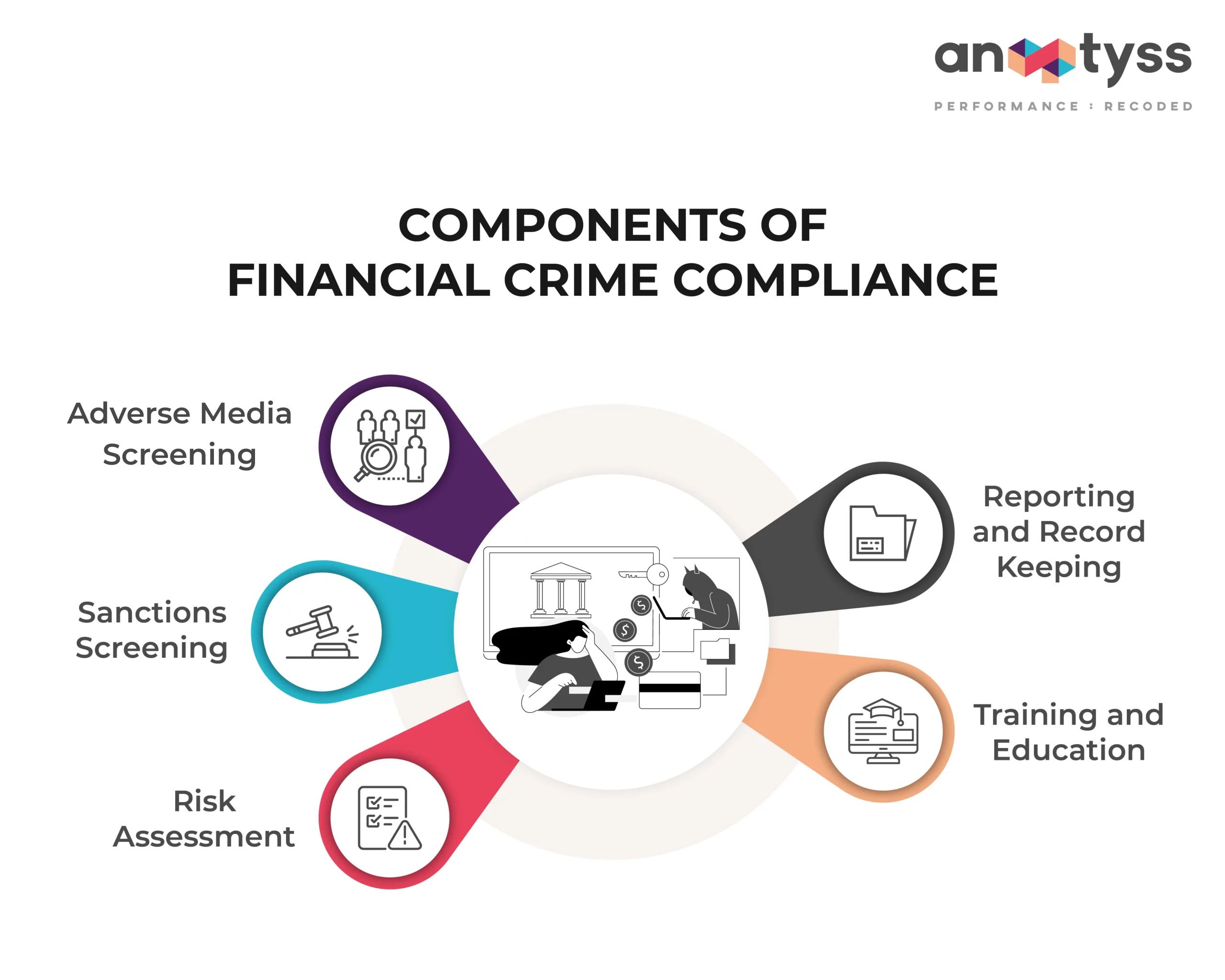
Components of Financial Crime Compliance

Financial crime compliance encompasses several key components:

Components of financial crime compliance

1. Adverse Media Screening

Adverse media screening or negative new screening (media monitoring) is one of the KYC processes that comes under the CDD umbrella. It helps identify and analyze damaging information about a person, organization, or entity from different online and offline media channels, including social media.

2. Sanctions Screening

Financial institutions must screen transactions and customers against international sanctions lists or collected customer data for effective financial crime compliance (FCC). It helps financial institutions detect sanctioned individuals, entities, or countries before conducting any business or transaction with them.

3. Risk Assessment

Banks and other financial institutions must conduct periodic risk assessments to identify potential hazards, and weaknesses, and analyze the effects before they occur. This helps them effectively adapt their compliance strategies accordingly.

4. Reporting and Record Keeping

Financial institutions must maintain accurate and accessible records and report certain transactions and suspicious activities (SAR) to regulatory authorities. This is a critical step to demonstrate control over the customer onboarding process. These records also help in investigating the audit trail of any money laundering or terrorist financing activity.

5. Training and Education

Staff members need to be adequately trained to recognize and address financial crime risks effectively. Fostering a deep understanding of financial crime risks and compliance requirements helps create awareness about the intricacies of various financial crimes and empowers individuals within banks and financial institutions to navigate a complex regulatory landscape. It helps employees:

  1. Stay updated, and adapt to emerging threats
  2. Detect suspicious activities
  3. Assess risks
  4. Develop robust compliance frameworks
  5. Enhance skills for more effective detection and prevention of financial crimes.

6. Ongoing Monitoring 

Perpetual KYC processes are becoming standard, with dynamic risk scoring and integration of third-party data sources.

7. Audit & Program Reviews (NEW) 

Routine independent reviews are critical to identify gaps and foster continuous improvement in FCC programs.

Financial Crime Compliance Solutions: Manual Vs. Digital

Digital financial crime compliance solutions, such as Robotic Process Automation (RPA) embedded with artificial intelligence and machine-learning capabilities, can help address the challenges in traditional solutions with real-time tracking and monitoring of transactions with high accuracy.

By leveraging these intelligent digital solutions, banks, and financial institutions can analyze the data and detect suspicious activities and transactions. They can also generate audit trails to support compliance and save the organization from penalties and the high cost involved in the manual or traditional approach, which is prone to errors.

Technology in Compliance

The year 2025 marks the year when AI transitioned from experimental to essential in financial crime compliance. Financial institutions are experiencing dramatic improvements in detection capabilities, with AI-driven systems reducing false positives by up to 45% and achieving operational savings of 50% or more through automated data aggregation and case narrative creation.

The RegTech market is projected to exceed $22 billion by mid-2025, growing at a CAGR of 23.5%. This expansion reflects increasing investment in technology solutions that address compliance challenges while improving operational efficiency. Future technological developments include:

Proven Solutions in Action: FCC Success Case Highlights

The journey from regulatory compliance to real-world impact is best illustrated through tangible results. The following table highlights a selection of our most impactful Financial Crime Compliance (FCC) success stories, showcasing how targeted solutions have delivered measurable improvements for leading banks and financial institutions in the United States.

Case Study & Link Description Key Value
Consultative BSA/AML Risk Mitigation for US Community Bank Implementation of a BSA/AML-focused program for regulatory risk reduction and compliance with FDIC directives. Regulatory risk mitigation, compliance enhancement
Automated Data Validation & Accurate Fraud Detection Deployment of an automated data validation tool that improved fraud detection accuracy by 48%. Fraud detection, operational efficiency
45% Reduction in Operating Costs for Regional Community Bank Process reengineering and automation leading to significant cost savings and sustained regulatory compliance. Cost reduction, process automation
75% Reduction in AML False Alerts (ALFA Solution) Introduction of ALFA, an AI/ML-based system that streamlined sanctions screening by reducing false positives. Sanctions compliance, accuracy improvement
Flagged 100% Fraudulent Transactions with ML Enhanced fraud detection system using machine learning algorithms to identify all fraudulent transactions in the test period. ML-driven fraud prevention, compliance support

Strategic Recommendations for Banks and Financial institutions

Immediate Priorities (2025)

Focus on rapid implementation of technology-driven solutions to address current regulatory and operational challenges.

  1. Implement AI-enhanced transaction monitoring systems – Leverage artificial intelligence to minimize false positives and improve real-time anomaly detection.

  2. Upgrade KYC processes – Automate identity verification and enable continuous monitoring to stay ahead of financial crime.

  3. Enhance sanctions screening frameworks – Adapt systems to handle dynamic sanctions lists and ensure instant alerts for red flags.

  4. Integrate ESG considerations – Align risk assessments with environmental, social, and governance risks for a sustainable compliance approach.

Medium-term Objectives (2026)

Build integrated compliance and risk infrastructures that are sustainable, scalable, and data-driven.

  1. Develop comprehensive digital asset compliance programs – Prepare for increasing crypto oversight with robust policies and reporting tools.

  2. Establish cross-functional teams – Break down silos by uniting compliance, technology, and operations under shared goals.

  3. Implement advanced analytics platforms – Use data science to anticipate risks and make proactive compliance decisions.

  4. Strengthen third-party risk management – Increase visibility into supply chains and ownership structures to reduce exposure.

Long-term Vision (Beyond 2026)

Create a resilient, adaptive, and proactive compliance ecosystem that evolves with global regulatory landscapes.

  1. Build adaptive compliance frameworks – Design systems capable of scaling with new threats, laws, and technologies.

  2. Develop industry collaboration mechanisms – Foster partnerships to share intelligence and raise sector-wide defense standards.

  3. Integrate compliance by design – Embed regulatory requirements throughout the organization’s processes and systems from the ground up.

  4. Establish comprehensive risk culture – Promote a consistent tone at all levels, ensuring everyone owns and understands compliance responsibilities.

Consultative Approach for Financial Crime Compliance Management

Financial crimes, such as money laundering, terrorist financing, fraud, bribery, and corruption, pose a greater threat to the integrity of banks and financial institutions across the globe. Failure to manage the risk of financial crime can have severe consequences, including loss of reputation and goodwill, penalties, and regulatory sanctions.

At Anaptyss, we help banks and financial institutions fulfill their financial crime compliance obligations in a customized manner with our Digital Knowledge OperationsTM (DKOTM) framework. The DKOTM framework empowers banks of any size to protect their customers, and reputation and avoid regulatory fines or sanctions.

FinCEN Strengthens the AML Whistleblower Program

The Financial Crimes Enforcement Network anti-money laundering whistleblower program was enacted on Jan 1, 2021. The program was created to receive information and tips related to the violations of the anti-money laundering laws, including,

Under the program, individuals providing information on violations of the Bank Secrecy Act (BSA) were eligible for an award of 30% of the monetary sanctions leading to more than $1 million in fines. However, the program is yet to issue a significant award.

However, with new improvements, congressional changes, and the sustained focus of the FinCEN on filed complaints, the program is now ready to rumble.

Obstacles in the FinCEN AML Whistleblower Program

Although the FinCEN AML whistleblower program started receiving tips and information in October 2021, disclosing information about the violations often involves personal and professional risks. This deters the whistleblowers from coming forward.

In addition, delays in receiving and investigating the received information or tips of AML/BSA violations and lack of minimum rewards for the whistleblowers are some of the key reasons why many lawyers were reluctant to take the anti-money laundering violation cases.

Besides, the whistleblowers are awarded only when the required funds are appropriated by Congress. However, this did not happen since the enactment of FinCEN’s AML Whistleblower program in 2021.

Improvements in the FinCEN’s AML Whistleblower Program

In late 2022, Congress passed the Anti-Money Laundering Whistleblower Improvement Act. The act mandates 10% of the civil penalties as a minimum award for whistleblowers who provides original tips and information. It also features strong protections for whistleblowers.

In addition, Congress created a fund for paying awards to the whistleblower who will receive money recovered from the penalties imposed by the US Treasury Department for BSA/AML violations based on their tips.

The expansion of FinCEN’s whistleblower program also mandates that banks and financial institutions take tips and information seriously and act on them. Besides, whistleblowers are provided with more options to raise an alarm to the various regulators. Thus, potential whistleblowers can now disclose information to FinCEN who previously had nowhere to go.

For example, the Office of Foreign Asset Control invoked IEEPA restricting transactions with large Russian banks and linked individuals in response to the ongoing invasion of Ukraine. Potential whistleblowers can now report banks and financial institutions found violating the restrictions, through branches and correspondent accounts located abroad, to the regulators.

Strengthening the Enforcement Effectiveness

The FinCEN requires banks and financial institutions to implement policies and programs for combating money laundering activities and file reports of suspicious transactions relating to criminal activities to meet the Bank Secrecy Act (BSA) and Anti-Money Laundering (AML) compliance. Failure to comply with the BSA regulations can lead to enormous penalties and a huge incentive for whistleblowers.

With recent changes and improvements in the FinCEN anti-money laundering whistleblower program, financial institutions can expect to receive more complaints and tip-offs regarding fraudulent activities such as money laundering.

In line with the FinCEN directives, they need to take prompt action, including investigative efforts and communication to respond to specific complaints. This could stress the capacity of the in-house financial crime units and result in due diligence lapses.

Having a service partner with hands-on domain expertise in investigating financial crimes can be a game-changing strategy for financial institutions. Through timely and effective redressal, the partner can help banks mitigate risks and maintain compliance with FinCen standards.

At Anaptyss, we leverage our exclusive Digital Knowledge Operations™ framework comprising a tailored, consultative approach, digital solutions, and operation expertise to prevent, detect, and address/rectify violations of anti-money laundering laws.

Financial Action Task Force (FATF): History, Functions, Lists, and Recommendations

The Financial Action Task Force (FATF) is an intergovernmental organization that sets international standards and rules to prevent financial crimes and illegal activities, such as money laundering and terrorist financing.

As a policy-making body, the FATF aims to establish global standards to prevent financial crimes and mobilize the political will necessary to bring about national legislative and regulatory reforms in these areas.

The blog outlines the history of the FATF, its functions, recommendations, and lists for banks and other financial institutions to combat financial crimes such as money laundering and the financing of terrorism.

History of FATF

In response to the growing concern about money laundering, the G-7 summit held in Paris in 1989 established the Financial Action Task Force (FATF). The FATF originally included the European Commission, G7 countries, and eight other countries.

The 39-member group establishes international standards to guarantee that national law enforcement can pursue illegal funds linked to serious crimes like cybercrime, the illicit arms trade, and drug trafficking effectively.

In total, more than 200 countries and jurisdictions have committed to implementing the FATF Standards as part of a coordinated global response to preventing organized crime, corruption, and terrorism.

FATF Functions

The objectives of the FATF are:

FATF Recommendations

FATF Recommendations are a comprehensive and consistent framework of measures that countries should implement to combat money laundering and terrorist financing, as well as the financing of the proliferation of weapons of mass destruction. The FATF risk-based approach (RBA) is central to the effective implementation and managing Financial Crime Compliance (FCC).

Countries have differing legal, administrative, and operational frameworks and varying financial systems. Therefore, all countries cannot take identical measures to counter these threats.

What are FATF Lists or Publication Lists

In 2000, the FATF issued its first list of “Non-Cooperative Countries or Territories”. The FATF members on the list are believed to be uncooperative in international efforts to combat money laundering and, later, terrorist financing.

The most common breach of the FATF mandate is a jurisdiction’s unwillingness or inability to provide other foreign authorities with information relating to ongoing investigations of suspected international money laundering, such as client or bank account details.

FATF has Three Types of Lists:

Whitelist – A list of individuals and entities whose characteristics cause an AST (automated screening tool) to hit or alert them but are not found to match a sanctions list. Some ASTs allow users to attach additional information that supports the conclusion that this person or entity is not a sanctions target and should be added to the whitelist.

Blacklist – Countries knowns as Non-Cooperative Countries or Territories (NCCTs) are put on the blacklist. These countries aid in terrorist financing and money laundering. The FATF updates the blacklist regularly, adding and removing entries.

Grey List – Countries that are considered a haven for supporting terror funding and money laundering are put on the FATF grey list, which also serves as a warning to the countries that may enter the blacklist.

FATF Compliance with Domain-Centric Approach

FATF aims to prevent financial crimes, such as money laundering, finance for terrorism, and illegal activities that cause harm to society. Banks and financial institutions play a pivotal role in combating such financial crime activities. To comply with FATF regulatory norms, they need to constantly scan, monitor and report their customers’ suspicious activities.

At Anaptyss, we assist banks and financial institutions meet FATF regulations and AML/CFT compliance by leveraging our exclusive Digital Knowledge Operations™ framework and deep-domain expertise in anti-money laundering (AML) and countering finance for terrorism (CFT).

Basel Norms: Purpose and History

Basel Norms or Basel Accords are the international banking regulations issued by the Basel Committee on Banking Supervision – BCBS. The Norms are an effort to coordinate banking regulations across the globe, to strengthen the international banking system.

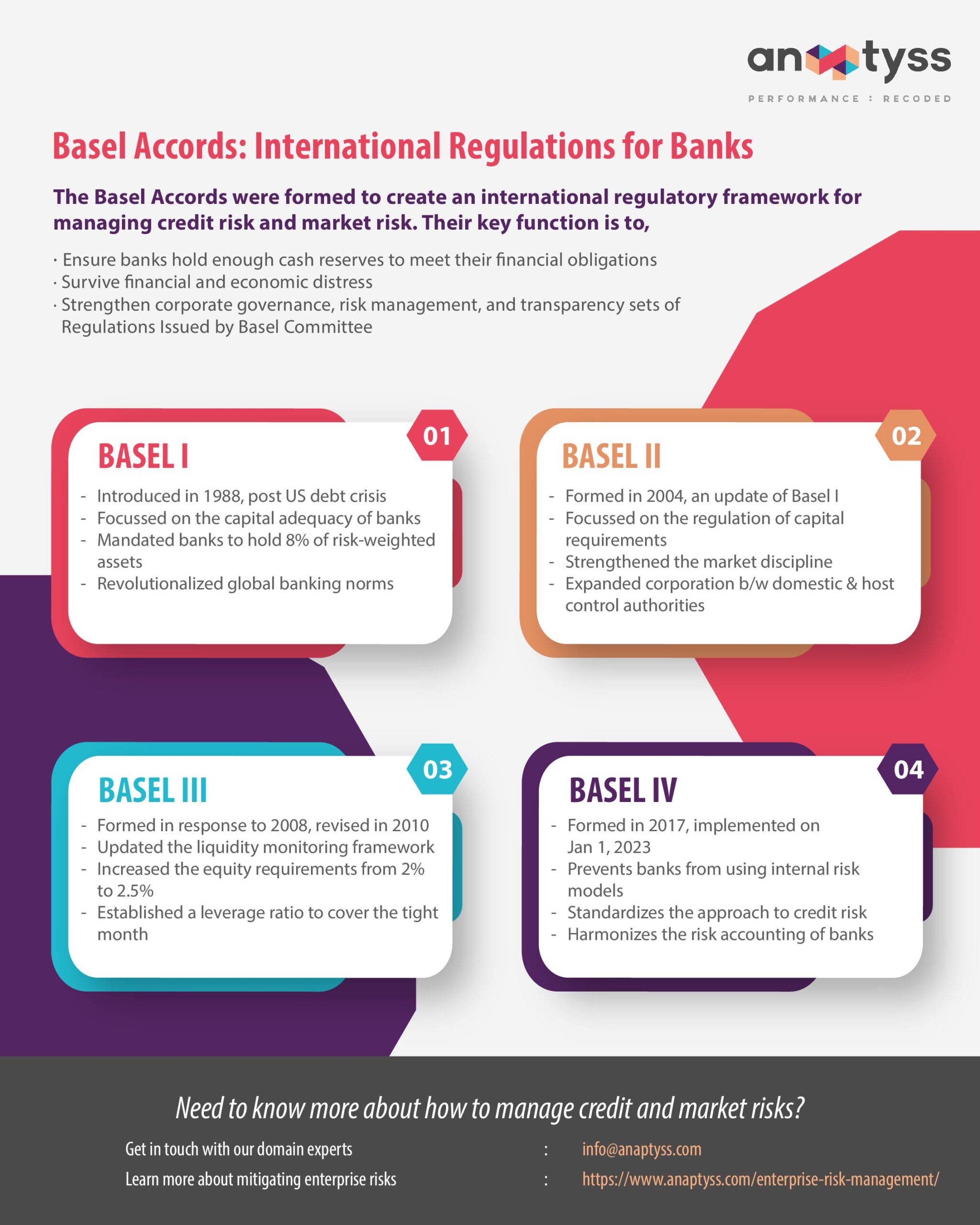
The Basel Committee has issued four sets of regulations known as:

1. Basel I: The First Accord Issued in 1988

This accord aimed to tackle credit risk. With this accord, BCBS established a bank asset classification and lowered many risk profiles, which boosted investments. This paved the way for the best practices and regulations in the banking sector.

2. Basel II: The Second Accord Issued in 2004

The major aim of this accord was to strengthen capital requirements and set up the regulatory review framework. This accord targeted to make banks’ capital more risk-sensitive, promote risk management for large banks, and establish standardized techniques and approaches to evaluating banks in non-EU countries.

3. Basel III: The Third Accord Issued in 2010

This accord came as a response to the global financial crisis. It aimed at reforming and enhancing the regulation, supervision, and risk management within the entire banking sector. Based on the two previous Basel Accords, Basel III focused on individual banks’ ability to withstand financial stresses and mitigate system-wide shocks.

4. Basel IV: The Fourth Accord Issued in 2017

This accord also known as Basel 3.1 refers to the conclusion of the Basel 3 reform package which had taken more than a decade to develop. Basel Committee published finalized rules covering major issues associated with Risk Weighted Assets (RWA). These rules outline fundamental changes to calculate the capital ratio and Risk Weighted Asset by all banks, regardless of the size or complexity of their banking model.

basel accords international regulations for banks

Why Were Basel Norms Formed?

The Basel Norms were formed to create an international regulatory framework for managing credit risk and market risk. Their key function is to ensure that banks hold enough cash reserves to meet their financial obligations and survive financial and economic distress. They also aim to strengthen corporate governance, risk management, and transparency.

The guidelines are the most comprehensive regulations governing the international banking system. The Basel Accords comprises Basel I, Basel II, Basel III, and Basel IV.

The Basel Committee on Banking Supervision – BCBS is the primary global standard setter for the prudential regulation of banks and provides a forum for regular cooperation on banking supervisory matters.

History of the Basel Committee

The Basel Committee—initially named Committee on Banking Regulations and Supervisory Practices—was established by the central bank Governors of the group of 10 countries at the end of 1974.

It was established to enhance financial stability by improving the quality of banking supervision worldwide and to serve as a forum for regular cooperation between its member countries on banking supervisory matters.

The committee is headquartered at the Bank for International Settlements (BIS) in Basel, Switzerland.

The Bank for International Settlements (BIS) is an International financial institution owned by central banks that fosters international monetary and financial cooperation and serves as a bank for central banks. BIS’s mission is to serve central banks in their pursuit of monetary and financial stability.

Established in 1930, the BIS is owned by 62 Central Banks, representing countries from around the world that account for 95% of world GDP.

Complying with Basel Norms: Domain-Centric Approach

Compliance with Basel Norms is important to protecting banks from financial and operational risks. An in-depth understanding of the banking domain and applicable regulatory mandates is crucial to drafting effective control frameworks and internal policies.

Additionally, digital technologies have a significant role in assisting and augmenting manual efforts. A domain-centric approach with digital solutions can provide an optimal strategy.

Image credit: pressfoto on Freepik

5 Key Takeaways From Recent FinCEN Alert on Human Smuggling on the Southwest Border

The Financial Crimes Enforcement Network (FinCEN) released a new alert focused on human smuggling and trafficking across the United States’ southwestern border.

This alert comprised guidance on relevant red flags, typologies, and SAR filing tips for financial institutions to help them detect and report suspicious transactions suggestive of human smuggling.

This blog shares key takeaways and red flags, providing a quick summary of the FinCEN alert.

FinCEN Alert on Human Smuggling

The FinCEN alert on human smuggling is focused on the Southwest Border of the United States. The following are the key pointers for financial institutions:

1. Human smuggling (HS) across the Southwest border of the United States generates ~$2 to $6 billion in yearly revenue.

2. Human smuggling typically occurs in two phases: solicitation and transportation. Often, smuggling networks not directly involved with large criminal organizations pay “protection tax” to TCOs along their routes.

3. The main illicit finance typologies include cash placement and layering into the formal financial system, alternative payment methods (such as P2P), and funnel accounts.

4. Cash is primarily used by migrants to pay smugglers. Therefore, smugglers are often involved in bulk cash smuggling and cash purchases of high-value assets.

5. SAR Filing instructions include using the term “FIN-2023- HUMANSMUGGLING” in SAR Field 2 and the narrative, while also selecting SAR Field 38(g) (human smuggling).

AML/CFT Red Flags Related to Human Smuggling

Financial institutions need to watch out for the following red flags when investigating potentially suspicious transactions related to human smuggling:

Domain-Centric Approach to Meeting AML and CFT Compliance

Deterring human trafficking and human smuggling is one of the FinCEN’s key priorities for countering the financing of terrorism (CFT) and anti-money laundering (AML) activities.

While human smuggling and human trafficking are not the same, they both are used for moving illegitimate money across borders. Thus, financial institutions should prioritize identifying suspicious activities related to human smuggling.

As a strategic partner, Anaptyss can provide financial institutions with tailored guidance and domain-specific consultative expertise. Leveraging the proprietary Digital Knowledge Operations™ framework, Anaptyss can improve their AML/CFT compliance capabilities and help them meet regulatory obligations.

Read the complete FinCEN advisory on human smuggling here.

Guide to Anti-Money Laundering in Banking and Finance

Anti-money laundering or AML in banking and finance refers to the legal obligations, set of rules, procedures, and regulations to prevent and counter money laundering.

Financial institutions need to implement dedicated frameworks and systems to monitor and report fraudulent activities to safeguard themselves from compliance risks and fulfill regulatory obligations.

For instance, banks need to implement an AML transaction monitoring system to detect and prevent money laundering activities to ensure that illicit money does not exploit their system.

This blog provides a guide for anti-money laundering to help banks and other financial institutions in the purview of BSA/AML/CFT regulations.

How Does Money Laundering Happen? Key Mechanism

Money laundering involves a slew of deceptive activities to legitimize illegal money generated through illicit activities such as drug trafficking, smuggling, shell companies, etc.

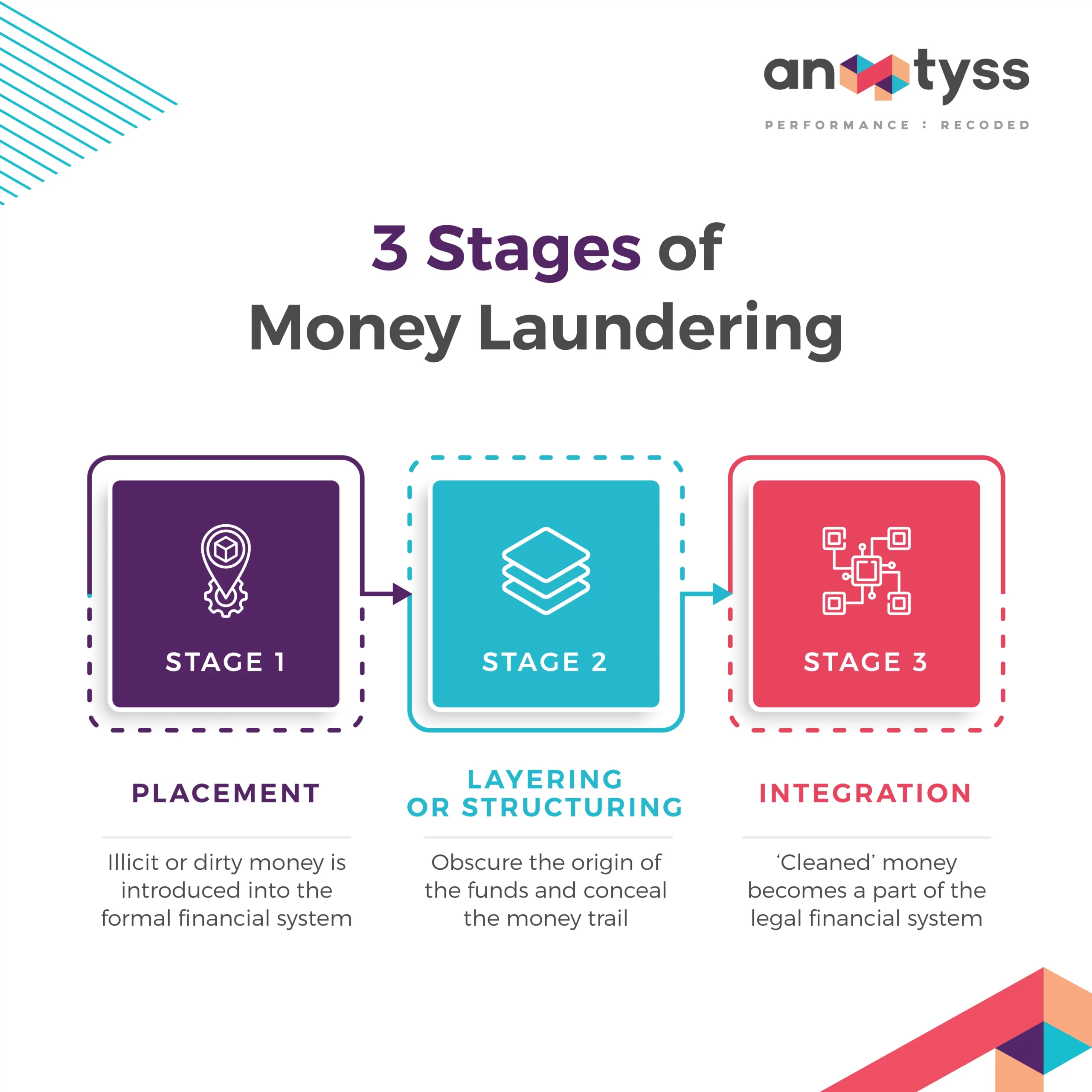
Its goal is to hide the sources of illegal money and “launder” it into the formal financial system as legitimate money. Money laundering entails three steps or stages:

1. Placement

In this stage, the illegal or dirty money is placed or injected into legal financial systems through activities such as smurfing, invoice fraud, offshore accounts, etc.

2. Layering

The layering stage layers or separates the funds from the source and conceals the money trail.

3. Integration

In the final integration stage, the laundered funds are invested in real estate, luxury goods, stocks, and other avenues/instruments.

Three Stages of Money Laundering

After the money is laundered, it becomes difficult for banks and financial institutions to differentiate the money from legitimate sources and apprehend the criminals.

Need for AML Compliance in the Banking Industry

Over the past two decades, AML legislation has become increasingly stringent for banks and financial service providers. In tandem, the digitized landscape and alternate finance give rise to novel money laundering scenarios, resulting in stronger regulatory measures to counter money laundering. Amid this scenario, banks need to step up their AML compliance efforts for various reasons as follows:

1. Increasing Regulatory Action

Regulatory enforcement concerning AML violations has been on the rise over the past decade. According to McKinsey, regulatory actions against banks have been almost steadily growing. In 2009, there were 5 actions, which grew up to 21 actions in 2018.

Further, the amount of money involved in each action has also increased. Regulatory agencies in the United States also have the power to impose huge fines and penalties if an action is successful.

2. Evolving Threat

Criminals and their money laundering gambits have become more sophisticated over time, posing a threat to the formal banking system. The rise of lone-wolf terrorists, cyber-enabled criminals, and illicit e-commerce portals are some of the new threats.

3. Reputational Risks

Money laundering incidents, once discovered, are widely reported, causing great reputational harm to the bank. Since the brand value of a bank is of paramount importance, the need to safeguard against money laundering risks is even greater.

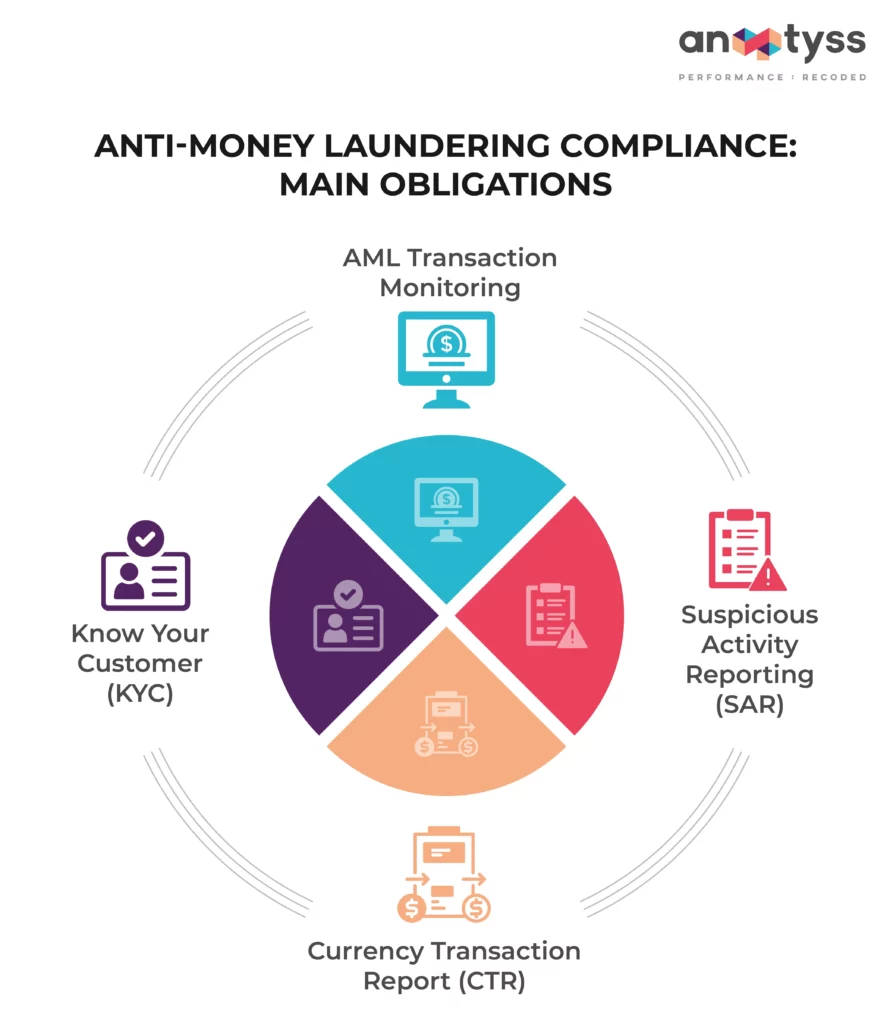
Anti-Money Laundering Compliance: Main Obligations

AML laws obligate banks to conduct specific processes and due diligence concerning customer onboarding, ongoing business, transaction monitoring, sanctions screening, reporting, etc.

Anti-Money Laundering Compliance_Main Obligations infographic

1. Know Your Customer (KYC)

As part of KYC, banks need to verify and ascertain the identity of their customers. The goal of KYC is to ensure that their customers are real and not involved in any unethical activities. The KYC processes span three elements viz. customer identification program (CIP), customer due diligence (CDD), and enhanced due diligence (EDD).

The CIP process involves collecting customer information such as name, date of birth, address, identification, etc. CDD processes involve establishing the customer’s credentials and risk profile to determine linkage with potential suspicious activities. Banks conduct EDD for customers with high-risk profiles exposed to heightened risks of money laundering and other financial crimes.

2. AML Transaction Monitoring

Banks need to monitor financial transactions to detect suspicious activities. Automated transaction monitoring systems identify suspicious transactions based on predefined criteria indicative of money laundering, fraud, or terrorist financing activities.

Patterns of suspicious activities can include abrupt or large transactions, repetitive wire transfers, multiple accounts, etc. The systems continuously monitor all transactions and automatically flag transactions that match the defined criteria.

3. Suspicious Activity Reporting (SAR)

Banks are required to report to the Financial Crimes Enforcement Network (FinCEN) any suspicious transactions that are suggestive of money laundering, terrorist financing, or other financial crimes.

Financial institutions must also have robust internal controls in place to identify and report suspicious activity, conduct investigations, and file the SAR.

4. Currency Transaction Report (CTR)

The purpose of CTR is to highlight potential money laundering activities by reporting currency transactions that are greater than $10,000.

Notably, banks can also file the CTR for transactions that appear to be deliberately capped lower than the threshold amount but make a suspicious pattern.

Setting Up an AML Compliance Program

The following are the major components of an anti-money laundering program that can help banks hamper illegal funds from entering the financial system or detect them swiftly:

1. Designate a Compliance Officer

Having a dedicated compliance officer accountability will help ensure focus on strategy and implementation of the BSA/AML/CFT program. It will also bring in the necessary domain expertise and oversight for a robust system.

2. Conduct Risk Assessment

An early step in setting up an AML compliance program is to conduct a routine risk assessment. This aspect is crucial to identifying money laundering and terrorist financing risks associated with a bank’s products, services, customers, geographical locations, and prevailing laws and regulations.

3. Develop Robust Policies and Procedures

Based on the risk assessment results, banks need to develop policies and procedures to address the identified risks. These policies and procedures should include compliance requirements such as rigorous recordkeeping, filing of suspicious activity reports, customer identity verification, etc.

4. Provide Employee Training

Impart training to the employees on policies and procedures of the AML compliance program so that they understand their responsibilities and can identify and report suspicious activities proactively.

5. Conduct Independent Tests and Audits

Conduct regular independent testing of the AML compliance program to build real-world effectiveness based on identifying and addressing potential gaps and weaknesses.

Countering Money Laundering with Domain Expertise

As criminals seek new ways to inject illegal funds into financial systems, banks must detect and prevent such activities.

Domain expertise and technology intervention have gained more relevance in strengthening anti-money laundering in the banking industry. At Anaptyss, we leverage our expertise in areas of AML compliance, ranging from case investigation to AML program audit/design and implementation.

For instance, Anaptyss has helped set up a consultative BSA/AML-focused risk mitigation program for a US-based community bank to meet the FDIC directives.

Image credit: wirestock on Freepik
DKO™
Life@Anaptyss
Careers