Enhanced Due Diligence in 2026: Key Regulatory Shifts and What They Mean for Banks

The compliance landscape of 2026 has moved decisively beyond the “check-the-box” methodologies of the early 2020s. We have entered what industry experts describe as a “NAVI world”—one that is Nonlinear, Accelerated, Volatile, and Interconnected. For financial institutions (FIs) and corporations, Enhanced Due Diligence (EDD) is no longer merely a defensive regulatory posture; it has evolved into a sophisticated data science exercise focused on producing intelligence with a “high degree of usefulness” for law enforcement and national security.

To navigating this change is the main challenge. Banks and financial institutions need to know how the new legislative frameworks coincide, the weaponization of Generative AI (GenAI), and the harmonization of global standards is critical for operational resilience.

1. The U.S. Regulatory Reset | Innovation Meets “Effectiveness”

In 2026, the United States regulatory environment reflects a strategic pivot toward supporting market efficiency while sharpening the focus on material risk.

The “Effectiveness Standard” & Investment Adviser AML Rule

The Financial Crimes Enforcement Network (FinCEN) has moved toward an “Effectiveness Standard,” requiring AML programs to be reasonably designed to identify and mitigate illicit finance risks based on national priorities. However, recognizing the complexity of the market, FinCEN issued a final rule in late 2025 postponing the effective date of new AML/CFT requirements for Registered Investment Advisers (RIAs) and Exempt Reporting Advisers (ERAs) from January 1, 2026, to January 1, 2028.

This delay is not a license to idle. It is a strategic window for firms to map their current customer data against future Customer Identification Program (CIP) requirements.

Relief for Mid-Sized Banks

In a move to tailor supervision, the Office of the Comptroller of the Currency (OCC) proposed raising the asset threshold for “heightened standards” guidelines from $50 billion to $700 billion. This dramatic shift reduces the number of covered banks from 38 to eight, allowing mid-sized institutions greater flexibility to self-direct technology investments and streamline risk management.

2. The GENIUS Act | Stablecoins Enter the Mainstream

A watershed moment for EDD arrived with the passage of the Guiding and Establishing National Innovation for U.S. Stablecoins Act (GENIUS Act) in July 2025. This legislation successfully integrated payment stablecoins into the regulatory mainstream.

Impact on EDD Data Points

As of 2026, due diligence on stablecoin issuers is no longer speculative. Under the Act, issuers are treated as financial institutions. EDD teams must now validate specific statutory requirements:

The GENIUS Act Compliance Checklist for 2026

Requirement 2026 EDD Action Item
Reserves Validate 1:1 backing with cash/Treasurys via monthly attestations.
Status Confirm issuer is a “Permitted Payment Stablecoin Issuer” (bank subsidiary or OCC-approved non-bank).
Redemption Verify the issuer’s ability to redeem tokens at par value upon demand.
Asset Class Ensure the stablecoin is not classified as a security or commodity under the new exclusions.


3. The AI Paradox | Deepfakes vs. Agentic Defense

Generative AI (GenAI) has emerged as the most significant disruptive force in 2026, acting as both a weapon for sophisticated criminal networks and a shield for compliance professionals.

Deepfakes have become a mainstream fraud vector. By early 2025, documented losses tied to deepfake fraud reached $200 million in just four months. Deloitte forecasts U.S. fraud losses could triple to $40 billion by 2027 due to generative AI scams.

EDD processes in 2026 must now account for “injection attacks,” where fraudsters use third-party webcam plugins to inject synthetic video streams during live KYC checks. Threat actors are increasingly utilizing deepfake “selfies” and AI-generated identity documents to bypass automated verification systems.

However, Agentic AI—autonomous systems capable of planning and executing tasks—has revolutionized compliance. By 2026, over 70% of banking firms report using Agentic AI to some degree. These agents enable the transition to Perpetual KYC (pKYC), allowing systems to monitor customer risk profiles in real-time rather than on 1, 3, or 5-year cycles.

4. European Harmonization | The Era of AMLA and CSDDD

The European Union has moved to centralize oversight through the Anti-Money Laundering Authority (AMLA), which is operationalizing its mandate in 2026. From 2028, AMLA will directly supervise 40 of the highest-risk financial institutions in the EU. For firms operating in Europe, this means EDD data points must align with a harmonized standard, including stricter Beneficial Ownership (UBO) thresholds fixed at 25% and the use of the “multiplication principle” for multi-layered structures.

Supply Chain Transparency and CSDDD

While the Corporate Sustainability Due Diligence Directive (CSDDD) saw its transposition deadline delayed to July 2027, compliance planning is active. The scope has been simplified to focus on Tier 1 suppliers, but companies must still watch for “plausible information” regarding adverse impacts deeper in the chain.

Simultaneously, the UK’s updated guidance on the Modern Slavery Act encourages businesses to disclose actual incidents identified and remediated, moving beyond generic statements.

Key EU/UK Regulatory Shifts in 2026

Regulation Status in 2026 Impact on EDD
AMLA Finalizing risk methodology; preparing for 2028 direct supervision. Harmonization of risk factors across EU member states.
CSDDD Transposition deadline delayed to July 2027; “Stop-the-Clock” directive in effect. Focus on Tier 1 supplier mapping; planning for mandatory climate transition plans.
Forced Labour Reg Entered into force; bans products made with forced labor by Dec 2027. Requires EDD to identify geographic risk of forced labor in supply chains.


5. Global Payments & The FATF Travel Rule & Cross-Border Precision

The Financial Action Task Force (FATF) finalized revisions to Recommendation 16 (The Travel Rule) in June 2025, adapting standards for payment transparency.

New Data Requirements For cross-border payments exceeding $1,000 USD/EUR, EDD systems must now ensure the transmission of specific beneficiary information, including name and account number. Crucially, the 2025 revisions clarify that beneficiary financial institutions must use this data to inform transaction monitoring and detect potential sanctions evasion or misdirected transfers.

Conclusion

The evolution of EDD in 2026 requires a paradigm shift from manual remediation to algorithmic vigilance. With the rise of stablecoins under the GENIUS Act, the centralization of EU supervision under AMLA, and the omnipresent threat of AI-driven fraud, the margin for error has vanished.

For organizations, success lies in “Agentic Compliance”—fusing human judgment with AI-driven, real-time risk analysis. At Anaptyss, we recognize that navigating this NAVI world requires more than just software; it demands a strategic operational partner capable of transforming these regulatory complexities into competitive advantages.

How Agentic AI Is Reshaping the First Line of Defense in Banking Operations

For years, the First Line of Defense (1LoD)—business units and front-line staff who own as well as manage risk—has operated under conflicting demands . Despite the rising investment in compliance technology, operational costs are still going up, besides that, the detection rates for sophisticated financial crime have not moved at all. The banks managed to trace only about 2% of the global financial crime flows; however, they still dedicate as much as 15% of their full-time staff to KYC/AML pursuits.

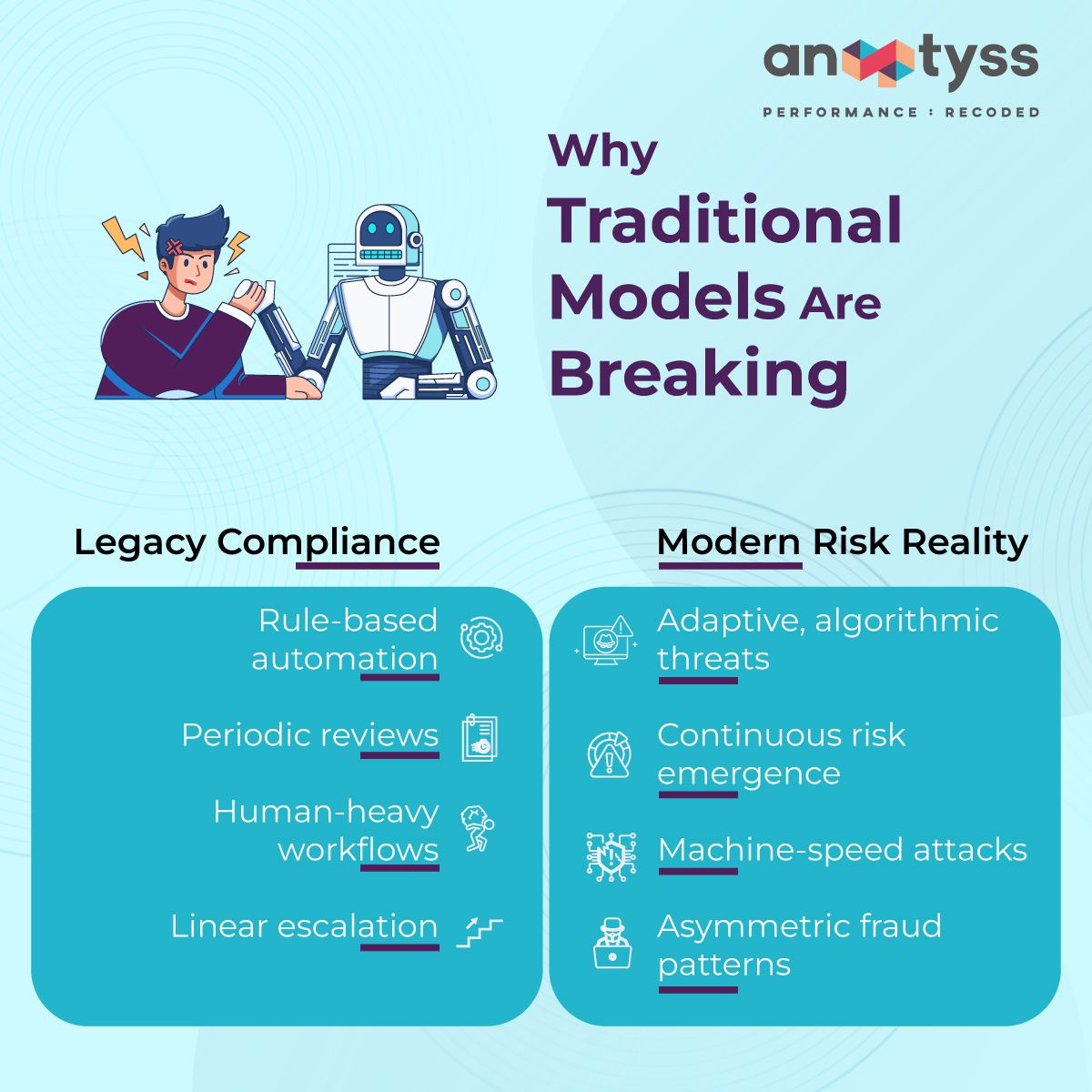
We are noticing that traditional methods based on rule automation and a large number of employees cannot do any more than what they have already done. The classic “Three Lines of Defense” model is having its difficulty to contain the asymmetric risks that hyper-digitalized markets and algorithmic scams present.

Yet we are amidst a major transformation. We are getting to the point of breaking the Generative AI hype and we are moving forward to the application of the AI Agentic–dedicated to autonomous reasoning, planning, and execution systems.

This shift is beyond just a software upgrade; it is rather a transition from the traditional static, reactive control environment to a proactive, real-time digital workforce.

From Generative Copilots to Agentic Action

To understand the strategic impact on the 1LoD, we first need to differentiate the tools that we currently have from the agentic systems that are being introduced to the market.

In essence, Generative AI (GenAI) is built to be reactive. It is programmed to wait for an input to summarize a regulatory filing or draft a credit memo. While it may be useful for the productivity of analysts, it does not possess “agency”—the right to make decisions independently of the systems to accomplish complex goals.

In contrast, Agentic AI is entirely focused on achieving objectives. It has the technical prowess to manage the multi-layered workflows with minimum human involvement. Instead of just suggesting a GenAI model might write an email about a suspicious transaction, an agentic system can find the discrepancy, halt the account, start a verification procedure, compare the customer’s reaction with the prior behavior statistics, and amend the core banking system―all done without any intervention from a person.

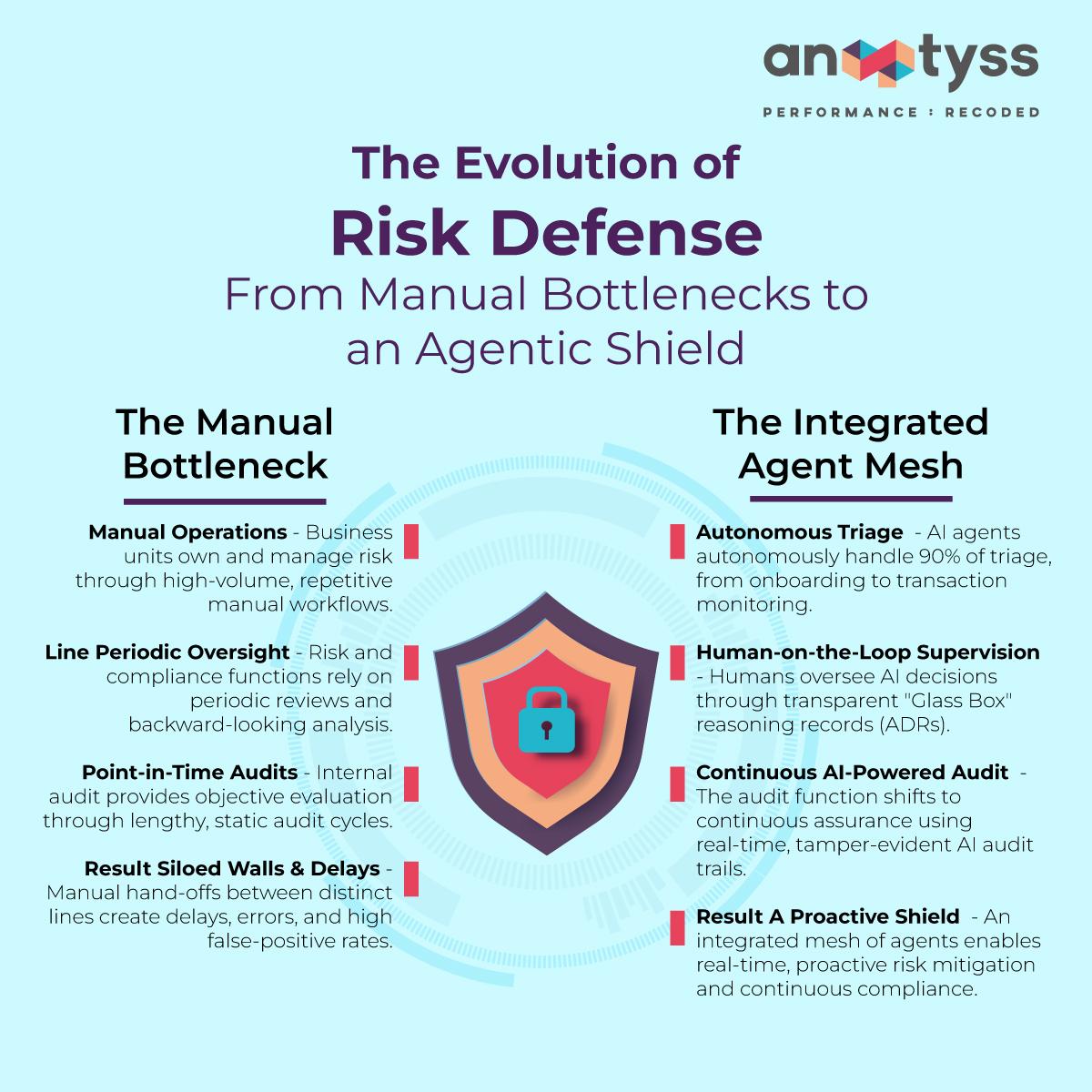
This shifts the 1LoD from a bottleneck of manual “hand-offs” to a “digital factory” where specialized agents pass context between departments instantly.

Transforming KYC – Transitioning to Always-on Compliance

The primary high-value usage of Agentic AI is in the area of Know Your Customer (KYC) and onboarding processes. Traditional onboarding is often a linear, friction-heavy process prone to delays. The productivity gains of Agentic AI in these fields are reaching 200% to 2,000% by implementing “squads” of specialized agents.

In a fully matured agentic workflow:

This combining of tasks speeds up the onboarding process from days to mere minutes. More significantly, it reflects the shift from periodic reviews (1, 3, or 5-year cycles) to Perpetual KYC (pKYC). Unlike the in-between data gaps left by the periodic review, agentic systems carry on monitoring transaction flows and external data sources regularly. The agent takes the initiative on its own by refreshing customer due diligence profile whenever a “trigger event” occurs, e.g., change in beneficial ownership or a new sanctions hit.

Why traditional moderls in Banks are breaking

Resolving the False Positive Dilemma in Financial Crime

In the fraud detection and anti-money laundering realm, the first line of defense (1LoD) is faced with a staggering number of false positives, exceeding 90% in the legacy rule-based systems. This is a problem that takes ample time of the investigators as it requires them to clear legitimate transactions instead of investigating the real threats and focusing on the strategic tasks.

Agentic AI fundamentally changes this scenario by processing transactions “in context” instead of taking them in isolation. By blending together information from payment records, vendor databases, and chat patterns, agentic fraud agents can diminish false positives to the extent of up to 80%.

Unlike static rules, these agents utilize adaptive learning. Each confirmed fraud or clear alert acts as an input for the model, refining accuracy in real-time. For instance, major players like Standard Chartered have mentioned that they achieved a 40% drop in compliance breaches and were able to solve cases faster by utilizing such predictive and AI-driven verification.

The Skeleton of Autonomy – Event-Driven Architecture

For Chief Risk Officers and Chief Technology Officers, it is vital to comprehend that Agentic AI requires a sophisticated infrastructure. The autonomous agents need to be driven by data that is continuously being generated. Traditional cycle-based processing cannot operate in real-time risk management.

To promote agentic workflows, banks are opting for Event-Driven Architectures (EDA) installed with technologies like Apache Kafka and Flink. The architecture built this way would act as the central nervous system, carrying events such as transaction logs, login signals, and market moves to agents in real-time.

As we progress toward an Agent Mesh, the communication model becomes “intent streams.” Herein, the agent doesn’t just pass on data; it also conveys an objective. An agent tracking a suspicious login can autonomously propose an intent that would, costs and security being resolved automatically, communicate with the client. This makes the entire process chain resilient and self-healing.

Evolution of Risk Defence in banking

Governance – The “Glass Box” Requirement

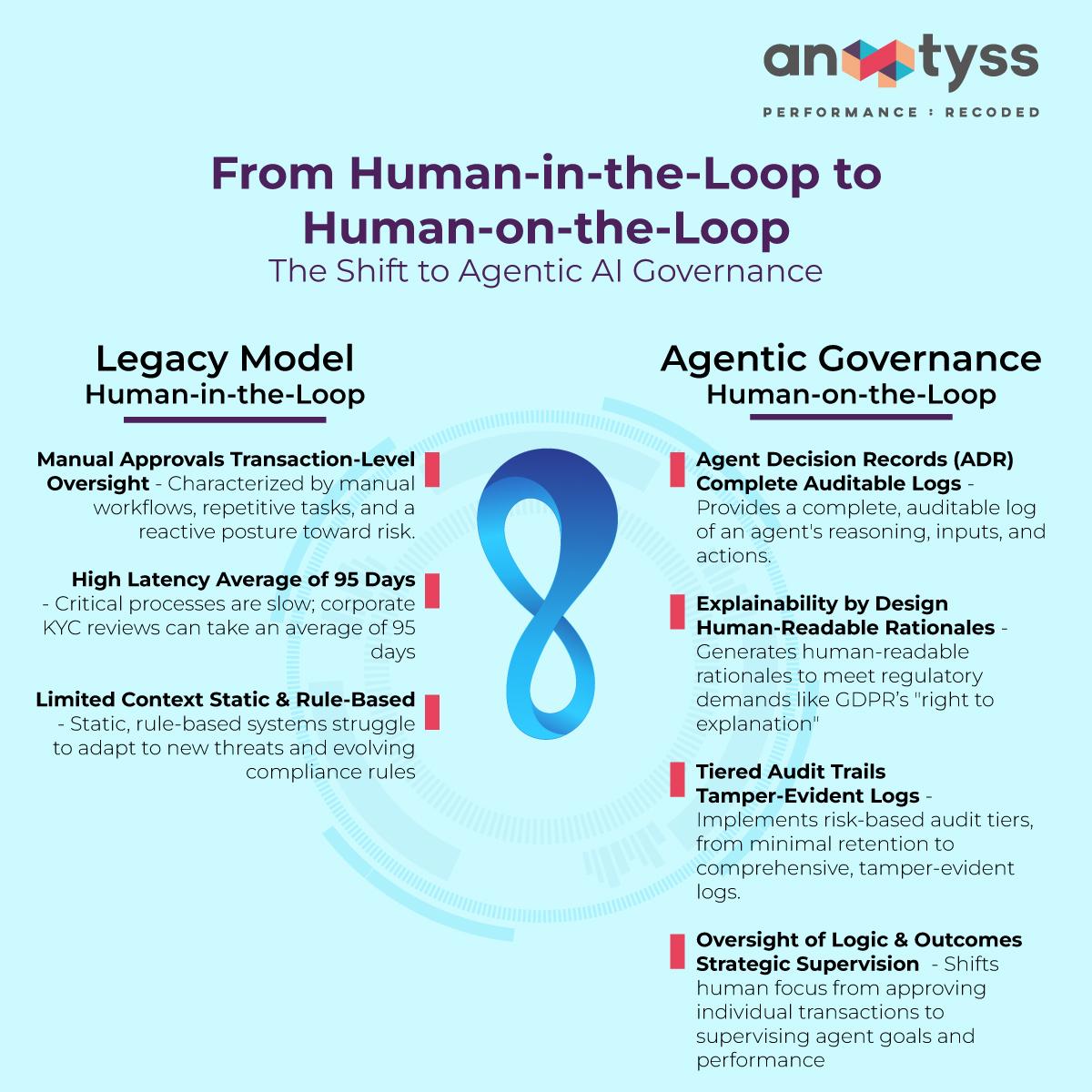
The escalating independence of Agentic AI has naturally created effects related to governance and “black box” style decisions. Regulators require complete transparency. Per legal standards such as GDPR and the EU AI Act, “it was the algorithm that decided” is not a valid excuse.

To deploy Agentic AI safely in the 1LoD, institutions must implement Agent Decision Records (ADR). These provide an immutable, comprehensive log of the reasoning behind an agent’s action—documenting which data sources were consulted, which business rules were applied, and the confidence score of the decision.

This shifts the governance model from “Human-in-the-Loop” for every transaction to “Human-on-the-Loop” for oversight of the system’s logic and outcomes. By implementing tiered audit trails that capture context and reasoning, banks can satisfy regulatory requirements for explainability while reaping the efficiency benefits of autonomy.

Shift to Agentic AI infographic Banks

Conclusion

The integration of Agentic AI into banking operations is not an optional upgrade; it is a strategic necessity for survival in an asymmetric risk landscape. Institutions that successfully deploy these digital workforces will not only slash operational costs but will create a robust, 24/7 First Line of Defense that predicts and prevents risks before they materialize.

The question is no longer if AI will reshape banking, but how leaders will architect their organizations to harness it.

Navigating the transition from legacy operations to an agentic-first enterprise requires deep domain expertise and a clear roadmap. At Anaptyss, we help financial institutions design and deploy solutions that integrate Generative and Agentic AI directly into the core of their business operations.

To dive deeper into the architectural and operational steps required for this transformation, we invite you to read our comprehensive white paper – Reimagining Banking Functions: How Generative and Agentic AI are Shaping the Future.

5 Key Strategies to Effectively Audit Model and AI Risk in Finance

In the modern financial landscape, mathematical models have become the central nervous system of decision-making. From underwriting credits and valuing exposures to detecting fraud and forecasting capital requirements, reliance on quantitative analysis is ubiquitous. However, this reliance introduces “model risk”—the potential for adverse consequences, financial loss, or reputational damage arising from decisions based on incorrect or misused model outputs. For a comprehensive overview, see our what is model risk and model risk management (MRM) in banking guide.

The requirement of internal audit teams has been shifted from mere compliance checks to a thorough and detailed assessment of the Model Risk Management (MRM) model. This is made more complicated by the direct implication of the aggregator of Artificial Intelligence (AI) and Machine Learning (ML), which brings in the “black box” complexities that the traditional audit methods can hardly tackle.

In this blog, we address how agile auditing could be applied to assure compliance with AI Model Risk Management architecture while addressing the specific risks the AI poses.

1. Defining the Audit Scope and Inventory

The audit of a financial system starts with the very question of whether the financial institution is aware of what models it possesses.

The guidelines lay down by the regulators like the Federal Reserve SR 11-7 and OCC 2011-12 define a model as a quantitative method that applies statistical, economic, financial, or mathematical theories to process input data and compute the quantifiable risk.

Therefore, a critical audit step is the verification of the inventory of the model of the organization and the inclusion of various quantitative methods that conform to the guidance even when termed as a “calculator” or “tool” to bypass governance.

Audit Action Item
The auditors are the ones who have to sift through the model inventory and scrutinize them for completeness. This includes verifying that the inventory properly delineates the model’s purpose, assigned risk level (tier), development stage, and previous validation results. Crucially, the inventory must track models throughout their lifecycle—from development to retirement. For deeper insights, see our top model risk management priorities for the banking industry blog.

2. The Three Lines of Defense

Effective MRM relies on a clear separation of duties, typically structured around three lines of defense. The first line develops and owns the models; the second line (risk management) validates them; and the third line (internal audit) provides independent assurance.

  1. Governance and Policy Review
    Auditors must evaluate whether the Board of Directors and senior management provide active oversight. This includes reviewing board meeting minutes to ensure that model risk is discussed and that the board understands the aggregate model risk profile. Policies must be explicitly defined, covering model development, implementation, use, and validation.
  2. Independence of the Second Line
    A critical audit objective is to verify the independence of the model validation function. Validators must not be responsible for model development or use, and they must have the authority to challenge developers effectively. The audit should assess whether validators have the technical competence and influence to delay model implementation if significant deficiencies are found.

3. Validating the Validator

Internal audit does not re-validate every model; rather, it “validates the validator” to ensure the MRM framework is functioning. This involves reviewing the validation process to ensure it includes three core elements.

  1. Validators must review the model’s design, theory, and logic against published research and industry practice.
  2. Auditors should verify that models are monitored to confirm they perform as intended over time, assessing whether changes in market conditions necessitate redevelopment.
  3. Auditors should assess outcomes analysis through back-testing, comparing actual results against model forecasts to evaluate ongoing predictive accuracy and identify potential model drift.

To audit these processes effectively, auditors can utilize scoring mechanisms. Scorecards can evaluate whether the validation governance, policy, and processes are “fully evident” or lacking, providing a quantitative metric for the maturity of the MRM framework.

4. AI, ML, and the Limits of Traditional Validation

The integration of AI and ML models has transformed finance but has also rendered traditional validation techniques insufficient. Unlike linear regression models, AI models often function as “black boxes,” where the logic behind a decision is often opaque.

Below are some of the key challenges for auditors and model risk teams.

  1. The Explainability Challenge
    Auditors must assess how the organization manages “explainability.” If an AI model denies a loan, can the institution explain why?
    Regulatory guidance increasingly emphasizes that AI decision-making processes must be reasonably understood by bank personnel. Auditors should look for the use of explainability frameworks (e.g., SHAP values) that translate model outputs into interpretable and defensible insights.
    Read more about how leading banks validate AI and ML models differently.
  1. Model Drift and Continuous Monitoring
    AI models are highly susceptible to “model drift” or “decay,” where predictive performance deteriorates as real-world data diverges from training data. Traditional annual validation cycles are often too slow for AI. Auditors should verify that the organization employs continuous monitoring tools that trigger automated alerts when performance metrics (like false positive rates) breach predefined thresholds.
  2. Bias and Ethical Considerations
    AI models can inadvertently learn and perpetuate biases present in historical data. An MRM audit must evaluate whether the validation process includes specific testing for algorithmic bias to ensure fairness and compliance with consumer protection laws.

5. Managing Third-Party and Vendor Risk

Many institutions rely on third-party vendor models, particularly for specialized tasks like Anti-Money Laundering (AML). However, relying on a vendor does not absolve the financial institution of responsibility.

Auditors must verify that the organization has performed its own validation of vendor models. Since vendors may not share proprietary code, the audit should look for “challenger testing”—where the bank compares the vendor model’s outputs against a simplified internal benchmark model to ensure results are reasonable. Additionally, the audit must ensure contingency plans are in place should a critical vendor model become unavailable.

For insights on AI-driven AML validation, see our generative AI transforming financial crime compliance post.

Leveraging Technology in the Audit

To keep pace with the volume and complexity of modern models, the audit function itself must evolve. Manual spreadsheets are no longer sufficient for tracking model risk. Auditors should look for a centralized system that stores all model documentation, risk assessments, and validation reports. This prevents version control issues and streamlines evidence collection. Advanced Governance, Risk, and Compliance (GRC) platforms can also help automate the tracking of validation findings and remediation timelines, ensuring that high-severity issues do not slip through the cracks,.

Conclusion

A well-executed MRM audit does more than satisfy regulatory requirements—it strengthens organizational resilience. By rigorously challenging the governance of both traditional and AI-driven models, internal audit enables institutions to innovate with confidence.

As the industry moves deeper into the AI era, the ability to validate the “black box” will become a critical competitive differentiator. Financial institutions that build these advanced audit frameworks will be able to mitigate financial and reputational risk and unlock data-driven strategic growth.

Anaptyss co-creates robust MRM and AI governance frameworks with financial institutions, combining structured audit methodologies with deep validation expertise.

5 Strategic Crypto & Blockchain AML Trends Defining 2026

As the years go by and the global financial system matures into the year 2026, the digital asset sector has completely shifted from being an experimental sector into what analysts predict as the “Great Normalization”.

According to financial institutions (FIs), fintechs, and Virtual Asset Service Providers (VASPs), regulatory ambiguity is mostly gone. The ecosystem has been restructured by the law enforcement agencies, alongside the stablecoins that have been integrated into the core banking system, and the implementation of fully autonomous AI technologies that have been completed at a high speed.

For compliance leaders, 2026 marks a critical point. The conjunction of the EU’s Markets in Crypto-Assets (MiCA) regulation, the U.S. GENIUS Act, and the increasing sophistication of financial crimes is the basis for the transformation from being reactive to proactive ecosystem governance.

In this blog, we outline five strategic AML and financial crime trends that will define the crypto and blockchain compliance landscape in 2026.

1. Regulatory Synchronization and The End of “Grandfathering”

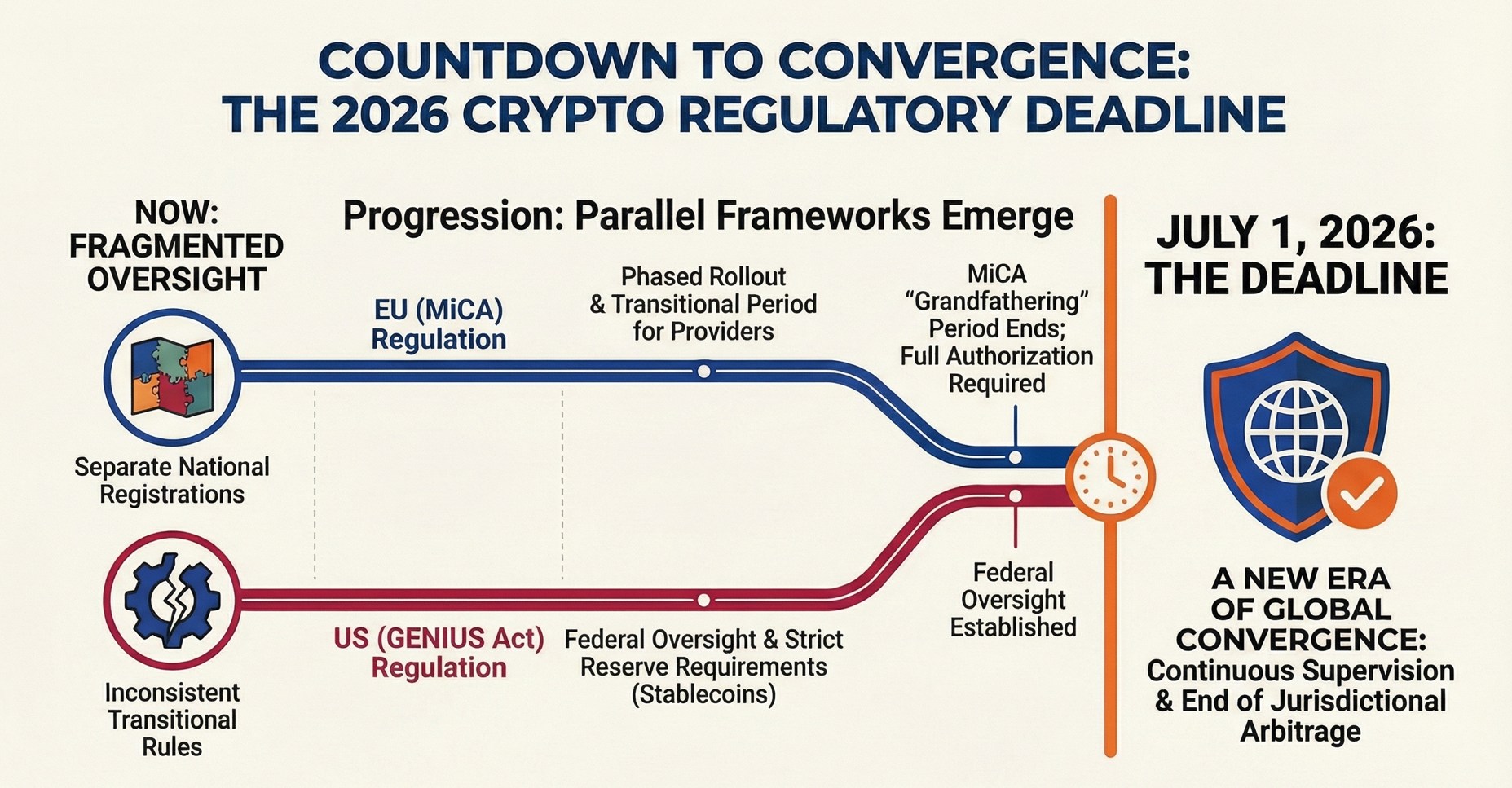
The period of time known as transitional grace that has permitted various VASPs to function under limited national registrations is announcing its end. In Europe, July 1, 2026, will mean the complete end of the “grandfathering” clause only under MiCA. Therefore, from this time forth, any crypto-asset service provider that wishes to function in the EU will have to go through the full authorization process, resulting in the regulatory movement from onboarding to activity, supervision that is active and intrusive.

On the other hand, the United States is experiencing a new era of federal stability that is attributed to the implementation of the Guiding and Establishing National Innovation for U.S. Stablecoins (GENIUS) Act. One of the key points of this legislation is that stablecoin issuers are required to hold reserves in assets that are considered to be high-quality liquid such as the U.S. Treasury, and also they are under direct federal supervision.

As a result, the compliance bar has been raised significantly. Organizations can no longer choose to make use of jurisdictional arbitrage. By the year of 2026, the inadequacies in the regulations of one area may solidly be the reason for some, if not all, areas exacerbating the problem, which will be the cause for the urgent need of uniform, cross-border regulatory regimes.

2. The Rise of “Agentic AI” vs. The Explainability Imperative

By the year 2026, the use of Artificial Intelligence in Anti-Money Laundering will not be limited to just identifying problematic transactions but it will also enable the full functioning of the process. The industry is seeing the growth of Agentic AI, where systems are created that can facilitate several job roles, from the first stage of alert triage to the evidence packaging for SARs, all without the involvement of a human.

While these autonomous agents are incredibly powerful—capable of ingesting multimodal evidence, correlating access logs, and proposing mitigation actions to drastically cut down the “mean time to insight”—there is a massive catch called Explainability.

If you look at the recent guidance coming out of the European Banking Authority (EBA) and NIST, the message is loud and clear. The era of the “black box” AI is effectively over. By the time we get deep into 2026, institutions won’t just need to make the right decisions; they will need to prove how they made them. Efficiency is great, but it cannot come at the cost of auditability.

3. Closing the “Cross-Chain” Blind Spot

Criminal methodologies have evolved faster than legacy monitoring tools. The primary tactic for illicit finance in 2026 is “chain-hopping”—moving funds rapidly across incompatible blockchains to break the transaction trail.

Legacy AML systems that provide only “fragmented snapshots” of a single blockchain are now considered operational risks. Analysis reveals that over 1.46 billion in a single year.

To remain compliant in 2026, firms must deploy forensic tools capable of Entity Resolution (ER)—using graph analytics to visualize and trace funds across 50+ blockchains and hundreds of bridges simultaneously.

Closing the Cross-Chain Blind Spot

4. Stablecoins: The New Rails of Institutional Finance

Stablecoins have become the primary entry point for institutional adoption. We are seeing a decoupling where Bitcoin creates its own “white space” as a store of value, while blockchain assets supporting tokenization and stablecoins drive utility in financial markets.

Despite this utility, stablecoins represent a high concentration of financial crime risk. Illicit volumes involving stablecoins and decentralized finance continue to rise, with fraud and scams accounting for an estimated $51 billion in on-chain activity.

The Financial Action Task Force (FATF) notes that most on-chain illicit activity now involves stablecoins. Consequently, “gold-standard” compliance in 2026 requires integrating treasury data with blockchain analytics to create real-time dashboards that demonstrate reserve coverage and token supply to regulators.

5. Pragmatic Privacy via Zero-Knowledge Proofs

A profound shift occurring in 2026 is the move toward “pragmatic privacy.” Institutional investors require confidentiality to prevent front-running of their strategies, yet they must satisfy strict AML/KYC mandates.

The solution gaining traction is Zero-Knowledge Proofs (ZKPs). ZKPs allow institutions to prove compliance—such as verifying a user is not from a sanctioned jurisdiction or meets accreditation standards—without revealing sensitive underlying data to the public blockchain. This technology is becoming a cornerstone for B2B crypto payments and payroll platforms, balancing the “privacy-compliance paradox.”

Conclusion

As we navigate 2026, the boundary between cybersecurity and AML compliance has largely disappeared. Attackers now focus on identity theft and “signing in as a real user,” making identity protection a frontline AML control.

The winners in this new landscape will be financial institutions and banks that treat compliance not as a cost center, but as a prerequisite for market integrity and institutional partnership. Success requires modernizing data architectures to support Agentic AI, ensuring human-in-the-loop oversight for explainability, and preparing for a world where digital assets are fully integrated into the global financial core.

Anaptyss helps banks, financial institutions, and digital asset firms build scalable, regulator-ready AML and financial crime compliance capabilities across crypto and blockchain ecosystems.

How Mid-Sized Banks and Financial Institutions Win in the AI Era

For mid-sized and regional financial institutions, the rise of “AI-first” fintechs presents a paradox. On one hand, these nimble competitors are reshaping customer expectations with frictionless, hyper-personalized experiences that legacy systems struggle to match. On the other, the foundational assets that mid-sized banks possess—deep customer history, regulatory stability, and institutional trust—are the very things fintechs are desperate to acquire.

The question is no longer whether traditional banks can survive the AI revolution, but how they will leverage their inherent strengths to outmaneuver the competition. The answer lies not in trying to “be” a fintech, but in adopting a symbiotic, AI-enabled strategy that combines the speed of innovation with the scale of trust.

In this blog, we discuss how mid-sized banks and financial institutions can bridge the gap and compete effectively.

1. Shift from “Service Provider” to “Trusted Advisor”

Fintechs excel at transactional efficiency—moving money from point A to point B instantly. However, mid-sized banks have the opportunity to own the relationship. The most significant value of AI for traditional banks isn’t just cost-cutting; it is the ability to transform bankers into “trusted advisors”.

2. Embrace the “Symbiotic” Partnership Model

The “build vs. buy” debate is outdated. The new winning formula is “partner and integrate.” Fintechs are often characterized by speed but lack scale; banks have scale but lack speed.

3. Unlock Growth with AI-First Lending

Legacy lending models based solely on FICO scores are leaving money on the table. AI-first lending allows banks to incorporate “alternative data”—such as utility payments, cash flow patterns, and educational background—to identify creditworthy borrowers who have thin credit files.

This is a critical growth engine. By using AI to automate document verification and risk checks, banks can drastically reduce “time-to-money,” cutting approval times from weeks to minutes. This closes the convenience gap with fintechs while allowing the bank to safely serve segments like the gig economy or new immigrants that were previously ignored.

4. Solve the Talent and Resource Gap

One of the biggest hurdles for regional and mid-sized banks is the scarcity of AI talent. You cannot simply hire an army of data scientists to compete with Silicon Valley. Instead, the strategy must be twofold:

5. Advance from Pilot to Production

A common pitfall for banks is getting stuck in the “pilot phase”—running endless small experiments that never reach production. To compete with AI-first companies, banks need a disciplined roadmap.

  1. Focus on data governance and establishing an AI steering committee. You cannot build AI on dirty data.
  2. Don’t just test; identify high-impact use cases (like customer service automation) and push them to scale.
  3. Move toward an “end-to-end” platform approach where AI connects the front office to the back office, ensuring that efficiency gains translate directly to customer value.

Conclusion

The future of banking is not a zero-sum game between incumbents and disruptors. It belongs to the institutions that can intelligently integrate the speed of AI with the resilience of traditional banking. Mid-sized banks do not need to become technology companies to win. They simply need to apply technology to what they have always done best: knowing their customers and managing risk. By combining strategic partnerships, human-centric AI, and the right external expertise, your institution can turn the “AI gap” into a competitive bridge.

Ready to accelerate your bank’s digital transformation without the operational burden?

AML and KYC Trends to Look for in 2026 for Banks and Financial Institutions

As we approach 2026, the financial services sector is witnessing a fundamental paradigm shift. The era of static, “check-the-box” compliance is definitively over. Driven by record-breaking enforcement actions in 2024—which saw penalties exceeding $4.3 billion globally—regulators have signaled that technical adherence to rules is no longer sufficient.

For banks, lenders, and financial institutions, 2026 marks the transition to a standard of “effectiveness.” FinCEN’s regulatory overhaul now demands that Anti-Money Laundering (AML) programs be “effective, risk-based, and reasonably designed” to produce highly useful information for law enforcement, rather than simply generating paperwork,. This shift requires institutions to move from reactive defenses to dynamic, intelligence-led operations.

Here are the five critical trends shaping AML and KYC strategies for 2026.

1. The Shift to “Effectiveness” and Dynamic Risk Assessments

The defining regulatory theme for 2026 is the pivot from technical compliance to demonstrable effectiveness. Under FinCEN’s Notice of Proposed Rulemaking (NPRM), examiners are moving away from reviewing policies in a vacuum. Instead, they will assess whether a program effectively mitigates the specific risks of an institution.

This means the traditional, static risk assessment is obsolete. Institutions must now implement dynamic risk scoring that links specific threats—such as fentanyl trafficking or proliferation financing—to specific controls,. If a bank’s risk profile changes due to a new product launch or geopolitical shift, its AML program must adapt in real-time, not during the next annual audit cycle.

2. The Death of the “Periodic Review” and Rise of Perpetual KYC

For decades, Customer Due Diligence (CDD) relied on periodic reviews—refreshing low-risk client files every three to five years. In 2026, this model is being replaced by Continuous Monitoring, often referred to as Perpetual KYC (pKYC).

Regulators now expect compliance to be event-driven. Rather than waiting for a calendar date, institutions must utilize systems that trigger immediate reviews based on material changes, such as a shift in beneficial ownership, a sudden spike in transaction volume, or negative media hits,.

Recent enforcement actions have specifically penalized banks for relying on outdated customer profiles that failed to account for “event-driven information,” leading to missed suspicious activity reports (SARs),.

3. Operationalizing the Corporate Transparency Act (CTA)

By 2026, the “full operational expectations” of the Corporate Transparency Act (CTA) will be in force. Identifying a Beneficial Owner is no longer just an onboarding administrative task; it is a complex data reconciliation challenge,.

Financial institutions must integrate Beneficial Ownership Information (BOI) verification into their daily workflows. When discrepancies arise between internal records and FinCEN’s BOI database, institutions are expected to identify and resolve them. This requires robust system-to-system communication to validate entity details in real-time, ensuring that shell companies cannot be used to obscure illicit flows.

Institutions must manage the friction of asking small business clients for updated ownership details while ensuring data quality remains high to avoid regulatory penalties.

4. The Rise of “Agentic AI” and the Digital Workforce

Technological adoption is moving beyond simple automation to Agentic AI—digital workers capable of performing complex tasks autonomously. Unlike generative AI which summarizes data, Agentic AI can execute end-to-end workflows, such as initial sanctions screening, alert adjudication, and KYC refreshes.

Early adopters are reporting productivity gains of 200% to 2,000% by deploying digital agents to handle “Level 1” alerts, significantly reducing the industry-wide plague of false positives. However, governance is non-negotiable. Regulators have made it clear that AI must be “explainable.” Every automated decision to close an alert or onboard a customer must be documented and auditable to ensure it is free from bias,.

5. Combating Deepfakes with Liveness Detection

As banks fortify their defenses, criminals are weaponizing technology. The use of deepfakes and synthetic identities has surged, with some regions seeing a 900% increase in AI-generated deepfakes.

To counter this, Video KYC combined with biometric liveness detection is becoming the gold standard for 2026. Simple document uploads are no longer sufficient for remote onboarding. Institutions must verify that the person behind the screen is physically present and matches their ID in real-time.

With synthetic identity fraud increasing by 378% in recent years, the integration of multimodal biometrics (face + voice) is critical to preventing fraudulent account openings,.

Conclusion

As we move toward 2026, compliance transformation becomes essential. Financial institutions must shift from static periodic reviews to continuous, data-driven monitoring, operationalize beneficial ownership transparency, and implement AI with strong governance. Institutions that align their programs with the effectiveness standards emerging for 2026 can strengthen risk management, enhance customer experiences, and build more resilient compliance operations.

Anaptyss helps financial institutions modernize AML and KYC operations with risk-based, effective, and scalable compliance solutions.

Why Trade Finance Needs “Intelligence,” Not Just Digitization, by 2026

The commercial lending industry currently exists in a state of cognitive dissonance. On the surface, banks are showcasing digital portals, workflow engines, and automation pilots. Yet behind this digital façade lies a stubborn analog reality: the ecosystem still runs on paper-heavy loan files, unstructured covenants, scanned PDFs, and decades-old documentation workflows.

As of 2025, lenders collectively generate and process billions of pages of documents—credit agreements, term sheets, collateral descriptions, financial statements, audits, guarantor documents, compliance certificates, and more.

For the last decade, financial institutions have used Optical Character Recognition (OCR) to bridge the gap between paper-based loan files and digital systems. But as 2026 approaches—bringing new Basel IV compliance structures and heightened supervisory scrutiny—OCR is becoming a crumbling bridge. It created what analysts now call the “Paperless Illusion”: the misconception that scanning documents into PDFs constitutes digitization.

To survive the coming shift, commercial lending must move from basic text extraction to true data intelligence.

Where Legacy Technology Falls Short

The “Paperless Illusion” persists because the industry underestimated the complexity of unstructured legal and financial data.

A PDF of a loan agreement or covenant package is, to a computer, just an image. It provides no semantic meaning.

OCR acts as a reader—it sees text.
But commercial lending requires a reasoner—a system that understands legal, financial, and contextual relationships.

OCR can read the word “Leverage,”
—but it cannot determine whether it refers to:

Traditional OCR is deterministic. It relies on templates and positional rules. This works for standardized forms—but fails miserably for loan packages, where each borrower’s attorney, accountant, and collateral agent produces documents in different formats.

If one law firm moves a “Debt Service Coverage Ratio” clause to a new section, legacy OCR breaks.

OCR vendors often claim high accuracy, but in lending workflows—filled with cross-referenced clauses, tables, signatures, and amendments—accuracy often collapses to 60% or lower.

In covenant monitoring, underwriting, and loan review, a 40% error rate is catastrophic.

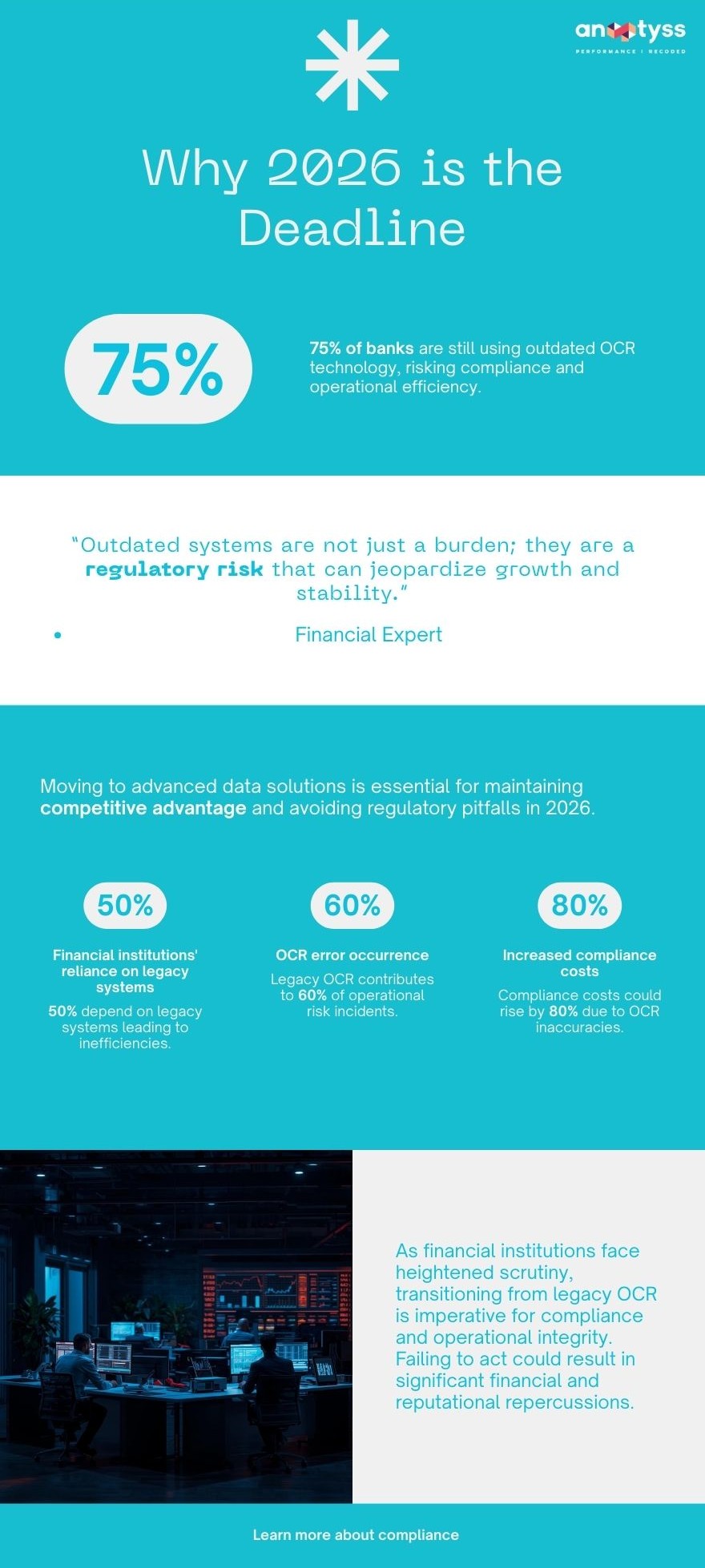
Why is 2026 the Deadline for Moving Legacy OCR

2026 is the year where technological debt becomes a regulatory liability—primarily for two reasons.

Infographic - Why 2026 is the Deadline - 1
Infographic – Why 2026 is the Deadline – 1

1. Basel IV and Capital Requirements

New capital standards taking effect on April 1, 2026 tie operational risk capital charges to historical loss events.

OCR-driven errors—misinterpreting covenants, missing collateral details, failing to extract financial ratios—create data risk that directly raises operational risk capital.

A loan file misread by OCR may force the bank to apply higher risk weights, directly cutting into ROE.

2. Heightened Supervisory Expectations for Data Accuracy

Regulators are intensifying expectations around:

Legacy OCR cannot meet these standards. It produces unverified text, not structured, trusted data.

As lenders move into automated credit decisioning, digital loan monitoring, and real-time covenant intelligence, OCR becomes a blocker—not an enabler.

Agentic AI and Intelligent Document Processing (IDP)

To move beyond the paperless illusion, financial institutions must transition to Intelligent Document Processing (IDP) powered by Generative AI and “Agentic” workflows.

Unlike OCR, IDP combines computer vision, Natural Language Processing (NLP), and Machine Learning to understand documents contextually. It does not rely on brittle templates. Instead, it utilizes AI agents—specialized digital workers—that can classify documents, extract fields, and even perform logical reasoning.

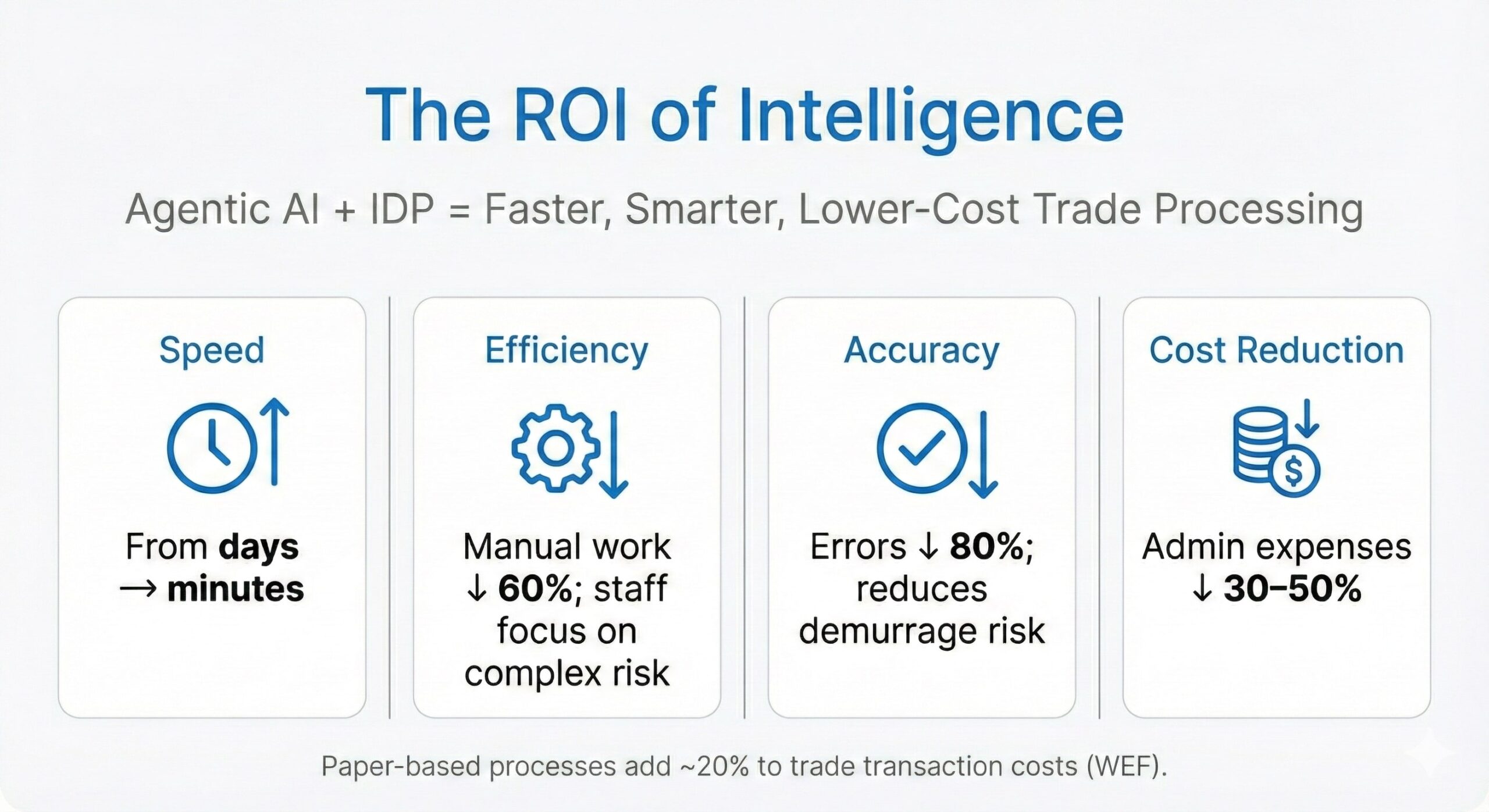
ROI of Intelligence

For example, in a covenant compliance process, an AI agent can automatically —

This shift from recognition to reasoning unlocks true digital lending.

Conclusion

The commercial lending industry is experiencing a digital paradox. While institutions display modern portals and workflow tools, the underlying engine remains paper-bound and error-prone.

For years, OCR acted as the bridge between paper and digital—but that bridge is now collapsing. The Paperless Illusion can no longer meet Basel IV expectations, supervisory accuracy requirements, or modern data governance standards.

CovenAce changes the game.
By combining AI-driven reasoning with human-in-the-loop oversight, it transforms unstructured loan documents, covenants, and financial statements into trusted, regulatory-ready data assets.
It enables faster extraction, near-perfect accuracy, automated discrepancy detection, and complete audit trail transparency.

This is the future of commercial lending data intelligence—and it starts by moving beyond OCR.


How Generative AI and Agentic Systems Improve Credit Risk and Compliance in Financial Services

Artificial intelligence (AI) is transforming banking and financial services by automating credit risk analytics—evaluating borrower default likelihood—and compliance processes like anti-money laundering (AML) and know-your-customer (KYC). Currently, AI integrates real-time data for precise scoring and regulatory adherence, potentially adding $340 billion in annual value globally. In the US, mature ecosystems drive widespread adoption; in India, regulatory frameworks like RBI’s FREE-AI ensure ethical implementation.

In this blog, we discuss how AI is reshaping two critical functions in banking—credit risk analytics and compliance. We explore the core use cases of AI, including predictive modeling, real-time monitoring, underwriting automation, and agentic systems, along with its expanding role in AML and KYC. The blog also examines key risks associated with AI adoption, mitigation strategies, and how managed services providers help financial institutions implement AI responsibly and at scale.

How AI Helps in Credit Risk Analytics


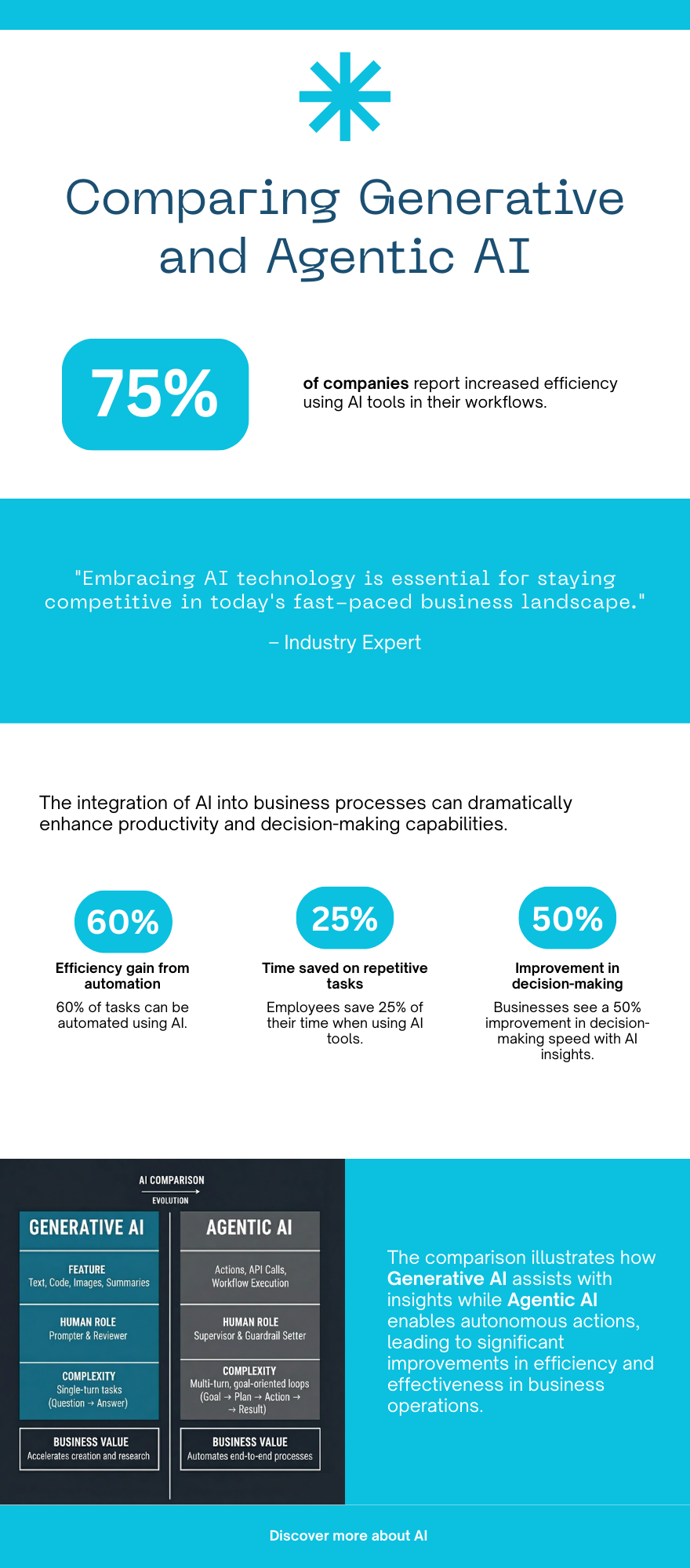
Credit risk analytics involve assessing the likelihood of borrower defaults using historical and real-time data. AI enhances credit risk analytics through machine learning (ML), generative AI (GenAI), and agentic systems—autonomous agents that perform multi-step tasks. Below are some key applications of AI when it comes to credit risk analytics.

Infographic - Comparing Generative and Agentic AI

AI in AML and KYC Compliance

AI is equally transformative in compliance processes. NLP and pattern recognition help scan large volumes of transactions, news, and external data sources to detect suspicious behavior that may indicate money laundering.

RPA (Robotic Process Automation) plus computer vision, OCR, and face recognition automate identity verification. AI also verifies proofs, cross-checks data sources, and accelerates onboarding while reducing human error.

For regulatory reporting and audit trails, explainable AI (XAI) systems can log decisions, inputs, and outputs. This supports compliance with requirements for traceability, explainability, and accountability. AI also helps detect identity fraud, transaction laundering, politically exposed persons (PEPs), and sanctions violations in real time.

AI Risks, Mitigation Strategies, and the Role of Managed Services

While AI offers huge potential, financial institutions must address several risks to ensure responsible adoption in credit risk analytics and compliance.

Risk Area Key Challenges Mitigation Strategies Where Managed Services Help
Algorithmic Bias & Fairness Models may unintentionally reinforce socio-economic or demographic biases. Regular bias testing, diverse training data, fairness monitoring. Providers bring pre-validated models, fairness audits, and continuous bias monitoring.
Explainability & Transparency AI “black-box” models can be hard to interpret for regulators and customers. Use explainable AI (XAI), documentation, interpretability tools. Providers deliver governance frameworks and ensure compliance with explainability standards.
Data Quality & Privacy Incomplete, noisy, or non-compliant data can lead to flawed outcomes. Robust governance, encryption, anonymization, quality pipelines. Providers offer enterprise-grade data management, secure storage, and compliance with GDPR/DPDP/RBI norms.
Model Risk & Overfitting Overreliance on historical data may fail under new conditions (e.g., recessions). Stress testing, scenario analysis, regular re-training. Providers run continuous validation, backtesting, and recalibration.
Operational & Cyber Risk AI systems vulnerable to downtime, breaches, or adversarial attacks. Resilient infrastructure, cybersecurity protocols, failover mechanisms. Providers ensure 24×7 monitoring, cybersecurity expertise, and scalable cloud/on-prem deployments.
Regulatory & Compliance Burden Evolving frameworks (RBI’s FREE-AI, Basel III, AMLD, etc.) increase compliance pressure. Strong governance, audit trails, compliance dashboards. Providers maintain compliance templates, automated reporting, and regulator-ready audits.

To navigate these risks effectively, many banks are turning to managed services providers for banking and financial services, who bring decades of domain expertise, scalable infrastructure, and pre-built governance frameworks. This allows institutions to accelerate AI adoption while ensuring compliance and reducing operational complexity.

Conclusion

AI is reshaping credit risk analytics and compliance in banking and financial services in profound ways. For banking institutions, the way forward is to adopt AI with intention and responsibility.

Those that invest early in robust infrastructure, governance, data quality, and ethical frameworks will gain competitive advantage (efficiency, lower risk, greater customer trust) and face lower regulatory friction. By partnering with a managed services provider, banks can accelerate transformation while ensuring compliance. Managed services bring domain expertise, scalable infrastructure, and governance frameworks that reduce time-to-value. They also provide continuous monitoring, model validation, and risk management—ensuring AI deployments remain ethical, auditable, and regulator-ready.

Why Traditional and Crypto Financial Crime Require a Unified AI Defense

For Chief Compliance Officers and risk decision-makers, the integrity of the financial system faces a critical challenge: the convergence of traditional economic crime with high-velocity digital asset offenses. Sophisticated criminal actors are moving illicit proceeds fluidly between fiat and crypto domains, necessitating a single, unified monitoring approach that legacy systems were not built to provide.

The inadequacy of fragmented Anti-Money Laundering (AML) defenses is clear with annual AML compliance costs exceeding $60 billion in the U.S. and Canada. And this is only a marginal fraction of illicit flows intercepted.

In this blog, we covered how traditional and crypto financial crime are converging, why legacy systems fall short, and how a unified AI-driven defense can transform compliance programs.

Convergence of Fiat and Digital Crime

The traditional financial institution faces threats that are not only scaling in volume but are also advancing in complexity due to the malicious use of technology.

How Traditional Financial Crime Is Evolving

Despite the focus on emerging digital technologies, traditional forms of financial crime remain potent and persistent.

Criminals are actively exploiting systemic vulnerabilities through technological means:

The Challenge of Digital Asset Laundering

The digital asset space introduces high-speed complexity and a significant theater for illicit financial activity.

The scale of this threat is immense, with projections for 2024 indicating that illicit on-chain transaction volume will meet or exceed $51 billion. Criminal methodologies are specifically designed to break the inherent traceability of public blockchains. These sophisticated laundering typologies include —

Why Legacy AML Systems Are No Match for Modern Threats

The core failure point in modern compliance stems from the sector’s historical reliance on rule-based systems. These systems employ static thresholds (e.g., “flag all transactions over X amount”) and are fundamentally unsuited for the volume, velocity, and evolving typologies of modern financial crime.

This traditional approach generates the pervasive “false positive deluge,” where industry estimates suggest 90% to 95% of alerts are benign activities incorrectly flagged as suspicious. This noise:

This inadequacy necessitates a shift from Know Your Customer (KYC)—a static snapshot of identity that criminals easily forge—to Know Your Transaction (KYT), which continuously monitors and validates the dynamic behavior of funds in real-time.

Implementing the Unified AI-Driven AML Defense

To address the shortcomings of rule-based systems and effectively monitor the convergence of threats, financial institutions must deploy a cohesive, AI-driven framework.

An effective AI defense uses a suite of Machine Learning (ML) techniques to achieve holistic risk coverage:

The Modern Compliance Architecture Needed for AI Success

Successful AI implementation requires modern infrastructure designed for integration and augmentation rather than a costly “rip and replace” of legacy systems. Key architectural components include:

Conclusion

The investment in AI delivers measurable returns, substantiated by the results achieved by early adopters. Anaptyss’s solutions have delivered demonstrable outcomes for financial institutions, translating directly into compliance robustness and operational scalability. For instance, a U.S.-based bank realized a 75% reduction in false alerts in sanctions compliance through Anaptyss’ proprietary AML solution, ALFA. Similarly, a global crypto exchange achieved 98% accuracy in clearing 60,000 KYT alerts, demonstrating the power of precise, AI-driven digital asset monitoring.

The future of financial crime compliance is a sophisticated human-machine partnership. AI manages the massive volume of data, detects hidden patterns, and provides rich context. This empowers human investigators to focus their expertise on the most complex and critical threats, ensuring compliance programs are effective, efficient, and fully audit-ready.

Ready to strengthen your compliance capabilities with AI-driven solutions?

Beyond Tokenized Deposits – Why Managed Services Are the Most Effective Strategy for Regional Banks

The financial threat posed by Payment Stablecoins (PSCs) is an imminent strategic crisis poised to accelerate sharply by 2026. As per reports, over $1 trillion in traditional bank deposits are at risk of migrating to stablecoins by 2030.

This outflow affects accounts that handle frequent transactions—like business operating accounts, regular customer balances, and cross-border payments—cutting off your bank from valuable transaction data that’s crucial for things like assessing credit and detecting fraud.

The GENIUS Act, signed into law on July 18, 2025, provides the necessary regulatory clarity to legitimize this asset class, accelerating institutional adoption and competition.

In this blog, we explore why managed services offer the most practical and powerful strategy for community and regional banks to protect deposits, retain data-driven insights, and ensure long-term relevance in a rapidly evolving financial landscape.

1. The Prohibitive Cost and Risk of a Proprietary Build

While building a proprietary stablecoin platform offers the highest degree of control, this strategy is practically unfeasible for all but the largest Tier 1 financial institutions. The capital, time, and specialized talent required create a barrier to entry that most regional banks simply cannot overcome.

For instance, a proprietary build would typically require 18 to 36 months of development, regulatory approval, and integration. In a market where competition is intensifying rapidly due to regulatory clarity, a multi-year delay is tantamount to surrender.

Also, developing such a platform from scratch demands immense upfront investment in technology, specialized blockchain engineers, and smart contract auditors. Furthermore, the bank takes on Sole Responsibility for compliance and the inherent High Execution Risk of such a complex, greenfield project.

The GENIUS Act, for example, imposes bank-like compliance burdens (BSA/AML/KYC) on all stablecoin issuers. Building this compliance infrastructure in-house, from transaction monitoring to real-time reserve management, is a massive and continuous undertaking.

2. Tokenized Deposits

Tokenized deposits—blockchain-based representations of traditional deposits—are a useful defensive measure for banks to gain internal efficiency and allow for instant settlement within the bank. However, they are fundamentally insufficient as a competitive response to the broader stablecoin disruption.

The critical flaw lies in their lack of interoperability.

Tokenized deposits miss the main advantage of the digital economy — the ability to move money seamlessly across networks. They are valuable for modernizing internal processes, but they are not a winning strategy for competing in the open digital asset ecosystem.

3. The Managed Services Advantage – Partnering for Speed, Scale, and Resilience

For the vast majority of U.S. banks, the critical strategic question distills down to how to partner or how to choose right managed services partner, not whether to partner.

Managed services—through PSC-as-a-Service or a Banking Consortium—help banks overcome major barriers like cost, technology, and complexity, enabling them to compete more effectively.

A. PSC-as-a-Service (PSC-aaS) for Accelerating Innovation

The PSC-aaS model is a turnkey solution that allows banks to launch a unique, branded digital currency with minimal upfront commitment. This approach transforms a massive capital expenditure project into a more predictable operational expense. It boasts a Low upfront capital expenditure and a rapid Time-to-Market of just 3-6 months.

A specialist provider handles the operational and technical heavy lifting, including smart contract deployment, secure wallet infrastructure, and real-time reserve management.

Crucially, the PSC-aaS provider often integrates a compliance engine that manages the rigorous, bank-like requirements of the GENIUS Act, including KYC/AML workflows and automated regulatory reporting.

This reframes the dynamic from rivalry to collaboration, allowing the bank to focus on its core strengths—brand trust, distribution, and customer relationships—while instantly acquiring the necessary innovative technology.

B. The Banking Consortium Model

Joining a consortium allows institutions to pool resources and mutualize risk, achieving scale that would be impossible individually.

Member banks jointly fund the development, maintenance, and compliance of the platform, significantly reducing the financial burden on any single institution. A consortium creates a common, interoperable settlement asset that is trusted by all members, establishing a shared liquidity pool and enabling instant, low-cost payments across the entire network. This directly counters the network effects enjoyed by large, non-bank-issued stablecoins.

This approach is already being implemented. Examples include the USDF Consortium in the U.S., formed by FDIC-insured community and regional banks to manage a shared tokenized deposit, and collaborative ventures among major European banks to launch MiCAR-compliant stablecoins. This functions as a modern revival of the traditional clearing house for the digital age.

Conclusion

Regardless of which managed services model you choose—partnership or consortium—your success ultimately depends on a solid foundation of real-time data visibility.

In an era of 24/7, real-time payments, traditional batch-based monitoring is no longer sufficient. A reconciliation backlog is not just an operational inconvenience—it’s a critical risk in a T+0 environment, signaling an inability to know your true cash and reserve position at any moment.

For regional banks, strategic partnering is no longer optional. It is the fastest, safest, and most capital-efficient path to maintaining relevance and competitiveness in the emerging $1 trillion stablecoin economy.

At Anaptyss, we help financial institutions build that readiness through digitally enabled managed services—combining domain expertise, intelligent automation, and real-time analytics. Our solutions empower banks to modernize operations, strengthen compliance, and achieve sustainable growth in a rapidly evolving digital landscape.

DKO™
Life@Anaptyss
Careers