Navigating Evolving Regulatory Challenges with Basel III AML KYC and Cross Border Compliance

The regulatory landscape for financial institutions has become increasingly intricate and pivotal to operational success. Banks and financial services firms are confronted with a pivotal juncture, marked by postponed Basel III implementations, advancing anti-money laundering (AML) mandates, and disparate cross-border compliance frameworks that are fundamentally altering business practices.

For compliance officers, risk managers, and senior executives, the focus has shifted beyond mere adherence to regulatory checklists. It now encompasses embedding resilience into core operations while preserving a competitive edge in an environment characterized by persistent regulatory flux.

Key Challenges of Basel III Implementation

The implementation of Basel III has shifted far from initial expectations. What was meant to be the final phase of post-financial crisis reforms has turned into a long, drawn-out negotiation, creating more confusion than clarity.

Data highlights this complexity. In the U.S., regulators are rethinking proposals that would have raised capital requirements for big banks by 16–21%. The Federal Reserve has softened its stance after strong industry feedback, but this shift makes it harder for banks to plan while rules continue to change.

A key challenge is the growing global fragmentation. While U.S. regulators refine their approach, authorities in Europe and the U.K. have delayed their timelines, citing uncertainty around U.S. progress. This has raised concerns among experts that standards may be weakened across regions in the name of competitiveness.

Institutions navigating this terrain must balance immediate preparations with adaptability.

According to a survey by Fitch Solutions, 40% of banking professionals identify data quality as their primary Basel III obstacle, while 32% are proactively adjusting business models in response to anticipated reforms that may ultimately differ from original designs.

The operational impact is significant. Banks need to upgrade risk management systems to support the Standardized Measurement Approach, while also keeping room for future amendments. This requires major investment in time, resources, and strategic planning.

For a deeper dive into operational risk modelling within Basel III frameworks, explore our white paper on operational risk modelling in banking.”

AML and KYC Compliance with Advanced Technology

While Basel III remains a moving target, AML and know-your-customer (KYC) compliance is advancing rapidly, giving banks and financial institutions new opportunities to leverage technology effectively.

The Financial Action Task Force has strengthened its rules on beneficial ownership under Recommendation 24 that extend beyond routine obligations and pushes for enhanced transparency. This shift encourages institutions to treat compliance not just as a cost, but as a potential strategic advantage.

In transaction monitoring, for instance, AI-driven systems have demonstrated reductions in false positives by up to 70% and improvements in detection efficacy by 40%. These advancements bolster compliance and enhance operational efficiency, yielding tangible financial benefits.

AI-driven transaction monitoring is already showing results—cutting false positives by up to 70% and improving detection rates by 40%. Similarly, digital KYC is reshaping customer onboarding. By 2025, more than 70% of onboarding is expected to be automated, using tools like biometric checks and advanced analytics. This speeds up customer integration, improves user experience, and reduces manual effort. Leading banks, for example, have cut false alerts by 75% using our proprietary AML compliance solution.

The RegTech sector is growing fast, projected to surpass $22 billion by mid-2025 with a 23.5% annual growth rate, proving that focused compliance investments can deliver strong returns.

Still, regional differences remain a challenge. Europe emphasizes risk-based frameworks, the U.S. focuses heavily on sanctions and international data exchange, and Asia-Pacific is advancing digital identity protocols alongside stricter ownership rules.

The best approach is to build adaptable compliance frameworks that can handle these differences without needing constant redesign.

Cross Border Compliance and Global Integration

Cross-border operations have always been complex, and this year, regulatory differences across regions have made compliance even more challenging for banks and financial institutions.

Without uniform global rules, multinational banks face a patchwork of regulations covering licensing, product distribution, and data privacy. For example, an investment product allowed in London might not meet New York rules, and GDPR-compliant data practices in Europe could conflict with emerging privacy laws in Asia.

Technology is key to managing this complexity. Leading institutions are using API-based systems to embed compliance directly into onboarding, advisory, and trading processes. Real-time monitoring with Key Risk Indicators (KRIs) helps banks track market risks while staying compliant.

Thus, the ISO 20022 standard is becoming important for cross-border payments. It provides richer data, improves transparency, strengthens compliance, and makes systems work better together. For banks handling large volumes of international transactions, adopting this standard not only meets regulations but also improves efficiency and customer experience.

European Union AML Directive and Its Impact

The European Union’s AML package, effective from July 2025, constitutes a landmark evolution in regulatory oversight. The Sixth Anti-Money Laundering Directive (AMLD6) transcends incremental updates, redefining AML governance across the EU.

AMLD6 now applies not only to banks but also to crypto-asset providers, crowdfunding platforms, and even organizations like football clubs. Customer Due Diligence (CDD) thresholds have been lowered from €15,000 to €10,000, and crypto transactions over €1,000 are now closely monitored.

A key feature is the creation of the European AML Authority (AMLA) in Frankfurt. AMLA provides unified EU-level supervision for cross-border operations, replacing the previous 27 separate national regimes. It sets technical standards and harmonizes regulatory oversight, simplifying compliance for institutions operating in multiple countries.

The directive’s implementation will continue until 2029, giving banks a phased period to adjust. Compliance teams need to manage parallel initiatives while keeping day-to-day operations running smoothly. New risks, such as those from crypto transactions, require updated approaches, as detailed in our white paper on mitigating financial crime risks in the age of cryptocurrency and related success story on crypto KYT alert clearance.

Building Future Ready Compliance Strategies

In today’s constantly changing regulatory environment, banks and financial institutions need compliance frameworks that can evolve rather than remain fixed.

Top-performing institutions are using this opportunity to modernize their compliance systems. By investing in RegTech, they can automate routine processes, monitor activity in real time, and maintain detailed audit records that meet multiple regulatory requirements simultaneously.

Data quality is critical. Whether for Basel III calculations or verifying beneficial ownership, banks need strong, reliable data systems that work across different regulations without requiring constant manual intervention.

Collaboration across departments is essential. Compliance can no longer operate in isolation—risk, technology, operations, and business teams must work together to develop solutions that meet regulatory standards while supporting strategic business goals.

Leading institutions view compliance not just as a cost, but as a strategic advantage. Efficient onboarding, better risk management, and streamlined processes help banks stay compliant while improving client experience and maintaining a competitive edge.

Conclusion

Current regulations are complex and constantly changing, but they also create opportunities for banks and financial institutions that adapt strategically.

By investing in resilient, technology-driven compliance systems, institutions can turn potential risks into strengths. This approach not only ensures ongoing regulatory compliance but also supports operational excellence, better client experiences, and a strong position in the market.


How Predictive Analytics Helps Manage Loan Covenant Risk

Traditional methods for covenant monitoring are becoming outdated as loan terms grow more flexible, weakening the early warnings lenders rely on. This article explains the current risk environment and how data analytics and AI can help shift from a reactive to a proactive approach. For banks, this change is not just about improving efficiency—it is crucial for long-term success.

Why Traditional Monitoring is No Longer Enough

Loan covenants are essential tools for managing risk. They serve as an early warning system, indicating a borrower’s financial trouble well before a missed payment. This gives lenders time to take preventative action.

However, these safeguards are becoming less effective. “Covenant-lite” loans, which now make up over 80% of the U.S. leveraged loan market, often lack strict financial tests. This allows a borrower’s financial condition to worsen significantly without triggering an alert. You can learn more in our white paper: Credit Portfolio Management In an Era of Fluctuating Interest Rates.

Adding to this problem, modern loan agreements have, on average, half the number of financial covenants they did in the late 1990s. This gives borrowers more flexibility but can create a false sense of security for lenders, as hidden risks may grow undetected.

Facing New Risks in a Complex World

Weaker loan covenants are especially concerning in today’s unstable global environment. Credit risk is now often caused by a combination of related economic, geopolitical, and supply chain issues. A loan covenant breach is typically the result of several pressures building over time, not a single event. Explore this further in our white paper: Future of Risk Management : Internal Controls, Advanced Risk Analytics.

For example, rising interest rates increase debt service costs for borrowers. At the same time, global events can disrupt supply chains, and inflation can drive up operating expenses. These combined pressures strain a company’s finances, making traditional risk models that look at each factor separately less effective.

Shifting to Proactive Analytics

Because of weaker covenants and a more volatile world, financial institutions must update their approach to credit risk. It is necessary to move from a reactive method, which only identifies problems after they occur, to a proactive, data-driven strategy that anticipates risk.

Traditional monitoring relies on quarterly financial statements, which causes delays. The manual process is slow and expensive. Advanced data analytics offers a better solution. By using an automated system, institutions can reduce operational costs by up to 70% and speed up processing times by over 80%. Key benefits include:

  • Better Risk Assessment — Predictive models accurately identify potential defaulters earlier.
  • Proactive Portfolio Management — Analytics helps lenders test their portfolios against different economic situations to make smarter decisions.
  • Greater Efficiency — Automation allows skilled employees to focus on strategic analysis instead of manual tasks.

Key Technologies for Managing Risk

A proactive strategy is powered by several analytical tools. Predictive modeling is central to this approach. It uses machine learning (ML) to analyze historical data and identify patterns that lead to covenant breaches.

Real-time monitoring is also essential, gathering data from multiple sources to track performance continuously. In addition, technologies like sentiment analysis review news and social media to provide early warnings of new risks.

AI will continue to transform the field. ML already automates the extraction of covenant data from legal documents, reducing manual review time by over 90%. Generative AI is also becoming a valuable tool for credit professionals. (Learn about the technology in our white paper: Reimagining Banking Functions: How Generative and Agentic AI are Shaping the Future).

How to Get Started

Adopting these new and emerging technologies requires a clear, strategic plan. Here are four key steps:

  1. Review Your Current Processes
    Analyze your existing monitoring methods, data systems, and team skills to identify areas for improvement.
  2. Develop an AI Strategy
    Create a phased plan for implementing AI, focusing first on the areas with the biggest impact. For a deeper look, see our white paper: A Strategic Approach to Digital-Led Transformation in Financial Services.
  3. Create a Unified Data Platform
    Combine data from different systems into one central source to support your analytics efforts.
  4. Support Your Team
    The goal is to use AI to enhance the skills of your employees, not replace them. Provide training to help your team work effectively with new technologies.

For institutions ready to implement AI-driven monitoring, platforms like CovenAce™ provide an end-to-end solution. It automates covenant extraction, ensures regulatory compliance, reduces manual effort by up to 70%, and accelerates processing by 80% or more. By integrating CovenAce™, Relationship Managers, Portfolio Managers, and Compliance Officers can focus on strategic decision-making, governance, and revenue generation rather than manual monitoring.

Conclusion

The way banks and financial institutions manage credit risk has changed. Relying on legacy, reactive monitoring is no longer effective in today’s high-risk and dynamic environment.

The best path forward is for financial institutions to adopt a proactive and data-driven approach. For instance, by using predictive analytics and AI, lenders can anticipate and reduce risk before it becomes a problem. This not only protects their portfolios but also improves efficiency and creates a strategic advantage.

As financial institutions make this important change, Anaptyss helps them build and implement the advanced analytics solutions needed to succeed.


Why Traditional Banks Are Positioned to Dominate the Stablecoin Market

Traditional banks face a competitive challenge as Fintech companies capture positions in the stablecoin market. The stablecoin market crossed the $200 billion mark for the first time ever in 2024, currently at $235 billion as of June 2025 – with projections suggesting the stablecoin market could reach $400 billion next year. While Fintechs have established early positions, this year represents an important opportunity for banks to use their regulatory advantages, infrastructure, and business relationships to compete effectively in the stablecoin market.

Fintechs Gained Early Market Share While Banks Waited

The competitive landscape shows the impact of banking’s careful approach to digital assets. Circle’s USD Coin (USDC) witnessed remarkable growth in 2024, with its circulation increasing by 78% year-over-year, while traditional banks remained mostly focused on pilot programs. Tether (USDT) has a market capitalization of approximately 116 billion US dollars, accounting for about 69.6% of the total stablecoin market despite ongoing transparency concerns that would be problematic for regulated financial institutions.

PayPal launched PYUSD in August 2023, and it has rapidly gained traction, with a market capitalization of $699 million, showing how consumer-focused platforms can scale digital asset capabilities. The company used its large user base to promote stablecoin usage, demonstrating how payment platforms can monetize digital asset features.

Fintech advantages include regulatory flexibility, with companies like Circle operating across multiple jurisdictions while banks worked through complex internal compliance processes. These players built blockchain-native systems from the ground up, avoiding legacy system integration challenges that have slowed traditional institutions.

However, Fintech weaknesses are becoming clear as the market develops. Regulatory oversight is increasing, capital requirements are growing, and business clients are demanding institutional-grade compliance that many Fintechs struggle to provide. These challenges create opportunities for banking’s response.

Banks Have Important Competitive Advantages in the Regulatory Era

The US Senate Banking Committee passed the Guiding and Establishing National Innovation for US Stablecoins Act of 2025 or “GENIUS Act,” which changes competitive dynamics in favor of traditional financial institutions. While Fintech face complex multi-regulatory approval processes, banks can use existing relationships with the OCC, FDIC, and Federal Reserve to speed market entry through established supervisory channels.

Regulatory compliance as a competitive strength represents banking’s main advantage. The GENIUS Act sets forth requirements for 1:1 backing with high-quality liquid assets, monthly public attestations, and segregated customer funds, which favor institutions with strong balance sheets and existing treasury operations. Fintech must build these capabilities from scratch while banks already have the infrastructure.

Business trust relationships provide banks with direct access to corporate treasury decision-makers that Fintechs cannot easily replicate. CFOs and treasurers have long-standing relationships with their banking partners, creating natural pathways for stablecoin adoption that bypass Fintech sales processes.

Capital advantages become important as the market scales. Banks can handle the operational costs of regulatory compliance while maintaining competitive pricing, whereas Fintechs must choose between profitability and market share. This dynamic will strengthen as regulatory requirements increase, and competition affects basic stablecoin services.

Infrastructure depth enables banks to offer complete solutions rather than single products. While Fintechs provide stablecoin issuance, banks can integrate these capabilities with existing commercial lending, trade finance, foreign exchange, and cash management services to create valuable, integrated client relationships.

Real World Examples

JPMorgan’s JPM Coin provides a model for how traditional banks can succeed in stablecoin markets. JPMorgan’s blockchain business has executed over $1.5 trillion of transactions such as intraday repos and cross-border payments since its inception in 2020, processing an average of more than $2 billion a day. JPMorgan Chase & Co.’s digital token JPM Coin currently handles about $1 billion daily and could be handling as much as $10 billion in daily transactions in the next year or two.

Cross-Border Payments

Cross-border payments represent the primary area where banks can effectively compete against Fintech competitors. Cross-border payments flows are projected to reach $290 trillion by 2030, and traditional correspondent banking relationships, regulatory expertise across multiple jurisdictions, and existing business client bases create natural advantages in this market.

  1. Cost advantages compound over time as banks spread regulatory compliance costs across larger transaction volumes. While Fintechs offer initially lower fees, banks can achieve better unit economics through operational scale and integrated service delivery that includes foreign exchange, trade finance, and working capital solutions.
    Speed differentiation becomes less relevant as both banks and Fintechs achieve near-instant settlement through blockchain technology. However, banks can offer complete settlement solutions that include regulatory reporting, tax optimization, and risk management services that standalone Fintech platforms cannot provide.
  2. Business integration favors banks with existing ERP system connections, treasury management platforms, and accounting software integrations. Corporate clients prefer unified solutions rather than managing multiple Fintech relationships for different aspects of cross-border payment processes.

Treasury Management

Corporate treasury integration represents banking’s strongest competitive position against Fintech players. Latin America and Sub-Saharan Africa are the fastest growing regions for retail and professional-sized stablecoin transfers, with year-over-year (YoY) growth exceeding 40%, but these businesses rely on banks for broader treasury management, creating natural expansion opportunities.

  1. Programmable Payment Capabilities
    Programmable payments capabilities enable banks to offer sophisticated automation that goes beyond simple transaction processing. Automated internal transfers, conditional payments triggered by business events, and integrated cash management solutions create value propositions that standalone stablecoin providers cannot match.
  2. Working Capital Optimization
    Working capital optimization through stablecoin integration provides measurable ROI for corporate clients. Banks can offer complete solutions that include supply chain financing, automated receivables management, and optimized float management through blockchain-based settlement systems.
  3. Risk Management
    Banks’ can leverage existing frameworks for credit assessment, operational risk monitoring, and regulatory compliance. Corporate treasurers value integrated risk management over fragmented Fintech solutions that require separate oversight and control processes.

Conclusion

The stablecoin market is entering a decisive phase. Fintechs gained early market share by moving quickly, but regulatory oversight, capital requirements, and rising client expectations are shifting the advantage back to regulated institutions. JPMorgan’s success with JPM Coin shows how quickly a well-positioned institution can scale when it moves decisively. The next 12–18 months will decide whether banks reclaim this space or allow Fintechs to entrench themselves permanently. For banks, the choice is to act now, define the standards, capture high-value client relationships, and secure relevance in the digital asset era.

Manual vs AI-Powered Challenger Model Development in Banking

In the high-stakes world of banking, challenger models serve as a critical check on the primary models used for credit risk, pricing, and capital allocation. These secondary models are developed independently, which help validate assumptions, benchmark performance, and comply with regulatory expectations, such as the Fed’s SR 11-7 and ECB’s TRIM.

Traditionally, developing challenger models has been a labor-intensive task. Usually requires weeks or months of effort from quantitative teams. With the rise of AI-powered model development platforms, this paradigm is shifting making banks rethink how they build, validate, and document challenger models.

Here’s a breakdown of how AI is transforming this core function—and why it might be time to leave manual challenger modeling behind.

The Manual Model Development Bottleneck

Manual development of challenger models usually follows a rigid, sequential process—beginning with the manual gathering and preprocessing of data from disparate sources, followed by handcrafted feature engineering based on analyst expertise. This is often limited to familiar modeling techniques, requires intensive back-testing and validation by separate teams, and ends with manually compiled documentation for audit and regulatory review.

Each of these steps consumes decent amount of time and specialized talent. Even modest model enhancements can take weeks to deploy. And with the complexity of AI/ML models growing, traditional validation methods struggle to keep up—further slowing innovation and operational efficiency.

The Rise of AI-Powered Challenger Model Development

AI and AutoML platforms are transforming challenger model development by automating nearly every stage of the process. This is helping in drastically reducing time-to-value and improving performance.

For instance, data processing—one of the major bottleneck—is now powered by intelligent agents that are capable of ingesting, cleaning, and harmonizing vast datasets from both structured and unstructured internal and external sources. This shift significantly reduces manual effort and minimizes data quality risks.

Similarly, feature selection, traditionally driven by analyst intuition, is now enhanced by platforms that apply statistical, machine learning, and domain-aware techniques. These systems accelerate the identification of relevant variables and reveal complex, non-linear relationships often missed in manual workflows.

Model training has also become significantly more scalable. Rather than relying on a narrow set of familiar techniques, AI-powered systems can evaluate thousands of algorithms and hyperparameter configurations in parallel. This potentially saves weeks of modeling work into hours and improves model performance. Built-in automation enables robust stress testing, sensitivity analysis, fairness checks, and benchmarking—aligned with regulatory mandates, such as SR 11-7 and internal model governance policies.

Most importantly, the documentation. A historically tedious and error-prone step, documentation can now be automatically generated. Modern AI platforms produce audit-ready reports with full traceability of inputs, assumptions, and modeling decisions—streamlining regulatory reviews and internal sign-offs.

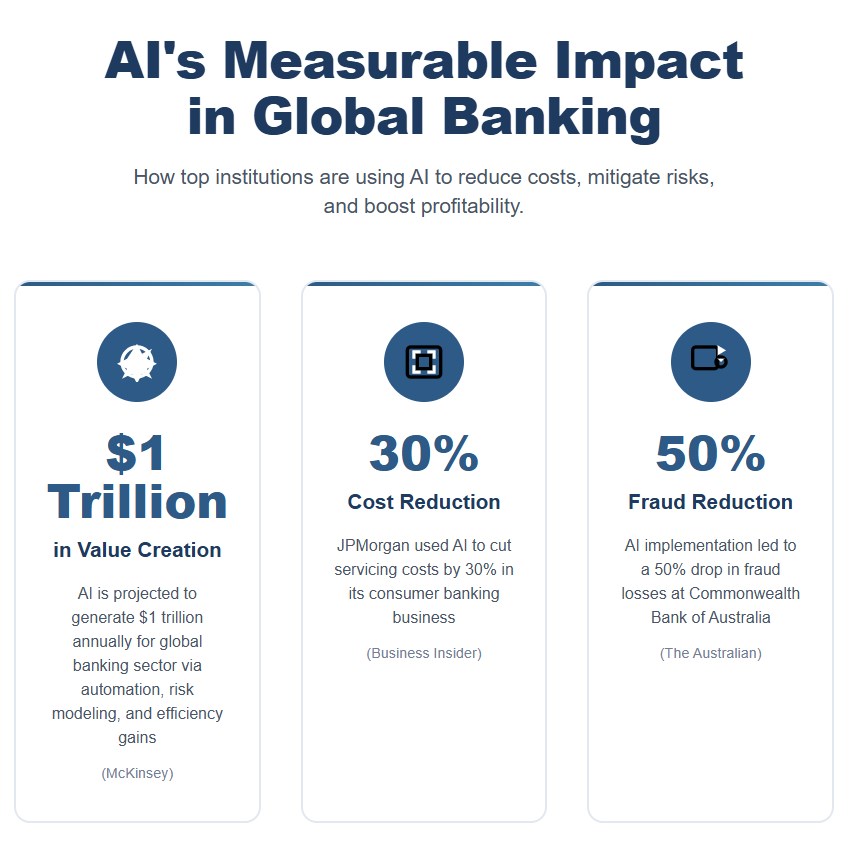
AI Impact in Global banking

For institutions exploring this shift, our Model Risk Management services at Anaptyss offer an AI-first approach to challenger development and validation.

Comparing Manual vs AI-Powered Development

Dimension Manual Approach AI-Powered Approach
Time to Develop 8–12 weeks 3–5 days
People Involved 4–6 SMEs, quants, validators 1–2 data scientists with platform support
Model Quality Dependent on limited techniques Broad exploration of advanced algorithms
Compliance Manual, error-prone documentation Auto-generated, regulator-ready documentation
Adaptability Difficult to scale across asset classes or markets Easily scalable and repeatable across functions

Agentic AI in Model Risk

While current AI tools automate many steps, agentic AI introduces the concept of autonomous, task-specific agents coordinating model development with minimal human intervention. Recent Nasscom thought piece on agentic AI in MRM highlight how these technologies streamline Model Risk Management in banking.

Though still emerging, these systems represent a step-change toward self-directing model ecosystems that are dynamic, auditable, and aligned with enterprise MRM strategy. For a deeper dive into agentic AI in financial services, explore our recent thought leadership.

Conclusion

The gap between manual and AI-powered challenger model development is widening. While traditional approaches offer control, they lack the speed, adaptability, and scalability required in modern banking. AI-powered systems—especially those incorporating agentic frameworks—offer a path to faster innovation, more robust governance, and improved business performance.

As regulatory expectations evolve and model complexity increases, institutions that embrace AI-driven challenger modeling will be better equipped to manage risk proactively and gain a competitive edge.

Anaptyss enables banks and financial institutions to modernize their Model Risk Management (MRM) function by integrating AI-driven automation across the model lifecycle. From challenger development to validation and documentation, we help reduce manual effort, ensure compliance, and accelerate decision-making.

SR 11-7 Compliance — Best Practices for Model Override Governance and Tracking

In the world of banking, mathematical models are the silent engines driving critical decisions, from credit approvals to fraud detection. However, these powerful engines sometimes require a human hand on the wheel. This is the realm of model overrides, a practice that, while necessary, is subject to intense regulatory scrutiny. For firms navigating the standards of SR 11-7, a robust framework for override governance is not merely good practice—it is a critical component of compliant model risk management.

While precise statistics on losses from poor override practices are often internal to institutions, the broader impact of model failures is significant. Studies indicate that inadequate data and model governance can result in billions of dollars in errors, fines, and reputational damage. For an example of how advanced validation techniques mitigate such risks, consider our case study on achieving 40% faster validation of third-party credit risk models.

This blog outlines best practices for managing model overrides, ensuring they serve as a tool for expert judgment rather than a source of hidden risks.

What is a Model Override and Why Does It Matter?

A model override involves a manual adjustment to a model’s output. For instance, a loan officer might increase a borrower’s credit line beyond the automated model’s recommendation, based on qualitative information, such as an anticipated inheritance not captured by the model.

Overrides are a double-edged sword. They enable expert judgment to address model limitations or unique circumstances that quantitative data cannot capture, such as those enhanced by real-time data in credit risk management. However, unchecked overrides can undermine model integrity, introduce bias, mask weaknesses, and create opaque decision-making processes—a key concern for regulators. To explore the broader spectrum of model risks, see our discussion on managing various model risks in financial institutions.

What SR 11-7 Demands

Regulators, through guidance like SR 11-7 and the OCC’s Comptroller’s Handbook, emphasize the need for a formal override process. Key expectations include:

  • Documenting clear policies and procedures for override use.
  • Requiring a documented rationale and justification for each override.
  • Establishing a structured approval process with tiered authority based on override significance.
  • Maintaining a centralized, auditable log of override activities.
  • Regularly analyzing override data to identify trends and inform model improvements.

For a broader understanding of regulatory compliance frameworks, refer to our guide on compliance risk management in banking.

Best-Practices for Model Override Governance

A best-practice framework transcends mere compliance, delivering strategic value. The essential pillars include:

1. Establish a Clear Governance “Rulebook”

The override policy serves as the single source of truth, defining:

  • What constitutes an override.
  • Permissible reasons for overrides (with standardized reason codes).
  • Prohibited reasons for overrides.
  • Roles and responsibilities of model owners, users, approvers, and risk management teams.

For insights into building effective governance frameworks, explore our best practices for GRC management.

2. Define Roles, Responsibilities, and Approval Hierarchies

Accountability is paramount. A clear hierarchy ensures appropriate scrutiny:

  • Level 1 (Initiator)
    A front-line user (e.g., loan officer) identifies the need for an override and provides justification.
  • Level 2 (Manager)
    A manager reviews and approves routine overrides.
  • Level 3 (Senior Management/Committee)
    High-impact or frequent overrides escalate to senior managers or a risk committee.

3. Set Intelligent Thresholds and Triggers

Data-driven thresholds help identify problematic override activity:

  • Quantitative Thresholds
    Monitor metrics like override rate (percentage of decisions overridden) or financial impact. For example, an alert may trigger if the override rate exceeds 5% in a quarter, potentially indicating model deficiencies.
  • Qualitative Triggers
    Initiate reviews for recurring override reasons or concentration with specific users or branches.

Learn how data analytics can enhance such monitoring in our blog on use cases of data analytics in commercial lending.

4. Create Robust Escalation Paths

When thresholds are breached, predefined escalation paths ensure timely action, such as:

  • Email notifications to model owners and risk management teams.
  • Mandatory reviews of the overrides causing the breach.
  • Inclusion in the next model risk committee agenda.

5.  An Auditable Override Tracking System

A centralized, auditable system (often within a GRC platform) is essential for tracking overrides. Each entry should capture:

  • A serial number for tracking.
  • The model and version overridden.
  • Original and overridden outputs.
  • Standardized reason code and detailed narrative.
  • Initiator, approver, and timestamps.
  • Financial or risk impact.
  • Outcome of the overridden decision (e.g., loan performance).

For a real-world example of technology enabling such tracking, see our case study on real-time reconciliation tracking with Power BI.

Conclusion

Effective model override governance is a strategic imperative, not just a regulatory requirement. It ensures expert judgment is applied transparently and audibly, transforming override data into a valuable asset. This approach not only meets SR 11-7 standards but also fosters better models, smarter decisions, and a robust risk culture. For a deeper exploration of these strategies, download our white paper on model risk management in financial services.

Navigating the complexities of model risk management can be challenging. Anaptyss specializes in designing tailored, compliant, and efficient solutions for financial institutions. Our team of seasoned risk management professionals brings deep regulatory expertise and practical implementation experience to help banks, credit unions, and financial services companies transform their MRM programs.

5 Capabilities Crypto Firms Need to Build for Regulatory Readiness

The digital asset ecosystem is undergoing a profound transformation. What began as a cypherpunk experiment has swelled into a multi-trillion-dollar asset class, with a global user base now exceeding 659 million, according to a 2024 report by Crypto.com. This explosive growth has propelled the industry past its nascent stage and into an institutional turning point, where long-term viability is no longer defined by innovation alone, but by the rigour of a firm’s risk and compliance framework.

Regulators globally are replacing ambiguity with action. Europe has already established a comprehensive supervisory foundation with its Markets in Crypto-Assets (MiCA) regulation, while the United States has begun charting a clearer path through the FIT21 Act and various stablecoin bills. At the same time, enforcement pressure is intensifying: the SEC, OFAC, and other U.S. agencies collected over $5 billion in crypto-related penalties in an 18-month span, underscoring a climate of zero tolerance for non-compliance.

In this high-stakes environment, crypto firms must evolve from reactive startups into mature financial institutions. This requires building enterprise-grade capabilities that not only satisfy today’s rules but also anticipate tomorrow’s. Research and regulatory commentary consistently highlight five foundational capabilities that separate market leaders from the rest.

1. Algorithmic Explainability: Transparency as a Compliance Imperative

As firms deploy AI and machine learning for AML monitoring and risk analytics, the “black box” era is over. Regulators, particularly under frameworks like the EU AI Act, demand not just accurate outcomes but transparent processes. Explainability—the ability to clearly articulate why a system flagged a user or transaction—has become a cornerstone of credibility.

Investigations show that regulators expect firms to demonstrate precisely which data points and decision rules led to an alert. Without this, auditors cannot verify compliance, and enforcement becomes likely. Explainable AI (XAI) isn’t just a technical upgrade; it is foundational to institutional trust.

2. On-Chain and Off-Chain Data Synthesis: Building a Single View of Risk

A user’s risk profile is split between two domains: the off-chain world of KYC documents, IP addresses, and bank records, and the on-chain world of wallet addresses and transaction histories. Operating without unifying these streams is akin to flying blind.

Rules like the FATF Travel Rule require firms to exchange originator and beneficiary information, which is impossible without robustly linking blockchain activity to verified identities. Industry leaders are now integrating blockchain analytics with CRM and KYC data to create holistic risk profiles. This synthesis allows precise sanctions screening, better fraud detection, and confident responses to regulators on the provenance and destination of funds.

3. Modular Compliance Architecture: Agility in a Fragmented Landscape

The regulatory mosaic is constantly shifting across jurisdictions. A rigid, monolithic compliance system is therefore a liability. Instead, leading firms are adopting modular compliance architectures—plug-and-play stacks where identity verification, monitoring, case management, and reporting can be flexibly integrated.

This approach lets firms respond quickly to new rules such as MiCA’s disclosure requirements or potential U.S. acts like CLARITY. It is also more cost-effective and scalable, enabling entry into new markets without rebuilding from scratch.

4. Embedded Compliance-by-Design: Engineering Safety into Products

The most mature firms weave compliance into their corporate DNA. “Compliance-by-design” means embedding safeguards into every stage of the product lifecycle. From onboarding, where automated controls prevent illicit activity, to smart contracts coded with preventative logic, compliance becomes a proactive shield rather than a reactive gatekeeper.

This approach minimizes errors, reduces user friction, and builds lasting trust—a decisive differentiator in an industry where credibility drives adoption and institutional capital.

5. Specialized Talent and Governance: The Human Backstop

Technology cannot replace the nuanced judgment of experienced professionals. Yet the crypto sector faces a critical shortage of compliance experts who combine regulatory, blockchain, and data analytics knowledge. Surveys indicate that more than 60% of compliance officers feel their teams are understaffed for the complexity of digital assets.

Firms that succeed invest strategically in talent and governance. This includes hiring and training multidisciplinary compliance professionals, and empowering an independent Chief Compliance Officer with direct board access and authority to implement an enterprise-wide program. Human oversight remains the ultimate safeguard, ensuring that tools and frameworks work as intended.

Beyond the Five: Emerging Pain Points

While these five capabilities form the bedrock of regulatory readiness, additional priorities are emerging:

  • Bridging Fiat and Crypto Silos: Many firms still manage fiat and digital assets in separate systems, creating blind spots at on- and off-ramps. Integrated surveillance across both domains is becoming essential.
  • Cybersecurity and Resilience: Regulators increasingly view cybersecurity, fraud prevention, and data privacy as inseparable from compliance. Robust cyber and resilience frameworks are now expected alongside AML and KYC systems.

Charting the Path to Enterprise Readiness

Navigating this complex web of technological demands and regulatory expectations requires specialized expertise. This is where a partner like Anaptyss becomes invaluable. We work with digital asset firms to accelerate institutionalization, providing domain knowledge and execution support across all five core capabilities—and beyond. From developing frameworks for algorithmic explainability and synthesizing on-/off-chain data, to building compliance-by-design products and training world-class compliance teams, Anaptyss acts as a catalyst for enterprise readiness.

The future of digital assets will be defined by firms that evolve from disruptive innovators into trusted financial institutions. Building these foundational capabilities is not just a defensive measure—it is a strategic imperative to unlock long-term enterprise value and lead the next phase of financial evolution.

7 Key Strategies to Optimize Credit Operations Workflows

The efficiency of credit operations directly impacts a bank or lending institutions’ financial health and competitive edge. As a cornerstone of financial management, credit management workflows are undergoing significant evolution, shifting from traditional manual methods to sophisticated, technology-driven approaches. This transformation is a necessity for achieving sustainable growth and enhanced customer satisfaction.

In this blog, we discussed the seven essential strategies to optimize the credit operations workflow and shared insights that move beyond basic understanding to actionable implementation. For foundational insights on credit risk frameworks, read our blog on credit risk management best practices and processes.

1. Review Current Workflow Assessment Methodologies

Before embarking on any optimization journey, it’s crucial to take a hard, analytical look at your existing workflows. This involves meticulously documenting current processes to pinpoint bottlenecks, redundancies, and areas ripe for improvement. A highly effective methodology for this is process mapping, which offers a visual representation of every step in your workflow.

Key components of a comprehensive workflow diagram include:

Visual mapping helps identify inefficiencies and fosters better collaboration among team members, even those less technical. Advanced tools like process mining and intelligence can analyze event logs from your processes to automatically generate these visual representations, precisely highlighting the root causes of bottlenecks and inefficiencies. Learn more about the impact of process mining in our blog on how process mining improves financial operations.

2. Process Efficiency Improvements Through Automation

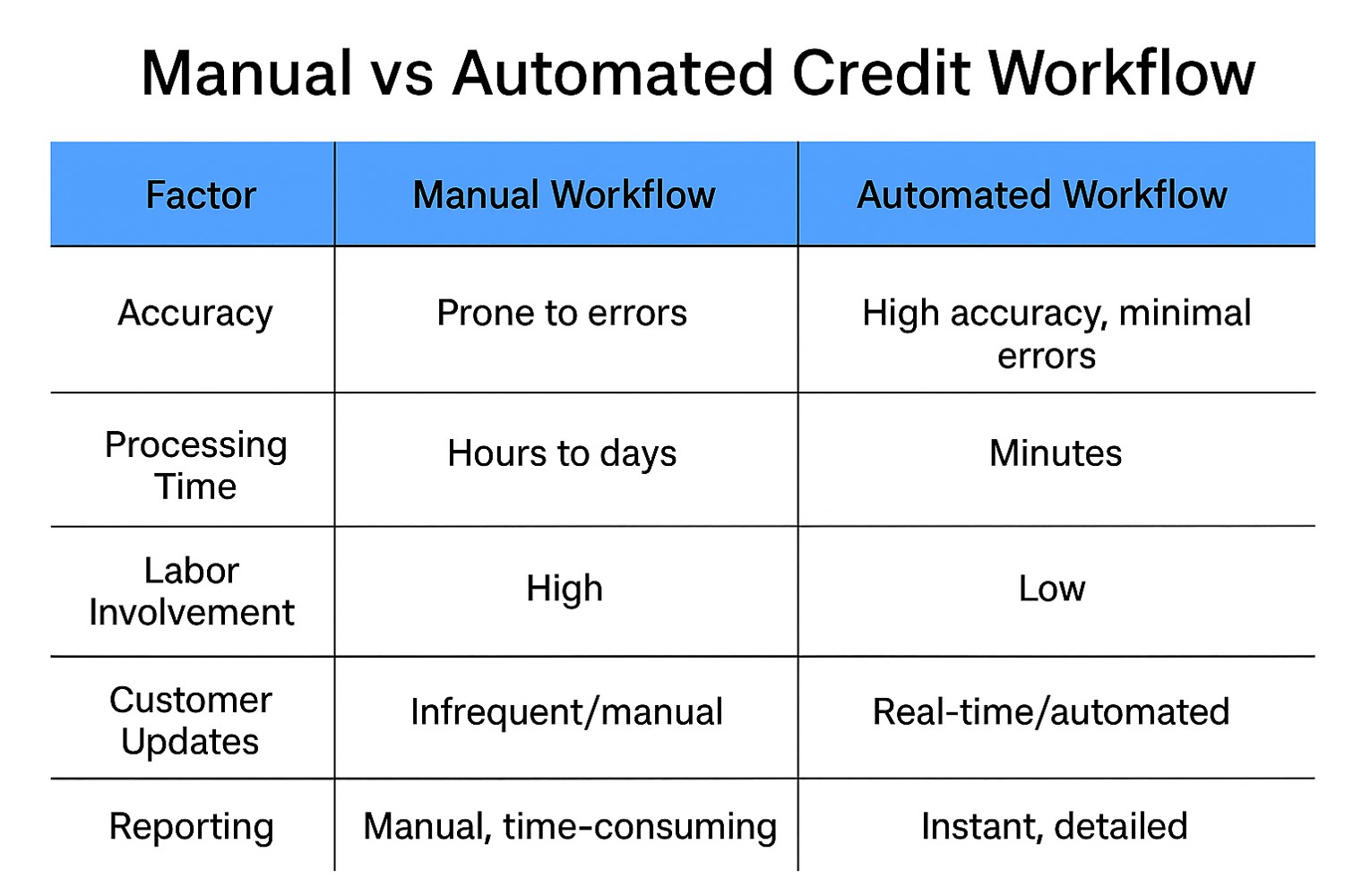
Automation stands as a significant game-changer in credit operations, addressing the inherent inefficiencies and error proneness of manual processes. Integrating workflow automation software reduces execution time, minimizes human error, and ensures tasks are completed consistently.

Process Efficiency Improvements Through Automation

The benefits of embracing automation in credit management are manifold:

3. Identify Bottlenecks and Resolution

Bottlenecks are those “pesky hiccups” that cap the overall efficiency of your operations, even if other processes are streamlined. Identifying these choke points is essential for maximizing business profitability and consistent efficiency.

Through thorough workflow documentation and process mapping, you can easily pinpoint redundant tasks and unnecessary steps that cause delays. Once identified, automation often provides the solution to fix these bottlenecks. Setting clear, actionable objectives from the start helps align your team to efficiently eliminate these obstacles.

4. Technology Integration for Workflow Enhancement

Modern credit management necessitates the adoption of cutting-edge technologies. Investing in specialized Loan Management Software (LMS) can streamline operations by automating data entry, document generation, and compliance checks. Electronic Document Management Systems (EDMS) reduce errors and time spent on filing and retrieval, providing secure, anytime access to files.

Beyond these, consider:

5. Staff Productivity Optimization

An optimized workflow directly translates to increased staff productivity and satisfaction. By removing unnecessary steps and automating repetitive tasks, teams can achieve more in less time, reducing frustration and burnout. It also allows human capital to be reallocated to more strategic, value-driven activities, leveraging their intelligence and creativity.

To further boost productivity:

6. Quality Control Integration and Standardization

Delivering high-quality outcomes with low error rates is a primary goal of workflow optimization. This is achieved by putting consistent processes in place and automating them where possible. Standardizing your workflow processes ensures a uniform approach regardless of who performs the task or when.

Standardization means setting a “gold standard” for operations, producing reliable results and eliminating variables that hinder optimal output. This consistency maintains high quality and efficiency, repeatedly offering a reliable customer experience and building brand reputation and trust. For example, in credit management, standardized credit scoring rules and e-signatures simplify the application process for both creditors and customers, improving efficiency and compliance.

7. Measurement and Monitoring Systems

Workflow optimization is an ongoing commitment; the work doesn’t stop after initial revamp. To ensure continuous efficiency and relevance, you must regularly monitor existing workflows and solicit feedback.

Key Performance Indicators (KPIs) are crucial for measuring the results of your optimization efforts. Some relevant KPIs include:

Quantitative KPIs are preferred for setting clear expectations and ensuring accountability. Continuously engaging with team members, assessing metrics, and observing performance will help identify areas for incremental improvements, leading to “optimally optimized” workflows over time. The optimization journey is never truly complete; it evolves with each feedback loop. Learn how modernizing your credit portfolio management can support ongoing measurement and monitoring for long-term impact.

Conclusion

In the modern business landscape, staying static is not an option. Optimizing your credit operations workflows is indispensable for efficiency, productivity, and sustainable growth. By embracing strategic assessments, leveraging advanced automation, fostering collaboration, and committing to continuous improvement, your business can significantly reduce costs, enhance quality, mitigate risks, and most importantly, deliver an exceptional experience for your customers and employees alike. It’s about making your work work better, driving your business forward in an ever-evolving market. To see how leading institutions are modernizing loan processes, check out our blog on improving commercial loan origination efficiency with automation.

At Anaptyss, we specialize in transforming credit operations for financial institutions through intelligent workflow design, advanced automation, and domain-driven digital services. Whether you’re looking to reduce operational friction, enhance decision accuracy, or deliver a better borrower experience, our team can help you build scalable, future-ready credit processes.

Ready to optimize your credit workflows?
Reach out to us at info@anaptyss.com to start the conversation.

How Financial Spreading Services Are Transforming Commercial Lending Workflows

In the intricate world of commercial lending, precision, speed, and foresight are not just desirable – they are critical for success. Financial institutions are under increasing pressure to make faster, data-driven credit decisions while managing growing risk and compliance demands. At the center of this effort is financial spreading—a process that’s historically manual but now ripe for intelligent automation.

Financial spreading services have emerged as a pivotal innovation, moving beyond mere technical upgrades to become a cornerstone of modern lending. These services empower institutions to make faster, more accurate, and more strategic decisions.

What is Financial Spreading?

Financial spreading is fundamentally the systematic process by which a bank transfers and organizes information from a borrower’s financial statements—including balance sheets, income statements, and cash flow statements—into the bank’s proprietary financial analysis program or spreadsheet. This critical step involves extracting raw line items and standardizing data into a uniform format, preparing it for rigorous analysis.

The core objective of financial spreading is to provide credit analysts with a comprehensive and granular view of a borrower’s current and prospective financial state. This detailed perspective is essential for making informed decisions regarding lending, investment, and other financial services.

Key reports generated from this process include:

  1. Common size balance sheets
  2. Common size income statements
  3. Financial ratios
  4. Statements of cash flow
  5. Reconciliation of net worth
  6. Revenue and growth trends
  7. Cost of Goods Sold (COGS)
  8. Operating expenses
  9. Profit margins
  10. Various cash flow indicators

It is important to recognize that while much financial information is processed in accordance with Generally Accepted Accounting Principles (GAAP), banks often apply specific internal adjustments.

Commercial Lending Workflow Challenges and Opportunities

The commercial lending process is a structured sequence of steps, meticulously designed to evaluate a company’s financial health, assess associated risks, and determine appropriate loan terms. This workflow typically encompasses several key stages:

Despite the structured nature of this process, traditional financial spreading methods have historically presented significant pain points for financial institutions:

Challenge Impact
Manual, resource-intensive, and error-prone High risk of human error and rework due to hand-keyed entries, leading to delays and operational inefficiencies.
Significant delays and bottlenecks Manual paperwork, identity verification, and data entry cause slowdowns. Borrowers may take 20–30 business days to close books, delaying decision timelines.
Data inconsistency and lack of standardization Inconsistent formats and analyst-specific judgment result in non-uniform assessments, reducing confidence in credit decisions.
Limited granularity and static insights Traditional methods provide a historical snapshot but fail to track custom covenants or detect early risk signals like rising DSO.
Slow turnaround times Prolonged processing leads to poor borrower experience and potential application abandonment.
Non-standard document formats Financials arrive in unstructured layouts, requiring manual normalization for system ingestion.
Prohibitively expensive monitoring Cash flow–based lending requires frequent reviews. Manual updates make this approach unsustainable at scale.
Analyst subjectivity Risk of bias and inconsistency when financial categorizations depend solely on individual interpretation.
Weak audit trails and compliance gaps Limited traceability in manual systems makes internal audits and regulatory reporting more difficult.

A critical consequence of these traditional challenges is the hidden cost associated with outdated data. The manual process is often so slow that by the time financial numbers are accurately compiled and reconciled, they are already historical. This means that lending decisions are frequently based on stale information, significantly increasing unseen risk.

This directly compromises the accuracy of risk assessments, potentially leading to mispriced credit or the failure to detect early warning signals.

This represents a fundamental flaw in risk management. In today’s competitive landscape, which demands real-time insights, banks that continue to rely on manual spreading risk losing market share to agile non-bank lenders who have embraced faster, data-driven approaches.

Transforming Lending – The Core Enhancements of Financial Spreading Services

Modern financial spreading services, particularly those leveraging automation and advanced analytics, directly address the aforementioned pain points of traditional workflows, delivering multifaceted benefits to commercial lenders.

a. Boosting Efficiency and Speed

Automated financial spreading significantly accelerates the loan origination process by drastically reducing the time required for data entry, document handling, and approval workflows. This enhanced speed directly translates into increased throughput, enabling financial institutions to process a higher volume of loans in less time and improving overall operational efficiency.

b. Ensuring Accuracy and Mitigating Risk

Automated systems minimize human errors in data entry and processing, providing a more accurate and reliable picture of a company’s finances and significantly reducing the risk of incorrect analysis. AI-driven algorithms are particularly adept at identifying inconsistencies that manual processes might overlook. Automated spreading also ensures –

c. Driving Deeper Insights and Strategic Decisions

Financial spreading allows banks to gain detailed information about their borrower’s financial position and creditworthiness, enabling a thorough evaluation of business performance over time. It provides essential insight into a business’s short-term and long-term performance, helping identify critical patterns in sales, expenses, and cash flow.

d. Strengthening Regulatory Compliance

Automation significantly aids institutions in adhering to regulatory standards by integrating compliance checks directly into the loan processing workflow, thereby reducing the risk of non-compliance and associated penalties.16 By standardizing financial data and reporting, automated systems facilitate regulatory compliance and make audits considerably less burdensome. Every action performed and every version of the data is meticulously logged, ensuring transparency and accountability throughout the process.8

e. Enhancing Customer Experience and Competitive Edge

In a market where customer experience has become a paramount differentiator, faster, more efficient, and transparent lending processes provide a substantial competitive advantage.

Quicker loan processing times and more transparent communication fundamentally enhance the customer experience. Borrowers directly benefit from faster decisions and a smoother application process, which significantly increases their satisfaction and loyalty to the institution.

Research by McKinsey indicates that banks excelling in customer satisfaction also demonstrate superior monetary performance. Furthermore, automated systems can easily scale to handle increasing loan volumes without a proportional increase in staffing levels, making it easier for institutions to grow their loan portfolios and expand their market reach.

Manual vs. Automated Financial Spreading in Commercial Lending

Aspect Manual Financial Spreading Automated Financial Spreading
Data Extraction Tedious, hand-keying, prone to errors AI/OCR-powered, fast, high accuracy
Data Standardization Inconsistent, analyst-dependent Uniform formats, consistent categorization
Processing Speed Hours to days per borrower, significant delays Minutes per borrower, real-time insights
Accuracy High human error rate, inconsistencies Minimized errors, AI-driven validation
Risk Assessment Based on outdated data, limited granularity Proactive, predictive, comprehensive
Compliance Manual checks, higher risk of non-compliance Integrated checks, audit-ready reporting
Resource Allocation Analysts focused on data entry/reconciliation Analysts focused on strategic analysis, client relations
Scalability Limited, requires increased headcount for volume Highly scalable, handles increased loan volumes
Customer Experience Slow decisions, potential abandonment Faster decisions, smoother process, higher satisfaction
Competitive Advantage Reactive, falling behind agile competitors Proactive, market leadership, revenue growth

Conclusion

Financial spreading services—especially those infused with automation and emerging technologies, such as artificial intelligence and machine learning—are no longer optional. They are a strategic imperative for today’s commercial lenders.

At Anaptyss, we partner with financial institutions to modernize and scale their operations through intelligent, automation-led solutions. Financial spreading is one of the most critical components in commercial lending workflows. Manual, resource-heavy processes are no longer viable in an environment that demands accuracy, speed, and agility

Our experience working with financial institutions has shown that automated financial spreading directly addresses the bottlenecks, inaccuracies, and limitations of manual workflows. By enabling faster processing, reducing the risk of human error, enhancing data quality, and unlocking richer financial insights, these solutions elevate both operational efficiency and decision-making accuracy.

AI-Powered Solution for Covenant Monitoring and Validation in Commercial Lending

For banks and financial institutions, covenant monitoring is a fundamental practice that ensures borrowers adhere to the terms of their loan agreements. These covenants, which include both financial metrics like debt-to-equity ratios and non-financial restrictions, such as limits on additional borrowing, are crucial for credit risk management, regulatory compliance, and portfolio stability, especially for commercial lenders.

The current landscape of covenant monitoring is rapidly evolving, significantly driven by the expansion of commercial lending, credit risks, economic volatility, and a growing demand for advanced technological tools.

The Evolving Challenges in Covenant Monitoring

The traditional, manual processes for covenant monitoring are no longer sufficient to keep pace with the current demands. Financial institutions face several significant challenges, such as,

  1. Expansion of Private Credit
    The private credit market has seen substantial growth, reaching approximately $1.7 trillion in assets under management (AUM) by late 2024, introducing more complex loan structures and intricate covenants.
  2. Economic Volatility and Risk
    Economic uncertainty, influenced by tighter monetary policies, has heightened the risk of covenant breaches, making proactive monitoring essential to prevent defaults.
  3. Challenges with Lenders and Borrowers
    An influx of less experienced lenders and less sophisticated borrowers further increases the complexity of designing, enforcing, and complying with robust covenant terms.
  4. Regulatory Scrutiny
    Regulatory bodies, such as the European Banking Authority (EBA), emphasize comprehensive frameworks for covenant monitoring, requiring financial institutions to monitor borrower adherence and track financial ratios as early warning tools for potential credit risks. The Basel III framework also underscores the importance of robust credit risk frameworks, which implicitly include covenant oversight.

These dynamics underscore the urgent need for financial institutions to adopt advanced monitoring frameworks.

The Power of AI in Transforming Covenant Monitoring

With the advancement in the financial technology and digital solutions, the way covenant were monitored is transforming rapidly, enabling financial institutions to manage large portfolios efficiently and accurately. For instance, AI-driven platforms are enabling financial institutions and commercial lenders automate covenant tracking by identifying, extracting, and structuring covenant clauses from diverse sources. This includes credit agreements, term sheets, and amendments—regardless of format (PDF, scanned image, or native text).

It also helps streamline document collection and compliance validation by integrating directly with Loan Origination Systems (LOS) and document repositories and reducing manual intervention by automatically mapping covenants to borrower data, financial ratios, and timelines.

These integrated platforms offer real-time tracking, analytics, and automation, becoming indispensable for effective risk management.

Introducing CovenAce™- An AI-Powered Solution for Covenant Monitoring

This is where we at Anaptyss.com, a digitally enabled managed services company, steps in. We serve a wide range of clients including Regional/Super-Regional Banks, Mortgage Lenders, Commercial Lenders, Wealth Management Firms, FinTech, Cryptocurrency firms, and Insurance Providers. Our flagship solution for covenant management is CovenAce™, an AI-powered covenant management solution designed to revolutionize how financial institutions handle their covenants.

CovenAce™ leverages proprietary AI and enterprise-grade infrastructure to deliver an end-to-end, intelligent covenant automation experience.

Here’s how CovenAce™ revolutionizes compliance and risk management:

  1. Rapid and Accurate Data Extraction
    CovenAce™ uses advanced AI models and reasoning engines to rapidly and accurately extract data with contextual analysis from loan agreements. It transforms them into actionable intelligence. CovenAce can process PDFs, scanned images, and various file types with consistent accuracy.
  2. Enhanced Efficiency and Cost Reduction
    With CovenAce, financial institutions can expect to process 80-85% faster and reduce costs by up to 70%. It extracts covenant data within minutes and therefore, enables immediate loan association and streamlined workflow automation.
  3. Unwavering Compliance and Auditability
    CovenAce ensures regulatory compliance and operational efficiency are met simultaneously. It maintains tamperproof audit trails with immutable, traceable records, minimizing the risks of manual processes and helping financial institutions stay compliant with evolving regulatory standards. The built-in verification with AI-powered accuracy ensures checks and auditable extraction trails provides regulatory transparency.
  4. Seamless Integration
    CovenAce connects effortlessly with any existing Loan Origination Systems (LOS), which makes it versatile. It also supports automated upload and mapping of covenant fields to streamline the workflows.
  5. Dynamic Reporting and Insights
    Access real-time, customizable reports to track Affirmative and Negative covenants, run sentiment analysis, and generate multi-format exports with just a few clicks. This capability supports data-driven lending decisions through historical covenant data.
  6. Robust Security and Scalability
    CovenAce™ offers enterprise-grade security with robust encryption for data at rest and in transit, top-tier security protocols, role-based access controls, complete data isolation, and zero storage retention.
    It’s a flexible, scalable cloud service, ready-to-deploy out of the box with multi-platform deployment options across cloud, hybrid, and on-premises environments.
  7. Empowering Your Teams
    By automating manual efforts, CovenAce™ empowers your Relationship Managers, Portfolio Managers, and Compliance Officers to focus on new revenue generation, realtionship building with existing and new prospects, and governance, allowing them to scale their operations effectively.

CovenAce™ solution helps financial institutions by providing a system that supports borrower-level tracking, deviation analysis, proactive notifications, and robust document management, aligning with key best practices for covenant monitoring. This proactive approach allows for the early detection of breaches, which serve as critical indicators of borrower financial distress, enabling timely corrective actions to prevent defaults and maintain portfolio stability.

The Future of Covenant Monitoring is Here

As the financial landscape continues to evolve with the growth of commercial lending, potential higher-for-longer interest rates, and evolving regulations like Basel III’s ESG integration, financial institutions must remain agile.

By adopting advanced AI-powered tools like Anaptyss’s CovenAce™, banks and commercial lenders can strengthen their covenant monitoring processes, ensuring portfolio stability and regulatory adherence in an increasingly complex environment.

A Practical Guide to Next-gen Fraud Detection in Banking with Machine Learning

The digital banking revolution has made life easier for customers, offering instant transactions and seamless experiences. But it’s also opened the door to a flood of payment fraud, hitting U.S. banks where it hurts most—their bottom line.

In 2023, fraud cost U.S. financial institutions over $120 billion, with payment fraud leading the charge (Association of Certified Fraud Examiners, 2024). Old-school fraud detection systems, built on rigid rules, are no match for today’s GenAI-enabled frauds and savvy fraudsters who exploit digital channels like mobile apps and real-time payment platforms.

However, machine learning (ML) is stepping up as a powerful ally and banks are strategically adopting it to detect fraud faster and smarter.

In this blog, we discuss how ML is transforming payment fraud detection for banks and financial institutions across the globe, sharing actionable insights and strategies for effective implementation..

The Growing Fraud Problem in the Banking Sector

Fraud is a relentless challenge for the banks. From credit card scams to account takeovers (ATO) and synthetic identity fraud, the threats keep evolving.

The Federal Trade Commission reported a 30% jump in fraud complaints from 2022 to 2024, driven by the rise of digital payments (FTC, 2024). Platforms like Zelle, processing $806 billion in transactions in 2023, are prime targets (Zelle Network, 2024).

Traditional fraud detection systems often miss the mark, flagging legitimate transactions, and letting sneaky ones slip through. In some cases, false positives can hit up to 90%, frustrating customers, leading to poor customer experience (CX), and clogging operations (Forbes, 2025).

Machine learning changes that by analyzing data in real time, spotting patterns, and adapting to new threats, keeping banks and their customers safer.

How Machine Learning Fights Fraud

Machine learning based models for fraud detection learns from data to outsmart fraudsters. Unlike static rule-based systems, ML continuously learns and evolves, digging into transactions, customer behavior, and even device details to catch suspicious activity. Here’s an overview of how it work.

These approaches help banks stay ahead, protecting their operations and customers with precision. However, deploying and maintaining these models effectively requires robust Machine Learning Operations (MLOps) frameworks.

Challenges in Deploying Machine Learning for Fraud Detection

Implementing machine learning (ML) systems for fraud detection in U.S. banks involves overcoming significant operational and technical hurdles. Here’s what the banking and financial industry is up against.

  1. Handling billions of daily transactions with inconsistent or incomplete data is a well-documented challenge in ML deployment. For instance, poor data quality reduces model accuracy, as models rely on clean, structured inputs for effective fraud detection. The need for robust data management systems underscores this as a critical hurdle.
  2. Incorrectly flagging legitimate transactions as fraudulent disrupts customer trust and increases operational costs due to manual reviews. Despite ML reducing false positives by 35% (MasterCard, 2024), the need for ongoing model tuning to balance sensitivity and specificity confirms this as a persistent challenge.
  3. Fraudsters’ use of advanced techniques, such as generative AI, to evade detection poses a dynamic challenge. ML models must be continuously updated with adversarial training to counter new threats, making this a significant obstacle.
  4. Strict U.S. regulations like AML and KYC require transparent and ethical ML practices. Ensuring compliance through tools like Explainable AI (XAI) and federated learning is a complex challenge due to the need to balance model performance with regulatory demands.
  5. Deep learning models, such as recurrent neural Networks (RNNs), require substantial computational resources, which can strain bank infrastructure. The reliance on cloud and edge computing to make these models cost-effective and scalable, highlights this as a technical and financial challenge.

Practical Steps for the Banks to Implement ML for Fraud Detection

To effectively deploy machine learning (ML) for fraud detection, banks and financial institutions must adopt strategic measures to address challenges we discussed above. The following steps, supported by MLOps practices, ensure robust, scalable, and compliant fraud detection systems.

  1. Unify Data Sources
    Integrate transactional, behavioral, and device data into a cohesive dataset to enhance model accuracy. Unified data systems improved fraud detection rates by 25% in 2024, as reported by Binariks (2024). MLOps-driven data pipelines ensure consistent, high-quality inputs critical for addressing data quality challenges.

  2. Continuously Update Models
    Regularly retrain ML models with fresh data to counter evolving fraud tactics, such as those leveraging generative AI, synthetic IDs, and deepfakes. Automated model retraining, as emphasized maintains robustness against sophisticated threats and helps mitigate the challenge of adaptive fraudsters.

  3. Combine ML with Rule-Based Systems
    Go hybrid and blend ML algorithms with traditional rule-based systems to create a layered defense. This hybrid approach can reduce fraud by up to 30%.

  4. Prioritize Customer Experience
    Prioritize reduction in false positives to minimize customer inconvenience and operational costs. ML-driven systems can potential cut customer complaints by 20% as per the Banking Technology, 2025. Further, continuous model tuning, supported by MLOps, ensures a balance between security and user satisfaction.

  5. Collaborate with Fintech Experts
    Partner with specialized managed services poviders, such as Anaptyss, to deploy tailored modern solutions like the ALFA platform, which is known to reduced false alerts by 75% for a super-regional bank. These partnerships leverage deep domain expertise to address computational and regulatory challenges efficiently.


Conclusion

By 2027, U.S. digital transactions are projected to hit $2 trillion, making real-time analytics a must. Federated learning and blockchain will boost privacy and security, while XAI ensures compliance. Although payment fraud is a $120 billion problem for U.S. banks, machine learning is turning the tide.

Anaptyss helps financial institutions stay ahead with scalable, ML-driven solutions like ALFA, reducing false alerts and ensuring compliance. Our deep domain expertise and MLOps frameworks enable faster, smarter fraud prevention.

DKO™
Life@Anaptyss
Careers