Modernizing Credit Portfolio Management – A Strategic Imperative for Resilient Banking

Credit Portfolio Management (CPM) is no longer a back-office, risk-monitoring exercise—it has evolved into a strategic function that shapes how banks navigate uncertainty, optimize capital, and deliver sustainable value to stakeholders. As financial institutions face a complex blend of economic cyclicality, regulatory evolution, sectoral risk concentrations, and digital disruption, CPM leaders are reimagining their roles from passive risk aggregators to proactive value creators.

This shift demands a reconfiguration of traditional frameworks. Institutions that embed forward-looking analytics, dynamic risk appetite alignment, and collaborative liquidity strategies into their CPM approach will be better equipped to manage volatility, preserve portfolio health, and support enterprise growth.

Why CPM Must Evolve Now

The global credit risk assessment market is projected to grow from $9.55 billion in 2025 to $31.46 billion by 2034—a CAGR of 14.2%. This rapid growth signals a fundamental shift in how financial institutions assess, manage, and mitigate credit risk. Beyond market expansion, there are several structural forces that are reshaping how banks must approach credit portfolio management.

JPMorgan has allocated $18 billion to technology, integrating over 175 AI tools, and reported $1.5 billion in cost savings from AI-driven fraud prevention, personalization, and credit processes.

Strategic Pillars for Next-Generation Credit Portfolio Management

  1. Dynamic Risk Appetite Alignment

CPM must work in sync with Enterprise Risk and Business Strategy to continuously adjust exposure thresholds across credit types, industries, and geographies. Leading institutions establish real-time feedback loops between portfolio health indicators and origination pipelines to control risk accumulation.

  1. Scenario-Based Portfolio Stress Testing

Rather than relying on fixed annual stress tests, forward-looking banks employ scenario libraries covering macroeconomic downturns, geopolitical shocks, climate risk events, and digital disruption. These tests feed directly into capital planning, provisioning strategies, and credit reallocation decisions.


  1. Sectoral Diversification and Thematic Rebalancing

To mitigate concentration risks, CPM teams actively shift exposures toward more resilient or emerging sectors, such as:

This requires both internal expertise and access to market-based instruments (loan syndications, credit default swaps, securitizations) for portfolio reconfiguration.

  1. Integration with Treasury, Capital, and Liquidity Management

Modern CPM is integrated with ALM, Treasury, and Finance to ensure alignment of:

This cross-functional orchestration supports regulatory compliance and strengthens institutional resilience.

  1. AI and Data-Driven Early Warning Systems

89% of finance teams still use Excel—but adoption of AI/ML for predictive modeling is growing However, by deploying machine learning models and digital intelligence platforms, financial institutions can detect early signs of –

Advanced institutions integrate these insights directly into underwriting, pricing, and portfolio rebalancing engines, enabling real-time risk mitigation.
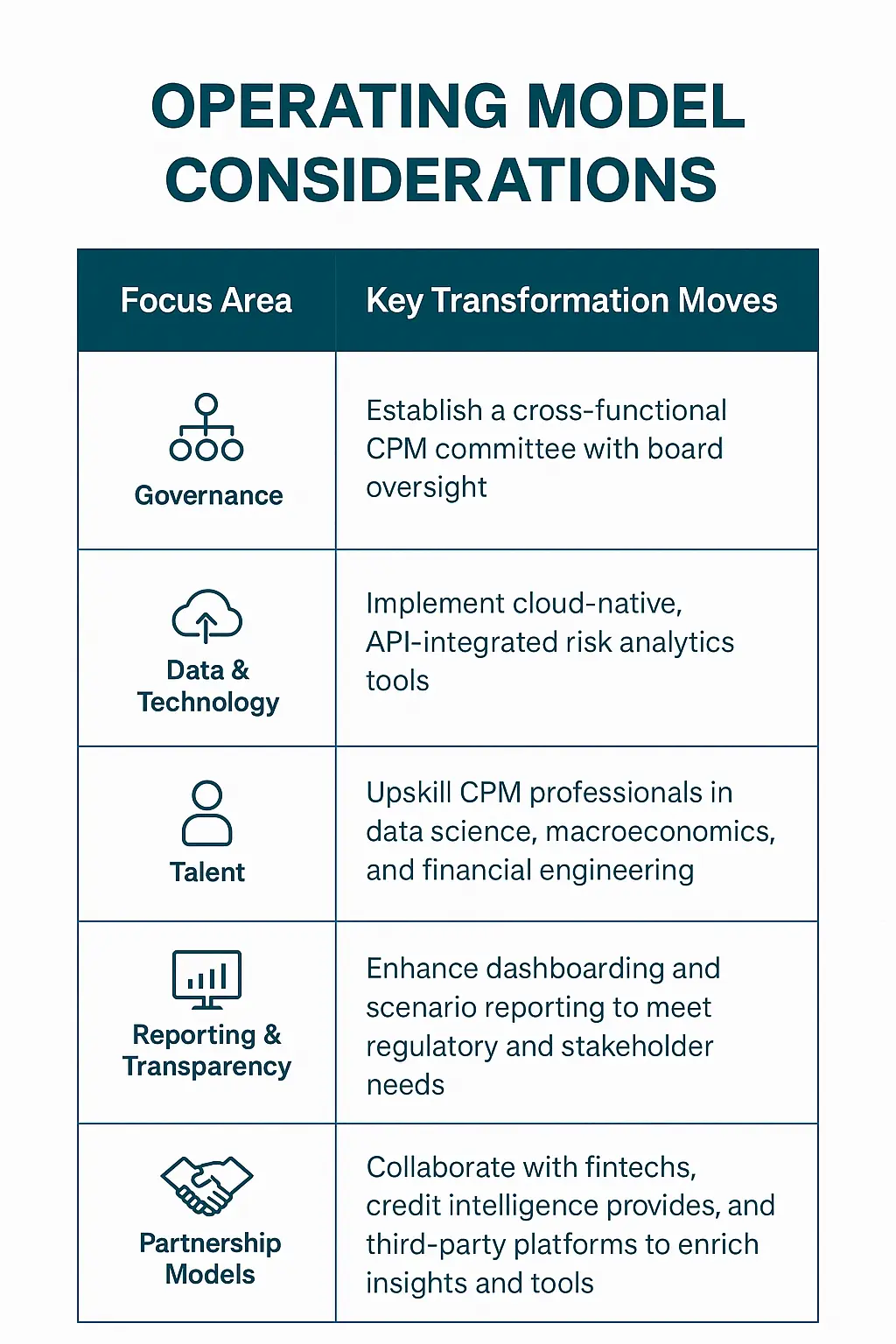
Key Considerations

Conclusion

Credit Portfolio Management is entering a new era—one where strategic foresight, integrated intelligence, and proactive intervention define success. In this environment, banks and financial institutions must adopt agile, data-driven, and enterprise-aligned CPM models to remain competitive, compliant, and resilient.

At Anaptyss, we partner with forward-looking institutions to modernize credit portfolio practices through advanced analytics, digital transformation frameworks, and regulatory-aligned operating models—driving risk-adjusted performance and long-term portfolio sustainability.


 

Why Traditional Banks Must Embrace Blockchain in 2025

The era of blockchain as a speculative experiment has ended—2024-2025 marks the definitive shift toward institutional adoption, with 90% of US and European banks actively exploring blockchain technology and global spending reaching $19 billion annually. This transformation is no longer optional for traditional financial institutions; it’s a strategic imperative driven by regulatory clarity, competitive pressures, and undeniable operational advantages that are reshaping the banking landscape.

As Archana Bae, CEO of Porta Strategies, observed during a recent industry panel, “The global crypto landscape has definitely undergone significant transformation over the past three to five years. There’s been a shift from speculative enthusiasm to a more structured institutional policy driven adoption.” This sentiment reflects the broader evolution from experimental interest to strategic necessity that traditional banks can no longer ignore.

Recent regulatory developments have removed many barriers to entry, while customer demands for faster, cheaper cross-border payments and digital asset services are creating new market pressures.

Traditional banks that fail to develop comprehensive blockchain strategies risk losing market share to more agile fintech competitors and crypto-native institutions that are rapidly gaining ground in core banking services.

The Transformation Landscape Emerging with an Unprecedented Momentum

The institutional adoption of blockchain technology has reached a critical inflection point, moving decisively from pilot programs to commercial-scale implementations.

For instance, JPMorgan’s Kinexys platform processed its first commercial transactions in 2024, facilitating cross-border payments for major corporations like Siemens while integrating foreign exchange settlement capabilities.

Meanwhile, HSBC committed to moving $20 billion in assets to blockchain by March 2025. And they recently launched their tokenized deposit service for corporate cash management in Hong Kong.

1. Statistical Evidence Underscores This Dramatic Shift

Global blockchain spending increased 188% to reach $19 billion in 2024, with banking representing the largest sector allocation. The cross-border payments market alone processed $32 trillion in stablecoin transaction volume during 2024, capturing approximately 3% of the estimated $195 trillion global cross-border payment market. Industry analysts project this could grow to 20% of global cross-border payment volume within five years, representing a $60 trillion market opportunity.

2. New Regulatory Framework Updates

Regulatory frameworks have provided the clarity institutions needed to move forward confidently.

a. The European Union

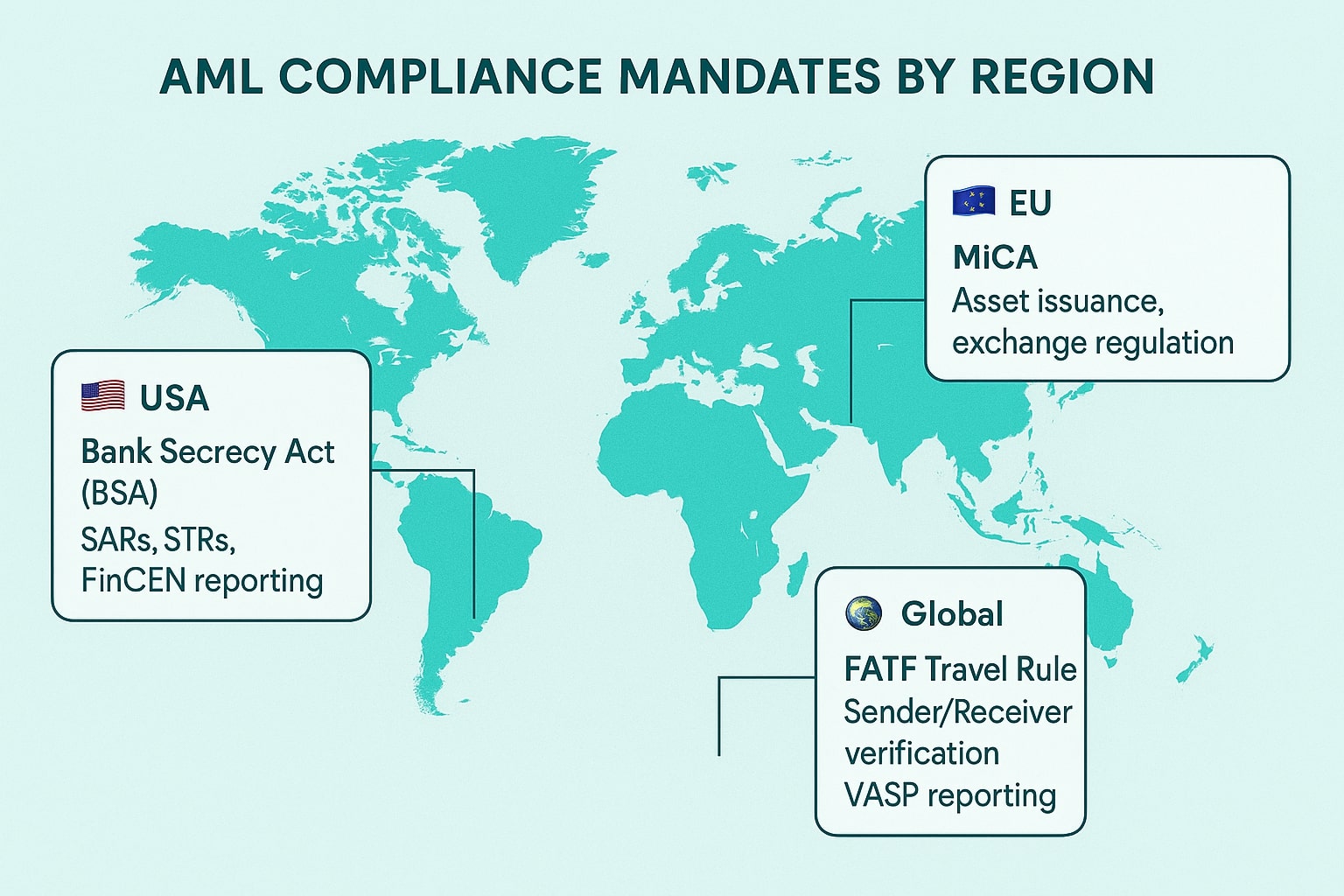
The European Union’s MiCA (Market in Crypto Assets) regulation became fully operational in December 2024, creating harmonized standards across all member states.

b. The United States

Simultaneously, US regulatory agencies revoked prior approval requirements for permissible crypto activities, with the Federal Reserve, OCC, and FDIC all streamlining their oversight approaches and easing restrictions on bank involvement in crypto-related activities.

Robert Triano, BSA Officer at East West Bank, emphasizes the impact from a traditional banking perspective, “We’re a financial institution that operates in both Asia and the United States… we have to be thinking about what is going on with our clients, what is going on with their clients, how are they evolving and changing… whether it’s trade, trade finance, cross-border payments.”

3. CBDCs in Banking

Central Bank Digital Currency development adds another layer of urgency, with 134 countries representing 98% of global GDP now exploring CBDCs. China’s digital yuan alone reached 7 trillion yuan ($986 billion) in transaction volume by June 2024, demonstrating the potential scale of digital currency adoption.

Traditional banks recognize that they must position themselves as intermediaries in these emerging payment systems or risk disintermediation as CBDCs bypass conventional banking infrastructure.

Critical challenges demand strategic responses from banking leadership

Cross-chain complexity represents perhaps the most significant technical hurdle facing institutions seeking to implement blockchain solutions. Most blockchain networks operate in isolation, creating integration challenges when banks need to support multiple platforms simultaneously. The technical infrastructure required for cross-chain interoperability demands sophisticated middleware solutions, API gateways, and bridging technologies that many traditional institutions lack the internal expertise to develop and maintain effectively.

Prasenjit Mukherjee, VP for Compliance Delivery at Anaptyss, highlighted the evolving compliance landscape, “Compliance teams as a whole actually have moved beyond just the flagging of suspicious transactions… They have moved beyond that. It’s about how we can integrate on chain behavioral analytical tools… to find out more or better nuanced patterns.”

1. Data Privacy

Compliance gaps continue to create operational friction despite recent regulatory clarity. Data privacy conflicts between blockchain’s immutable nature and regulations like GDPR’s “right to be forgotten” create fundamental tensions that require careful architectural planning. The Travel Rule implementation for virtual asset transactions remains one of the most complex compliance challenges, as banks must establish counterparty identities for transactions linked to wallet addresses rather than traditional account holders.

2. Talent Shortages

Financial institutions face intense competition for specialized talent from technology companies offering higher compensation packages and more cutting-edge development environments. According to Mercer’s 2024-2025 Global Talent Trends, 50% of HR professionals in financial services cite skills shortages as a top business threat, while 44% of workers’ skills will be disrupted by technology over the next five years, requiring continuous retraining investments.

3. Legacy Systems

Legacy system integration presents ongoing architectural challenges for institutions built on decades-old COBOL mainframe systems processing. These outdated platforms struggle to integrate with modern blockchain infrastructure, creating data format incompatibilities and fragmented architectures that require substantial middleware investments and careful migration planning to avoid operational disruption.

Strategic imperatives for Financial Institutions

Risk-based approaches must anchor all blockchain initiatives, balancing innovation opportunities with institutional safety and soundness requirements. Leading banks are implementing phased rollout strategies that begin with low-risk applications like document verification and compliance monitoring before scaling to higher-value use cases like cross-border payments and asset tokenization.

Basel Committee guidance requiring 1250% risk weighting for certain crypto assets necessitates careful capital planning and exposure management.

1. API-First Technology Integration and Interoperability

Technology integration strategies should prioritize API-first architectures that facilitate seamless connections between legacy systems and blockchain platforms. Successful institutions are investing in cloud-native platforms and middleware solutions that bridge architectural gaps while maintaining operational resilience. Industry-wide standardization efforts through consortiums like R3 and Hyperledger provide collaborative opportunities to address interoperability challenges collectively.

2. Comprehensive Talent Development and Upskilling Programs

Comprehensive talent development programs represent critical investments for long-term success. Banks are implementing upskilling initiatives for existing developers with transferable skills in software engineering and cryptography, while establishing partnerships with universities and specialized training providers to build internal expertise. Cross-functional teams combining traditional banking and blockchain knowledge enable knowledge transfer and reduce dependence on external consultants.

Archana Bae stresses the importance of interdisciplinary skills: “The new professionals of this environment are going to have to have blockchain fluency, regulatory intelligence and data-driven decision making… We need to train our compliance officers, but we need to also train the authorities and our law enforcement officers as well.”

A case study shows how Anaptyss helped a community bank commission a fully automated digital knowledge management and e-learning center of excellence for banks with a 100% updated knowledge repository and 1900+ digitized business process blueprints.

3. Proactive Regulatory Engagement and Compliance Frameworks

Regulatory engagement requires proactive collaboration with oversight agencies to shape emerging frameworks rather than react to prescriptive requirements. Institutions partnering with specialized compliance firms for crypto asset expertise while implementing behavior-based monitoring systems position themselves advantageously as regulations continue evolving. Participation in regulatory sandboxes provides controlled environments for experimentation and stakeholder feedback.

4. Strategic Ecosystem Partnerships for Specialized Capabilities

Strategic partnerships across the blockchain ecosystem enable access to specialized capabilities without requiring full internal development. Collaborations with fintech companies, managed services providers, technology vendors, and industry consortiums provide knowledge sharing opportunities and reduce individual implementation risks. Vendor partnerships for blockchain analytics tools like Chainalysis and Elliptic ensure robust AML/KYC compliance capabilities from project inception.

Conclusion

Banking executives must recognize that blockchain adoption is no longer a question of “if” but “how quickly” and “how strategically.” Organizations that invest comprehensively in technology infrastructure, talent development, regulatory compliance, and strategic partnerships will capture the transformative benefits of blockchain technology while maintaining the trust and stability that define successful financial institutions.

Anaptyss enables this transformation by helping banks accelerate blockchain readiness through its domain expertise, digital solutions, and compliance-first approach. With deep capabilities in financial crime compliance, digital operations, and risk management, Anaptyss empowering institutions to embrace blockchain strategically – ensuring they lead innovation rather than follow it.

To learn more about how Anaptyss can support your crypto/blockchain journey, visit this page or reach us at info@anaptyss.com.

This analysis draws from the June 2, 2025 webinar “Evolution of the Global Crypto Ecosystem: Blockchain-Based Forensic Accounting and Web3 Compliance,” featuring industry experts Archana Bae (CEO, Porta Strategies), Robert Triano (BSA Officer, East West Bank), and Prasenjit Mukherjee (VP Compliance Delivery, Anaptyss). The full recorded session provides additional insights into regulatory frameworks, compliance strategies, and implementation best practices for traditional financial institutions.


How Quantum Technology is Changing the Future of Banking and Financial Services

Quantum computing is an emerging technology poised to redefine established financial paradigms, impacting everything from intricate risk assessment and optimized portfolio management to enhanced cybersecurity and sophisticated algorithmic trading.

The transition from theoretical concept to tangible application is accelerating, necessitating proactive strategic adjustments within financial institutions.

In this blog, we examine the foundational principles of quantum computing, its transformative implications for core financial operations, emerging real-world applications, and the strategic challenges institutions must address.

Understanding the Quantum Evolution

At its core, quantum computing fundamentally diverges from classical computational models. Instead of relying on binary bits (0s or 1s), quantum computers leverage qubits, which can exist in multiple states simultaneously through superposition. This, coupled with entanglement—a phenomenon where qubits become interconnected regardless of distance—enables quantum machines to execute complex calculations and analyze vast datasets with unparalleled speed and efficiency. This capability allows for the identification of intricate patterns beyond the scope of traditional computing methods, making it exceptionally well-suited for the dynamic and data-intensive financial environment.

A Foundational Shift Across Financial Ecosystems

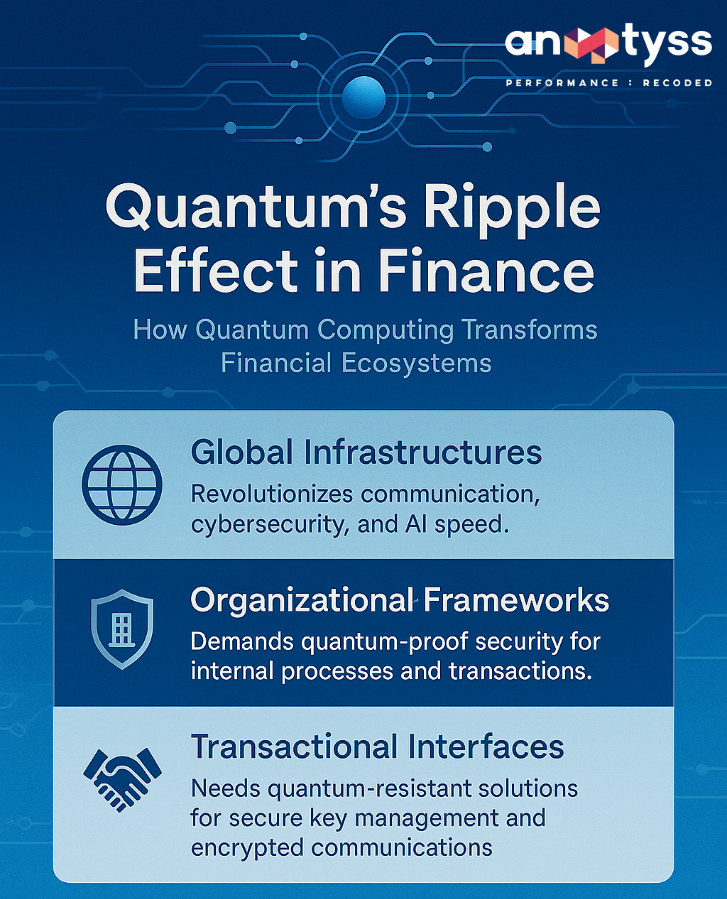
The influence of quantum computing will extend across the entire financial landscape, manifesting through three distinct interconnected dynamics—

A Foundational Shift Across Financial Ecosystems

a. Global Infrastructures

At the global level, quantum computing will revolutionize communication infrastructures, cybersecurity protocols, and the velocity of artificial intelligence. This will necessitate the development of entirely new security architectures to manage the exponentially accelerating pace of change.

b. Organizational Frameworks

Individual financial organizations will be compelled to adapt their operational workflows. This requires implementing quantum-proof security measures for all internal processes and cross-organizational transactions, potentially through advanced post-quantum cryptography (PQC) solutions.

c. Transactional Interfaces

The impact will reach individual interactions, demanding quantum-resistant solutions for secure key management and encrypted communications. Financial entities must integrate enhanced security directly into their workflows, assets, liabilities, and transactional frameworks.

Furthermore, quantum computing will significantly accelerate the evolution of AI in finance. This will translate into real-time adjustments of trading strategies, the development of proactive fraud detection mechanisms, and the ability to conduct risk modeling with unprecedented levels of complexity.

Transformative Applications of Quantum Computing in Financial Operations

The strategic adoption of quantum computing offers substantial competitive advantages across various financial operations.

a. Portfolio Optimization

Quantum computers can process the extensive variables involved in investment portfolio optimization at speeds unattainable by classical methods—balancing returns, risk, and regulatory constraints in real time. Institutions like JPMorgan Chase and Fidelity, in collaboration with IonQ, are leveraging quantum algorithms such as the Quantum Approximate Optimization Algorithm (QAOA) to streamline investment strategies.

These developments enable real-time portfolio rebalancing, a capability increasingly critical in volatile markets.

b. Risk Analysis and Management

Quantum computing improves risk assessment by enabling more precise modeling of market behaviors and scenario simulations.

Quantum Monte Carlo methods can reduce portfolio risk calculation times from hours to seconds. Additionally, quantum AI is projected to decrease loan default rates by 20%-30% through advanced risk modeling. These improvements allow banks to make faster, better-informed lending and investment decisions.

c. Fraud Detection

Quantum machine learning (QML) enhances fraud detection by analyzing vast transactional datasets with superior speed and granularity. For instance, a fintech startup specializing in peer-to-peer (P2P) lending platforms employed Quantum Machine Learning (QML) to monitor transactions for collusion and fraudulent activities among lenders and borrowers. The project utilized quantum neural networks (QNNs), which leveraged the superposition property of quantum systems to analyze transaction networks at an accelerated pace.

This enabled the simultaneous assessment of multiple potential fraud scenarios. As a result, the platform achieved a 25% reduction in false positive rates, significantly improving user experience while preserving trustworthiness. The quantum-enhanced system was seamlessly integrated with existing classical machine learning models, providing a hybrid solution that enhanced both the accuracy and responsiveness of the fraud detection process.

d. Derivatives Pricing

The computation of complex financial derivatives, a highly resource-intensive task, stands to be significantly optimized. Goldman Sachs, in collaboration with QC Ware, estimates that quantum algorithms could accelerate derivatives pricing by up to 1,000x, with quantum algorithms already demonstrating up to 100 times faster computations than traditional models.

e. Operational Optimization

Quantum computing can drive down operational costs and enhance efficiency. A notable collaboration between SpinQ and Huaxia Bank’s LongYingZhiDa Fintech for ATM placement and management optimization yielded a quantum AI model that achieved 99% accuracy, surpassing classical algorithms in both speed and precision.

f. Cybersecurity

The cybersecurity implications of quantum computing are both a risk and an opportunity. As traditional encryption faces obsolescence under quantum attacks, institutions must adopt quantum-secure protocols.

Navigating Challenges and Ethical Considerations

Despite its promising capabilities, the integration of quantum computing presents considerable challenges and ethical considerations:

a. Decryption Risk

A critical concern is the ability of quantum computers to compromise widely adopted encryption protocols, such as RSA and ECC, which form the bedrock of modern cybersecurity.
This vulnerability introduces the threat of “Harvest Now, Decrypt Later” attacks, where sensitive encrypted financial data is captured today for decryption once powerful quantum computers become available.

b. Integration Complexity and Talent Shortage
The integration of this advanced technology into existing, often legacy, financial IT infrastructures represents a substantial hurdle. Compounding this is a notable deficit of skilled professionals in quantum information science, making it challenging for organizations to acquire the necessary expertise.

c. Exacerbated Inequalities
The high cost and inherent complexity of quantum computing resources currently limit their accessibility to a select group of well-funded corporations and governmental entities. This concentration of power carries the risk of exacerbating existing socio-economic inequalities and widening the digital divide.

d. Accountability and Transparency
As quantum algorithms become increasingly sophisticated, particularly in AI-driven decision-making, questions of accountability arise when unforeseen or undesirable outcomes occur. Establishing clear guidelines and robust governance frameworks is paramount to addressing these concerns.

Conclusion

The quantum computing revolution in finance is not a speculative future but an impending reality. The paradigm shift it promises will unlock unprecedented opportunities for efficiency, accuracy, and innovation, while simultaneously introducing significant security challenges. Financial institutions that proactively embrace this transformative technology, strategically invest in quantum-safe solutions like PQC, and cultivate a quantum-ready workforce will be optimally positioned to secure a leading and resilient position within the evolving global financial landscape.

At Anaptyss, we recognize that quantum transformation is not just about adopting new technologies—it’s about preparing your organization to thrive in a fundamentally reshaped digital landscape. Whether you’re exploring quantum use cases, integrating hybrid quantum-classical systems, or transitioning to post-quantum cryptography, we bring the domain expertise and executional agility to guide you every step of the way.

Key Anti-Financial Crime Changes for U.S. Banks in 2025-26 | Enforcement, AI Fraud & Compliance

The anti-financial crime regulatory environment has entered a new phase of unprecedented enforcement intensity and technological sophistication in 2025-26. U.S. banking institutions face an evolving landscape characterized by record-breaking penalties, expanded compliance obligations, and increasingly sophisticated criminal methodologies. This comprehensive analysis examines the critical developments shaping financial crime prevention strategies and the technological solutions driving compliance effectiveness.

1. Record AML Enforcement Sets New Penalty Benchmarks

The regulatory enforcement landscape has fundamentally shifted toward maximum penalty assessments, with agencies demonstrating an uncompromising stance on compliance failures. FinCEN’s October 2024 assessment of a $1.3 billion penalty against TD Bank for “chronic failures” in its AML program represents the largest enforcement action in the agency’s history, establishing a new benchmark for regulatory consequences.

The Federal Reserve’s $43 million penalty against crypto-focused Silvergate Bank in July 2024 for deficient transaction monitoring, combined with the OCC’s cease-and-desist order against Bank of America in January 2025 for unsafe BSA/AML and sanctions controls, demonstrates consistent regulatory expectations across all banking segments. The FDIC’s $20.4 million penalty against a Kansas bank for inadequate AML/CFT programs amid $27 billion in annual wire flows further underscores that transaction volume amplifies regulatory scrutiny and potential penalties.

These enforcement actions establish clear regulatory expectations: robust internal controls, qualified AML officers, proactive testing, and timely SAR/CIP compliance are non-negotiable requirements. The “ignorance is no excuse” doctrine now pervades all regulatory examinations, with agencies explicitly stating that lack of sanctions/AML knowledge does not shield firms from liability.

2. Corporate Transparency Act Modifications and AML Program Requirements

FinCEN’s March 2025 interim final rule represents a significant policy shift, removing domestic companies from the Corporate Transparency Act’s beneficial ownership reporting requirement while maintaining focus on foreign-owned companies. This modification reduces compliance burden for U.S. entities while preserving oversight mechanisms for international ownership structures that present elevated money laundering risks.

Simultaneously, the long-pending AML/CFT program rule mandated by the 2020 AML Act continues under regulatory review. The 2024 Notice of Proposed Rulemaking would establish universal requirements for all financial institutions to maintain “effective, risk-based” AML programs incorporating documented risk assessments and government priority integration.

FinCEN’s finalized rule expanding BSA obligations to SEC-registered investment advisers, effective January 1, 2026, represents the continued broadening of AML compliance requirements beyond traditional banking sectors. These advisers must now establish comprehensive AML/CFT programs and file Suspicious Activity Reports, significantly expanding the universe of reporting entities. This expansion occurs alongside the CTA modifications, creating a regulatory environment where domestic entity reporting decreases while investment adviser obligations increase.

3. Sanctions Enforcement Maintains Strict Liability Framework Despite Numerical Decline

OFAC enforcement statistics reveal a tactical shift rather than reduced enforcement intensity. While public enforcement actions declined to 12 cases in 2024 (compared to 17 in 2023) with approximately $48.8 million in penalties, half of these cases involved Iran sanctions violations. Two early 2025 enforcement actions specifically targeted Ukraine/Russia sanctions violations, indicating continued focus on geopolitically sensitive compliance areas.

The strict liability model governing U.S. sanctions remains unchanged, with OFAC maintaining that “lack of familiarity with sanctions is no defense.” All U.S. entities and foreign banks processing dollar transactions must implement comprehensive screening protocols against updated OFAC lists, with even inadvertent violations triggering potential penalties.

Treasury’s early 2025 issuance of new general licenses and updated guidance for Syria, Iran/Iraq, and Russia demonstrates the dynamic nature of sanctions compliance requirements. Financial institutions must establish daily monitoring protocols for OFAC’s “Recent Actions” page and maintain continuously updated screening systems to ensure real-time compliance with evolving designations.

4. AI-Driven Fraud Threats Are Rising Fast

The integration of generative AI and deepfake technology into criminal methodologies represents a paradigm shift in fraud sophistication. FinCEN’s alerts regarding increased suspicious activity involving deepfake documents highlight the growing prevalence of AI-enhanced financial crimes affecting banking institutions.

Cybercriminals now deploy AI to create highly convincing phishing campaigns and Business Email Compromise schemes, with AI-enhanced voicemails mimicking executives and realistic deepfake video calls observed in operational environments. These developments necessitate enhanced authentication protocols and behavioral analytics capabilities to identify anomalous login patterns and transaction behaviors.

Account takeover fraud continues surging across mobile wallets, peer-to-peer payment applications, and cryptocurrency platforms through social engineering and credential-stuffing methodologies. Industry analysis by Deloitte projects synthetic identity fraud losses reaching approximately $23 billion annually by 2030, representing a significant threat vector requiring enhanced detection capabilities.

5. Real-Time Payment Systems Accelerate Fraud Execution Timelines

The proliferation of faster payment systems—including FedNow, Zelle, and RTP—has enabled what security professionals term “faster fraud.” The FBI’s Internet Crime Report documents a marked increase in instant payment scams throughout 2024, with fraudsters leveraging AI deepfake communications and malware to manipulate employees into authorizing unauthorized wire transfers.

Traditional check fraud has experienced a resurgence, with criminals employing AI technology to produce sophisticated counterfeit checks featuring forged signatures and simulated security features. Remote deposit capture systems have inadvertently expanded attack surfaces, requiring banks to supplement legacy check-processing controls with AI-powered image recognition systems and enhanced deposit limits.

Elder financial abuse represents a growing concern, with AARP reporting approximately $28.3 billion in annual losses to senior-targeted scams. These schemes increasingly employ AI-generated communications to build trust through tech-support fraud, romance scams, and investment schemes targeting vulnerable populations.

6. Cyber Threats Escalate for U.S. Banks

Banking institutions face escalating cybersecurity challenges from sophisticated threat actors deploying advanced attack methodologies. Multiple new ransomware families—including BianLian, Play, RansomHub, and KillSecurity—specifically targeted financial firms throughout 2024, deploying system encryption attacks and demanding cryptocurrency ransom payments.

Nation-state cyber activities present elevated risks, with Russia-affiliated groups launching disruptive DDoS and intrusion attacks against Western banking institutions in apparent retaliation for Ukraine support activities. North Korea maintains designation as the most severe state-sponsored cyber threat to U.S. financial services, primarily through illicit cryptocurrency exploitation and SWIFT network attacks.

A World Economic Forum study identified that 42% of organizations experienced increased phishing attacks due to AI capabilities in 2024, while 54% of large organizations rank vendor and supply-chain security as their primary cybersecurity concern. These statistics underscore the critical importance of comprehensive third-party risk management and continuous vendor security assessments.

7. Advanced Technology Solutions Drive Compliance Effectiveness

Financial institutions increasingly rely on artificial intelligence and machine learning capabilities to maintain AML program effectiveness amid budget constraints. Advanced ML models process millions of transactions to identify complex money-laundering patterns while significantly reducing false positive rates. ACAMS research indicates that institutions view AI and automation as “the only answer” to maintaining compliance effectiveness under current resource limitations.

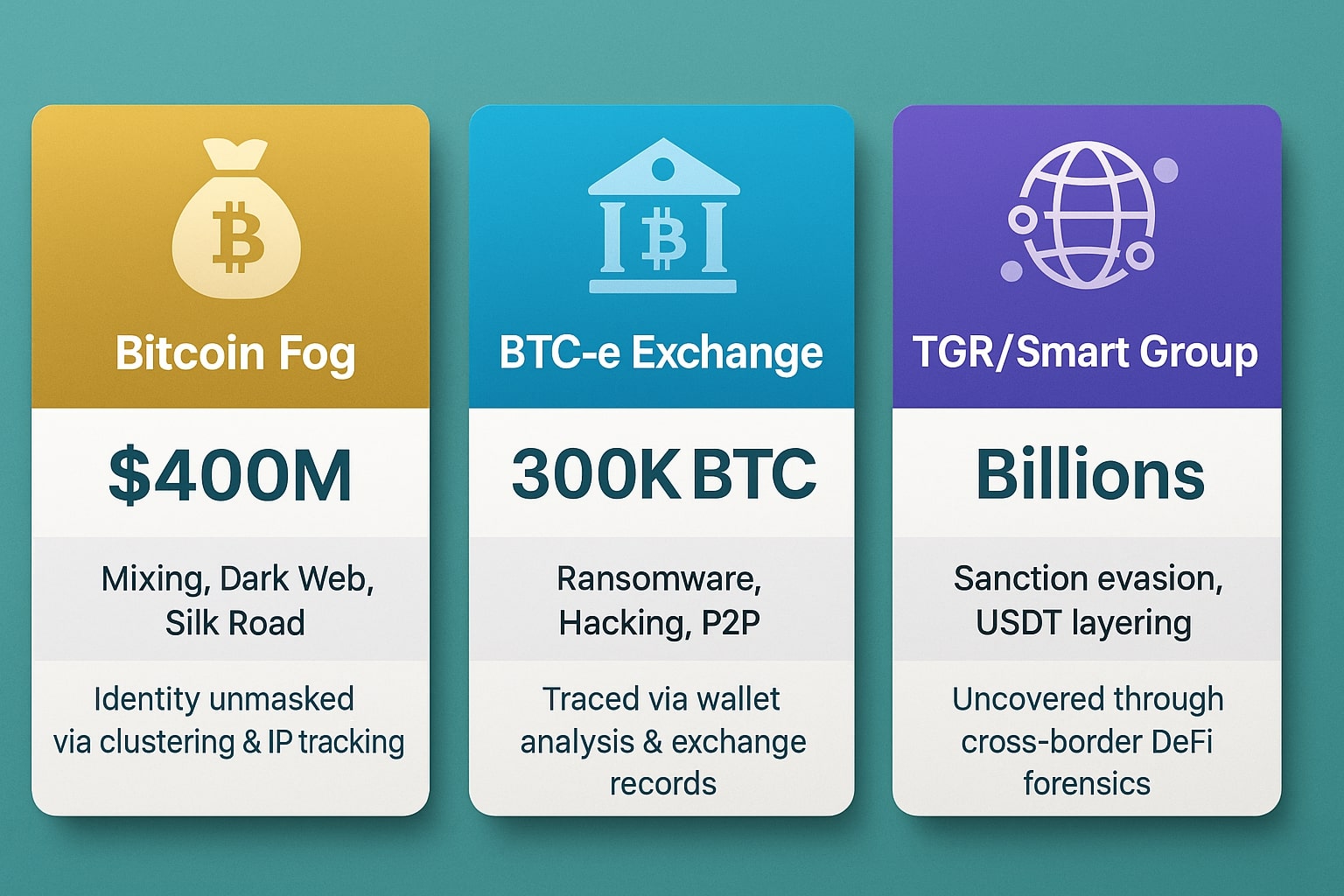
Blockchain forensics platforms enable cryptocurrency transaction tracing to identify illicit activities, supporting Travel Rule compliance and FATF guideline adherence. These analytical capabilities help satisfy regulatory requirements while enabling banks to participate in digital asset markets with appropriate risk management protocols.

Biometric authentication adoption continues accelerating, with industry estimates indicating 70% of new account onboarding processes will incorporate automated e-KYC solutions in 2025. Multi-factor authentication combining biometric verification with device tokens represents current best practices for preventing account takeover incidents.

RegTech solutions providing cloud-based compliance automation continue gaining adoption, with automated customer risk scoring, transaction monitoring engines, and sanctions screening systems now capable of daily updates incorporating new watchlist information. These platforms enable compliance scaling without proportional headcount increases while generating comprehensive audit trails required for regulatory examinations.

Regulatory Outlook and Strategic Recommendations for Banks

FinCEN’s anticipated update to national AML priorities under new administration guidance is expected to emphasize counterterrorism, narcotics trafficking, and non-Russian threat vectors. The dramatic CTA modifications reflect the new administration’s intent to substantially reduce domestic reporting obligations while maintaining focus on foreign entity transparency. Banking institutions should prepare compliance programs for potential priority shifts while maintaining current program effectiveness, particularly as the interim final rule status indicates possible further modifications based on public comment review.

The SEC’s April 2025 guidance declaring certain “covered” stablecoins as non-securities may reduce regulatory complexity for banks engaging with digital payment mechanisms, though traditional AML/CFPB compliance requirements remain applicable.

Joint regulatory initiatives indicate continued coordination among federal banking agencies, with expectations for potentially stricter BSA data sharing requirements and unified AML/CFT examination protocols by late 2025.

Strategic Implementation Framework for Banking Institutions

Banking institutions should prioritize comprehensive risk assessment updates incorporating emerging threat vectors and regulatory requirements. Investment in AI-powered monitoring systems, enhanced authentication protocols, and automated compliance processes represents essential infrastructure for maintaining program effectiveness.

Senior leadership engagement in cyber-incident planning and compliance oversight remains critical, with regulatory expectations for board-level involvement in anti-financial crime program governance. Institutions should establish continuous monitoring protocols for regulatory updates and maintain flexibility to adapt procedures based on evolving requirements.

The convergence of record enforcement penalties, expanded compliance obligations, and sophisticated criminal methodologies requires proactive investment in advanced compliance technologies and comprehensive risk management frameworks. Banking institutions that establish robust, technology-enabled compliance programs while maintaining strong risk culture will achieve sustainable competitive advantages in the evolving regulatory environment.

Conclusion

The anti-financial crime landscape in 2025-26 presents U.S. banks with unprecedented challenges and opportunities. As enforcement intensifies and criminal tactics become more sophisticated, financial institutions must adopt advanced technologies, update compliance frameworks, and engage leadership at all levels to remain resilient and compliant. The evolving regulatory environment — from FinCEN’s Corporate Transparency Act modifications to expanded AML obligations and AI-driven fraud risks — demands proactive, strategic responses.


Advanced Strategies to Mitigate Deepfake Fraud and Synthetic Identities in Banking and Financial Services

Financial institutions are confronting a sophisticated new category of fraud that exploits the intersection of artificial intelligence and identity verification. Deepfakes—AI-generated synthetic media that can realistically impersonate individuals—combined with synthetic identities created from amalgamated real and fabricated personal information, are systematically bypassing established security protocols.

The Evolving Threat landscape

Deepfakes and synthetic identities represent a paradigm shift in fraud methodology, fundamentally undermining traditional Know Your Customer (KYC) protocols and fraud detection systems that have served as the industry’s primary defense mechanisms for decades.

Recent industry data reveals the magnitude of this threat. Deepfake-related fraud attempts in fintech increased by 700% in 2023 alone, while synthetic identity fraud accounted for $2.42 billion in fraudulent funds in the United States.

Perhaps most concerning, Synthetic identity fraud continues to rise, fueled by data breaches. In H1 2024, U.S. lender exposure across auto loans, credit cards, and personal loans hit a record $3.2 billion—up 7% YoY. The share of accounts opened with synthetic identities also jumped 18%, reaching new highs – according to Transunion.

Deepfake-as-a-service offerings, available for approximately $16,000, have lowered the barrier to entry for high-impact fraud schemes, fundamentally altering the risk profile for financial institutions. As the industry grapples with these evolving threats, AI and machine learning are simultaneously transforming wealth and asset management services, creating both opportunities and challenges for financial institutions.

Vulnerabilities in Current KYC Infrastructure

Traditional KYC processes, designed for a pre-AI era, demonstrate critical vulnerabilities when confronted with advanced synthetic media. Remote onboarding procedures, increasingly prevalent in digital banking, present particularly attractive targets for fraudsters employing deepfake technology.

Facial recognition systems and liveness detection protocols—long considered robust authentication methods—are proving insufficient against sophisticated deepfakes capable of passing real-time verification checks.

The synthetic identity threat operates on a different vector, combining legitimate and fabricated personal information to establish credible credit histories. These identities can remain dormant for extended periods, building creditworthiness before being activated for fraudulent purposes.

The integration of deepfake technology with synthetic identities creates a compound threat that can circumvent multiple layers of traditional fraud prevention.

Advanced Strategies to Detect and Mitigate Deepfake and Synthetic ID Frauds

Financial institutions must adopt a multi-layered approach incorporating next-generation biometric technologies and advanced analytics to address these emerging threats effectively. The challenge of combating generative AI-enabled deepfakes and other financial frauds requires comprehensive strategic planning and technological investment.

a. One-Time Biometric Authentication

This advanced form of liveliness verification technology employs controlled illumination that changes with each authentication attempt. The unique and unpredictable lighting conditions make it extremely difficult for fraudsters to replicate. As a result, the dynamic nature of this approach significantly reduces the effectiveness of pre-recorded or manipulated media.

b. AI-Powered Detection Systems

Advanced systems powered by AI and machine learning can detect subtle, synthetic manipulation invisible to the human eye. A prime example is ALFA, an enterprise-grade solution for AML compliance and financial crime risk mitigation. ALFA uses AI/ML for real-time transaction monitoring, global watchlist screening, KYC profiling, and intelligent alert investigations. It reduces false positives, enhances due diligence, and streamlines compliance operations while adapting to emerging financial crime threats through continual learning.

c. Real-Time Monitoring Platforms

These platforms detect fraud as it happens by analyzing attack patterns across multiple dimensions, including geographic distribution, device characteristics, and behavioral patterns. These systems leverage machine learning algorithms to detect coordinated fraud campaigns and emerging attack methodologies as they develop. Tools enhanced with Agentic AI are redefining how banks approach risk, fraud, and customer service, offering smarter, adaptive protections.

d. Link Analysis Technologies

These tools help trace and examine relationships between various data points to identify suspicious connections that may indicate synthetic identity fraud. They expose hidden connections—such as reused personally identifiable information across multiple applications—spotting fraud rings that might otherwise remain undetected.

e. Blockchain Intelligence Capabilities

With enhanced visibility into crypto transactions, blockchain forensics and intelligence tools track illicit funds across traditional and digital ecosystems. These insights help institutions detect financial crime networks and improve regulatory compliance in the evolving digital asset space.

Implementation Challenges and Industry Response

Despite technological advances, implementation challenges persist.

a. New Attack Vectors

The rapid evolution of AI-driven fraud techniques creates an arms race scenario where detection capabilities must continuously advance to maintain effectiveness. New attack methodologies—such as “Repeater” tactics that probe security systems for vulnerabilities demonstrate the sophisticated reconnaissance capabilities now available to criminal organizations.

b. Fraud-as-a-Service Models

The scalability of fraud-as-a-service models compounds these challenges by enabling widespread deployment of sophisticated attack techniques. Financial institutions must balance security enhancements with operational efficiency and customer experience considerations, particularly in digital onboarding processes where friction reduction remains a competitive advantage.

c. Industry Response

Industry collaboration through public-private partnerships has emerged as a critical component of effective defense strategies. Information sharing regarding emerging threats, attack patterns, and effective countermeasures enables collective defense capabilities that individual institutions cannot achieve independently. AI-driven digital automation is driving the future of mortgage underwriting, demonstrating how the same technologies being exploited by fraudsters can strengthen legitimate financial processes when properly implemented.

Strategic Recommendations for Financial Institutions

To effectively combat the evolving landscape of fraud, financial institutions must adopt a multi-layered, proactive security strategy that addresses both technological and human vulnerabilities.

a. Implement Comprehensive, Multi-Technology Security Frameworks

Relying on single-point solutions is no longer sufficient. Institutions should deploy integrated security architectures that combine multiple detection technologies—such as behavioral analytics, biometric verification, and device fingerprinting. These frameworks must include regular assessments and updates to authentication protocols to remain resilient against emerging threats.

b. Prioritize Workforce Training and Awareness

Human judgment remains a crucial line of defense. Financial institutions should invest in continuous training programs and e-learning platforms, such as Fluent, that can help rapidly educate employees on identifying fraud tactics, including the nuances of AI-generated content. Awareness of the strengths and limitations of automation ensures staff can effectively support and complement machine-based detection systems.

c. Engage in Strategic Partnerships and Intelligence Sharing

Collaborations with specialized security vendors and participation in threat intelligence sharing communities are essential. These partnerships provide institutions with access to cutting-edge detection tools, expert insights, and timely information on new attack vectors—critical resources in a rapidly evolving threat environment.

d. Conduct Targeted Security Assessments and Testing

Routine penetration testing and security assessments should specifically focus on synthetic identity and media-based fraud. These evaluations must test the robustness of current systems against real-world attack simulations, ensuring readiness to address both known and emerging tactics.

Conclusion

The rise of deepfake fraud and synthetic identity schemes marks a transformative shift in the financial crime landscape—one that renders traditional KYC and fraud prevention strategies insufficient on their own. To stay ahead, financial institutions must embrace proactive investments in AI-powered detection technologies, strengthen industry collaboration, and build adaptive, multi-layered defense frameworks.

At Anaptyss, we help financial institutions navigate this evolving threat environment by delivering intelligent digital solutions, including AI-powered automation, advanced analytics, and tailored fraud prevention solutions that enhance security without compromising digital customer experience. Our expertise in digital transformation and deep industry knowledge enables us to build resilient, scalable defenses aligned with your operational goals.

How Generative AI is Redefining Financial Reconciliation for Banks in 2025

With transaction volumes escalating, customer expectations for real-time visibility growing, and regulatory requirements becoming more stringent, traditional manual reconciliation methods are proving inadequate.

Generative AI is emerging as the solution to these challenges, offering sophisticated automation capabilities that go far beyond conventional rule-based systems. McKinsey projects that Generative AI could contribute $200 billion to $340 billion in annual value to the global banking sector by 2025, primarily through enhanced operational productivity.

Operational Challenges in Regional Bank Reconciliation

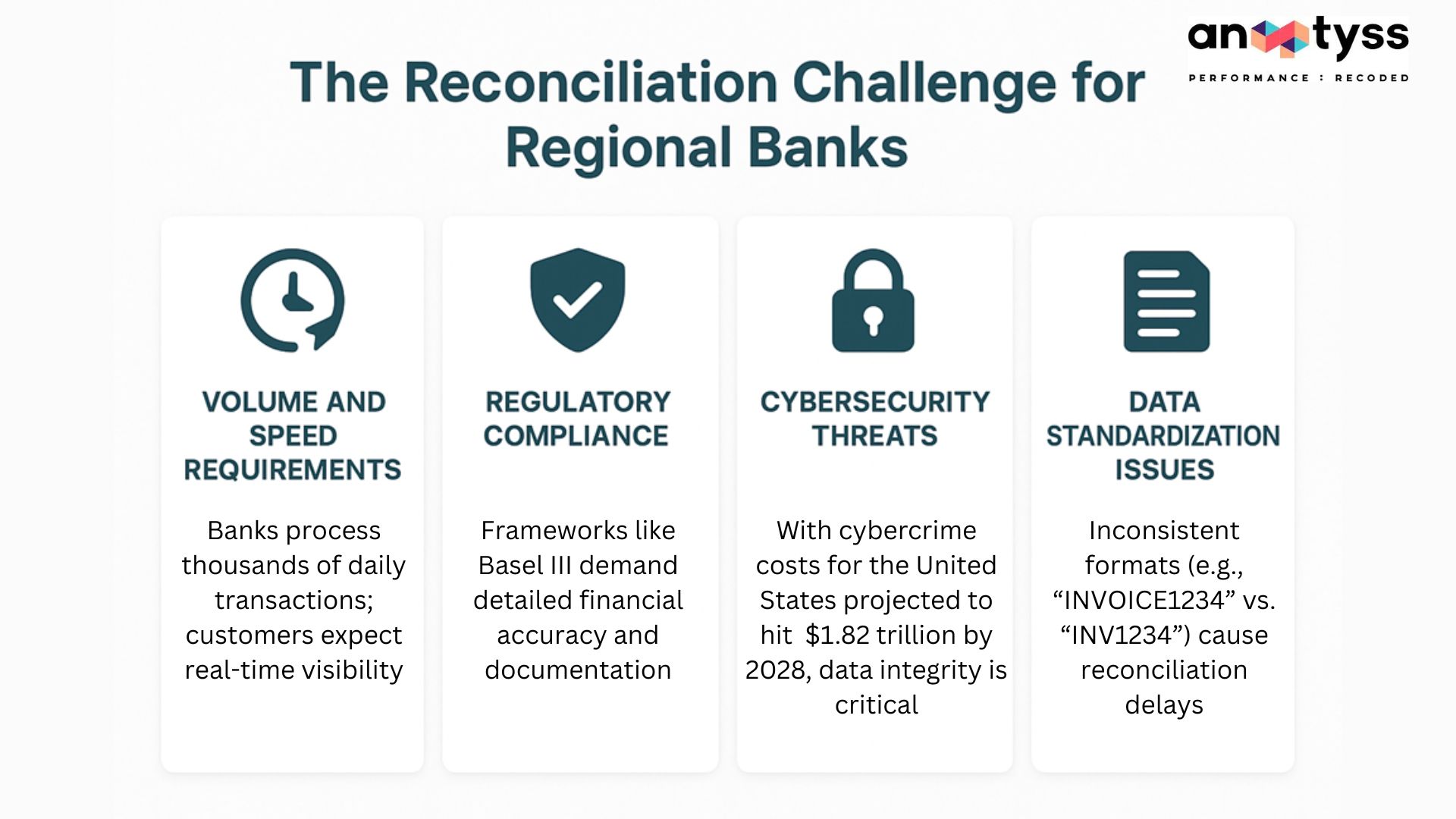
Financial reconciliation—ensuring accuracy and consistency across transaction records—requires precise matching across general ledgers, bank statements, and enterprise resource planning (ERP) platforms. Regional banks face unique operational pressures that make this process particularly challenging.

1. Volume and Speed Requirements

Digital transformation has increased the pace and volume of transactions. Customers now expect real-time account updates, which in turn require near-instant reconciliation processes—something manual methods struggle to keep up with.

2. Regulatory Compliance

Basel III and other frameworks mandate comprehensive risk management and accurate financial reporting. These requirements significantly increase reconciliation complexity, demanding higher accuracy levels and detailed documentation.

3. Cybersecurity Threats

Cybercrime costs in the US reached $452.3 billion in 2024, estimated to reach $1.82 trillion by 2028. And that’s United States alone. Thus, securing financial data during reconciliation is a critical concern. Banks must maintain data integrity while responding quickly to potential threats.

4. Data Standardization Issues

Inconsistent data formats across systems—such as “Invoice 12345” appearing as “INV12345” in different platforms—create reconciliation errors and processing delays that traditional manual methods struggle to resolve efficiently.

How Generative AI Is Changing the Reconciliation Landscape

Unlike conventional AI that analyzes existing data, Generative AI creates new insights and automates complex processes through advanced pattern recognition. The technology’s market growth reflects its transformative potential, with the Generative AI banking market projected to expand from $2.8 billion in 2023 to $75.7 billion by 2028—a remarkable 93.7% compound annual growth rate.

Key Capabilities Transforming Reconciliation

1. Intelligent Transaction Processing

Generative AI processes extensive transaction volumes with unprecedented speed and accuracy, automatically matching records across multiple systems while minimizing manual intervention.

2. Advanced Error Reduction

By automating repetitive tasks, these systems substantially reduce human error rates while ensuring enhanced accuracy in financial record maintenance.

3. Unstructured Data Intelligence

Using sophisticated natural language processing, Generative AI interprets ambiguous data elements, recognizing contextual relationships that traditional systems miss.

4. Predictive Risk Analytics

The technology analyzes historical patterns to predict potential discrepancies, enabling proactive risk management and preventive intervention strategies.

5. Automated Compliance

Generative AI generates comprehensive, audit-ready reports ensuring adherence to regulatory standards while reducing compliance burden.

Aligning AI With Risk Management – The Three Lines of Defense

AI implementation in reconciliation also intersects with risk management practices. Many institutions follow the “Three Lines of Defense” model, which include:

AI technologies can strengthen each of these lines. At the operational level, intelligent automation reduces manual effort and flags anomalies in real-time. For compliance teams, AI enables continuous monitoring and policy alignment. Internal audit functions benefit from data-driven insights and streamlined access to audit-ready reports.

Anaptyss supports this structured approach by aligning its solutions with Basel III and Three Lines of Defense principles. Its AI-driven reconciliation tools are designed to improve risk visibility, enhance operational efficiency, and support regulatory compliance across all levels of the risk management framework.

Case Insight – A Community Bank’s Transformation

A prominent US-based community bank partnered with Anaptyss to address significant reconciliation challenges including extensive backlogs of unreconciled transactions, unstructured data management issues, and inadequate monitoring capabilities.

Anaptyss implemented their proprietary Digital Knowledge Operations™ (DKO™) methodology, deploying a customized Power BI dashboard for real-time transaction monitoring and comprehensive reporting.

Outcomes included:

Adoption Trends and Strategic Considerations

The banking sector’s Generative AI adoption demonstrates accelerating momentum. IBM’s 2025 banking outlook reveals that while only 8% of banks systematically developed Generative AI capabilities in 2024, this percentage is expected to surge dramatically in 2025, with 60% of banking CEOs acknowledging the necessity of accepting calculated risks to leverage automation benefits.

Accenture projects a 30% increase in employee productivity by 2028 through strategic Generative AI adoption. Over 50% of technology leaders in financial services are actively exploring AI applications, with primary focus areas including operational improvement and regulatory compliance enhancement.

Conclusion

Generative AI is not a one-size-fits-all solution—but it offers compelling tools for addressing the persistent challenges of financial reconciliation in regional banking. By rethinking legacy processes through intelligent automation, banks can better meet customer demands, satisfy regulatory expectations, and strengthen operational resilience.

Anaptyss’s AI-powered digital solutions demonstrate the substantial potential for cost reduction, operational improvement, and risk mitigation. Our documented success in achieving 45% cost reduction alongside real-time operational transparency provides compelling evidence of transformative capabilities.

The Four Pillars of Effective Prepayment Risk Management for Financial Institutions

Through extensive analysis and collaboration with banking and financial services institutions, Anaptyss has observed the significant challenges in accurately forecasting customer behavior, particularly regarding loan prepayments. When interest rates decline, conventional wisdom suggests an immediate surge in mortgage refinancing activity. However, empirical evidence indicates a considerably more nuanced reality.

This scenario repeats consistently across the financial sector. Management teams rely on prepayment models that project minimal portfolio disruption for upcoming quarters. Subsequently, when rates decline unexpectedly, institutions experience substantial early repayment volumes. This results in material compression of net interest margins and necessitates rapid strategic adjustments.

Analysis demonstrates that traditional prepayment modeling methodologies frequently fail to capture the multidimensional nature of borrower decision-making. While interest rate differentials constitute a primary factor, they represent merely one component within a complex framework of variables that influence credit risk management.

The Prepayment Risk Challenge

Financial institutions recognize that prepayment risk represents a significant concern for balance sheet management. When borrowers retire loans ahead of schedule, particularly fixed-rate instruments, this creates multiple adverse consequences:

These factors explain the substantial institutional investment in developing sophisticated prepayment forecasting methodologies. As outlined in previous blog on operational risk management in financial services, effective risk modeling is essential for maintaining institutional stability.

The Four-Factor Model – Beyond Unidimensional Models

A common methodological limitation observed in the industry involves excessive focus on interest rate differential metrics. While the variance between a customer’s existing rate and available refinancing options constitutes a relevant factor, it fails to provide comprehensive predictive capability.

Anaptyss research has identified notable behavioral patterns contradicting conventional modeling assumptions. During certain periods characterized by declining interest rates, high-income borrowers frequently demonstrate refinancing activity substantially below model predictions. Analysis suggests these clientele segments place greater value on time efficiency than potential interest savings. The administrative requirements associated with refinancing often outweigh modest payment reductions for this demographic.

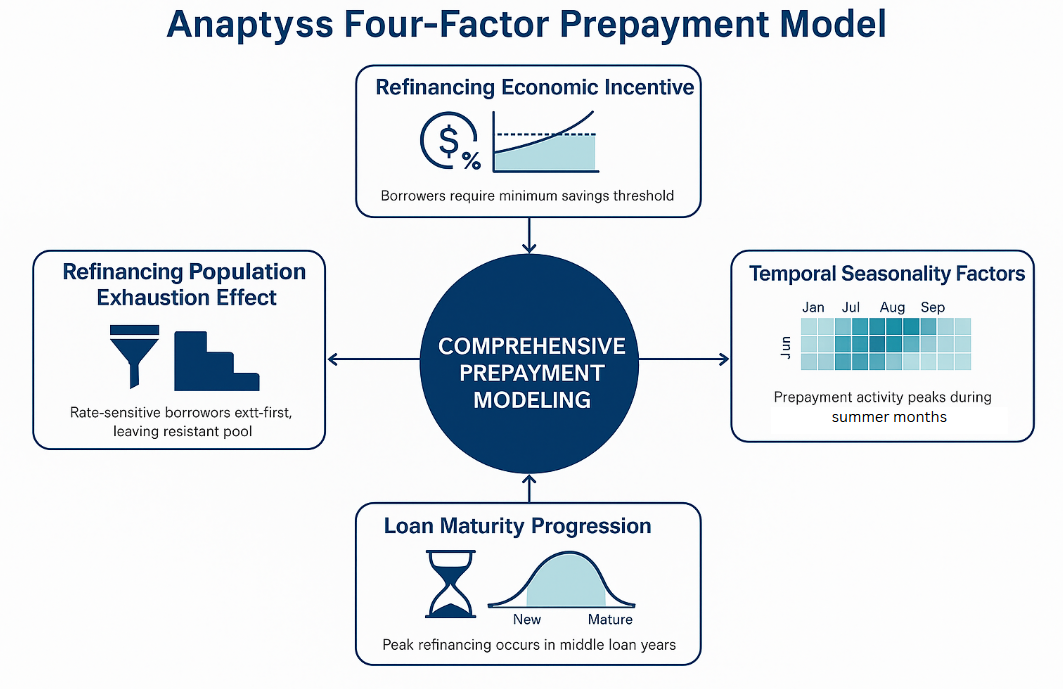
Based on extensive market research and validation, this multifactor modeling framework incorporates four critical components that align with top model risk management priorities for the banking industry.

  1. Refinancing Economic Incentive
    Interest rate differential analysis requires contextual refinement. Research indicates threshold effects exist below which borrowers demonstrate minimal refinancing propensity despite positive economic incentives.
  2. Temporal Seasonality Factors
    Statistical analysis confirms borrowers execute major financial decisions with seasonal patterns. Anaptyss data demonstrates consistently elevated prepayment activity during summer periods relative to winter months, corresponding with residential mobility patterns and lifecycle transitions.
  3. Loan Maturity Progression
    Recently originated loans demonstrate minimal refinancing probability. As loans mature, prepayment likelihood follows a characteristic distribution curve, with peak activity during intermediate maturity phases and diminishing probability approaching final maturity.
  4. Refinancing Population Exhaustion Effect
    This phenomenon manifests following extended periods of refinancing opportunity, where rate-sensitive borrowers have previously exercised refinancing options, resulting in a remaining population demonstrating reduced sensitivity to subsequent rate declines.

Prepaytment 4 factor model

Comprehensive modeling requires integrating these factors to achieve statistically valid prepayment behavior forecasting. This approach is consistent with proven methodologies as discussed in modern approaches to credit risk modeling and has demonstrated significant effectiveness in our machine learning-based credit risk scoring model implementation.

Measurable Benefits

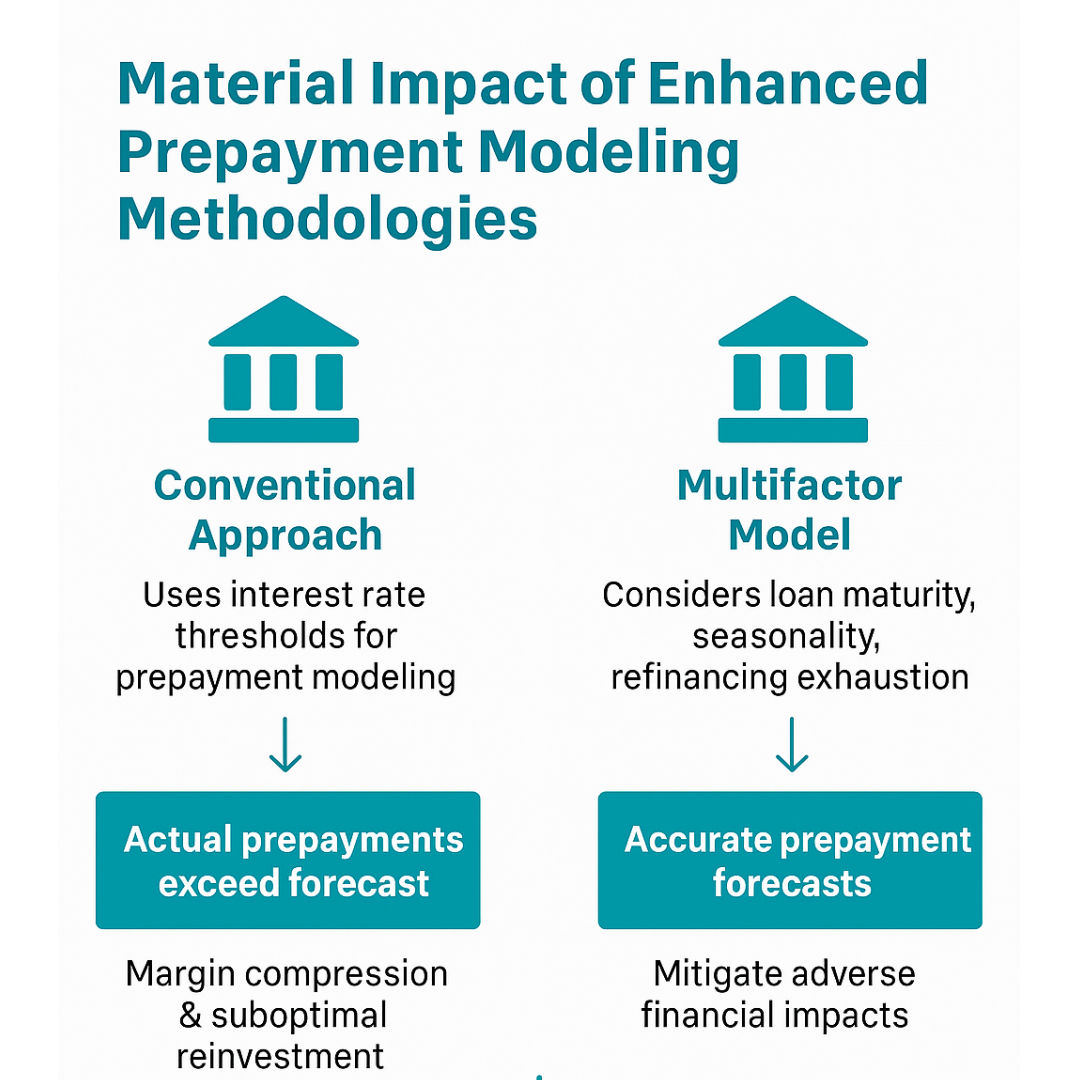
To illustrate the material impact of enhanced prepayment modeling methodologies, consider the following scenario.

Measurable Benefits - Prepayment modeling

An example,

Two equivalently sized regional banking institutions implement divergent approaches to prepayment risk management. The first utilizes conventional interest rate threshold methodologies, while the second implements a comprehensive multifactor model incorporating seasonal variations, loan maturity profiles, and refinancing exhaustion metrics.

During an unanticipated interest rate decline scenario, the first institution experiences actual prepayment volumes substantially exceeding forecasted levels. Consequently, they face significant margin compression and suboptimal reinvestment of excess liquidity in the prevailing low-yield environment.

Conversely, the second institution’s prepayment forecasts demonstrate significantly higher accuracy. This enables proactive balance sheet strategy adjustments, substantially mitigating adverse financial performance impacts.

This comparative analysis demonstrates that forecast accuracy differentials between robust and suboptimal prepayment modeling methodologies can generate material financial performance variance for institutions regardless of asset size. As demonstrated in our case study on portfolio model validation, advanced modeling techniques can improve validation efficiency by up to 40%.

Strategic Implementation Framework

For institutions seeking to enhance prepayment risk forecasting capabilities, it is recommended to implement the following strategic initiatives:

1. Implement statistically valid portfolio segmentation methodologies.

Effective analysis requires granular portfolio stratification. Develop segmentation frameworks incorporating parameters demonstrating statistical correlation with prepayment behavior, including product characteristics, demographic variables, loan amount distribution, and rate structure attributes. This approach aligns with our comprehensive framework for risk management in banking operations.

2. Conduct comprehensive historical pattern analysis beyond interest rate factors.

Execute detailed retrospective analysis examining seasonal prepayment patterns, maturity distribution effects, and historical refinancing opportunity periods. Sophisticated data mining techniques can identify valuable predictive relationships within existing institutional data. For examples of effective implementation, see our success story on fraud transaction detection capabilities.

3. Establish rigorous model governance protocols.

Model effectiveness deteriorates over time as market dynamics evolve. Implement systematic monitoring procedures comparing forecasted versus actual prepayment metrics, and develop recalibration methodologies responsive to evolving customer behavior patterns. In addition, the three lines of defense model for risk management provides a structured approach to ensuring ongoing model effectiveness.

Conclusion

While quantitative methodologies provide the foundation for effective prepayment modeling, it remains essential to incorporate behavioral finance perspectives. Ultimately, prepayment decisions represent individual financial determinations based on unique personal circumstances.

This recognition underscores Anaptyss’s methodological approach integrating quantitative analytical rigor with qualitative behavioral analysis when developing prepayment forecasting models. The numerical analysis provides necessary structure, but behavioral understanding provides essential context. Read the full white paper to dive deeper into our methodology.

Financial services fundamentally represent transactions between institutions and individuals. The most effective risk management frameworks maintain focus on this core relationship, as emphasized in our enterprise risk management framework for financial institutions.

How Continuous Control Monitoring is Transforming Banking Risk Management

Banks and financial institutions are among the most regulated sectors, facing unprecedented challenges in managing cybersecurity, compliance, and operational risks. Traditional periodic control testing and assessment methodologies no longer provide adequate protection in an environment characterized by sophisticated, advanced cyber threats, complex regulatory requirements, and increasing operational complexity. A closer look at structured approaches to control testing in financial institutions reveals how aligning testing frequency and scope with risk priorities can improve overall resilience.

Continuous Controls Monitoring (CCM) represents a strategic advancement in risk management technology that enables financial institutions to transform their approach from periodic evaluation to real-time risk intelligence.

The Evolution of Risk Management in Banking

The traditional approach to control monitoring in banking relies heavily on periodic assessments, manual testing processes, and sample-based methodologies. This approach presents significant limitations in today’s dynamic risk landscape, including –

According to industry research, financial institutions that continue to employ these traditional methodologies may potentially face significant challenges in effectively managing their risk exposure. The financial services sector experienced 744 data compromises in 2023, making it the second-most targeted industry for cyber incidents. With the average cost of a data breach in the financial sector exceeding $6 million, the stakes for effective risk management have never been higher.

Alarmingly, the trend has intensified in 2024—with 407 data compromises reported in just the first half of the year, marking a 67% increase compared to the same period in 2023.

The Continuous Controls Monitoring Paradigm

Continuous Controls Monitoring provides financial institutions with automated, real-time oversight of control effectiveness across cybersecurity, compliance, and operational domains. This technology-enabled approach delivers several key advantages:

  1. Enhanced Risk Visibility
    CCM provides immediate awareness of control performance rather than periodic snapshots, enabling early identification of potential issues.
  2. Automated Testing Processes
    By automating control assessment, CCM reduces the manual effort required for testing while expanding coverage beyond limited samples.
  3. Data-Driven Insights
    Through continuous data collection and analysis, CCM delivers actionable intelligence that supports more informed risk management decisions.
  4. Proactive Risk Management
    Rather than reacting to control failures after they occur, CCM enables preventative identification and remediation of potential issues.

Strategic Applications in Banking

Cybersecurity Risk Management

Financial institutions implementing CCM for cybersecurity benefit from continuous monitoring of critical security controls. This capability is increasingly vital as approximately 65% of financial organizations reported experiencing ransomware attacks in 2024. With CCM technology, bank and financial institutions can –

With the rise in ransomware and access-related threats, institutions are increasingly integrating compliance and cyber strategies. This shift is explored in more detail in emerging practices for managing digital-age compliance risks, which highlights the convergence of continuous controls and regulatory expectations.

Regulatory Compliance

The regulatory landscape for financial institutions continues to expand in complexity. CCM provides significant advantages for compliance management through:

Rather than treating compliance as a periodic checkbox exercise, CCM enables a continuous improvement approach that adapts as regulatory requirements evolve.

Operational Risk Reduction

Beyond security and compliance, CCM delivers substantial benefits for operational risk management.

These operational improvements not only reduce risk but also enhance customer experience and operational efficiency. Beyond fraud detection, intelligent transaction oversight plays a critical role in managing operational risk. Practical insights on designing effective AML and monitoring systems emphasize the importance of automation, alert quality, and system adaptability.

Quantifiable Return on Investment

The business case for implementing CCM extends beyond improved risk management to deliver substantial financial benefits. Analysis indicates that CCM implementation can reduce compliance and audit costs by approximately 75% compared to traditional methodologies.

This cost reduction derives from multiple sources:

  1. Efficiency Gains
    Organizations implementing CCM have reduced control testing time from 50 hours to less than 10 hours per control annually, resulting in thousands of staff hours saved across the control environment.
  2. Reduced Incident Costs
    Early detection of control failures prevents costly security incidents and regulatory penalties.
  3. Resource Optimization
    Automation enables reallocation of skilled resources from routine testing to higher-value risk management activities.
  4. Operational Improvements
    Continuous monitoring identifies process inefficiencies and control gaps that can be addressed before they impact operational performance.

Real-world implementations continue to show the financial upside of automating risk controls. One such example details how process redesign and intelligent automation reduced compliance overhead, showcasing measurable improvements in both efficiency and accuracy.

5 Key Building Blocks for CCM Deployment

Financial institutions looking to implement Continuous Controls Monitoring (CCM) should consider these key factors –

a. Prioritize High-Risk Areas

Start with control areas that pose the highest risk to your organization to maximize impact and build early momentum. Here’s what they can focus on –

  1. Financial transaction monitoring for fraud prevention
  2. Anti-money laundering (AML) compliance processes
  3. User access controls and segregation of duties (SoD)
  4. Third-party and vendor risk management

Targeting these high-impact domains helps demonstrate value early and fosters organizational support for broader CCM adoption.

b. Technology Integration

Effective CCM depends on seamless integration with your existing technology ecosystem. Consider the following –

  1. Ensuring seamless integration with core banking systems
  2. Selecting solutions with pre-built control libraries for banking processes
  3. Implementing data quality controls to ensure accurate monitoring
  4. Considering cloud-based solutions for faster deployment and scalability

c. Phased Deployment Approach

A phased implementation strategy delivers the best results.

  1. Select a specific process or business unit for initial deployment
  2. Adjust monitoring rules based on initial results
  3. Expand to additional control areas using risk-based prioritization
  4. Track key performance indicators (KPIs) and ROI to sustain stakeholder buy-in

d. Regulatory Alignment

A CCM program must align with the regulatory landscape your institution operates within:

  1. For U.S. banks, ensure consistency with OCC, Federal Reserve, and FDIC expectations
  2. For global institutions, align with Basel Committee and relevant jurisdictional requirements
  3. Build robust reporting capabilities to support audits and regulatory examinations

e. People and Process Considerations

Technology alone does not ensure success—people and process readiness are equally critical.

  1. Establish clear roles and responsibilities for control monitoring
  2. Provide training for control owners and business users
  3. Implement clear escalation and remediation workflows
  4. Develop a culture of continuous improvement

By addressing these implementation considerations, financial institutions can transform their control monitoring approach from periodic, manual testing to continuous, automated oversight, delivering significant improvements in risk management, compliance effectiveness, and operational efficiency.

Conclusion

As financial institutions navigate an increasingly complex risk landscape, Continuous Controls Monitoring represents a strategic imperative rather than an optional enhancement. By implementing CCM, banking organizations can transform their approach to risk management from periodic, reactive assessment to continuous, proactive intelligence.

The technology foundations for effective CCM implementation are now mature, with AI, advanced analytics, and cloud capabilities enabling sophisticated monitoring solutions. Financial institutions that embrace this transformation will not only enhance their risk posture but also realize significant operational and financial benefits through improved efficiency, reduced incident costs, and enhanced decision-making.

With cybercrime costs projected to reach $10.5 trillion annually by 2025, financial institutions must evaluate their current control monitoring capabilities and develop a strategic roadmap for implementing CCM across their risk management functions.

Machine Learning Operations (MLOps) in Banking – Automating the Model Lifecycle for Continuous Risk Management

In today’s data-driven financial landscape, machine learning operations (MLOps) have emerged as a critical framework for banking and financial institutions seeking to leverage AI effectively. As financial services organizations increasingly rely on machine learning models for decision-making, detecting fraud, personalizing customer experiences, and managing risk, ensuring transparency, governance, and reliability through MLOps is essential to mitigate model risk and and support sustainable model risk management practices.

This is especially important as risks can arise from data drift, model bias, lack of explainability, and regulatory non-compliance.

The Rise of ML in Financial Services

Banks and financial institutions have been at the forefront of AI adoption, using machine learning (ML) for various critical functions. One leading financial institution achieved 40% faster validation of third-party credit risk models using machine learning, demonstrating the tangible benefits of advanced model operations. It also helps in –

The Critical Need for MLOps in Banking

The true challenge lies not in developing AI/ML-based models—but in deploying, managing, and governing them effectively at scale. Poorly governed machine learning models can introduce financial risk, compromise compliance, and erode customer trust.

This is where machine learning operations (MLOps) plays a pivotal role—providing a structured framework to align model development and deployment with enterprise-wide governance, compliance, and risk management standards.

However, unlike conventional software development, machine learning systems in financial services face particular challenges:

  1. Data Drift and Model Decay

Financial markets are inherently volatile, with consumer behavior, market conditions, and regulations constantly evolving. A 2023 McKinsey survey found that 56% of financial institutions experienced significant model drift in at least one of their machine learning models, largely due to changing customer behavior and external market volatility. Models trained on historical data quickly become outdated, leading to inaccurate predictions and potentially harmful decisions.

  1. Regulatory Scrutiny and Compliance

Financial institutions operate under stringent regulatory frameworks like GDPR, Basel III, and industry-specific requirements. Models must be explainable, fair, and auditable. Regulators increasingly require documentation of model lineage, validation processes, and bias testing – all facilitated by MLOps practices.

  1. Security and Data Privacy

Banking data is highly sensitive. MLOps frameworks in financial services must incorporate robust security measures, ensuring data protection throughout the model lifecycle while maintaining appropriate access controls.

  1. Time-to-Market Pressures

In the competitive financial landscape, the ability to rapidly deploy and update models can provide a significant edge. Traditional model deployment cycles in banking often take months – an unsustainable timeframe in today’s fast-moving market.

Key Components of Financial MLOps

1. Continuous Integration and Delivery for ML Models

In banking applications, CI/CD pipelines must be adapted to account for both code and data dependencies. This means:

A major UK financial institution leveraged MLOps to reduce their model deployment time from 60+ days to just 7 days, enabling faster responses to market changes while maintaining compliance.

2. Model Monitoring and Performance Management

For financial services, model monitoring goes beyond accuracy metrics to include:

Dutch banking consortium ING implemented MLOps monitoring systems that allowed them to detect model drift early during the pandemic, preventing potentially misleading predictions in their credit risk models.

3. Model Governance and Documentation

Financial institutions must maintain comprehensive model documentation for both internal risk management and regulatory compliance:

These capabilities are foundational to a modern model risk governance function. A strong MLOps pipeline reinforces the principles of accountability, traceability, and explainability, which are core to meeting regulatory expectations for model validation and independent review.

Maturity Levels of MLOps in Financial Services

Most financial institutions progress through distinct levels of MLOps maturity:

Level 0: Manual Process

Characterized by disconnected teams, manual deployments, and minimal monitoring. Unfortunately, many banking institutions still operate at this level, with data scientists working separately from engineering teams, resulting in the “model handoff problem” where models fail to transition effectively from development to production.

Level 1: ML Pipeline Automation

At this level, financial institutions automate the training and deployment of ML models but may still lack robust monitoring and governance. Banks at this stage often struggle with model drift in volatile markets but benefit from faster deployment cycles.

Level 2: CI/CD Pipeline Automation

Here, banks implement continuous integration and deployment for both ML code and infrastructure. This allows for rapid iteration and testing, crucial for time-sensitive applications like fraud detection and trading algorithms.

Level 3: Full MLOps with Governance

The most advanced financial institutions implement end-to-end MLOps with robust governance frameworks. This includes automated compliance checks, model explainability tools, and business impact monitoring. Models are treated as products with full lifecycle management.

Challenges Specific to Banking MLOps Implementation

1. Legacy Infrastructure Integration

Many banks operate on decades-old core banking systems that weren’t designed for modern ML workflows. Successful MLOps implementations must bridge legacy systems with modern cloud infrastructure.

2. Cross-Functional Collaboration

Banking has traditionally operated in organizational silos. MLOps requires close collaboration between data scientists, IT operations, compliance teams, and business stakeholders – often necessitating cultural and organizational changes.

3. Balancing Agility with Stability

Financial services require both innovation and stability. MLOps frameworks in banking must enable rapid experimentation while ensuring robust testing and validation before production deployment.

Best Practices for Financial Institutions

  1. Start with Governance Frameworks

Unlike other industries where governance might be added later, financial institutions should begin with strong governance models that incorporate regulatory requirements from the outset.

  1. Implement Feature Stores

Centralized feature stores allow for consistent feature engineering across models and applications, crucial for maintaining coherent customer experiences across banking channels.

  1. Adopt Explainable AI Practices

Models making financial decisions must be explainable. MLOps should incorporate tools and processes for model interpretability, particularly for credit decisions and risk assessments.

  1. Establish Model Performance Baselines

Financial institutions should define clear performance thresholds for models, including both technical metrics and business impact measurements, with automated alerting when thresholds are breached.

  1. Incorporate Fairness Testing

Banking models must be regularly tested for bias across protected attributes. MLOps pipelines should include automated fairness assessments to prevent discriminatory outcomes.

Conclusion

For financial institutions, MLOps is not merely a technical practice but a strategic necessity. They are increasingly aligning their MLOps capabilities with formal model risk management frameworks. This includes integrating MLOps outputs into model validation workflows, aligning lifecycle documentation with audit needs, and creating feedback loops between operations and governance teams.

As banking continues its digital transformation, those institutions that master MLOps will be best positioned to leverage AI safely, effectively, and at scale. For a deeper dive into advanced approaches, our white paper on leveraging digital twins for model risk in banking explores innovative techniques for model simulation and testing in controlled environments.

By implementing robust MLOps practices, banks and financial services organizations can ensure their AI initiatives deliver sustainable value while meeting the industry’s unique regulatory and performance requirements. In an industry where trust is paramount, MLOps provides the framework for responsible, effective AI deployment.


How Blockchain Forensics Transforming the Cryptocurrency AML Compliance Landscape

Cryptocurrencies have revolutionized finance through decentralization, borderless transactions, and innovative financial products. However, these same features create significant anti-money laundering (AML) challenges. According to recent industry reports, cryptocurrency-related money laundering reached an estimated $22 billion in 2023, highlighting the urgent need for robust compliance solutions. Furthermore, the U.S. Federal Bureau of Investigation (FBI) reported that cryptocurrency-related investment fraud losses totaled over $5.6 billion in 2023, a 45% increase from the previous year. Investment scams accounted for the majority of these losses, highlighting the ongoing challenges in combating fraud within the crypto space .​

Financial criminals exploit several key vulnerabilities in the cryptocurrency ecosystem —

Role of Blockchain Forensics in Transforming AML Compliance

While cryptocurrencies present unique challenges, blockchain technology also offers unprecedented transparency for compliance professionals who leverage the right tools and techniques.

Blockchain forensics has emerged as a critical discipline that applies advanced analytics, machine learning, and network analysis to cryptocurrency transactions. These techniques enable compliance teams to —

  1. Trace transaction flows
    Follow cryptocurrency movements across multiple blockchains, exchanges, and wallet services
  2. Identify high-risk addresses
    Flag addresses associated with sanctioned entities, darknet markets, or known fraud schemes
  3. Detect suspicious patterns
    Identify transaction behaviors that match money laundering typologies
  4. De-anonymize entities
    Link cryptocurrency addresses to real-world identities through clustering algorithms
  5. Audit smart contracts
    Analyze code vulnerabilities and transaction patterns in decentralized applications

“Blockchain forensics represents a paradigm shift for financial crime prevention,” explains Tasneem Abdulrahman – Director – Compliance Delivery at Anaptyss. “The transparent nature of blockchain technology actually gives investigators advantages they never had with traditional financial systems—if they know how to leverage the right analytical approaches.”

Regulatory Developments Driving Forensic Adoption

Regulatory frameworks worldwide are evolving rapidly to address cryptocurrency risks, creating new compliance obligations for financial institutions and virtual asset service providers (VASPs).

AML Compliance Mandates by Region

These regulatory developments have accelerated the adoption of blockchain forensics tools and methodologies across the financial sector.

Real-World Applications Changing Financial Crime Detection

Case studies demonstrate the effectiveness of blockchain forensics in combating financial crime.

Real Work Case Summary

Challenges in Blockchain Forensics Implementation

Despite its potential, implementing effective blockchain forensics presents several challenges —

Building an Effective Blockchain Forensics Program

Financial institutions can enhance their cryptocurrency compliance programs by—

  1. Investing in specialized tools
    Implementing blockchain analytics platforms that provide transaction monitoring and risk scoring
  2. Developing internal expertise
    Training compliance staff on cryptocurrency typologies and blockchain analysis techniques
  3. Establishing risk-based procedures
    Creating cryptocurrency-specific risk assessments and due diligence protocols
  4. Collaborating with regulators
    Engaging proactively with regulatory bodies to align compliance approaches
  5. Participating in information sharing
    Joining industry initiatives that share threat intelligence on emerging risks

For a deeper dive into cryptocurrency accounting challenges and forensic solutions, download our complete white paper: “Cryptocurrency Accounting & Blockchain Forensics” and discover how leading organizations are transforming their approach to digital asset compliance.

The Future of Cryptocurrency Compliance

The cryptocurrency compliance landscape is evolving toward greater integration of automated analytics, artificial intelligence, and cross-platform visibility. Forward-thinking institutions are developing programs that —

Enhance Your Cryptocurrency Compliance Strategy

Understanding blockchain forensics has become essential for compliance professionals navigating the complexities of cryptocurrency regulation. To deepen your expertise in this rapidly evolving field, join our upcoming webinar, “Cryptocurrency Compliance: Leveraging Blockchain Forensics for Effective AML Programs.”

In this comprehensive session, industry experts will explore —

As the cryptocurrency ecosystem continues to evolve, proactive adoption of blockchain forensics capabilities will distinguish compliance leaders from those playing catch-up in this dynamic regulatory environment.

DKO™
Life@Anaptyss
Careers